
Autor Cointelegraph By Marcel Pechman

Pro traders curb their enthusiasm until Ethereum confirms $3,400 as support

Ether (ETH) price jumped 11% between March 26 and March 29 to reach $3,480, which is the highest level in 82 days. Currently, the price is down 9% year-to-date but does data support the belief that the altcoin has resumed its uptrend toward a new all-time high? Institutional investors seem excited that the CoinShares Digital Asset Fund Flows Weekly Report revealed on Tuesday that the exchange-listed crypto products inflows reached the highest level in three months. Data showed that investment products for digital assets saw net deposits of $193 million last week.At the same time, the Office of Science and Technology Policy, an executive office of the President of the United States, launched a study to offset energy use related to digital assets. Furthermore, on March 9, U.S. President Joe Biden signed an executive order directing various federal agencies to examine the implications of digital assets.The Ethereum network’s planned move to Proof-of-Stake consensus can also explain some of its outperformance versus Bitcoin. The transition has been postponed multiple times, although Q1, 2022 was mentioned on the official roadmap. By eliminating the burden of digital mining, Ethereum plans to become more efficient and allow cheaper and faster transactions.Even with the anticipation of the PoS upgrade, the rally of the past 3 days is not enough to cause Ether pro traders to flip bullish according to derivatives metrics.The Ether futures premium is neutralTo understand how larger-sized traders are positioned, one should look at Ether’s futures and options market data. For instance, the basis indicator measures the difference between longer-term futures contracts and the current spot market levels.The annualized premium of Ether futures should run between 5% and 10% to compensate traders for “locking in” the money for two to three months until the contract expires. Levels below 5% are bearish, while numbers above 10% indicate excessive demand from longs (buyers).Ether 3-month futures’ annualized premium. Source: LaevitasThe above chart shows that Ether’s basis indicator recovered from 2% on March 13 to the current 6%. This level exceeds the 5% bear sentiment threshold but at the same time signals a weak demand for opening ETH futures longs.Even though the metric points to a neutral-to-bearish sentiment, one must remember that Ether remains down 9% year-to-date and 28% below its $4,800 all-time high.Options traders fear ETH could drop lowerThe 25% options delta skew is extremely useful as it shows whether arbitrage desks and market makers are overcharging for upside or downside protection. If option investors fear an Ether price crash, the skew indicator will move above 10%. On the other hand, generalized excitement reflects a negative 10% skew.Related: Waiting on the executive order: how users and financial professionals may benefit from itEther 30-day options 25% delta skew: Source: LaevitasThe skew indicator dropped below 10% on March 18, exiting the “fear” level as these options traders are no longer overcharging for downside protection. The current 7% level remains close to a bearish threshold.Although there was a modest improvement in Ether’s futures premium, the indicator remains neutral. Basically, ETH options markets are pricing a slightly higher risk for downside, so professional traders are not confident that the current $3,400 support will hold.The views and opinions expressed here are solely those of the author and do not necessarily reflect the views of Cointelegraph. Every investment and trading move involves risk. You should conduct your own research when making a decision.

Čítaj viac
Bitcoin price surges, but derivatives metrics reflect pro trader’s neutral sentiment

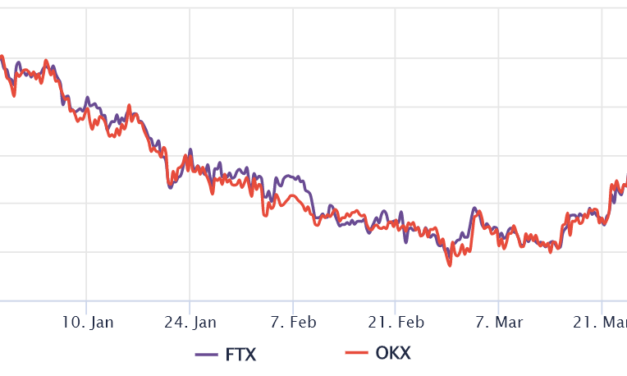
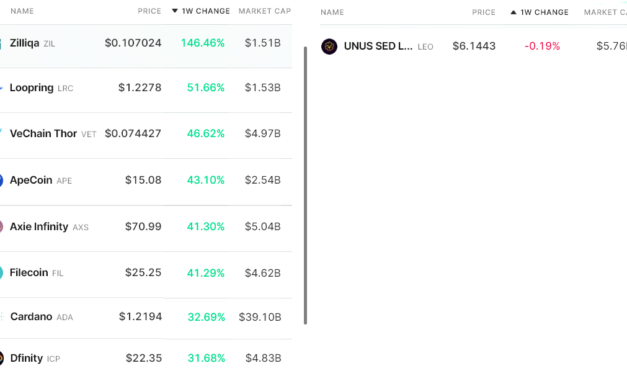
As Bitcoin (BTC) finally broke out of the $46,000 resistance on March 27, traders were quick to conclude that the bearish trend was gone for good. Even as the price hit its highest level in 84 days, derivatives metrics and Asia’s Tether premium still show a lack of bullish sentiment.While analysts will struggle to find a rationale for the modest 5.8% 24-hour gain that pushed Bitcoin above $48,500, we still have to account for the daily 3.8% average volatility. For instance, over the past 12 months, BTC presented a daily swing higher than 5.8% in 44 instances, ranging from a negative 14.4% on May 19, to a 14.6% price increase on Feb. 28.Bitcoin’s rally caused the broader crypto market capitalization to hike 15.3% over the past week, reaching $2.2 trillion. Curiously, Bitcoin gained 15.7% and Ether (ETH) 15.8%, pretty much in line with the altcoin’s average.Still, they were no match for the altcoin rally that followed. Below are the top gainers and losers among the 80 largest cryptocurrencies by market capitalization.Weekly winners and losers among the top-80 coins. Source: NomicsZilliqa (ZIL) announced a partnership with payments infrastructure provider Ramp, and is expected to release its metaverse project called Metapolis which will be built on unreal gaming engine, the same 3D technology behind Fortnite and PlayerUnkown’s Battlegrounds, or PUBG.Loopring (LRC) price surged by 51% after GameStop’s upcoming NFT marketplace integrated the Loopring network on March 23 and Axie Infinity (AXS) rallied 41% as the team outlined plans to progressively give control over the project’s treasury and governance control. Axie is also expected to launch the Origin game over the next couple of weeks, which includes a reimagined storyline and the addition of active cards for eye and ear body parts.Tether premium indicates weak retail demandThe OKX Tether (USDT) premium is a good gauge of China-based retail trader demand for crypto. It measures the difference between China-based USDT peer-to-peer trades and the official U.S. dollar currency.Excessive buying demand tends to pressure the indicator above fair value, which is 100%. On the other hand, Tether‘s market offer is flooded during bearish markets, causing a 4% or higher discount.Tether (USDT) peer-to-peer vs. USD/CNY. Source: OKXCurrently, the Tether premium stands at 99.9%, which is neutral. Thus, data shows retail demand is not picking up despite the price improvement, which is odd considering that the total cryptocurrency capitalization jumped 15.3%.Funding rates show undecided tradersPerpetual contracts, also known as inverse swaps, have an embedded rate that is usually charged every eight hours. Perpetual futures are retail traders‘ preferred derivatives because their price tends to track regular spot markets perfectly.Exchanges use this fee to avoid exchange risk imbalances. A positive funding rate indicates that longs (buyers) demand more leverage. However, the opposite situation occurs when shorts (sellers) require additional leverage, causing the funding rate to turn negative.Weekly winners and losers among the top-80 coins. Source: NomicsNotice how the accumulated seven-day funding rate is uneventful in most cases. This data indicates a balanced leverage demand between longs (buyers) and sellers (shorts).For example, Solana’s (SOL) positive 0.20% weekly rate equals 0.8% per month, which is not a burden for traders building futures positions. Typically, when there‘s an imbalance caused by excessive optimism, that rate can easily surpass 5% per month.Some might say that the Bitcoin price hike above $47,000 was the nail in the coffin for the bears because the cryptocurrency displayed strength during global macroeconomic uncertainty.At the moment, there are no signs of bullishness from Asian retail traders, as measured by the CNY Tether premium and there is no indication of pressure from leverage longs (buyers) on futures markets. Therefore, the overall crypto market sentiment is neutral.The views and opinions expressed here are solely those of the author and do not necessarily reflect the views of Cointelegraph. Every investment and trading move involves risk. You should conduct your own research when making a decision.

Čítaj viac
Terra’s Bitcoin purchase and BlackRock comments back ETH’s surge to $3.1K

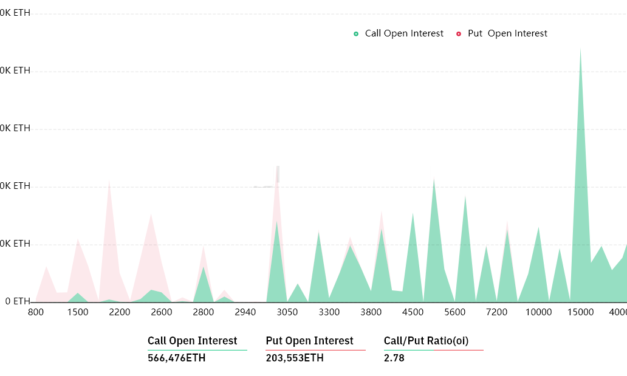
Ether (ETH) bulls have a few good reasons to celebrate the 20% gain between March 14 and March 24. The price increase surprised many and led to the first daily close above $3,000 in 34 days. Even with this move, Marc’s $2.4 billion Ether options expiry is somewhat uncertain because bears can easily profit by pushing the price below $3,000.In a letter to shareholders, Larry Fink, the CEO of BlackRock, the world’s largest asset manager, noted that the global socio-political crisis and growing inflation could make way for a global digital payment network.Moreover, cryptocurrency investors turned bullish after Terra co-founder Do Kwon reconfirmed plans for the giant $10-billion BTC allocation. On March 24, the third tranche of Tether (USDT) left a wallet thought to hold funds earmarked to purchase Bitcoin.On the macroeconomic side, there have been mixed feelings. For example, retail sales in Canada grew 3.2% over the last month, which is above the 2.4% market expectation. On the other hand, the United Kingdom’s Consumer Price Index came at 6.2% year-over-year while expectations stood at 5.9%.Bulls expected a miracle, and it did not happenEther’s recent strength might have come as a surprise for many, but some bulls were definitely over-optimistic. Even though the call (buy) option instruments dominate the March 25 options expiry, overconfident bulls placed bets at $5,000 and higher.Ether options aggregate open interest for March. 25. Source: CoinGlassA broader view using the call-to-put ratio shows a 178% advantage to Ether bulls as the $1.76 billion call (buy) instruments have a larger open interest versus the $630 million put (sell) options. However, the 2.78 call-to-put indicator is deceptive because most bullish bets will become worthless.For example, if Ether’s price remains below $3,100 at 8:00 am UTC on March 25, only 10% of the call (buy) options will be available. That effect happens because there is no value in the right to buy Ether at $3,300 if it’s trading below that level.Bears are better positioned despite having smaller numbersBelow are the three most likely scenarios based on the current price action. The number of options contracts available on March 25 for bulls (call) and bear (put) instruments varies depending on the expiry price. The imbalance favoring each side constitutes the theoretical profit:Between $2,800 and $3,000: 27,500 calls vs. 37,500 puts. The net result is $25 million favoring the put (bear) instruments.Between $3,000 and $3,200: 64,000 calls vs. 16,500 puts. The net result favors bulls by $140 million.Between $3,200 and $3,300: 88,000 calls vs. 15,500 puts. The net result favors the call (bull) instruments by $240 million.This crude estimate considers the call options used in bullish bets and the put options exclusively in neutral-to-bearish trades. Even so, this oversimplification disregards more complex investment strategies.For instance, a trader could have sold a call option, effectively gaining a positive exposure to Ether above a specific price. But unfortunately, there’s no easy way to estimate this effect.Sub-$3,000 Ether would benefit bearsEther bears need a small dump below $3,000 to avoid a $140 million loss on M. On the other hand, the bulls’ best case scenario requires a 4% price increase from the current $3,100 to score a $240 million profit.Ether bears seem in a worse position, considering Larry Fink’s positive remarks and the positive Bitcoin momentum triggered by Terra’s (Luna’ potential $3 billion BTC acquisition. The most likely outcome is that bulls will continue to display strength by pushing the price to $3,200 or higher as the March 25 options expiry approaches.The views and opinions expressed here are solely those of the author and do not necessarily reflect the views of Cointelegraph. Every investment and trading move involves risk. You should conduct your own research when making a decision.

Čítaj viac
Here’s why Bitcoin bulls will defend $42K ahead of Friday’s $3.3B BTC options expiry

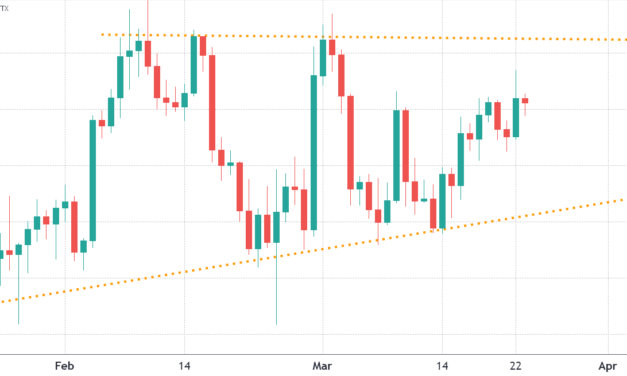
Over the past two months, Bitcoin (BTC) has respected an ascending triangle formation, bouncing multiple times from its support and resistance lines. While this might sound like a positive, the price is still down 11% year-to-date. As a comparison, the Bloomberg Commodity Index (BCOM) gained 29% in the same period.Bitcoin/USD 1-day chart at FTX. Source: TradingViewThe broader commodity index benefited from price increases in crude oil, natural gas, corn, wheat and lean hogs. Meanwhile, the total cryptocurrency market capitalization was unable to break the $2 trillion resistance level and currently stands at $1.98 trillion.In addition to 40-year record high inflation in the United States, a $1.5 trillion spending bill was approved on March 15, enough to fund the government through September. Worsening macroeconomic conditions pressured the supply curve, which, in turn, pushed commodities prices even higher.For these reasons, cryptocurrency traders are increasingly concerned about the U.S. Federal Reserve rate hikes expected throughout 2022 to contain inflationary pressure. If the global economies enter a recession, investors will seek protection in U.S. treasuries and the U.S. Dollar currency itself, moving away from risk-on asset classes like cryptocurrencies.Bulls placed their bets at $100,000 and higherThe open interest for the March 25 options expiry in Bitcoin is $3.34 billion, but the actual figure will be much lower since bulls were overly-optimistic.These traders might have been fooled by the short-lived pop to $45,000 on March 2, as their bets for Friday’s options expiry extend beyond $100,000.Even Bitcoin’s recent rally above $42,000 took bears by surprise because only 16% of the bearish option bets for March 25 have been placed above this price level.Bitcoin options aggregate open interest for March 25. Source: CoinGlassThe 1.75 call-to-put ratio shows more sizable bets because the call (buy) open interest stands at $2.13 billion against the $1.21 billion put (sell) options. Nevertheless, as Bitcoin stands near $42,000, most bearish bets will likely become worthless.For instance, if Bitcoin’s price remains above $42,000 at 8:00 am UTC on March 25, only $192 million worth of these put (sell) options will be available. This difference happens because there is no use in a right to sell Bitcoin at $40,000 if it trades above that level on expiry.Bulls are aiming for a $280 million profitBelow are the three most likely scenarios based on the current price action. The number of options contracts available on March 25 for call (bull) and put (bear) instruments varies, depending on the expiry price. The imbalance favoring each side constitutes the theoretical profit:Between $39,000 and $42,000: 6,300 calls vs. 6,300 puts. The net result is balanced between the call (bull) and put (bear) instruments.Between $42,000 and $44,000: 8,700 calls vs. 4,600 puts. The net result favors bulls by $175 million.Between $44,000 and $45,000: 10,600 calls vs. 4,300 puts. Bulls boost their gains to $280 million.This crude estimate considers the put options used in bearish bets and the call options exclusively in neutral-to-bullish trades. Even so, this oversimplification disregards more complex investment strategies.For example, a trader could have sold a put option, effectively gaining positive exposure to Bitcoin above a specific price, but unfortunately, there’s no easy way to estimate this effect. Related: Terra may be about to repeat $125M BTC buy that sparked Bitcoin’s run to $43.3KBears will want to pin BTC below $42,000Bitcoin bears need to pressure the price below $42,000 on March 25 to avoid a $175 million loss. On the other hand, the bulls’ best case scenario requires a push above $44,000 to increase their gains to $280 million.Bitcoin bears had $150 million leverage short positions liquidated on March 22, so they should have less margin required to drive Bitcoin price lower. With this said, bulls will undoubtedly try to defend $42,000 until the March 25 options expiry.The views and opinions expressed here are solely those of the author and do not necessarily reflect the views of Cointelegraph. Every investment and trading move involves risk. You should conduct your own research when making a decision.

Čítaj viac

$43K BTC flipping support? Not anytime soon, according to derivative metrics

Bitcoin (BTC) showed strength on March 22, posting a 5% gain and testing the $43,000 resistance. The move liquidated over $150 million worth of leverage short positions, those betting on a declining price using futures contracts.Some Twitter analysts attribute the price improvement to the Do Kwon, the co-founder of blockchain protocol Terra. During a recent Twitter Spaces conversation with analyst Udi Wertheimer, Kwon revealed his plans to back the TerraUSD stablecoin with Bitcoin. Terra’s co-founder said “the current clip that we have to buy Bitcoin is about $3 billion and will add to that,” causing markets to get agitated on March 21 when some observers attributed a $125 million Tether (USDT) transaction to Kwon. Margin traders are still going longMargin trading allows investors to borrow cryptocurrency to leverage their trading position, increasing returns. For example, one can buy cryptocurrencies by borrowing Tether and increasing their exposure. On the other hand, Bitcoin borrowers can only short the cryptocurrency as they bet on its price declining. Unlike futures contracts, the balance between margin longs and shorts isn’t always matched.OKEx USDT/BTC margin lending ratio. Source: OKExThe above chart shows that traders have been borrowing more BTC recently, as the ratio decreased from 15 on March 20 to the current 7.5. Even though the data remains bullish as the indicator favors stablecoin borrowing, it reached the lowest level since March 9. Considering crypto traders are usually bullish, a margin lending ratio below 3 is deemed unfavorable. Thus, the current level remains positive, just less confident than two days ago.Option markets did not shift recentlyCurrently, it’s somewhat difficult to discern a direction in the market. Still, the 25% delta skew is a telling sign whenever arbitrage desks and market makers overcharge for upside or downside protection. The 25% delta skew compares similar call (buy) and put (sell) options. The metric will turn positive when fear is prevalent because the protective put options premium is higher than similar risk call options.The skew indicator will move above 8% if traders fear a Bitcoin price crash. On the other hand, generalized excitement reflects a negative 8% skew.Bitcoin 30-day options show 25% delta skew: Source: Laevitas.chAs displayed above, we exited the 8% “fear” mode on March 9 and entered a neutral area since then. Still, Tuesday’s 5% rally was not enough to shift the options skew to a neutral-to-bullish zone. Related: Bitcoin hash rate may see ‘small capitulation’ with difficulty set for new all-time highDespite the not-so-positive indicator from Bitcoin options, these arbitrage desks and market makers will be forced to reverse bearish positions once the price breaks $45,000 and changes the current trend. The OKX margin lending rate showed pro traders reducing their bullish bets after a 13% BTC price rally in 10 days, so derivatives data provides a slightly bearish view. For this reason, expecting a pump above $43,000 right now seems a bit too optimistic.The views and opinions expressed here are solely those of the author and do not necessarily reflect the views of Cointelegraph. Every investment and trading move involves risk. You should conduct your own research when making a decision.

Čítaj viac

Získaj BONUS 8 € v Bitcoinoch

nakup bitcoin z karty

Registrácia Binance

Burza Binance

Aktuálne kurzy