
Autor Cointelegraph By Marcel Pechman

Bitcoin price drops to $39K, but data shows leverage traders dreaming of $50K

On April 11, Bitcoin (BTC) dropped to $40,500, reaching a crucial level that erased the gains from the previous three weeks when the price peaked at $48,200 on March 28.According to analysts, the United States Federal Reserve balance sheet reductions are adding pressure to stocks and risk assets, with Bitcoin standing to lose appeal.Decentrader co-founder filbfilb agreed with these powerful headwinds by arguing that the Fed’s action could influence the BTC price trend “for months to come.”Bitcoin reacted unfavorably to a resurgent dollar, with the U.S. dollar currency index (DXY) returning above 100 for the first time since May 2020. While some consider the DXY event a temporary show of strength, its impact on crypto markets was clear.Data shows margin traders are bullishMargin trading allows investors to borrow cryptocurrency to leverage their trading position with the hope of increasing returns. Traders can borrow Tether (USDT) to open a leveraged long position, whereas Bitcoin borrowers can only short the cryptocurrency because they are betting on its price declining. Unlike futures contracts, the balance between margin longs and shorts isn’t always matched.OKEx USDT/BTC margin lending ratio. Source: OKExThe above chart shows that traders have been borrowing more USDT recently, a fact shown by the ratio increasing from 9.6 on April 8 to the current 15.9, which is the highest level in two months.Even though the margin lending reached 5 on March 28, the indicator favored stablecoin borrowing. Crypto traders are usually bullish, so a margin lending ratio below 3 is deemed unfavorable. Thus, the current level remains positive, just less confident than the previous week.Related: Bitcoin keeps falling as former BitMEX CEO gives $30K BTC price target for JuneThe long-to-short ratio is slightly bearishThe top traders’ long-to-short net ratio excludes externalities that might have impacted the longer-term futures instruments. By analyzing these positions on the spot, perpetual and futures contracts, one can better understand whether professional traders are leaning bullish or bearish.There are occasional methodological discrepancies between different exchanges, so viewers should monitor changes instead of absolute figures.Exchanges’ top traders Bitcoin long-to-short ratio. Source: CoinglassExcluding a brief spike in OKX’s Bitcoin long-to-short ratio on April 6, professional traders have slightly reduced their long (bull) positions since March 31. This movement is directly opposite to the previously presented margin trading markets, which showed a significant sentiment improvement in the first week of April.So what could be the cause of the distortion? The most likely factor is the fact that Bitcoin’s price has been down 32% in 12 months. Even as BTC flirted with $48,000 on March 29, futures traders were not yet ready to build bullish positions using leverage.It’s possible to have a “glass half full” reading from the same data because Bitcoin price dropped 15% since March 29, and yet, there is no sign of bearishness from the margin and BTC futures trading. From the perspective of derivatives, traders are playing it safe, but are also still hopeful that $50,000 and higher is possible in the near term.The views and opinions expressed here are solely those of the author and do not necessarily reflect the views of Cointelegraph. Every investment and trading move involves risk. You should conduct your own research when making a decision.

Čítaj viac
Solana NFT marketplace integration and DApp metrics shine even after SOL’s 20% drop

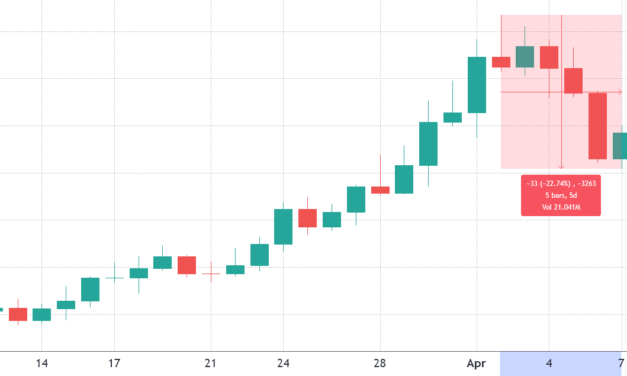
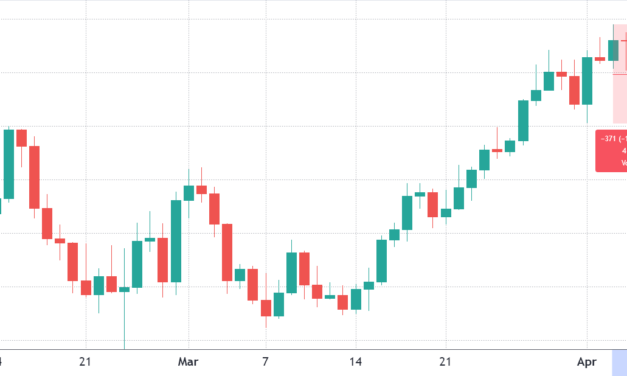
Solana (SOL) price reached $143.50 on April 2 after an incredible 82% rally over a 20 day period. This positive performance can be attributed to recent NFT markets-related news and a marketwide bounce, but the current 22.7% decline could have investors confused. Solana/USDT at FTX. Source: TradingViewThe rally started after Coinbase Wallet added support for SOL and other Solana-based blockchain tokens on March 18. The crypto exchange also outlined plans to “further integrate” with Solana by connecting the Coinbase Wallet with the decentralized applications (DApps) and nonfungible tokens (NFTs) hosted on the network.The expectation of OpenSea’s integration of the Solana network also excited investors. This means Solana will join Ethereum, Polygon and Klaytn as the payment options visible in the drop-down “all chains” tab on OpenSea’s “rankings” page.Solana’s strategy to focus on NFT markets seems to have paid off because the layer-1 blockchain network has risen to third place all-time in total NFT sales on April 6. Moreover, the latest 30-day accumulated data shows Solana amassing $216 million worth of NFT sales.Solana’s DApp deposits are on the declineSolana’s primary decentralized application (DApp) metric started to display weakness in late March after the network’s total value locked (TVL) dropped below SOL 50 million.Solana network Total Value Locked, SOL. Source: DefiLlamaThe chart above shows how Solana’s DApp deposits saw a 30% decrease in three weeks as the indicator reached its lowest level since Sept. 20, 2021. As a comparison, Terra’s TVL increased by 34% year-to-date, while Fantom network deposits grew by 30%.On the bright side, on April 5, Neon released an alpha version for the first Solana Ethereum Virtual Machine (EVM) cross-compatibility and scaling solution and on April 7, Solana announced that over 1.6 million network addresses currently hold an NFT.A DeFi application stood out front the crowdTo confirm whether the TVL drop is concerning, one should analyze DApp usage metrics.Solana DApps 30-day on-chain data. Source: DappRadarAs shown by DappRadar data on April 8, the number of Solana network addresses interacting with decentralized applications increased by 11% on average. Orca, a user-friendly decentralized exchange (DEX), was the absolute highlight, amassing 153,290 users.Even though Solana’s TVL has been hit the hardest compared to similar smart contract platforms, there is solid network use on DeFi and NFT marketplaces, as measured by Magic Eden’s 212,230 active addresses in the last 30 days.The data above suggests that Solana investors should not worry about the most recent correction. The Solana ecosystem is fueled by the delivery of important milestones toward Ethereum compatibility and NFT market integrations and as long as this happens the potential for further price appreciation seems likely. The views and opinions expressed here are solely those of the author and do not necessarily reflect the views of Cointelegraph. Every investment and trading move involves risk. You should conduct your own research when making a decision.

Čítaj viac
Pro traders turn into bears after Ethereum price dropped to $3,200

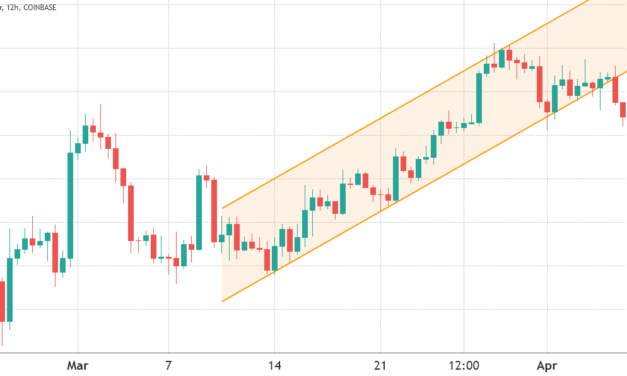
After a 42% rally over a three-week period, Ether (ETH) peaked at $3,580 on April 3 and since then, a 12% correction to $3,140 has taken place.Tech giants launching their own smart contract platforms and regulatory uncertainty might have impacted investors’ sentiment and derivatives metrics also show worsening conditions that confirm professional traders’ shift toward a bearish sentiment.Ether/USD price at FTX. Source: TradingViewOn April 6, the Financial Times reported that Meta is reportedly planning to introduce virtual currency and lending services. This move is aimed at exploring alternative sources of revenue for Facebook, WhatsApp, Instagram and Messenger.United States Senator Pat Toomey, the ranking member of the Senate Banking Committee, also drafted a bill proposing a regulatory framework for stablecoins. The legislation requires issuers to back up their stablecoin reserves with assets “that are cash and cash equivalents or level 1 high-quality liquid assets denominated in U.S. dollars.”Despite Ether’s price correction to $3,200, the network’s value locked in smart contracts increased 13% in 30 days to $85.6 billion. Thus, it is worth exploring whether the mood of derivatives traders was impacted by the recent price rejection.Derivatives show Ether traders flipping bearishTo understand whether the market has flipped bearish, traders must look at the Ether futures contracts’ premium, also known as the “basis.” Unlike a perpetual contract, these fixed-calendar futures do not have a funding rate, so their price will differ vastly from regular spot exchanges.A trader can gauge the market bullishness level by measuring the expense gap between futures and the regular spot market.Ether perpetual futures 8-hour funding rate. Source: Coinglass.comFutures should trade at a 5% to 12% annualized premium in healthy markets. Yet, as displayed above, Ether’s annualized premium has decreased from 6% on April 5 to the current 4.5%.Related: The FDIC wants US banks to report on current and intended crypto-related activities Options markets flirt with pessimismTo exclude externalities specific to the futures instrument, traders should also analyze the options markets. The 25% delta skew compares similar call (buy) and put (sell) options. The metric will turn positive when fear is prevalent because the protective put options premium is higher than similar risk call options.The opposite holds when greed is prevalent, causing the 25% delta skew indicator to shift to the negative area.Ether 30-day options 25% delta skew. Source: Laevitas.chThe 25% skew indicator has been ranging between 4% and 8% since March 22, indicating balanced pricing for bullish and bearish options. However, the correction to $3,140 on April 7 caused the metric to momentarily test 9.5%, the threshold for a neutral-to-bearish sentiment.While the current 7% reading is still neutral, it is safe to say that Ether pro traders became more uncomfortable as Ether traded down 12% in four days. Presently, there is a mild sense of bearishness in the market. Of course, none of that can predict when Ether will continue to downtrend but considering the current derivatives data, there’s less demand for leverage longs.The views and opinions expressed here are solely those of the author and do not necessarily reflect the views of Cointelegraph. Every investment and trading move involves risk. You should conduct your own research when making a decision.

Čítaj viac
Bears have a $100M reason to keep Bitcoin price under $45K until Friday’s options expiry

Some analysts argue that Bitcoin (BTC) rallied too fast and too soon and the weakness that we see on April 7 is a result of that. Currently, a new COVID-19 variant has caused the Chinese government to implement severe restrictions on Shanghai and other major cities and persistent regulatory concerns continue to weigh down th sentiment within the crypto sector.Another concerning development is the March 31 European Parliament’s Committee on Economic and Monetary Affairs (ECON) vote to update the regulations in regards to the ability of exchange platforms to deal with noncustodial crypto wallets. Should the regulatory project make it to the legislative phase in the upcoming months, it would place strict disclosure requirements on transactions for crypto exchanges in the European Union.Bitcoin/USD 1-day price chart. Source: TradingViewNot everything has been negative for Bitcoin because the cost of moving Bitcoin across the network has hit decade lows, according to research by Galaxy Digital. The Bitcoin median transaction fee has plummeted to 0.00001292 Bitcoin ($0.59) in 2022, the lowest in 11 years.According to Glassnode on-chain analyst James Check, “batching and Segwit is certainly part of the mix,” because it increases the number of transactions that fit in a block.Bulls were taken by surpriseBitcoin’s drop below $45,000 on April 6 took bulls by surprise because only 8% of the call (buy) option bets for April 8 have been placed below this price level.Bulls might have been fooled by the recent attempt to overtake $48,000 on March 29 and this is shown in their bets for April 8’s $610 million options expiry that go all the way to $65,000.Bitcoin options aggregate open interest for April 8. Source: CoinGlassA broader view using the 0.97 call-to-put ratio shows balanced bets between the $300 million call (buy) open interest stands and the $310 million put (sell) options. Now that Bitcoin is back below $45,000, most of these bullish bets will become worthless.For example, if Bitcoin’s price remains below $45,000 at 8:00 am UTC on April 8, only $24 million worth of these call (buy) options will be available. This difference happens because there is no use in the right to buy Bitcoin at $50,000 if it trades below this level at expiry.Bears are aiming for a $145 million profitListed below are the four most likely scenarios based on the current price action. The number of options contracts available on April 8 for call (bull) and put (bear) instruments varies, depending on the expiry price. The imbalance favoring each side makes up the theoretical profit:Between $42,000 and $44,000: 250 calls vs. 3,650 puts. The net result favors the put (bear) instruments by $145 million.Between $44,000 and $45,000: 550 calls vs. 2,800 puts. The net result favors bears by $100 million.Between $45,000 and $46,000: 700 calls vs. 2,150 puts. The net result benefits put (bear) options by $60 million.Between $46,000 and $47,000: 1,800 calls vs. 1,500 puts. The net result is balanced between call (buy) and put (sell) instruments.This crude estimate considers the call options used in bullish bets and the put options exclusively in neutral-to-bearish trades. Even so, this oversimplification disregards more complex investment strategies.For instance, a trader could have sold a put option, effectively gaining positive exposure to Bitcoin above a specific price but unfortunately, there is not an easy way to estimate this effect.Related: Scaramucci sees bright future for crypto but ‘very worried’ about US politiciansBears have incentives to suppress Bitcoin priceBitcoin bears need to push the price below $44,000 on April 8 to secure a $145 million profit. On the other hand, the bulls’ best case scenario requires a 4.3% gain from the current $44,200 to $46,000 zone to balance the scales.Bitcoin bulls had $65 million in leveraged long positions liquidated on April 6, so they probably have fewer resources to push the price higher in the short term. With this said, bears will likely try to suppress BTC below $45,000 before the April 8 options expiry.The views and opinions expressed here are solely those of the author and do not necessarily reflect the views of Cointelegraph. Every investment and trading move involves risk. You should conduct your own research when making a decision.

Čítaj viac

Bitcoin price drops to $43.5K, but data and BTC’s market structure project strength

Bitcoin (BTC) has been struggling to break the $47,000 resistance and even with April 6’s drop below $44,000, there is still mounting evidence that the market structure is healthy. On Dec. 3, 2021, Bitcoin initiated a 25.6% correction that lasted 18 hours and culminated with a $42,360 low. Four months later, the price remained 18% below the $56,650, closing on Dec. 2, 2021.Much has changed over that period, and hard evidence comes from other sections of the sector. Between February 15 and April 2, 2022, enterprise software development firm MicroStrategy announced the acquisition of 4,197 Bitcoin. Inflows to Canadian Bitcoin exchange-traded funds (ETFs) also hit an all-time high, according to data from Glassnode. These investment vehicles in Canada have increased their holdings by 6,594 BTC since January to a historical high of 69,052 BTC under management. The Purpose Bitcoin ETF, a spot instrument, currently has $1.68 billion worth of assets.Among the wave of recent buyers is Terra’s Luna Foundation Guard (LFG), which is on a mission to acquire $3 billion worth of BTC as a reserve for TerraUSD (UST) stablecoin.CoinMetrics data shows that the active on-year Bitcoin supply reached 36.8% on April 5, its lowest level since September 2010.Bitcoin trailing 1-year active supply. Source: CoinMetricsThe chart shows how “diamond hand” holders have not moved their coins over the past 12 months.Futures markets show traders are uncomfortable near $47,000To understand how professional traders are positioned, including whales and market makers, let’s look at Bitcoin’s futures and options market data. The basis indicator measures the difference between longer-term futures contracts and the current spot market levels.The Bitcoin futures annualized premium should run between 5% to 12% to compensate traders for “locking in” the money for two to three months until the contract expiry. Levels below 5% are extremely bearish, while the numbers above 12% indicate bullishness.Bitcoin 3-month futures annualized premium. Source: Laevitas.chThe above chart shows that this metric dipped below 5% on Feb. 11, reflecting traders’ lack of demand for leverage long (bull) positions. The sentiment changed on March 26 after the basis rate regained the “neutral” 5% threshold. Even though this occurred, there are no signs of confidence from pro traders, according to the futures premium. Options traders worry about downside riskCurrently, Bitcoin seems to lack the strength needed to break the $47,000 resistance, but traders should use derivatives to gauge professional investor sentiment. The 25% delta skew is a telling sign whenever arbitrage desks and market makers overcharge for upside or downside protection.If those traders fear a Bitcoin price crash, the skew indicator will move above 10%. On the other hand, generalized excitement reflects a negative 10% skew.Bitcoin 30-day options 25% delta skew: Source: Laevitas.chData shows that the skew indicator has been ranging between 0% and 8% since March 9. Albeit not signaling fear, these options traders are overcharging for downside protection. From the BTC options markets perspective, there’s a slightly higher risk for unexpected downward price swings.The neutral-to-bearish Bitcoin derivatives data offers an interesting opportunity for bulls. If somehow the $47,000 resistance is broken, this will be a surprise for most investors. Two positive effects will arise from that event: a short squeeze from derivatives markets and room for buyers to use futures for leverage.If Bitcoin’s futures premium had been running above 10%, traders would face a much higher cost to add long (bull) positions. Bulls seem better prepared to deal with the $47,000 price resistance considering the sound market structure that is marked by the absence of exaggerated buyers’ leverage and this provides better odds of success.The views and opinions expressed here are solely those of the author and do not necessarily reflect the views of Cointelegraph. Every investment and trading move involves risk. You should conduct your own research when making a decision.

Čítaj viac

Získaj BONUS 8 € v Bitcoinoch

nakup bitcoin z karty

Registrácia Binance

Burza Binance

Aktuálne kurzy