Autor Cointelegraph By Marcel Pechman

Bitcoin’s trapped under $74K while $9B options expiry looms: Are bears back in control?

Key takeaways:Bears gained a major edge ahead of Friday’s $9 billion options expiry, especially if Bitcoin price stays below $74,000.Spot Bitcoin ETF outflows and corporate BTC balance reductions fueled market pessimism.Bitcoin (BTC) retested the $72,500 level for the first time in six weeks on Thursday, triggering $342 million in liquidations for bullish leveraged positions. Despite a subsequent relief bounce to $73,500, traders are worried that bears will keep control due to the upcoming $9 billion monthly options expiry.May 29 Bitcoin call (buy) options open interest at Deribit, BTC. Source: DeribitDeribit holds a 70% market share for the May monthly options expiry, capturing $3.4 billion in open interest for calls (buy) and $2.91 billion for puts (sell). However, bulls were caught off guard when Bitcoin broke below $78,000 on May 17.If Bitcoin stays below $74,000 heading into Friday’s expiry, only $306 million worth of call options will remain in the money. In contrast, put options targeting $74,000 or higher total $1.05 billion, giving bearish strategies a massive advantage.May 29 Bitcoin put (sell) options open interest at Deribit, BTC. Source: DeribitEven if Bitcoin reclaims $74,000 by Friday, put options will still outpace call instruments by $265 million. On the bright side, there is no excessive demand for downside protection right now, as put options volume typically spikes only when traders anticipate severe negative surprises.Bitcoin options put-to-call volume ratio, USD. Source: LaevitasThe Bitcoin options put-to-call volume ratio stood at 0.8 on Thursday, reflecting $1.57 billion traded in calls versus $1.29 billion in puts. This neutral setup represents an improvement from the prior week, which was marked by heavy demand for defensive, neutral-to-bearish options strategies.Bitcoin only has an 18% chance of reaching $80,000 by June 26The June 26 expiry shows traders are generally uninspired by Bitcoin’s short-term price prospects.Deribit June 26 Bitcoin options pricing. Source: DeribitThe $80,000 June call option traded at 0.0103 BTC on Thursday, equivalent to $757. Given the 28 days remaining until expiry, the implied odds of Bitcoin trading above that level sit at 18%. This widespread pessimism can be partly attributed to the $1.07 billion in net outflows from US-listed spot Bitcoin ETFs over two days.Related: Bitcoin falls further as BTC miners pivot to AI, pro-crypto legislation stallsOn Thursday, Paris-based semiconductor developer Sequans Communications (SQNS) announced plans to fully liquidate its Bitcoin holdings, abandoning its previous accumulation strategy. Publicly traded mining firms, as well as Trump Media and Technology Group (DJT), have also recently scaled back their Bitcoin exposure.While it is impossible to predict whether a correction to $70,000 is the most probable scenario based solely on Bitcoin options flows and positioning, bears clearly hold the upper hand heading into the upcoming Friday expiry at 8:00 am UTC. Lingering fear and market uncertainty should prevail, significantly weakening the odds of any sustained bullish momentum in the short term.

Čítaj viac
Bitcoin falls further as BTC miners pivot to AI, pro-crypto legislation stalls

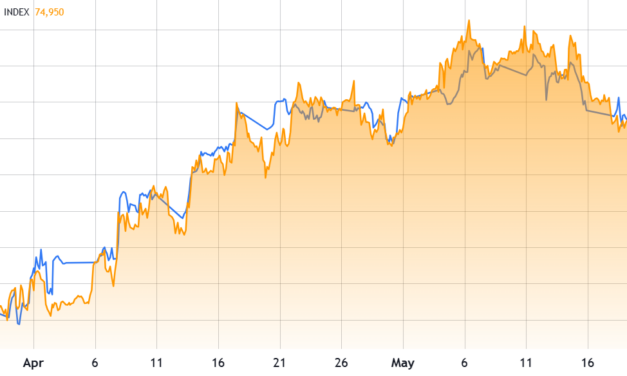
Key takeaways:Bitcoin’s drop below $75,000 marks a sharp decoupling from a record-breaking stock market fueled by the AI boom.Crypto trader sentiment remains weak as key US regulatory acts face ongoing delays.Bitcoin’s (BTC) rejection at $78,000 on Thursday marked a decoupling from traditional markets after two months of strong correlation. Wednesday’s decline below $75,000 happened while the tech-heavy Nasdaq 100 Index jumped to an all-time high.The factors behind Bitcoin’s underperformance are unlikely to fade in the near term, reducing the odds of a bullish breakout above $82,000.Russell 2000 Index (left) vs. Bitcoin/USD (right). Source: TradingViewThe US small-cap Russell 2000 Index reached a record high on Wednesday, signaling that traders are not particularly worried about the macroeconomic environment. Despite the war in Iran nearing the 3-month mark, strong earnings momentum in the artificial intelligence sector has contributed to generalized optimism in the stock market.The exact rationale behind the weaker demand for Bitcoin might never emerge, but it likely includes recent BTC reserve sales by publicly listed miners and their subsequent pivot toward AI infrastructure. The latest example includes TeraWulf (WULF US) announcing the addition of a 1-gigawatt high-performance computing capacity in Kentucky.Pro-crypto regulation stallsFurther bearish sentiment emerged after Trump Media & Technology Group (DJT US) transferred 2,650 BTC, worth $205 million at the time, to a cryptocurrency exchange address on Friday, according to Lookonchain data. The media conglomerate controlled by President Donald Trump’s family had previously accumulated 11,542 BTC at a cost basis above $118,500.The lack of regulatory progress in the legislature has also negatively affected traders’ sentiment. The Digital Asset PARITY Act overhauls cryptocurrency taxation by exempting mining and staking rewards from being taxed until sold. The proposal was formally introduced in May, but is not yet scheduled for hearings or votes.Similarly, the Digital Asset Market CLARITY Act awaits a full Senate floor vote, but no official date has been set. The bill creates a comprehensive market structure framework for digital assets, dividing oversight between the Commodity Futures Trading Commission (CFTC) and the US Securities and Exchange Commission (SEC), while complementing the already-passed GENIUS Act for stablecoins.Fed policy trajectory puzzles investors Investors likely anticipated a stronger balance sheet expansion from the US Federal Reserve (Fed), expecting continued US Treasury buying and additional liquidity for the markets. However, the prevailing trend from previous months faded in April as the Fed’s total assets stabilized.US Federal Reserve total assets, USD billion. Source: St Louis FEDThe Fed’s decision to act more cautiously was likely driven by a surge in oil prices, which raises inflation. Expansionary measures could further exacerbate the issue and negatively impact economic growth. The Fed’s total assets have remained stuck near $6.7 trillion since April 15. Bitcoin’s weak performance also contrasts with a massive surge in demand for AI infrastructure companies.Related: Bitcoin price lags bullish US tech stocks–Is there a silver lining?Top 7-day gains among world’s 100 largest assets. Source: 8marketcapMemory chipmakers SK Hynix (000660 KS) and Micron (MU US) surged past a $1 trillion market capitalization for the first time ever, joining multiple stocks that gained 20% or more over the past week alone. 

Čítaj viac

Bitcoin volatility falls to 8-month low: Is a BTC breakout imminent?

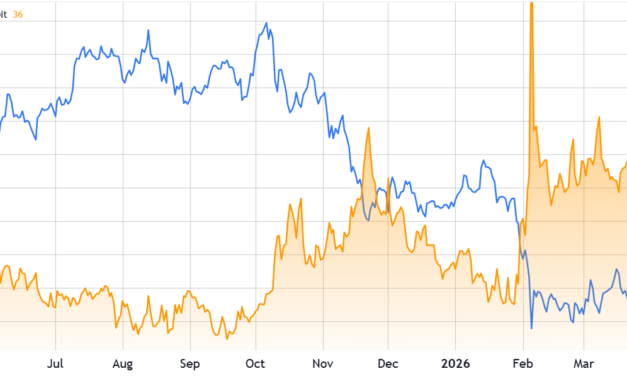
Key takeaways:Bitcoin’s implied volatility plunged to a multi-month low, signaling that traders expect further price consolidation.Excessive confidence among Bitcoin bears could catalyze a liquidation-driven bull run above $82,000.Bitcoin (BTC) implied volatility dropped to 36%, its lowest level in eight months, signaling that professional traders are pricing in lower odds of wide price swings. While declining volatility is not inherently bullish or bearish, Bitcoin derivatives data suggest that overconfidence among bears could catalyze a bullish breakout.Bitcoin/USD (blue) vs. Deribit Bitcoin volatility index (orange). Source: TradingViewA sharp price decline between January and February caused an initial spike in volatility, especially due to the lack of a clear rationale for the move. Even as Bitcoin traded in a relatively narrow range between $63,000 and $71,000 in March, implied volatility held above 50%.Traders became increasingly confident in the support level near $60,000, leading to a lower risk perception and a subsequent reduction in volatility. Some analysts claim the Bitcoin price has been tamed due to growing institutional participation and the expansion of derivatives products, including Strategy’s perpetual stocks.Source: X/NakamotoTyler Evans, chief investment officer of UTXO Management, reportedly said that digital credit products created a buffer against Bitcoin’s volatility. Rather than being forced to sell their holdings, large investors—including miners and companies focused on building Bitcoin reserves—have increasingly resorted to collateralized loans.Is Bitcoin volatility bound to go up?Bitcoin’s volatility may return to levels above 42%, as the asset is far from mature in terms of adoption and potential use cases. Bitcoin’s volatility has never held below 35%, but in theory, it could go lower. Historically, major price swings occur after a period of consolidation, which results in lower volatility.Regardless of whether it is driven by external factors such as trade wars, economic stimulus measures, or excessive stock market valuations, Bitcoin’s price moves are often accelerated by liquidations of leveraged positions.Estimated Bitcoin liquidation heatmap, USD. Source: CoinGlassBitcoin liquidation heatmap estimates show a high concentration of shorts (sell positions) between $78,000 and $83,000. Bears might have become overconfident after nearly four months of the Bitcoin price holding below $90,000. The Bitcoin options skew can be helpful to assess how whales and market makers are positioned.Related: Coinbase premium hits monthly low as institutional selling pressure mountsBitcoin 30-day options delta skew (put-call). Source: GlassnodeProfessional traders currently fear a Bitcoin price decline as put (sell) options trade at a 14% premium relative to call (buy) instruments. Under neutral market conditions, this indicator should range between -6% and +6%, but this has not been the case over the past four months.Volatility should not be used to predict market direction. However, given the weak sentiment in Bitcoin options markets, odds are that a bullish breakout above $82,000 would trigger a stronger squeeze in leveraged positions, while a retest of $72,000 seems somewhat priced in.

Čítaj viac

Bitcoin holds $77K as stocks rally, global tensions cool: Are BTC bulls back?

Key takeaways:Declining oil prices boosted global stock markets, helping lift Bitcoin back to $77,000 amid reduced inflation fears.$2.66 billion spot Bitcoin ETF outflows have kept professional crypto traders from turning resoundingly bullish.Bitcoin (BTC) reclaimed the $77,000 level on Monday following a recovery in global stock markets. US President Donald Trump stated on Saturday that talks with Iran to reopen the Strait of Hormuz were progressing, causing crude Brent oil prices to retreat to a five-week low and setting the stage for a potential Bitcoin price run to $82,000.Crude Brent oil futures (left) vs. Bitcoin/USD (right). Source: TradingViewGlobal stock markets reacted positively on Monday, with a 2.9% gain in Japan’s Nikkei 225 Index and France’s CAC 40 closing up 1.8%. Reduced inflationary pressure from oil prices caused yields on 5-year Eurozone government bonds to hit 2.64%, their lowest level in five weeks. This prospect of reduced geopolitical risk prompted investors to rotate cash positions back into bonds and equities.Despite the overall drop in risk perception, professional Bitcoin traders refused to flip bullish.Bitcoin 3-month futures basis rate. Source: GlassnodeBitcoin 3-month futures contracts traded at a 2% annualized premium (basis rate) relative to spot markets, indicating a lack of demand for bullish leveraged positions. Under neutral conditions, this indicator typically ranges between 5% and 10% to compensate for capital costs. Still, one could argue that low leverage remains constructive as long as the $74,000 support holds.Bitcoin spot ETF outflows and Strategy’s focus on reducing debtRecent outflows from spot Bitcoin exchange-traded funds (ETFs) likely contributed to the bulls’ lack of confidence.US-listed Bitcoin spot ETFs daily net flows, USD. Source: SoSoValueUS-listed spot Bitcoin ETFs experienced $2.66 billion in net outflows since May 7. Despite representing less than 3% of total assets under management, the shift signals fading appeal for institutional investors. Strategy’s (MSTR) pause on Bitcoin acquisitions to repurchase some of its convertible bonds has also fueled concerns.Strategy (MSTR US) debt profile. Source: StrategyThe company held $8.7 billion in convertible debt with an average maturity of less than 4 years. Strategy’s decision to focus on Bitcoin yield per share might temporarily hold back additions to its 843,738 BTC reserves, but it benefits shareholders by reducing financial leverage and lowering potential share issuance. Related: Why is Bitcoin falling despite pro-crypto Kevin Warsh becoming Fed chair?It remains unclear what could flip Bitcoin traders’ sentiment in a favorable direction, especially as the stock market—particularly the tech sector—continues to dominate investors’ attention. With earnings on the rise, Nvidia’s board approved an additional $80 billion share repurchase program, strengthening investment appeal despite a record-high market capitalization.Bitcoin’s odds of reclaiming $82,000 likely depend on greater visibility into global economic growth prospects. A potential deal between the US and Iran is certainly a step in the right direction, but as long as spot Bitcoin ETF flows remain negative, investor sentiment may remain subdued.

Čítaj viac

Bitcoin longs soar despite weak US macroeconomic data: Is $82K BTC next?

Key takeaways:Top traders boosted their Bitcoin long-to-short ratios, strengthening the $76,000 support floor.Macroeconomic pressures and persistent Bitcoin ETF outflows are capping immediate Bitcoin breakout potential to $82,000.Bitcoin (BTC) flirted with $78,000 on Thursday but failed to sustain its bullish momentum after a disappointing outlook from US retailer Walmart and growing signs of a more restrictive US monetary policy. Despite weakening macroeconomic conditions, professional Bitcoin traders increased their bullish exposure. Is a rally to $82,000 the next step?Top traders’ Bitcoin long-to-short position at Binance & OKX. Source: CoinGlassTop traders’ long-to-short ratio jumped to its highest level in 2 weeks, indicating growing confidence in the $76,000 support level. At Binance, the ratio remained near 8% favoring longs (buy) for three days, while traders at OKX reduced their shorts (sell) between Wednesday and Thursday. Still, in absolute terms, the long-to-short indicator remains neutral.Worsening economy and high oil prices prompt US rate hike fearsPart of this lack of confidence can be pinned to worsening economic growth perspectives. Walmart (WMT US) saw its shares decline 7% after issuing weak 2027 guidance due to persistently high oil prices. Walmart CFO John Furner said low-income consumers are “navigating financial distress.” The company acts as a proxy for US retail data due to its massive $178 billion quarterly sales.The prolonged war in Iran and the subsequent partial closure of the Strait of Hormuz have kept crude Brent oil prices sustained above $95 for the past month. The US Federal Reserve (Fed) has less room to maneuver due to this upward inflationary pressure. Traders are now anticipating interest rate hikes, marking a complete turnaround from the previous month’s expectations.FOMC interest rate target probabilities for Sept. 2026. Source: CME Group FedWatch ToolThe implied odds of interest rate hikes by September, based on government bond futures markets, have jumped to 37%, up from 0% one month prior. Thus, regardless of the strength of the S&P 500 Index, investors anticipate accelerated growth in the monetary base, as higher interest rates negatively affect the $39 trillion US government debt.Bitcoin/USD at Coinbase vs. Bitcoin/USDT at major exchanges. Source: TradingView / CointelegraphThe Bitcoin price at Coinbase traded at a 0.10% discount relative to Bitcoin prices at major exchanges quoted in USDT. This negative Coinbase Bitcoin premium is typically associated with weak institutional demand, which aligns with the $2.07 billion net outflows from US-listed Bitcoin spot exchange-traded funds (ETFs) since May 12.Related: Chance of new Bitcoin lows ‘extremely slim’ as long-term holders’ supply tops 15M BTCBitcoin perpetual futures annualized funding rate. Source: LaevitasThe Bitcoin perpetual futures funding rate has maintained neutral levels since Monday, reversing the trend from the prior week. The current 7% rate is far from being bullish, but it marks a complete turnaround from May 14 when shorts (sellers) paid 13% to keep their positions open.Given the uncertain perspectives for global economies, the odds of a sustained Bitcoin bull run to $82,000 in the near term appear low. Still, the reduction in top traders’ short positions and a balanced perpetual futures funding rate indicate that bulls are gradually building confidence in the $76,000 support level.

Čítaj viac

Získaj BONUS 8 € v Bitcoinoch

nakup bitcoin z karty

Registrácia Binance

Burza Binance

Aktuálne kurzy