Autor Cointelegraph By Marcel Pechman

Three reasons why Ether price rallies fizzle near $2.4K

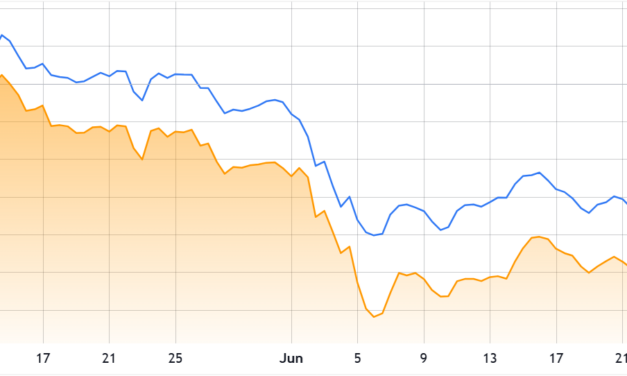
Key takeaways:A sharp fifty percent drop in exchange activity and decentralized application revenue is stalling Ether price growth.Institutional investor interest in Ether remains under pressure as major holders like Bitmine face billions in unrealized losses. Ether (ETH) has failed to sustain levels above $2,400 for the past three months, consistently lagging behind most of its peers. Ether’s down 21% in 2026, and investors have expressed uncertainty about the altcoin’s inability to mirror the broader market recovery.Total crypto market capitalization vs. ETH, USD. Source: TradingViewThe total cryptocurrency market capitalization is down 11% year-to-date, suggesting specific headwinds for Ether remain in play. A decline in decentralized applications (DApps) activity partially explains this fading interest. Regardless of whether this trend has affected the industry as a whole, the shift negatively affects ETH price formation.Ethereum DEX monthly volumes vs. DApps revenue, USD. Source: DefiLlamaDecentralized exchanges (DEX) volumes fell by 53% in six months, a sector largely responsible for Ethereum’s DApps activity. Consequently, these DApps experienced a 49% decline in revenue over the same period. While the sharp drop in memecoin prices and token launches contributed to reduced DEX appeal, other factors, including protocol hacks, also played a significant role.Multiple hacks had a negative impact on DApp activityThe cryptocurrency industry suffered $630 million in hacks in April, with KelpDAO and Drift Protocol accounting for 82% of the losses. Blockchain security company Hacken attributed the attacks to actors linked to the Democratic People’s Republic of Korea (DPRK). Aggregate crypto industry DEX activity dropped by 47% in three months.Blockchain DApps revenue market share. Source: DefiLlamaSome Ethereum competitors have opted for base layer scalability, providing less friction for regular users. While Ethereum remains the absolute leader in the aggregate ecosystem, including its layer-2 solutions, Solana and Hyperliquid account for a combined 42% market share in DApp revenue. Such data is even more impressive given that Ethereum’s total value locked is six times larger.Source: X/uttam_singhkUttam Singh, engineer at Alchemy, noted that part of the market incorrectly judged that Ethereum’s upcoming glamstedam hard fork would put rollups “in danger.” The upcoming network upgrade should result in a threefold increase in base-layer capacity and allow clients to pre-fetch block data, thereby enabling parallel transaction execution.Fierce blockchain competition, ETH whales underwaterRegardless of how straightforward Ethereum’s scaling plans are, most users and investors struggle to understand the need for layer-2 rollups once base-layer scalability reaches a certain threshold. There is also limited visibility on whether these changes will actually generate higher network fees, which ultimately act as a catalyst for higher staking yields.Related: Ethereum backers pledge up to 30,000 ETH to rsETH recovery after bridge incidentInstitutional investors’ perception of Ether has also been negatively impacted as Bitmine (BMNR US), the largest publicly listed holder of ETH, remains underwater in its corporate reserves. The company, led by chairman Tom Lee, spent $12.2 billion to acquire ETH, but its position is currently valued at $10.8 billion. While this does not pose an immediate sell-off risk, it reduces the asset’s institutional appeal.None of these factors is an absolute impediment for Ether price to reach $2,800. However, declining onchain activity, fierce competition in the DApps industry, and reduced institutional appeal continue to contribute to its underperformance relative to the broader crypto market.This article is produced in accordance with Cointelegraph’s Editorial Policy and is intended for informational purposes only. It does not constitute investment advice or recommendations. All investments and trades carry risk; readers are encouraged to conduct independent research.

Čítaj viac

Bitcoin holds $81K amid flat derivatives markets: Is the rally sustainable?

Key takeaways:While Bitcoin onchain activity and derivatives show a lack of participation from traders, record spot ETF inflows point to strong institutional demand.The absence of leveraged longs may actually fuel further upside as sellers are forced to buy back if Bitcoin edges higher.Bitcoin (BTC) gained 7% over the past week, breaking above $81,000 for the first time in over three months. Despite the strong price performance, data suggest that Bitcoin derivatives lack optimism from investors and this raises questions on the rally’s sustainability. Bitcoin derivatives fail to mirror investors’ joy over $81,000Macroeconomic and several onchain metrics point to softening demand.Bitcoin 2-month futures basis rate. Source: LaevitasBitcoin monthly futures traded at a 1% annualized premium (basis rate) relative to spot markets on Tuesday, landing well below the neutral threshold. Typically, sellers demand a 4% to 8% premium to compensate for the cost of capital. This cautious sentiment took hold in late January, when Bitcoin was trading at $90,000, partly explaining the current lack of enthusiasm.To confirm if the issue is limited to futures, one should assess the demand balance between put (sell) and call (buy) options. Under neutral conditions, these instruments trade within a -6% to +6% premium relative to each other. When professional traders fear downside risks, the delta skew metric moves above 6%.Bitcoin 30-day options delta skew (put-call) at Deribit. Source: LaevitasThe Bitcoin delta skew moved closer to the 6% neutral threshold on Tuesday, though it remained slightly bearish. Whales and market makers do not appear particularly worried about an imminent crash, but bulls’ conviction has clearly stagnated. With Brent crude oil prices hovering near $110, persistent inflation concerns are weighing on traders’ expectations for economic growth.US 5-year inflation expectation vs. Euro 10-year government bond yields. Source: TradingViewUS inflation expectations neared a 10-year high of 2.5%, according to data from the Federal Reserve Bank of Cleveland. Simultaneously, investors are demanding higher returns to hold Eurozone government bonds. Despite these inflationary pressures, the tech-heavy Nasdaq 100 Index surged to an all-time high on Tuesday, signaling a broader risk-on environment.Declining Bitcoin onchain activity faces heavy spot ETF accumulationBitcoin may have benefited from this increased risk appetite, but weak onchain metrics hints with declining retail demand.Bitcoin onchain daily volume (USD) vs. number of transfers. Source: Glassnode / CointelegraphDaily network transfer volume has plummeted 54% from three months ago, dropping to $4.1 billion. Similarly, the number of transfers is nearing its lowest level in over five years. While Bitcoin’s price action is not strictly dependent on onchain activity, these metrics serve as a proxy for general public interest and adoption.The temporary pause in Strategy’s (MSTR US) accumulation ahead of its earnings release may have sparked some unwarranted fear. The company, led by Michael Saylor, maintained an aggressive acquisition pace over the previous four weeks. However, analysts expect Strategy to report a quarterly net loss due to its mark-to-market Bitcoin accounting.Related: Bitcoin turns risk on as stocks hit new highs and miner profits rise: Is $85K BTC next?Macroeconomic weakness and declining onchain activity negatively impacted Bitcoin derivatives, but the $1.16 billion in net inflows into US-listed Bitcoin spot exchange-traded funds (ETFs) between Friday and Monday suggests rising institutional demand.Ultimately, the lack of demand for leveraged bullish positions in Bitcoin derivatives might serve as a catalyst for further upside. As prices climb, shorts (sellers) may be forced to close their positions at a loss, fueling additional momentum.This article is produced in accordance with Cointelegraph’s Editorial Policy and is intended for informational purposes only. It does not constitute investment advice or recommendations. All investments and trades carry risk; readers are encouraged to conduct independent research.

Čítaj viac

Bitcoin turns risk on as stocks hit new highs and miner profits rise: Is $85K BTC next?

Key takeaways:Improved Bitcoin mining profitability and massive ETF inflows have calmed investors’ fears that miner selling could cap BTC price.Bitcoin dominance hits its highest level since July 2025 as investor interest shifts away from struggling altcoin sectors.Bitcoin (BTC) surged to $80,000 for the first time in three months on Monday, triggering $270 million in liquidations across leveraged short (sell) futures contracts. This positive momentum for Bitcoin coincided with tech stocks jumping to an all-time high, signaling a broad risk-on environment. Currently, three key indicators point to further upside momentum for Bitcoin.Nasdaq 100 futures (left) vs Bitcoin/USD (right). Source: TradingViewBitcoin’s price action maintained a tight correlation with the tech-heavy Nasdaq 100 Index. Yet while the US stock market nears its highest-ever level, Bitcoin sits 36% below its $126,200 peak from October 2025.Bitcoin Hashprice Index by Luxor, USD. Source: HashrateIndexProfitability for Bitcoin miners has also improved. The expected daily return for 1 pentahash/second has climbed to $37, a high not seen since Jan. 30. This shift is crucial because the total hashrate has dropped 13% over the last quarter. Major publicly listed mining firms have recently liquidated their Bitcoin treasuries to reduce debt and support AI data center investments.Bitcoin miners, ETF flows and options demand back BTC’s momentumFor a time, traders feared that a decline in network hash power would spark additional sell pressure. Data from BGometrics shows miner reserves hitting 10-year lows and on Thursday, Riot Platforms (RIOT US) confirmed that it sold $250 million in Bitcoin last quarter. Fortunately, the recent jump in mining profitability is beginning to alleviate these structural concerns.Bitcoin market share, excluding stablecoins. Source: TradingView / CointelegraphBitcoin’s market share, excluding stablecoins, has jumped to its highest level since July 2025. This move reflects a declining demand for memecoins, governance tokens, and blockchain applications in general. Reduced interest in decentralized exchanges and numerous hacks within finance applications have also contributed to the negative sentiment surrounding altcoins.Combined assets under management for Bitcoin and Ether (ETH) exchange-traded products reached $147 billion, according to a CoinShares report from April 27. In comparison, similar products for Solana and XRP have failed to break above $3 billion each. Investors’ expectations for institutional demand for major altcoins proved too high, as BTC and ETH now account for 95% of that market.Related: Bitcoin short-term cost basis approaches profitability, but $80K must flip to support firstDeribit Bitcoin options premium put-to-call, USD. Source: LaevitasDemand for call (buy) option premiums exceeded that for equivalent put (sell) options on Monday by 24%. This data represents a major turnaround from levels seen during the weekend, when premiums paid for call options were 25% lower than those for put options. While it seems premature to conclude that traders are flipping bullish, the fear of an imminent price decline is no longer present.Friday’s strong $630 million net inflows into US-listed spot exchange-traded funds (ETFs) likely contributed to the improved sentiment. Regardless of the high correlation with tech stocks, Bitcoin’s path to $85,000 remains valid given the increased mining profitability, dominance versus altcoins and Bitcoin options data.This article is produced in accordance with Cointelegraph’s Editorial Policy and is intended for informational purposes only. It does not constitute investment advice or recommendations. All investments and trades carry risk; readers are encouraged to conduct independent research.

Čítaj viac

Bitcoin rally extends, yet BTC options price only 25% chance of $84K in May

Key takeaways:Bitcoin options markets price in low odds of BTC reaching $84,000 in May, while the monthly futures basis rate reflects weakness.Significant Bitcoin accumulation by listed companies and rising spot Bitcoin ETF inflows absorb mining supply, reducing the impact of potential selling.Bitcoin (BTC) reclaimed the $78,000 level amid broader risk-on sentiment, as the S&P 500 Index jumped to an all-time high on Friday. Despite 15% gains over the past 30 days, options markets are pricing in 25% odds that Bitcoin will trade above $84,000 by the end of May. Derivatives markets remain skeptical of further gains, although institutional spot demand remains solid.Bitcoin monthly options at Deribit. Source: DeribitBitcoin call (buy) options with a May 29 expiry and an $84,000 strike price traded at 0.0136 BTC, or $1,063. Considering there are 27 days left until expiry, the implied probability for Bitcoin price gaining 8% in May stood at 25%. Bitcoin put (sell) options have consistently traded at a premium over the past month, indicating heightened demand for downside price protection.Bitcoin options 30-day delta skew (put-call) at Deribit. Source: LaevitasThe delta skew measures the gap between put and call options, which usually ranges between -6% to +6% in balanced markets. When professional traders are unwilling to take downside price exposure, the indicator jumps above the 6% neutral threshold, a level that has been the norm for the past month. A similar trend has also been prevalent in BTC futures markets.Bitcoin 2-month futures basis rate. Source: LaevitasThe Bitcoin monthly futures basis rate usually trades at a 4% to 8% premium relative to regular spot markets to account for the cost of capital. However, this metric has displayed weakness over the past 30 days. The lack of demand for bullish leveraged positions can be partially explained by Bitcoin’s 12% decline year-to-date in 2026.Bitcoin accumulation by spot ETFs and listed companiesWhile derivatives traders show little confidence that Bitcoin will reach $84,000, US-listed spot Bitcoin exchange-traded funds (ETFs) tell a different story. These instruments accumulated $1.3 billion in net inflows during March and another $2 billion in April, driving total net assets above $100 billion. This metric is commonly used as a proxy for institutional investor demand.Related: Bitcoin’s surge to $77K pressures shorts, but absent spot and long leverage caps ralliesUS-listed spot Bitcoin ETFs monthly net flows, USD. Source: SoSoValueSimilarly, listed companies have added massive Bitcoin positions to their reserves over the last 30 days. These include 56,235 BTC from Strategy (MSTR US), 5,075 BTC from Metaplanet (3350 JP), and 929 BTC from Strive (ASST US). By acquiring more than the equivalent of five months of future Bitcoin mining supply, these companies greatly reduce potential sell pressure.The lack of demand for bullish Bitcoin derivative exposure does not invalidate the odds that the BTC price will reach $84,000 or higher by the end of May. As long as institutional appetite remains solid, the bullish momentum should continue.This article is produced in accordance with Cointelegraph’s Editorial Policy and is intended for informational purposes only. It does not constitute investment advice or recommendations. All investments and trades carry risk; readers are encouraged to conduct independent research.

Čítaj viac

Spot Bitcoin ETF outflows top $490M: Is BTC’s rally losing momentum?

Key takeaways:Spot Bitcoin ETFs saw $490 million in net outflows over three days, signaling a recent dip in institutional demand.Rising inflation is eroding real yields on fixed income, likely fueling long-term demand for scarce assets like BTC.Bitcoin (BTC) faced three consecutive days of outflows from US-listed spot exchange-traded funds (ETFs). The outflows coincided with a failed attempt to reclaim $78,000. Traders fear more downside, but heightened US inflation will likely act as a catalyst for further bullish momentum.US-listed Bitcoin spot ETFs daily net flows, USD. Source: SoSoValueThe US-listed spot Bitcoin ETFs saw $490 million net outflows between Monday and Wednesday, reversing the trend from the prior two weeks, which indicates a decline in institutional demand. Still, a longer-term perspective shows $3.3 billion net inflows since March.S&P 500 futures (left) vs. Bitcoin/USD (right). Source: TradingViewPart of the lack of confidence among traders can be attributed to the 14% year-to-date decline in Bitcoin’s price, while the S&P 500 soared to an all-time high. However, the tech sector came under scrutiny as quarterly earnings releases failed to impress investors. Meta (META US) faced a 9% correction on Thursday, while Microsoft (MSFT US) shares dropped 4%.Brent crude oil (left) vs. US 5-year Treasury yield (right). Source: TradingViewSince the war in Iran started in late February, oil prices have been a major driver for risk appetite. The latest Brent crude oil rally to $126 coincided with yields on the US 5-year Treasuries jumping to 4.02%, up from 3.51% two months prior. Traders demanded higher yields on government-backed bonds amid upward pressure on inflation, triggering risk-off sentiment.Higher inflation favors Bitcoin’s bullish momentumBitcoin’s lack of bullish momentum near $78,000 can also be pinned to worsening economic conditions. The US Commerce Department reported that gross domestic product grew at a 2% seasonally adjusted annualized rate in the first quarter, slightly below the 2.3% rate economists projected, according to CNN.Related: Most crypto investors believe Bitcoin is undervalued–Coinbase surveyStrategy (MSTR US) latest Bitcoin acquisitions. Source: StrategyStrategy, the company led by Executive Chairman Michael Saylor, announced the acquisition of 56,235 BTC in the first four weeks of April, driving its average cost to $75,537. Traders fear that the Bitcoin price could suffer if the Strategy accumulation pace does not hold up, even if only temporarily.US President Donald Trump’s family’s activities in the cryptocurrency market have also hurt the industry’s appeal. Three US Senators demanded an inquiry into Trump and his family’s profits from their cryptocurrency ventures.The risks of higher inflation and lower economic growth are unlikely to dissipate in the near term, but the mere three-day sequence of net outflows from Bitcoin ETFs should not be a source of concern. Ultimately, reduced returns on fixed income, when adjusted for inflation, will likely drive demand for scarce alternative assets. Thus, the Bitcoin path to $80,000 remains intact.This article is produced in accordance with Cointelegraph’s Editorial Policy and is intended for informational purposes only. It does not constitute investment advice or recommendations. All investments and trades carry risk; readers are encouraged to conduct independent research.

Čítaj viac

Získaj BONUS 8 € v Bitcoinoch

nakup bitcoin z karty

Registrácia Binance

Burza Binance

Aktuálne kurzy