Autor Cointelegraph By Marcel Pechman

SOL reclaims $72, but onchain data flags weakening momentum

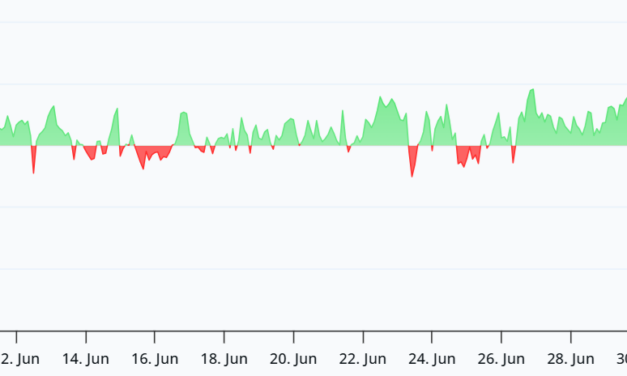
Key takeaways:SOL’s rebound to $72 shows bullish futures and airdrop hopes, but falling TVL and low DEX volumes point to fragile onchain demand.Tokenized stocks spark hype on Solana, yet Pump.fun dependence and Hyperliquid competition threaten sustained SOL momentum.Solana native token SOL jumped to $72 on Friday, distancing itself from the $64 lows the prior day. Part of traders’ optimism stemmed from the stellar growth of tokenized stock trading, fueled by the AI sector. However, increasing competition in decentralized application networks could limit SOL’s short-term upside.Solana tokenized stocks 24-hour volumes, USD. Source: Jupiter AggregatorTokenized stocks on Solana traded over $113 million in 24 hours, according to Jupiter Aggregator data. However, the relatively thin liquidity in the automated market-making pools raised concerns, especially as multiple issuers compete for similar products. Still, some of those tokens launched only recently, which might explain the low number of holders in most cases.Blockchains ranked by DeFi Total Value Locked (TVL), USD. Source: DefiLlamaThe Total Value Locked (TVL) on the Solana network dropped 11% over the past month, while the Ethereum layer-2 Base reduced the gap. Negative highlights on Solana TVL include a 19% decline in Kamino, a 20% trim by Binance Staked SOL, and a 17% decline in Raydium. The tokenization platform xStocks, on the other hand, posted 31% growth in TVL.Solana weekly DEX volumes & DApps revenue, USD. Source: DefiLlamaDecentralized exchange (DEX) volumes on Solana fell to $10 billion per week from $30 billion in early February, coinciding with a downtrend in decentralized application (DApp) revenues. Thus, regardless of the successful launch of tokenized tech stocks and equity indexes, demand for SOL on blockchain processing remains subdued.Solana’s dependence on Pump.fun and increased competition in tokenized launchesMore concerningly, 30% of DApp revenue on Solana came from the token launch platform Pump.fun, which depends heavily on memecoin activity. A CoinGecko report revealed that 80% of the 18.7 million tokens launched in less than 48 hours, while 55% of the addresses involved lost up to $1,000 according to Dune data.SOL perpetual futures annualized funding rate. Source: LaevitasDemand for bullish leverage on SOL futures increased on Friday, pushing the funding rate to its highest level in June. The current 10% level is far from displaying excessive confidence, as the 6% to 12% range is typically deemed neutral. Still, the 14% gains since the $64 low on Thursday managed to reverse the bearishness marked by negative funding rates.Related: Solana grabs 95% of tokenized equity as traders debate if SOL bottom is inPart of SOL investors’ optimism stems from anticipation of airdrops on the network, although the timing of those tokens’ launch remains uncertain. Highlights include OnRe reinsurance with $200 million in TVL, Bulk perpetual DEX with an aggregate open interest of $325 million, and Loopscale lending platform at $79 million in TVL.It might be premature to claim that SOL is bound to reclaim the $80 mark, last seen on June 1, given increased competition in tokenized stock trading from Hyperliquid and centralized exchanges on competing blockchains. OKX, for instance, formed a strategic partnership with the NYSE parent company using Ethereum-based systems.

Čítaj viac

ETH futures flash bearish signal, but stakers’ resilience points to underlying strength

Key takeaways:While bearish ETH futures trends and spot ETF outflows signal weak institutional appetite, staking demand prevents further decline.Falling exchange deposits and accumulation by BitMine indicate holder confidence in ETH’s long-term value.Ether (ETH) price failed to reclaim the $1,700 level over the past week, tracking a broader weakness across cryptocurrency markets. This correction contrasts sharply with the bullish momentum seen in the US stock market. Traders worry that Ether’s appeal has faded due to sluggish on-chain activity and a distinct lack of demand for bullish leveraged positions.ETH futures annualized funding rate. Source: LaevitasThe ETH perpetual futures annualized funding rate flipped negative on June 5, meaning shorts are paying premiums to keep their positions open. Bullish traders remain uncomfortable adding risk despite a 30% price correction over the past five weeks. The ETH futures aggregate open interest has also dropped significantly, indicating a pullback in institutional activity.ETH futures aggregate open interest on major exchanges, ETH. Source: CoinGlassTotal exposure on ETH futures has fallen 30% in a month, hitting a 13-month low. This shrinking institutional appetite is evident in US-listed Ether spot exchange-traded funds, which posted $323 million in net outflows over two weeks.ETH staking demands contrast with weak on-chain activityRegardless of whether the decline in ETH futures demand can be pinned to record-breaking demand for the SpaceX (SPCX US) IPO, the impact on trader sentiment remains negative. Declining Ethereum on-chain activity has likely fueled this ETH price downtrend.Ethereum Total Value Locked vs. weekly DApp revenue, USD. Source: DefiLlamaThe total value locked (TVL) on the Ethereum network dropped 33% in two months to $37.5 billion. Concurrently, decentralized application (DApp) revenues plunged 43% in May compared to the previous six months. This reduced on-chain volume is typically associated with lower network fee generation and falling ETH utility.Curiously, rising demand for Ethereum staking contrasts sharply with the bearishness in ETH derivatives. Staking approval for US-listed ETFs and aggressive accumulation by BitMine (BTMN US) vastly outpaced outflows during the period, despite a modest 2.7% yield.ETH staking validator queue, ETH. Source: ValidatorQueueThe entry queue for ETH staking validators currently sits at 50 days, totaling over 2.9 million ETH. In contrast, the exit queue has zero wait time, a major sign of strength, given that 39.5 million ETH are currently staked. While there is no guarantee that stakers will lock up their tokens forever, this metric signals deep confidence in Ethereum’s long-term prospects.Related: ETH futures traders lean into $1.6K range lows: Will Ether lead market recovery?ETH estimated balance on exchanges, ETH. Source: GlassnodeMeanwhile, exchange-held ETH deposits dropped to 15.05 million from 16.15 million three months ago, pointing to heavy accumulation. This shift was partly driven by BitMine, which added 337,078 ETH to its balance sheet over the past 30 days, according to CoinGecko data.Ultimately, weak demand for bullish ETH leverage shouldn’t be misread as a sign of rising downside risk. As long as staking metrics stay solid and spot ETF outflows remain reasonably contained, the odds of an ETH price crash to $1,500 look slim.

Čítaj viac

Big Tech crash, oil volatility rattles markets: Will Bitcoin hold above $60K?

Key takeaways:Surging oil prices and rising producer inflation have pushed traders to price in a stricter US Fed monetary policy.Massive spot Bitcoin ETF outflows in June show the cryptocurrency is currently failing to act as a stock market hedge.The Nasdaq 100 Index dropped 7.5% in the seven days leading up to June 10, wiping out $2.7 trillion in market value. The fallout represents more than twice the entire Bitcoin (BTC) market capitalization and has put traders on alert, especially as inflation data feels the heat from high oil prices. Traders now fear that Bitcoin support near $60,000 stands at risk.Nasdaq 100 futures (left) vs. Bitcoin/USD (right). Source: TradingViewThe ongoing war in Iran has driven Brent crude oil prices above $90, prompting investors to fear an economic slowdown and to price in a tighter monetary policy for longer than previously anticipated. Regardless of job market conditions, money available for consumption tends to decline.The US Labor Department reported Thursday that its producer price index jumped 6.5% from May 2025, the highest level since 2022. Traders now anticipate 40% odds of an interest rate increase by the US Fed by September, up from 5% one month prior, according to the CME FedWatch Tool.Bitcoin 2-month futures annualized basis rate. Source: LaevitasBitcoin futures contracts traded below the 4% neutral premium relative to regular spot markets on Thursday, indicating low demand for bullish leverage. Meanwhile, the upcoming $75 billion SpaceX (SPCX US) IPO was oversubscribed by more than 2x, signaling investors are not yet ready to abandon hope of further tech sector growth.AI infrastructure companies are in desperate need of cash to fuel their build-outs, which partially explains the negative market reaction. Google (GOOG US) announced plans to raise $80 billion, while Oracle (ORCL US) and Super Micro Computer (SMCI US) followed suit with $40 billion and $7 billion, respectively. The Friday debut of SpaceX shares will likely set the tone for upcoming IPOs.Selected AI sector stock performances. Source: TradingView & CointelegraphIt seems premature to deem the AI sector a bubble after SpaceX marked the largest IPO in history at a $1.77 trillion valuation. Moreover, the US stock market reacted positively after US President Donald Trump called off planned strikes on Iran, citing renewed negotiations to reopen the Strait of Hormuz.Strategy accumulation pause amid spot Bitcoin ETF outflowsBitcoin’s decline coincided with Strategy’s (MSTR US) decision to temporarily halt its Bitcoin accumulation to reduce convertible debt. As a result, Strategy’s cash position declined to seven months of dividend coverage, while its preferred variable Stretch (STRC US) shares distanced themselves from the $100 level that would allow further equity issuance.US-listed Bitcoin spot ETFs daily net flows, USD. Source: SoSoValueThe $1.9 billion in outflows from spot Bitcoin exchange-traded funds (ETFs) in June reinforced bearish sentiment, as the indicator serves as a proxy for institutional demand. Presently, Bitcoin can hardly be considered a hedge against an eventual stock market sell-off; the odds of a further correction below $60,000 should not be ruled out.

Čítaj viac

Bitcoin miner margins fall to record low: Will BTC’s $60K floor hold?

Key takeaways:Record-low Bitcoin mining margins and rising demand for AI infrastructure incentivize miners to reduce their BTC positions.Institutional spot Bitcoin flows vastly surpass miner output, making macro trends more vital than miner profits alone.Bitcoin’s price slide to $62,000 was paired with weak on-chain activity and declining BTC miner revenues, which have fallen to an all-time low. This revenue drop is fueling investor anxiety over potential sell pressure, especially since miners and mining pools still control over $110 billion in Bitcoin.1 TH/second of hashing power per day returns, USD. Source: Luxor Hashrate IndexThe estimated daily return for 1 terahash per second of hashing power plunged to an all-time low of $0.28 on Tuesday, down from $0.39 just a month ago. For context, the estimated monthly gross profit for an Antminer S21 XP Hydro (at an electricity cost of $0.07 per kilowatt-hour) has slid to $137, down from $192 last month. This profitability crunch arrives as demand for AI capacity and infrastructure investments surged, dampening market sentiment just as the crucial $60,000 support level was put to the test.Bitcoin miners’ 30-day net position change, BTC. Source: Glassnode StudioThe 14-day average net position change for Bitcoin held in miner and mining pool addresses flipped negative in early May and has remained negative since. Whether these liquidations are intended to fund ongoing operations, reduce debt leverage, or bankroll expansion into AI data center computing, the net effect remains a heavy drag on Bitcoin’s price discovery.Source: X/LightningNewsXThe high concentration of Bitcoin hashrate among the three largest mining pools is a frequent target of analyst criticism. The latest 7-day data show that Foundry USA, AntPool, and F2Pool control a combined 59% market share. In contrast, the top three Bitcoin mining pools held a combined 44% hashrate market share back in 2022. According to Bernstein analysts, the primary bottleneck for scaling AI data centers is access to electricity rather than chips. This constraint is prompting some Bitcoin miners to repurpose parts of their power infrastructure to support AI computing applications, a sector currently viewed as more stable and lucrative than traditional crypto mining.Source: X/Capriole InvestmentsAccording to Charles Edwards, founder of Capriole Investments, the Bitcoin mining production cost, including depreciation and amortization, stands at $62,650, while the absolute minimum to break even on electricity is $50,120. However, certain publicly listed companies leverage much more efficient ASIC models and industrial-scale energy contracts.American Bitcoin Corp (ABTC US) reported gross operational costs near $36,200 per Bitcoin mined in the first quarter of 2026. Ultimately, pinning down a single, industry-wide production cost is impossible, and some operations choose to mine at a loss for specific tax benefits. Even if these high-cost miners temporarily shut down, spot institutional flows now vastly surpass miners’ output.Related: Bitcoin may act as a ‘canary in the coal mine’ as risk-off pressure spreads–BitwiseBitcoin traded below its estimated production cost for more than six months in 2019 and again in 2023, based on Capriole Investments data. Whether the current market stagnation persists depends on investor risk perception amid broader macroeconomic uncertainty, rather than miner profitability alone.

Čítaj viac

ETH falls to 13-month low on Zcash bug news and Bitcoin drop to sub-$60K: Is $1.4K next?

Key takeaways:Ether derivatives metrics flip to a heavily bearish bias as cascading liquidations cut off a relief bounce. A critical ZCash bug discovered by AI triggers widespread fears of contagion, driving a contraction in Ethereum TVL.Ether (ETH) plummeted to a 13-month low of $1,540 on Friday, following the bearish trend across the broader cryptocurrency market. Traders now fear a deeper price correction, given weakness in ETH derivatives metrics and heightened risk after a bug was found in the Zcash blockchain.ETH perpetual futures annualized funding rate. Source: LaevitasThe Ether futures annualized funding rate flipped negative on Friday, indicating increased demand for short positions. Even with ETH trading 67% below its all-time high from August 2025, confidence among bulls has been shattered after $1.28 billion in leveraged longs were liquidated over 5 days.ETH options premium put-to-call ratio at Deribit. Source: LaevitasDemand for downside price protection surged as the Deribit ETH options put-to-call premium spiked to 3.7 times on Friday. The indicator has consistently shown excess demand for put (sell) options since Monday. Low conviction among holders fuels uncertainty, giving bears an easy path to take control.ETH price followed Zcash: Why?The severe decline in Ethereum network Total Value Locked (TVL) to its lowest since February 2024 has also negatively impacted trader sentiment. Smaller deposits in decentralized applications (DApps) tend to reduce ecosystem revenue, ultimately reducing demand for ETH use in smart contracts.Ethereum network DApps Total Value Locked, USD. Source: DefiLlamaSome of Ethereum’s top DApps experienced severe TVL contractions, including Spark (-50%), Ether.fi (-49%), EigenCloud (-41%), and KernelDAO (-39%). Part of the exodus from smart contracts can be attributed to a critical vulnerability allowing unlimited ZEC minting in the largest ZCash zero-knowledge pool. The bug was found on May 29 using the Opus 4.8 AI model from Anthropic.Given that the ZCash bug had existed since 2022 without anyone ever detecting it, traders fear that other blockchains and smart contracts could also be at risk. Advances in AI-driven security failure detection have put investors on high alert, especially after cryptocurrency hacks totaled $630 million in April.KelpDAO’s $293 million hack and Drift Protocol’s $280 million exploit accounted for 82% of the monthly losses across 25 protocols, triggering panic across the decentralized finance (DeFi) industry. The hacks occurred across multiple networks, including Ethereum, Solana, Base, BNB Chain, Sui and PulseChain.Percent of ETH supply in profit since they last moved. Source: GlassnodeCurrently, only 30% of the ETH supply is profitable relative to when those coins were last moved. This setup has occurred only a few times in history, with the most recent instance being the mid-March 2020 COVID crash. Prior to that, this strong buy signal also emerged in mid-December 2019, preceding a 118% rally within 60 days.Related: FG Nexus offloads additional $17.8M Ether as losses top $100MWith over $500 million in leveraged ETH long positions liquidated in 48 hours, there are no signs of a relief bounce. The largest Ethereum treasury firm, Bitmine (BMNR US), is sitting on an unprecedented $10.5 billion unrealized loss, as the company holds 4.5% of the entire ETH supply.ETH could slide further below $1,550 as investor confidence deteriorates following multiple hacks across the DeFi industry and the inflationary bug found in the shielded Zcash protocol.

Čítaj viac

Získaj BONUS 8 € v Bitcoinoch

nakup bitcoin z karty

Registrácia Binance

Burza Binance

Aktuálne kurzy