Autor Cointelegraph By Marcel Pechman

Bitcoin longs soar despite weak US macroeconomic data: Is $82K BTC next?

Key takeaways:Top traders boosted their Bitcoin long-to-short ratios, strengthening the $76,000 support floor.Macroeconomic pressures and persistent Bitcoin ETF outflows are capping immediate Bitcoin breakout potential to $82,000.Bitcoin (BTC) flirted with $78,000 on Thursday but failed to sustain its bullish momentum after a disappointing outlook from US retailer Walmart and growing signs of a more restrictive US monetary policy. Despite weakening macroeconomic conditions, professional Bitcoin traders increased their bullish exposure. Is a rally to $82,000 the next step?Top traders’ Bitcoin long-to-short position at Binance & OKX. Source: CoinGlassTop traders’ long-to-short ratio jumped to its highest level in 2 weeks, indicating growing confidence in the $76,000 support level. At Binance, the ratio remained near 8% favoring longs (buy) for three days, while traders at OKX reduced their shorts (sell) between Wednesday and Thursday. Still, in absolute terms, the long-to-short indicator remains neutral.Worsening economy and high oil prices prompt US rate hike fearsPart of this lack of confidence can be pinned to worsening economic growth perspectives. Walmart (WMT US) saw its shares decline 7% after issuing weak 2027 guidance due to persistently high oil prices. Walmart CFO John Furner said low-income consumers are “navigating financial distress.” The company acts as a proxy for US retail data due to its massive $178 billion quarterly sales.The prolonged war in Iran and the subsequent partial closure of the Strait of Hormuz have kept crude Brent oil prices sustained above $95 for the past month. The US Federal Reserve (Fed) has less room to maneuver due to this upward inflationary pressure. Traders are now anticipating interest rate hikes, marking a complete turnaround from the previous month’s expectations.FOMC interest rate target probabilities for Sept. 2026. Source: CME Group FedWatch ToolThe implied odds of interest rate hikes by September, based on government bond futures markets, have jumped to 37%, up from 0% one month prior. Thus, regardless of the strength of the S&P 500 Index, investors anticipate accelerated growth in the monetary base, as higher interest rates negatively affect the $39 trillion US government debt.Bitcoin/USD at Coinbase vs. Bitcoin/USDT at major exchanges. Source: TradingView / CointelegraphThe Bitcoin price at Coinbase traded at a 0.10% discount relative to Bitcoin prices at major exchanges quoted in USDT. This negative Coinbase Bitcoin premium is typically associated with weak institutional demand, which aligns with the $2.07 billion net outflows from US-listed Bitcoin spot exchange-traded funds (ETFs) since May 12.Related: Chance of new Bitcoin lows ‘extremely slim’ as long-term holders’ supply tops 15M BTCBitcoin perpetual futures annualized funding rate. Source: LaevitasThe Bitcoin perpetual futures funding rate has maintained neutral levels since Monday, reversing the trend from the prior week. The current 7% rate is far from being bullish, but it marks a complete turnaround from May 14 when shorts (sellers) paid 13% to keep their positions open.Given the uncertain perspectives for global economies, the odds of a sustained Bitcoin bull run to $82,000 in the near term appear low. Still, the reduction in top traders’ short positions and a balanced perpetual futures funding rate indicate that bulls are gradually building confidence in the $76,000 support level.

Čítaj viac

Solana futures funding rate turns negative: Is $78 SOL next?

Key takeaways:Solana perpetual futures funding rates flipped negative, signaling excess demand for bearish positions.Rival networks like Base and Hyperliquid pose direct threats to Solana by aggressively capturing DEX market volume.Solana’s native token SOL (SOL) faced a 15% correction following a rejection at $98 on May 11. A retest of the $83 level on Tuesday was followed by negative futures funding rates, indicating increased demand for short SOL positions. While declining network activity contributed to the price drop, competition among rival blockchain networks has picked up. SOL perpetual futures annualized funding rate. Source: LaevitasThe SOL perpetual futures funding rate stood at -3% on Tuesday, down considerably from the +8% on Saturday. During neutral market conditions, this indicator hovers near +9% to account for the cost of capital and exchange risk. Demand for bullish leverage has been largely absent since Saturday, when SOL price slipped below $90.Solana DEX activity has declined by 56% since JanuaryDeclining activity on Solana’s decentralized exchanges (DEXs) has reduced ecosystem revenue and demand for SOL. This reduced appetite for decentralized applications (DApps) was not exclusive to Solana, but growing competition poses a major threat, as investors fear that demand for memecoins has faded for good.Solana weekly DEX volumes, DApps revenue, USD. Source: DefiLlamaSolana DApp revenue stabilized near $20 million per week, down from an average of $35 million in January. This movement closely mirrors the network’s DEX activity trend, which currently stands at $11 billion per week, compared to January’s average of $25 billion. The 30-day DApp revenue leaders on Solana are Pump, Axiom Pro, Phantom, and Jupiter, which command a combined 65% market share.Blockchain ranked by weekly DApps revenue market share. Source: DefiLlamaSolana remained the top blockchain for DApp revenue despite intensifying competition. Hyperliquid created a direct threat due to its dominance in perpetual contracts, offering a high-throughput solution with core trading features built directly into the consensus layer. Meanwhile, the Ethereum layer-2 network Base offered seamless integration into the Coinbase ecosystem.In terms of total value locked (TVL), Solana secured second place with $5.9 billion, followed by BNB Chain at $5.5 billion and Base at $4.5 billion. DEX platforms and staking DApps like Jupiter, Kamino, Sanctum, and Raydium lead Solana’s TVL. Still, no blockchain threatens Ethereum’s $43.2 billion TVL, which relies heavily on collateralized lending and liquid staking.Potential spoofing activity on Solana network DAppsSolana’s footprint in the DApp industry cannot be understated, but the network’s low fees offer a perfect opportunity for maximal extractable value (MEV) botting and inflated activity.Related: Goldman Sachs exits XRP, Solana ETF exposure in Q1 2026Source: X/lukecannon727X user lukecannon727 noted that 1,600 addresses were reportedly responsible for nearly 63% of volumes on PreStocks, a synthetic asset trading platform that runs on the Solana network. According to the analysis, those entities presented balanced trading activity, high execution frequency, and small net losses. These findings are highly consistent with arbitrage activity, but they could also indicate volume spoofing.  Recent weakness in SOL prices can be partially attributed to the broader decline in DApp demand and increased competition, especially from Hyperliquid and Base. An eventual bull run seems highly dependent on a pickup in DEX activity, particularly in memecoin trading. But, at the same time, there is no indication that SOL should retest the $78 level last seen in early April.

Čítaj viac

Bitcoin lost its hold on $80K, but three events may send it back sooner than markets expect

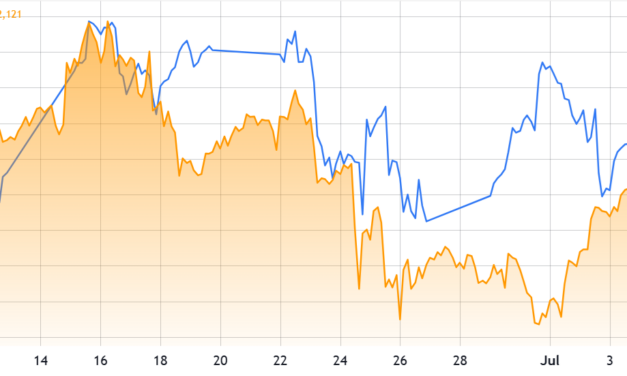
Key takeaways:Aggressive Bitcoin buying by Strategy helped to offset the recent leveraged long liquidations.Rising bond yields and a heavy US government debt burden are driving investors toward scarce assets.A potential deal between the US and Iran could quickly restore traders’ risk appetite.Bitcoin (BTC) faced a rejection following a failed attempt to break above $82,000 on Thursday. A subsequent retest of the $76,000 level on Monday triggered $400 million in liquidations for bullish Bitcoin positions over a four-day period. While traders’ confidence took a hit from the 7% price decline, the prospects for recovering the $80,000 mark remain valid.Bitcoin reserve accumulation by Strategy (MSTR US). Source: StrategyUS-listed Strategy (MSTR US) completed the acquisition of $2 billion in BTC over the past week alone. Spearheaded by Michael Saylor, the company continues to surprise investors by finding innovative ways to reduce the cost of capital and raise cash through equity issuance, whether via MSTR common stock or STRC preferred equity.More importantly, Strategy proved the company can also capitalize on a weaker market by repurchasing $1.5 billion of its debt due in 2029. Retiring some of its senior convertible notes reduces potential future dilution for current MSTR holders. This move clears the runway for new share issuance and additional Bitcoin purchases.S&P 500 index (left) vs. US 10-year Treasury yield (right). Source: TradingViewFrom a macroeconomic perspective, the odds of a sustainable bullish momentum for Bitcoin improved as traders demanded higher returns to hold government bonds. Yields on the 10-year Treasury jumped to 4.60%, hitting their highest level in 16 months. Investors are gradually realizing the heavy burden on the US Treasury, especially with $2 trillion in long-term debt maturing in 2026.US dollar weakness and a potential deal with IranThe US Federal Reserve will likely need to continue accumulating bonds and Treasurys, a move that potentially weakens the US dollar. Typically, investors seek shelter in scarce assets when they lose confidence in the central bank’s ability to navigate a crisis without devaluing the currency. Even if gold acts as the primary beneficiary, the incentive to hold fixed-income assets drops significantly.Gold/USD (left) vs. Bitcoin/USD (right). Source: TradingViewGold prices surged in January after the US captured Venezuelan President Nicolas Maduro and President Trump’s global trade war escalated. However, gold retraced most of those gains over the next four months, while Bitcoin built strong bullish momentum, jumping to $76,500 from $65,000 in late February. These recent price moves hint at growing confidence in Bitcoin as a reliable hedge instrument.Related: Analysts debate whether Bitcoin is in ‘sell in May’ bear market setupCrude Brent oil prices jumped to $113 on Monday as negotiations to fully reopen the Strait of Hormuz backpedaled. Oil prices have surged more than 50% since the US and Israel attacked Iran in late February. President Trump’s administration also decided not to renew a waiver for Russian crude oil, further squeezing supply, according to Yahoo Finance.A deal between the US and Iran, while not the baseline scenario, could trigger renewed risk appetite and catapult the Bitcoin price back above $80,000. Inflation has been pinned down by high energy prices, limiting the odds of expansionary monetary policies. Even so, the odds favor Bitcoin, as the US stock market is hovering near its all-time high while the cryptocurrency still sits 39% below its peak.

Čítaj viac

Bitcoin slides below $79K on macro fears: Can fixed-income outflows save it?

Bitcoin (BTC) faced a sharp contraction on Friday following a rejection at $82,000 the prior day. Recent price movements closely resembled the US small-capitalization stock index, hinting that macroeconomic factors are the leading drivers behind the nosedive below $79,000. The anxiety sparked a sell-off in fixed-income markets. Counterintuitively, this may help Bitcoin embark on a sustained bull run over the next few weeks. Key takeaways:High correlation with US small-cap stocks and absent bullish leverage demand leave Bitcoin vulnerable to broader macro risks.Fixed-income outflows could ultimately drive fresh liquidity back into Bitcoin in the medium term.Bitcoin loses $80,000 support amid high oil prices, recession risksThe US small-capitalization stock index excludes the 1,000 largest companies, avoiding the heavy concentration of tech stocks. More importantly, these stocks carry a higher risk due to smaller relative earnings and a lower financial capacity to survive worsening market conditions. Russell 2000 Index futures (left) vs Bitcoin/USD (right). Source: TradingViewMoreover, the cost of capital for smaller companies is often higher, making them more sensitive to interest rate trends.The strong correlation between Bitcoin and the Russell 2000 Index indicates that Bitcoin is not currently being valued as a hedge, but rather as a risk-on asset.Bitcoin perpetual futures annualized funding rate. Source: LaevitasThe Bitcoin perpetual futures funding rate flipped deeply negative on Thursday and remained near 0% on Friday. Demand for bullish leverage has been mostly absent, as the indicator has been below the neutral 6% threshold for the past couple of weeks. Multiple attempts to break above $82,000 were not enough to instill confidence, meaning traders remained skeptical of further price gains.Investors might have opted to reduce exposure ahead of the weekend, which is natural given the uncertainty regarding the prolonged war in Iran. There is an overall sense of increased risk as the stock market is just 5% below the peak dot-com bubble of January 2000, according to the 10-year S&P 500 inflation-adjusted Shiller price-to-earnings ratio.Shiller inflation-adjusted 10-year S&P 500 price-to-earnings ratio. Source: MultplGains in the tech sector drove the Nasdaq 100 Index to an all-time high on Thursday. However, the optimism cooled off on Friday after disappointing results from the US-China Summit in Beijing. No concrete deals on import tariffs have been announced, apart from promises to accelerate US farm goods exports “over the next three years,” according to The Guardian.Investors flee fixed-income investments, triggering short-term anxietyAdditionally, China’s foreign ministry reportedly said that the war in Iran “should never have happened” and “has no reason to continue.” Crude Brent oil prices jumped to $106 from $99 one week prior, piling further upward pressure on inflation. This move has caused investors to flee government bonds, as central banks will likely be forced to boost liquidity to avert an economic recession.Related: Bitcoin trades at a ‘discount’ on Coinbase: Is a $76K retest next?Japan 10-year government bond yield. Source: TradingViewYields on the 10-year government bond surged to their highest levels in over two decades. A similar movement occurred on Eurozone 10-year bond yields, which jumped to 3.18%, the highest mark in 15 years. Outflows from fixed-income investments will eventually seek gains elsewhere. Hence, the shaky economic conditions might ultimately benefit Bitcoin in the medium term.For now, Bitcoin’s short-term price weakness can be pinned to its high correlation with small-cap US stocks, a lack of demand for bullish BTC leveraged positions, the war in Iran and fear of an economic crisis.

Čítaj viac

Bitcoin trades at a 'discount' on Coinbase: Is a $76K retest next?

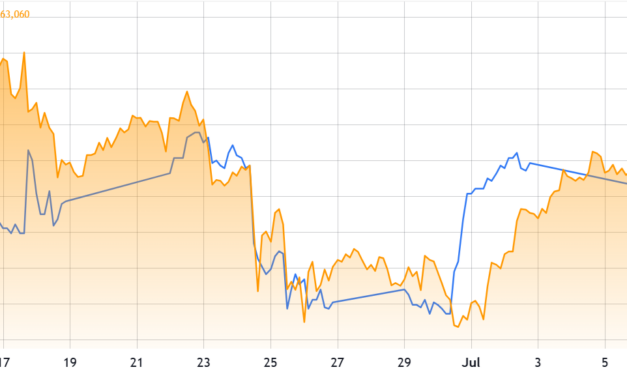
Key takeaways:The Coinbase Bitcoin discount likely stems from stablecoin outflows rather than actual institutional sell pressure.Strategy continues buying Bitcoin as the market holds firm despite minor price differences across exchanges.Bitcoin (BTC) showed resilience on Thursday by successfully defending the $79,000 level. However, some traders worry that upside momentum is stalling as Bitcoin on Coinbase trades at a discount relative to stablecoin pairs on international exchanges.Coinbase discount likely driven by stablecoin outflowsWhile the indicator is often debated, it potentially suggests a lack of institutional buying demand, though the situation is likely more complex.BTC/USD at Coinbase vs. BTC/USDT at major exchanges. Source: TradingView & CointelegraphBTC/USD on Coinbase has maintained a 0.03% discount against Binance, OKX, and Bybit over the past week. This gap represents a notable shift from the 0.04% premium seen in April. This change in market structure happened even as Strategy (MSTR US) purchased 51,364 BTC during a three-week window.Although a correlation exists between institutional activity and the Coinbase premium, stablecoin demand also impacts the metric. High volumes of traders moving from crypto back into fiat currency can cause stablecoins to devalue slightly against the dollar. Consequently, these assets do not always trade at parity, which can distort the perceived premium or discount on USD-based exchanges.USD stablecoin premium/discount relative to USD/CNY rate. Source: OKXMeasured in China’s Yuan, USD stablecoins are currently trading at a 0.6% discount against the official foreign exchange rate. This data signals heightened demand to exit cryptocurrency markets and is likely the main driver behind the Bitcoin discount on Coinbase compared to stablecoin-based pricing. Coinbase Bitcoin inflows not enough to justify a sell pressureEssentially, stablecoin prices remain volatile regardless of whether they are quoted in dollars or Yuan.Bitcoin 7-day average net transfer volumes at Coinbase, USD. Source: GlassnodeNet Bitcoin flows on the Coinbase exchange show average net deposits of $58 million per day. This figure is relatively modest and does not reflect the disparity with other markets. For comparison, average net daily Bitcoin withdrawals peaked at $275 million in April, yet the Coinbase premium failed to climb above 0.05% during that period.US-listed spot Bitcoin ETFs daily net flows, USD. Source: SoSoValueOutflows from US-listed Bitcoin exchange-traded funds (ETFs) have likely contributed to these net deposits at Coinbase. The $1.26 billion in net outflows recorded since May 7 aligns with the negative stablecoin premium seen against the Chinese Yuan. Furthermore, Bitcoin’s repeated failure to break above the $82,000 resistance level has dampened sentiment, making it difficult to isolate the primary cause of the fluctuating Coinbase premium metric.Related: Strategy stock beats Bitcoin after rising 25% in a month-BTC bottom in?A 5% Bitcoin price correction from the $82,840 peak on May 6 should not cause concern, especially as Strategy continues adding exposure through perpetual stock issues. More importantly, the Bitcoin/USD discount on Coinbase is not a reliable indicator of institutional appetite. Furthermore, Coinbase exchange flows reveal no anomalies or panic selling.Bitcoin’s strength above $81,000 on Thursday makes it evident that price differences between exchanges are not enough to dictate price trends. Ultimately, the odds of a $76,000 retest in the short term are low despite these technical distortions.

Čítaj viac

Získaj BONUS 8 € v Bitcoinoch

nakup bitcoin z karty

Registrácia Binance

Burza Binance

Aktuálne kurzy