Autor Cointelegraph By Marcel Deer

What is BNB auto-burn and how does it work?

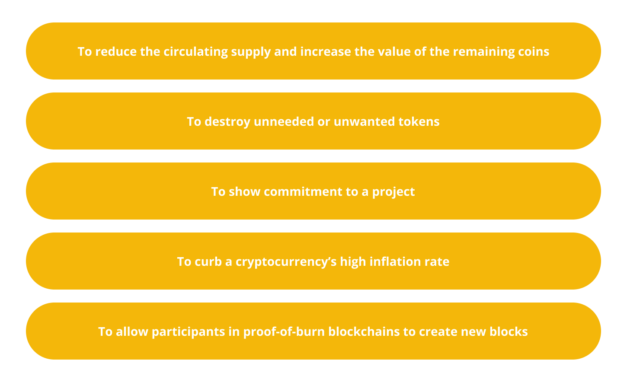
BNB and its role in the blockchain ecosystemBinance Coin (BNB) is the Binance ecosystem’s native cryptocurrency. Launched in 2017, BNB was originally presented as an ERC-20 token on the Ethereum blockchain with a total supply of 200 million. In 2019, Binance started its mainnet swap and migrated all BNB tokens to BNB Chain.Related: A beginner’s guide to the BNB Chain: The evolution of the Binance Smart ChainBNB Chain is composed of two blockchains, both powered by BNB:BNB Beacon Chain: Previously called Binance Chain, this blockchain handles BNB Chain governance functions such as voting and staking.BNB Smart Chain (BSC): Once known as the Binance Smart Chain, this blockchain uses the Ethereum Virtual Machine to support smart contracts and is fully compatible with Ethereum’s tools and decentralized apps (DApps).The native Binance Coin is now an essential part of the Binance ecosystem. It is used to power the operations of the Binance and Binance.US exchanges, including other applications built on the BNB Chain, such as:PancakeSwapBiswapApeSwapAutoshark FinanceAvarice Libera.FinancialNominex/NomiswapThe age of dinosaursDEX FinanceOpen LeverageThese are just a few of the many dApps built on the BNB blockchain. Binance also remains the largest cryptocurrency exchange by trading volume and is one of the most popular exchanges in the world.What is a coin burn?A coin burn is when a cryptocurrency project destroys some of its coins, often to reduce the circulating supply and increase the value of the remaining coins. The coins are sent to a dead crypto wallet with an unknown private key, which means that these coins can never be spent again.Coin burns are often conducted on a quarterly or semi-annual basis. Binance, for example, has committed to burning BNB coins every quarter until 100 million BNB are destroyed. This will leave a total supply of 100 million BNB — the maximum possible supply of BNB.Related: Buyback-and-burn: What does it mean in crypto?Blockchains and crypto protocols do periodic coin burns and token burns for a couple of reasons, including:How is BNB burned?There are coin-burning mechanisms by which BNB is burned, as explained below:Real-time burning mechanism (BEP-95)The first is the Binance Evolution Proposal (BEP)-95 burning mechanism. Through BEP-95, BNB is burned in real-time by burning a portion of the gas fees spent on BSC. Since the 2021 upgrade of the BNB Smart Chain, BEP-95 has continued to burn around 860 BNB daily.Binance CEO Changpeng Zhao implemented BEP-95 to accelerate BNB’s burn rate, which was going slower than planned. By burning part of the gas fees collected by each block’s validators, BEP-95 provides a constant stream of BNB to be burned.BEP-95 is completely reliant on the BSC network, so it will continue to burn BNB after the 100 million burn goal has been reached. BEP-95 burn progress can be tracked via the BNB Burns Tracker Bot on Twitter:Quarterly auto-burnThe second method is the scheduled quarterly burns conducted by Binance. In these burns, a specific amount of BNB is bought back from the open market and destroyed. The first burn was conducted in October 2017 and burned 986,000 BNB.The quarterly burns are conducted using Binance’s profits and are announced well in advance. The specific amount of BNB to be burned is based on several factors including overall profitability, BNB circulating supply and the number of blocks produced per quarter. As of the most recent burn in April 2022, a total of 1,839,786.261 BNB have been burned:What is BNB auto-burn?BNB auto-burn was created alongside the launch and rebranding of Binance Chain and Binance Smart Chain into BNB Chain. According to Binance, the auto-burn mechanism was designed to maximize the BNB token’s value and provide a sustainable and safe long-term growth plan for the BNB ecosystem.Binance used to do quarterly BNB burns based on the BNB trading volume on their exchange. However, quarterly burns were replaced by BNB auto-burn in December 2021.The auto-burns are still done quarterly, but they are no longer based solely on the trading volume on Binance. The BNB auto-burn mechanism is automated to adjust the quantity of BNB that will need to be burned depending on two factors:BNB priceNumber of blocks generated on BSC per quarterAccording to Binance, the new BNB burning mechanisms provide better transparency and are more predictable than the previous quarterly burn method. According to the Binance team, the new auto-burn mechanism will help stabilize the BNB price and protect it from large fluctuations.How does BNB auto-burn work?From a technical perspective, BNB auto-burn uses on-chain information from the BNB Smart Chain to calculate how much BNB should be burned. This is how the mechanism “adjusts” the burn amount.The burn amount is also influenced by supply and demand dynamics, which means that when the price of BNB declines, the burn rate increases. As previously mentioned, coin burns increase a cryptocurrency’s value.BNB auto-burn was designed to remain independent of BNB trading volume on Binance (which used to be its sole basis). This is to assure the BNB community that the process is verifiable, objective and transparent.The goal is to continue running auto-burn until the 100 million mark. It will do so automatically using the formula below:In the equation above, B represents the total amount of BNB to be burned and N represents the number of blocks produced on the BNB Smart Chain during the quarter. The average block time is 3 seconds, setting the approximate value of blocks produced per hour at 1,200 blocks. A standard computation would yield the value of N as approximately 2,592,000 blocks. The value may fluctuate depending on exactly how many days there are per month during a specific quarter.P is for BNB’s average price at the time. The average price fluctuates within a range of 10% to 20% per day, and the median value is determined by taking a sample based on an accepted oracle provider, such as ChainLink, for BSC. This is typically carried out every 10,000 blocks and takes around 8.3 hours to produce.K is initially set at 1000 and is a constant price anchor. Its value is subject to change and largely depends on BNB Smart Chain’s community. Members can submit a BEP proposal as well as cast a community vote to update this value.BNB quarterly burnThe older quarterly burn mechanism was updated to quarterly auto-burns. Auto-burn achieves the same objective but is more efficient and transparent. The chart below shows the anticipated quarterly BNB auto-Burn amount for a variety of BNB average prices:How to check BNB auto-burn history?BNB auto-burn history can be tracked. The website keeps a record of all previous burns including details of each burn:For example, if we click on the latest burn, Burn #19, we can see the following details:So, how much BNB has been burned till now? To date, the total BNB burned is 35,750,684.88. Per current price data, this is equivalent to $7,866,304,917.03. You can also follow real-time values and details about BNB burning events. When is the next BNB burn?The latest BNB Burn took place on April 19, 2022, destroying 1,830,382 BNB, or $772,363,806, via auto-burn. There is no specific date yet for the 20th burn, but it is expected to happen anytime between July 16-20, 2022.Typically, Binance CEO Changpeng Zhao announces BNB burn dates on Twitter, so it’s worth watching that space for updates on the next auto-burn.

Čítaj viac
What is a bull trap, and how to identify it?

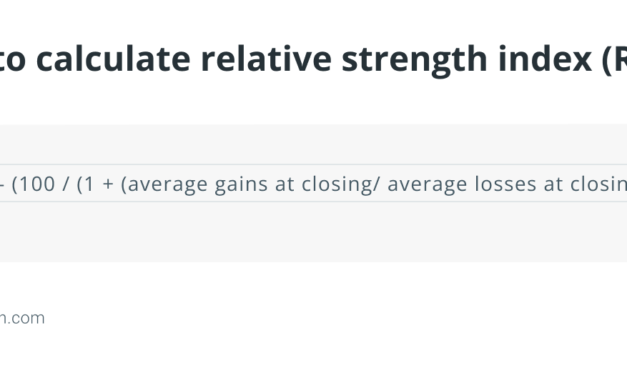
Here’s how to spot a bull trap with some tell-tale indicators that one is on the way: RSI divergence A high RSI might be an indication of a potential bull or bear trap. A relative strength index (RSI) calculation may be used to identify a possible bull or bear trap. The RSI is a technical indicator, which can help determine whether a stock or cryptocurrency asset is overbought, underbought or neither. The RSI follows this formula: The calculation generally covers 14-days, although it may also be applied to other timeframes. The period has no consequence in the calculation since it is removed in the formula. In the instance of a probable bull trap, a high RSI and overbought circumstances suggest that selling pressure is increasing. Traders are eager to pocket their gains and will most probably close out the trade at any moment. As a result, the first breakout and uptrend may not be an indication of continuing price rises. Lack of increase in volume When the market is truly breaking out to the upside, there should be a noticeable increase in volume because more people are buying the security as it rallies higher. If there is little or no increase in volume on the breakout, it’s a sign that there isn’t much interest in the security at that price and that the rally might not be sustainable. A price rise without a significant increase may also probably be due to bots and retail traders jockeying for position. Absence of momentum When a stock experiences a sharp drop or gap-down with enormous red candles but then rebounds very gently, it’s an indication of a bull trap. The natural tendency of the market is to move in cycles. When it reaches the top of a cycle, it is generally a period of consolidation as the bulls and bears battle it out for control. This lack of momentum can be considered an early warning sign that the market is due for a reversal. Lack of trend break A decline in price is indicated by a sequence of lower lows and lower highs. Trends in stock prices do not always change when advances are made. A downtrend is still intact as long as the price increase does not exceed the most recent lower high. Lack of confirmation is one of the most frequent mistakes made by those caught in bull traps. They should already suspect that if the present high does not surpass the previous high, then it is in a downtrend or a range. This is typically considered a “no man’s land,” one of the worst places to begin a purchase unless you have a good reason to do so. Although some traders may be disappointed by this, most are better off waiting for confirmation and buying at a higher price than attempting to “get in early” and be trapped. Re-testing of resistance level The first indication of an approaching bull trap is a powerful bullish momentum maintained for a long time, but which reacts swiftly to a particular resistance zone. When a stock has established itself as a strong uptrend with little bearish pressure, it implies that buyers are flooding in all of their resources. However, when they reach a resistance level they’re unwilling or afraid to breach, the price will typically reverse before going even higher. Suspiciously huge bullish candlestick In the last stage of the trap, a huge bullish candle usually takes up most of the immediate candlesticks to the left. This is generally a last-ditch effort by the bulls to take control of the market before the price reverses. It could also occur due to several other reasons: Big players are intentionally pushing the price higher to entice unsuspicious buyers. New investors are confident that a breakout has occurred, and begin purchasing again. Sellers intentionally let the buyers dominate the market for a short period, allowing sell limit orders above the resistance zone to be accepted. Formation of a range The final feature of a bull trap arrangement is that it creates a range-like pattern on the resistance level. The price of an asset is said to bounce back and forth amid a support and resistance level when it fluctuates within a range. Because the market might still be creating smaller, higher highs, this range may not be perfect, especially on the upper end. Yet the start of the bull trap is visible, as the huge candle previously stated forms and closes outside of this range.

Čítaj viac

How a DAO for a bank or financial institution will look like

DAOs can provide several services for banks, including asset management, compliance and lending. Banks today are already using blockchain technology for things like payment, clearing and settlement, trade finance, identity and syndicated loans, according to The Financial Times. However, there are still many unexplored areas in banking where a DAO-based model might be useful: Fundraising In the crypto world, initial coin offerings (ICOs) are breaking down the barrier between access to capital and traditional services like capital-raising firms. Likewise, banks can use DAOs to raise capital from a wider pool of investors via ICOs. Loans and Credit Using decentralized technology in banking can eliminate the need for gatekeepers in the lending industry. DAOs provide more secure ways for people to borrow money, not to mention lower interest rates and better terms. Trade Finance DAOs could also streamline trade finance by digitizing paper-based processes and automating manual tasks. This would make it easier for banks to keep track of their transactions, thereby reducing the risk of fraud and establishing trust among global trade parties. Securities A DAO can help banks issue, manage and trade securities, both digital and traditional. Through tokenization of traditional securities such as bonds, stocks, and other assets and placing them on blockchains, banks can facilitate the creation of capital markets that are interoperable, efficient and accessible to the greater public. Customer KYC and Fraud Prevention Since DAOs are transparent and decentralized, they offer a way for banks to verify the identity of their customers while preventing fraud. Using smart contracts, banks can automate customer onboarding and KYC processes. Blockchain technology also offers financial institutions an efficient and secure platform for sharing information with other firms.

Čítaj viac

Centralized vs. decentralized digital networks: Key differences

A decentralized digital network is not controlled by a central authority. Instead, control is distributed among its users. There is no single server or point of command. Rather, the network is run on a peer-to-peer basis, with each user wielding equal power and responsibility. A great example of a decentralized network is the internet, itself, which is not controlled by one authority. Rather, it is distributed among its users. However, some argue that the internet is moving toward centralization due to the monopoly of big names within the space—Google, Facebook, WordPress and the like. How so? Data is concentrated within these big players’ servers. As such, everything one needs to access online goes through any one of them. So to answer the question, “Is the internet centralized or decentralized?”  Technically, it’s decentralized, but the argument that it is slowly but surely becoming more centralized cannot be downplayed or understated. Another example is Bitcoin (BTC), the first cryptocurrency. Bitcoin’s network architecture was born after the Great Financial Crisis of 2007–2008. Briefly put, Bitcoin was launched as a decentralized network precisely because centralized institutions (banks, financial firms) “had failed the people.” The creator(s) of Bitcoin realized that if a single point of control or failure exists, the entire financial system is at risk. Therefore, they designed Bitcoin to be decentralized and distributed. No single entity or group controls it. Instead, it is managed by its users.

Čítaj viac

How to incorporate a DAO and issue tokens to be ready to raise money from VCs

What is a DAO?A DAO, or decentralized autonomous organization, is an online-based organization that exists and operates with no single leader or governing body. DAOs are run by code written on a blockchain like Ethereum (ETH) and are owned and operated by the people who use them.There are many different types of DAOs, but they all have one thing in common: they are decentralized, meaning that decisions about the organization’s future are decided by the collective group and not a single individual. This decentralization is what makes DAOs promising, as it theoretically removes the possibility of corruption or manipulation by a single entity. Smart contracts (and not people) execute the terms and conditions of the organization, making them incredibly efficient and resilient to change.How does a DAO work?A DAO is a collection of smart contracts that live on the Ethereum blockchain. These contracts interact with each other to form the organization. They are written in such a way that anyone in the world can use them.The code for a DAO is public, and anyone can view it to see how it works. This transparency is one of the key features of a DAO. Compared to traditional organizations, DAOs are much more efficient because there is no need for a middleman or central authority.Another key feature of a DAO is that it is autonomous, meaning that it can operate without human intervention. This is made possible by using smart contracts, which can automatically execute tasks according to the programmed rules.DAOs are self-governing and self-sustaining, meaning they can continue to exist and operate even if the original creators are no longer involved. This is another advantage of using smart contracts. They ensure the DAO continues to follow its original rules even if the people running it changes. Some of the most well-known DAO tokens and platforms are Uniswap (UNI), Aave (AAVE), Compound (COMP), Maker (MKR) and Curve DAO.Steps to raise money from VCs after incorporating a DAOWrite a white paperAfter incorporating your DAO, you will need to write a white paper. A white paper is an essential document that explains what your DAO is, what it does and how it works. It should be clear, concise and easy to understand. Your white paper will be used to convince potential investors to support your DAO, so it’s important to ensure it’s well-written and persuasive. To help you get started on writing your DAO’s white paper, check out our detailed guide here.Create a pitch deckIn addition to a white paper, you will also need to create a pitch deck. A pitch deck is a short presentation that gives an overview of your DAO and its purpose. Your pitch deck should be clear, visually appealing and easy to follow. It should also include information about your team, your progress to date and your plans for the future.Create a websiteThe next step in raising money for your DAO is to create a website. Your website should be professional and informative. It should include your white paper as well as any other relevant information about your DAO.It should also have a way for potential investors to get in touch with you. This could be through a contact form, an email address or a social media account.Reach out to VCsOnce you have created a white paper, pitch deck and website, you can start reaching out to venture capitalists, or VCs. When contacting VCs, it’s important to be clear about your objectives and what you are looking for. Some VCs may be interested in investing in your DAO if they believe in its mission. Others may be more interested in the financial return that investing in your DAO would give them. Related: Venture capital financing: A beginner’s guide to VC funding in the crypto spaceIt’s also important to remember that VCs are busy people. They receive hundreds of pitches every week, so you need to ensure that your pitch stands out.Negotiate termsOnce you have found a VC interested in investing in your DAO, you will need to negotiate the terms of the investment. This includes the amount of money the VC will invest, and the equity stake they will receive in return. It’s important to remember that you are in a strong position when negotiating with VCs. After all, they are the ones who are interested in investing in your DAO. As such, you should aim for terms favorable to you and your team. This includes getting a large equity stake and a high valuation for your DAO. Close the dealClosing the deal is an important step in raising money for your DAO. Once you have negotiated the terms of the investment, you will need to close the deal. This involves signing a contract with the VC, as well as receiving the agreed upon amount of money. It’s a good idea to have a lawyer review the contract before you sign it. Use the fundsOnce you have closed the deal and received the investment, you will need to use the money wisely. This means spending it in a way that will help your DAO achieve its objectives. Some of the things you could use the money for include hiring employees, marketing your DAO and developing new features.It’s also important to remember that you will need to report back to the VCs on how you are using the money. For this reason, ensure that your expenses and progress are all properly tracked.Pay back the VCsEventually, you will need to pay back the VCs. This could be through a sale of your company, an initial public offering (IPO) or another exit strategy. Paying back the VCs is an important step in the life cycle of a DAO. It is also a good way to show them you are committed to your business and have faith in its future.Related: What is an IPO? A beginner’s guide on how crypto firms can go publicCan DAOs replace VCs?Are DAOs a viable replacement for venture capitalists? The answer is that it depends. VCs typically invest in early-stage companies and help them grow through the provision of capital, mentorship and connections.DAOs can provide some of these same services, but they’re not well suited to invest in early-stage companies. This is because DAOs are decentralized and cannot make quick and decisive decisions.VCs, on the other hand, are centralized and can make quick decisions that help early-stage companies grow. So, while DAOs can provide some of the same services as VCs, they’re not a perfect replacement. A VC is probably a better choice if you’re looking for an organization to invest in early-stage companies.A hybrid future of DAOs and traditional VCsDAOs are a new and innovative way of organizing people and resources. While they can’t exactly replace traditional VCs, they can potentially disrupt the industry.We’ll likely see a future where DAOs and traditional VCs work together to support the growth of early-stage companies. For example, a DAO could provide the capital and resources while a VC provides the mentorship and connections.Such a hybrid model would allow early-stage companies to get the best of both worlds: the capital and resources they need to grow, and the mentorship and connections they need to succeed.VC DAOs already exist, proving that such a model is possible. One example is The LAO, a venture capital DAO. It focuses on early-stage blockchain projects based on Ethereum (ETH) and has funded over 30 projects so far. How it works is that governance remains a function of the blockchain while an external service provider takes care of the administrative and legal procedures.Another good example is MetaCartel Ventures, a private VC DAO and a spin-off of the Ethereum ecosystem grant fund, MetaCartel. The VC DAO arm is managed by a board of “mages,” who conduct functions like presenting investment proposals, due diligence and voting on proposals. They mainly fund early-stage decentralized applications and protocols at the moment.

Čítaj viac

Získaj BONUS 8 € v Bitcoinoch

nakup bitcoin z karty

Registrácia Binance

Burza Binance

Aktuálne kurzy