Autor Cointelegraph By Luke Huigsloot

Judge orders probe to investigate whether Celsius was a Ponzi

The judge overseeing the Celsius bankruptcy case has ordered the examiner and the official committee of Celsius creditors to determine who will head a probe into whether the firm was operating like a Ponzi scheme.The order during the Nov. 1 hearing comes in response to allegations from customers that Celsius had used assets of new users to pay yields and facilitate withdrawals to existing users, and as a result, fits the legal definition of a Ponzi scheme.The judge had approved the appointment of an independent examiner on Sep. 9 to look into aspects of Celsius’ business following calls for greater transparency into its operations, such as its tax payment procedures and why some customers were moved to different accounts.It is not the first time the embattled lender has been accused of operating like a Ponzi scheme, with decentralized finance (DeFi) protocol KeyFi having alleged that Celsius acts like one when it sued Celsius on Jul. 7.Celsius had filed for chapter 11 bankruptcy on Jul. 13, citing a crash in crypto values and poor asset deployment decisions, and the case has been proceeding through the court system since. In the Nov. 1 hearing, the Federal judge, Martin Glenn, also told Celsius that they would have to include more details in its Oct. 11 motion to pay nearly $3 million to 62 employees as part of a key employee retention plan (KERP), with Law360 quoting the judge as saying:“I was shocked when I saw the redactions. I had never seen anyone try to redact everything,”Glenn is referring to a section within the motion that outlines the participants of the bonus, where every detail relating to the individuals available to the public had been redacted, including their salaries and job descriptions. Related: Core Scientific may consider bankruptcy following uncertain financial condition: ReportThe U.S. Trustee had filed an objection on Oct. 27 to the KERP, taking issue with the lack of identifiable metrics within the motion to warrant such an expensive bonus scheme and that it prevented interested parties from arguing whether some participants could be considered insiders and therefore ineligible for a KERP.

Čítaj viac


MicroStrategy CEO reiterates 'long term' Bitcoin play in Q3 earnings

The third quarter earnings for business intelligence firm MicroStrategy revealed a narrowed net loss of $27.1 million for the quarter, while it continues to grow its Bitcoin (BTC) portfolio despite poor crypto market conditions.The world’s largest publicly traded corporate Bitcoin owner confirmed it still owns 130,000 BTC at the end of Q3 2022. That amount represents 0.62% of all Bitcoin that will ever be owned, which it says was acquired for a total cost of around $4 billion, or $30,639 per BTC.The company reported on Nov. 1 impairment charges for the quarter of $727,000, far less than the $917.8 million it recorded in the second quarter of 2022 or the $65 million for the same period last year, thanks to stable Bitcoin prices throughout the last quarter.An impairment charge is an accounting term used by businesses to describe a reduction in the value of held assets, and according to MicroStrategy, it had cumulative impairment losses of approximately $2 billion as of Sept. 30.In an earnings call MicroStrategy president and CEO, Phong Le reiterated the firm’s long-term hodling strategy, saying:“We have not sold any Bitcoin to date. To reiterate our strategy, we seek to acquire and hold Bitcoin for the long term. And we do not currently plan to engage in sales of Bitcoin. We have a long-term time horizon and the core business is not impacted by the near-term Bitcoin price fluctuations.”Michael Saylor, who stepped down from his position as CEO on Aug. 8 but remains with the company as an executive chairman, mentioned in the call that since embarking on its Bitcoin strategy on Aug. 11, 2020, the company’s share price was up 116% compared to Bitcoin’s 72% increase for the same period.In the accompanying earnings report, chief financial officer Andrew Yang gave a nod to the recent announcement from the United States Financial Accounting Standards Board’s decision to support “fair value accounting” for Bitcoin, noting:“If finally adopted and implemented, we believe fair value accounting will improve upon the current, unfavorable intangible accounting treatment applicable to Bitcoin holdings and will promote additional institutional adoption of Bitcoin as an asset class”MicroStrategy reported adjusted earnings per share losses of $0.96, compared to analyst estimates of a loss of $0.94, and its revenues of $125.4 million surpassed estimates by just 0.05%.Related: The Madeira Bitcoin adoption experiment takes flightThe firm’s revenues over the past year have reached $119.3 and $122.1 million respectively for Q1 and Q2. $16.4 million of its Q3 revenue came from its subscription services, which represents a 51% increase compared to the year prior in what is the fastest-growing source of revenue for MicroStrategy.

Čítaj viac

Celsius bankruptcy case Trustee slams $3M employee bonus motion

The U.S. Trustee overseeing the Celsius chapter 11 bankruptcy case, William Harrington, has objected to a Celsius motion that would see 62 of its 275 employees paid a retention bonus totaling $2.96 million.The Trustee has blasted Celsius in its supporting statement for the objection filed on Oct. 27, noting:“It defies logic, not to mention the Bankruptcy Code, that a company where the majority of its functions are no longer providing services, would now propose a multi-million dollar bonus scheme.”For the “bonus motion”, as it is aptly named, to receive approval, the Trustee claims that Celsius must show that the bonuses are reasonable based on the facts of the case. Without any identifiable metrics, the Trustee says Celsius has failed to do so.While the objection does not infer that Celsius employees are not deserving of an essential employee retention program (KERP), it points to the information provided by Celsius as being insufficient to justify such a high amount.KERPs are designed to motivate employees to advance a successful restructuring outcome. While adding to executive pay ahead of a potential restructuring may seem counterintuitive, it can often be in the best interest of stakeholders.Related: Quebec Pension Fund loses almost entirety of its Celsius investment in less than ten monthsUnlike the personal information of Celsius creditors, details of the KERP recipients have been kept out of the public eye, with an unredacted breakdown provided only to the court, the Official Committee of Unsecured Creditors, and the Trustee. The Trustee has taken issue with that as well, claiming other interested parties are unable to argue whether the participants could be considered insiders, which would render them ineligible for a KERP.Celsius had filed the bonus motion on Oct. 11, with a hearing on the proposal and related relief set to take place on Nov. 1.Meanwhile, the lender is also being blamed for causing financial distress at Bitcoin (BTC) miner Core Scientific, who claimed on Oct. 19 that Celsius has refused to pay its bills since it filed for chapter 11 bankruptcy on Jul. 13, resulting in Core Scientific losing approximately $53,000 per day.

Čítaj viac

CFTC commissioner compares crypto contagion risk to 2008 financial crisis

Commodity Futures Trading Commission’s (CFTC) Christy Goldsmith Romero has pointed to the collapse of the Terra ecosystem and its flow-on effects as an example of how contagion risks within crypto markets are similar to those experienced by the traditional financial (TradFi) system during the global financial crisis (GFC) of 2008. Romero suggested in a speech given at the International Swaps and Derivatives Association’s (ISDA) Crypto Forum on Oct. 26 that increased links between crypto markets and TradFi increases the risk posed by crypto to overall financial stability, noting:“The digital asset market remains relatively small and contained from the level of systemic risk that would come with greater scale or interconnections with the traditional financial system. But this may not be the case in the near future, particularly given growing interest by traditional finance.”One area of TradFi the commissioner would prefer to remain distant from crypto is retirement and pension funds, an opinion which has likely been influenced by recent events in the U.K. where pension fund issues required intervention from the Bank of England.I have significant concerns about the possibility of pensions and retirement funds investing in #Cryptocurency— Commissioner Christy Goldsmith Romero (@CFTCcgr) October 27, 2022While Romero cautions the U.S. not to rush regulations, she supports a “same risk, same regulatory outcome” approach as the level of risk posed by the crypto industry increases, suggesting:“Similar to post-crisis reforms, Congress can address financial stability risks by providing additional authority to the CFTC.”The GFC came about after banks began to lend recklessly to people without the means to fully pay back their mortgages. These ‘subprime’ mortgages were bundled together and sold as safe investment products before defaults started a ripple effect that spread across the world.Related: ‘Secretly circulating’ draft crypto bill could be a ‘boon’ to DeFiWhile the CFTC is often regarded as the more crypto-friendly regulator compared to the Securities and Exchange Commission (SEC), it appears to be attempting to change that image as part of its bid to gain more regulatory oversight after revealing it instigated 18 enforcement actions on the sector throughout the 2022 fiscal year.One of the more recent CFTC actions was the fine levied at the Ooki DAO and its members, which was heavily criticized by a CFTC commissioner and members of the crypto community, who referred to it as “blatant regulation by enforcement.” Before this action, decentralized autonomous organizations (DAOs) were regarded by many advocates as being “above the law”, and have resulted in the formation of legal entities within DAOs as a way to limit liability.

Čítaj viac

Asset management firm launches BTC Lightning Network startup accelerator

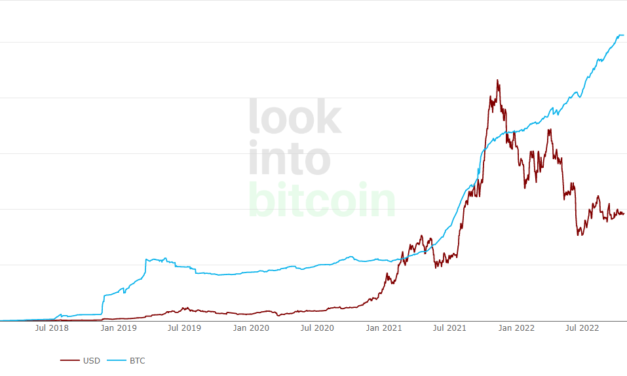
Asset management firm Stone Ridge, the parent company of Bitcoin company NYDIG, has launched the first startup accelerator that focuses on the Bitcoin Lightning Network and the Taro protocol, called In Wolf’s Clothing (Wolf). The accelerator consists of 8-week programs in which the best founders and startup teams from around the world will be brought to New York City, with accommodation and travel costs covered.The teams which apply and are accepted into the program will receive a guaranteed investment of $250,000.  One team will be chosen by a panel of judges to receive an additional $500,000 of funding during the demonstration day at the end of each program. The programs will occur four times per year, with the first now open to applications and set to kick off in April next year. Kelly Brewster, the CEO of Wolf, pointed to one-on-one mentorships and access to a range of specialists as additional benefits of the program.Working alongside experts from Wolf, Stone Ridge, NYDIG, and beyond, founders will get funding, one-on-one mentorship, and access to specialists in bitcoin, cryptography, regulation, engineering, branding, marketing, sales, and more.— Kelly Brewster (@kbbrewster) October 26, 2022Despite macroeconomic headwinds and a huge drop in the price of Bitcoin (BTC), the Lightning Network has continued to see rapid growth in its capacity over the last year, recently breaching the 5,000 BTC threshold after having only hit 4,000 BTC in June.Bitcoin Lightning Network capacity. Source lookintobitcoin.comRelated: CashApp adds support for Bitcoin Lightning NetworkThe Lightning Network is a layer-2 solution built on top of Bitcoin that allows users to send satoshis, the smallest amount of Bitcoin can be divided into, with greater speeds and lower fees.The Taro protocol is a Taproot-powered protocol designed by the Bitcoin software firm Lightning Labs, which allows assets issued on the Bitcoin blockchain to be transferred to the Bitcoin Lightning Network. In other words, Taro allows the Lightning network to become a multi-asset network with Bitcoin at its core.According to data from 1ml, at the time of writing the network’s capacity is currently sitting at 5,140 BTC, representing a 5.43% increase over the past month, and median transaction fees are well under 1 millionth of a cent per satoshi.

Čítaj viac

Získaj BONUS 8 € v Bitcoinoch

nakup bitcoin z karty

Registrácia Binance

Burza Binance

Aktuálne kurzy