Autor Cointelegraph By Luke Huigsloot

10,000 BTC moves off crypto wallet linked to Mt. Gox hack

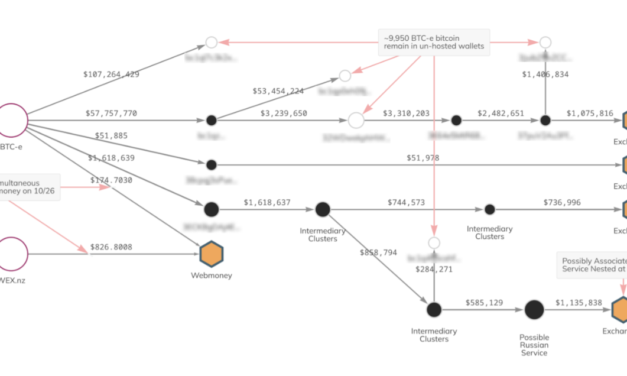
A crypto wallet belonging to the shutdown crypto exchange BTC-e has just moved 10,000 Bitcoin (BTC), currently worth over $165 million, to various exchanges, personal wallets, and other sources on Nov. 23.A Nov. 23 Chainalysis report suggested while this withdrawal is the largest made by BTC-e since April 2018, BTC-e and WEX — an exchange which is thought to be BTC-e’s successor — both sent small amounts of BTC to Russian electronic payments service Webmoney on Oct. 26 before making a test payment on Nov. 11, then transferring out a further 100 BTC on Nov. 21.The movement of BTC belonging to BTC-e and WEX wallets. Image: ChainalysisOf the total amount sent, 9,950 BTC is thought to still be located in personal wallets, while the rest was moved through intermediaries before ending up at four deposit addresses in two large exchanges.Blockchain analytics firm Cryptoquant co-founder and CEO, Ki Young Ju, also verified the findings noting 0.6% of the funds were sent to exchanges and may represent sell-side liquidity.In a Nov. 24 tweet, Young Ju shared images of the transfer highlighting the BTC had been in the wallet for over seven years.7-year-old 10,000 $BTC moved today.No surprise, it’s from criminals, like most of the old Bitcoins. It’s the BTC-e exchange wallet related to the 2014 Mt. Gox hack.They sent 65 BTC to @hitbtc a few hours ago, so it’s not a gov auction or something.https://t.co/6LnCxFAJfX https://t.co/YdPrvJafxY pic.twitter.com/Sp2higUqbq— Ki Young Ju (@ki_young_ju) November 24, 2022Young Ju also mentioned that 65 BTC had been transferred to the crypto exchange HitBTC and called on them to suspend the account for suspicious activity.Related: Crypto has survived worse than the fall of FTX: ChainalysisMt. Gox was a Tokyo-based cryptocurrency exchange that once accounted for more than 70% of Bitcoin transactions. In 2014, the exchange was hacked with thousands of Bitcoin stolen, the exchange filed for bankruptcy shortly after. BTC-e, which had its servers located in the United States, had its website shut down and funds seized by the Federal Bureau of Investigation (FBI) in 2017 after allegations that it was involved in money laundering, including crypto stolen during the Mt. Gox exchange hack.According to Chainalysis, at the time of its shutdown BTC-e still held “a substantial amount of Bitcoin,” and in April 2018 moved over 30,000 BTC out of its service wallet.While the owners of BTC-e attempted to remain anonymous, Alexander Vinnik is thought to be the main operator and has been embroiled in legal battles for the last five years as a result.A WizSecurity report released in 2017 alleged that BTC-e and Vinnik were directly involved in the theft of Mt. Gox Bitcoin and user funds, with the latter being forced to suspend trading and close its website after the losses.

Čítaj viac

Crypto has survived worse than the fall of FTX: Chainalysis

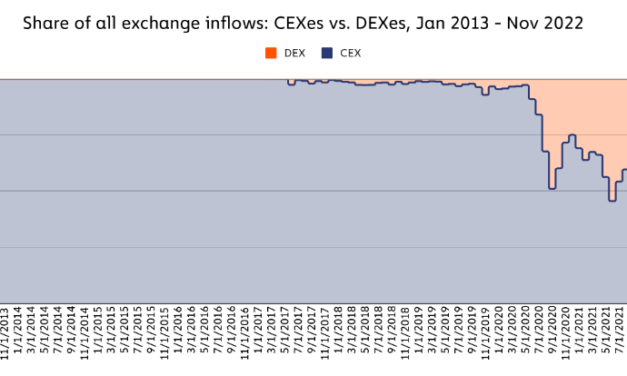
Blockchain analysis firm Chainalysis has compared the fall of Mt. Gox to FTX to determine how FTX’s bankruptcy will impact the ecosystem.It concluded that FTX was a relatively smaller part of the crypto industry than Mt. Gox was at the time and that the industry should bounce back stronger than ever.In a Nov. 23 Twitter thread, Chainalysis’ research lead Eric Jardine began his comparison by first looking at the market share of the two firms, finding that Mt. Gox averaged 46% of all exchange inflows in the year leading up to its collapse in 2014, compared to FTX’s average of 13%, which operated from 2019 to 2022.Jardine notes in 2014 when Mt. Gox collapsed, that centralized exchanges (CEXes) were the only players in the game, while in late 2022 nearly half of all exchange inflows were captured by decentralized exchanges (DEXes) such as Uniswap and Curve.Exchange inflows of CEXes compared to DEXes between 2013 to 2022. Source: ChainalysisJardine mentions, however, that FTX was slowly gaining in market share while Mt. Gox was seeing theirs steadily decline, and that business trajectories are worth considering, adding:“Mt. Gox was becoming one exchange among many during a period of growth for the category, taking a smaller share of a bigger pie. FTX on the other hand was taking a bigger share of a shrinking pie, beating out other exchanges even as its raw tx volume declined.”Despite this, Jardine concluded that Mt. Gox was a “linchpin of the CEX category at a time when CEXes dominated,” making it a bigger part of the crypto ecosystem at the time of its collapse than FTX was.Jardine then goes on to examine the recovery of the crypto industry after the fall of Mt. Gox and found that while on-chain transaction volume was stagnant for a year or so, activity soon picked back up.Related: Sam Bankman-Fried says he is ‘deeply sorry’ for collapse in letter to FTX teamIn Feb. 2014, Mt. Gox suspended trading, closed its website, and filed for bankruptcy protection after losing 850,000 Bitcoin (BTC) in a hack. Customers who had holdings deposited on the exchange have still not received their funds back, but the Mt. Gox Trustee announced on Oct. 6 that creditors have until Jan. 10, 2023, to select a repayment method for the 150,000 BTC reportedly in their possession.Monthly service inflows for crypto before and after Mt. Gox collapsed. Source: ChainalysisJardine believes that although there are other factors such as Sam Bankman-Fried’s large public presence, the “comparison should give the industry optimism,” as when it’s boiled down to market fundamentals, “There’s no reason to think the industry can’t bounce back from this, stronger than ever.”

Čítaj viac

Institutional investors are buying through crypto winter: Survey

A survey of institutional investors suggests that their cryptocurrency allocations have increased over the last year despite the industry going through a prolonged crypto winter.A Coinbase-sponsored survey released on Nov. 22 conducted between Sep. 21 and Oct. 27, found 62% of institutional investors invested in crypto had increased their allocations over the past 12 months.In comparison, only 12% had decreased their crypto exposure, indicating most institutional investors may be bullish on digital assets in the long term despite prices falling, according to the survey. More than half of the investors surveyed said they were currently, or planning, to use a buy-and-hold approach for cryptocurrencies, with the belief that crypto prices will stay flat and range bound over the next 12 months. Additionally, 58% of respondents said they expected to increase their portfolio’s allocation to crypto over the next three years, with nearly half “strongly agreeing” that crypto valuations will increase over the long term. As has been widely reported before, regulatory uncertainty was once again the factor most investors were concerned about when weighing up whether to invest in crypto, particularly among those planning to invest in the next 12 months where 64% noted concerns.The representative sample of the Coinbase survey consisted of 140 institutional investors based in the United States, who collectively have assets under management totaling around $2.6 trillion. The survey was conducted by business-to-business publisher Institutional Investor’s Custom Research Lab.Related: $138B investment manager Man Group to launch crypto hedge fund: ReportIn October, a survey of institutional investors by Fidelity Investments subsidiary, Fidelity Digital Assets, released on Oct. 27 had similar findings, and in an interview with Cointelegraph, Fidelity head of research Chris Kuiper noted:“They’re agnostic to some of this crazy volatility and price because they’re looking at it from a very long-term perspective. They’re looking over the next years, five years, decade or more.”It is worth noting that both these surveys were conducted prior to the collapse of FTX, which according to CoinShares has led to a record surge in short-investment products, while total assets under management of crypto institutional investors are now at $22 billion, the lowest in two years.CoinShares’ James Butterfill on Nov. 21 said the increase in short investments is likely “a direct result of the ongoing fallout from the FTX collapse.”

Čítaj viac

Core Scientific in 'substantial doubt' of continuing without more cash

Bitcoin (BTC) miner Core Scientific has warned of  “substantial doubt” they will be able to continue operations over the next 12 months given financial uncertainty.In its quarterly report filed with the United States Securities and Exchange Commission (SEC) on Nov. 22, the firm indicated it had accrued a net loss of $434.8 million over the third quarter of 2022.After net losses of $862 million in the second quarter, its total net losses for 2022 are sitting at $1.71 billion.The company suggested in order to continue its operations through to November 2023, it will require additional liquidity, adding that it anticipates its cash resources “will be depleted by the of 2022 or sooner.””Given the uncertainty regarding the Company’s financial condition, substantial doubt exists about the Company’s ability to continue as a going concern through November 2023.It said it also had doubts about its ability to raise funds through financing or capital markets citing “uncertainties and current market conditions” which have reduced the availability of those types of liquidity sources.Rising energy costs, the falling price of Bitcoin, and an increased hash rate were also cited as reasons for why it’s suffering a liquidity squeeze, adding that further “substantial doubt exists” with its ability to continue operating as its “very difficult to predict when or if Bitcoin prices will recover or energy costs will abate.”Core Scientific had previously indicated in an Oct. 26 SEC filing that a low Bitcoin price, the rising cost of electricity, and a refusal from bankrupt crypto lender Celsius to repay a $2.1 million loan could result in its cash resources being “depleted by the end of 2022 or sooner.”Core Scientific has taken steps to ease the financial stress it is under, including decreasing operating costs, reducing or delaying capital expenditures, and increasing hosting revenues.It has also decided not to make payments to some of the firms it has borrowed from and warns that it may be sued for nonpayment and face increases in interest rates as a result.Related: Turbulence for blockchain industry despite strong Bitcoin fundamentals: ReportCore Scientific is not the only crypto mining firm struggling to continue operating in the current market, with Argo Blockchain seeking to raise additional liquidity via subscription for ordinary shares and warning that it is also at risk of ceasing operations if it fails to do so.Australian mining firm, Iris Energy, is also showing signs of financial distress, revealing in a Nov. 21 filing to the SEC that it had unplugged hardware due to the units producing “insufficient cash flow.”The founder of asset manager Capriole Investments, Charles Edwards, has been particularly bearish about the state of Bitcoin mining and noted in a Nov. 22 tweet that this type of response is to be expected when the price of Bitcoin is below the cost of mining.Bitcoin miners are “unplugging their hardware” because “the units produce insufficient cashflow.”Iris Energy bankrupt. This is what happens when we spend time below the Bitcoin Electrical Cost. It no longer makes sense for many to run their mining rigs. pic.twitter.com/kjrC6j3KVf— Charles Edwards (@caprioleio) November 22, 2022

Čítaj viac

Nifty News: Celebs lose big on BAYC, Meghan and Harry building a metaverse, and more.

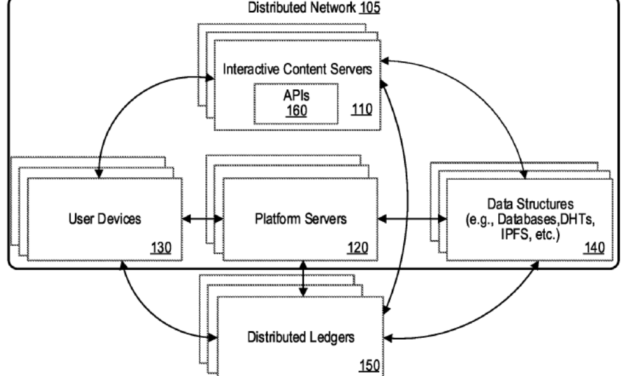
Celebrities facing huge losses from BAYC NFTsThe hype behind the Bored Ape Yacht Club (BAYC) over the last year resulted in many celebrities investing in the Ethereum-based nonfungible token (NFT) collection with many, such as singer Justin Bieber, paying top dollar.Bieber paid 500 Ether (ETH) for BAYC #3001 on Jan. 29, which at the time was valued at around $1.28 million, while the current top offer on the NFT cracks just over $69,500.According to data from NFT Price Floor, the floor price for the collection has fallen considerably since it peaked at 144.9 ETH on May. 1 this year, which at the time was worth around $396,760, to a current low of 48 ETH, valued at $58,589 at the time of writing.Many other celebs also rode the wave of hype that saw the Yuga Labs made NFTs become a “blue chip” collection, such as entrepreneur Gary Vee who still has a number of Bored Apes in his 2,400-strong NFT collection, and television host Jimmy Fallon, who bought BAYC #599 for $224,191 on Nov. 8 which has a current top offer of $70,264.It’s not all bad news for Bored Apes though, with BAYC #8633 having been bought from digital art collector Pransky for nearly $747,500 on Nov. 17 showing that there is still a huge demand for Bored Apes with some rare attributes.The Sussexes in talks for a ‘virtual world’Prince Harry and Meghan Markle are “in advanced talks” with pax.world — a platform allowing users to create their own metaverse, according to a Nov. 15 Mirror article.Sources allege that Markle is the driving force behind the plan, as a result, the Metaverse has cleverly been dubbed the “Meg-averse.”The former working royals are thought to be looking for new ways to connect with their fans and see their purported Metaverse as a way “to take their brand fully global.”.According to pax.world founder Frank Fitzgerald, the Metaverse is perfect for the “progressive, tech-savvy” audience the pair are looking to connect with as they build upon their brand, saying the platform is offering the couple “a plot of prime pax.world land.”Adidas Originals unveil ‘virtual gear’ collectionAdidas released an Ethereum based NFT collection called the “Genesis collection,” on Nov. 16 featuring a set of wearables designed to be worn by virtual avatars.INTRODUCING ADIDAS VIRTUAL GEARUnveiling the genesis collection of adidas Virtual Gear 1/6 pic.twitter.com/FUt9Qhj8VO— adidas Originals (@adidasoriginals) November 16, 2022Calling the new product “Virtual Gear,” the sportswear giant has labeled the collection as a “new, interoperable product category,” adding:“[It] accelerates our collective drive towards strengthening web3, and the adidas community-based, member-first, open metaverse pledge”Building on Adidas’ partnership with BAYC, Mutant Ape Yacht Club and Inhabitants, the 16-piece collection will also allow users who own a wearable Adidas NFT and a participating partner’s NFT to “dress up” that NFT with their Adidas virtual wearable.Owners of the Adidas Originals: Capsule NFT Collection, which launched in May will be able to burn their capsule NFT and have it replaced with a random NFT from the new collection.Commenting on the collection, the Senior VP of Creative Direction for Adidas Originals Nic Galway said Web3 offers new opportunities for its designers and collaborators and adds a “level of utility that can be explored and even discovered as worlds and avatars take new forms.”Sony’s NFT gaming patentIn a patent applied for in May 2021 and made public on Nov. 10, technology conglomerate Sony has revealed its intent to incorporate blockchain technology into its games.The patent shows the company aims to track in-game assets using blockchain technology and NFTs,  including a series of diagrams showing how it would do this.One of the diagrams showing how Sony envisages its tracking system to work. Image: WIPOWhile the filing is just a patent at this time, it may indicate the entertainment behemoth is interested in joining the growing NFT gaming market.Sony has already dipped its foot into NFTs, after partnering with Theta Labs in May to launch a collection of 3D NFTs viewable on its Spatial Reality Display, that allows visualization of 3D models.More Nifty News:Crypto has been front and center at Abu Dhabi Grand Prix, with Red Bull Racing featuring NFTs on both the cars of the Red Bull Racing’s driving team following a deal struck with crypto exchange Bybit.The creator of the BAYC, Yuga Labs, acquired Beeple’s browser-based NFT game on Nov. 15. The game allows players to outfit heroes with crafted loadouts and items to complete missions, and Yuga Labs have hinted that it could be merged into their Otherside metaverse ecosystem.

Čítaj viac

Získaj BONUS 8 € v Bitcoinoch

nakup bitcoin z karty

Registrácia Binance

Burza Binance

Aktuálne kurzy