Autor Cointelegraph By Keira Wright

Meta-Marriage: Decentraland hosts first Metaverse wedding

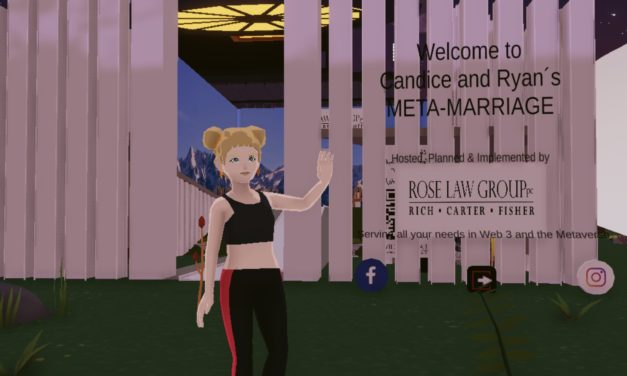
A Phoenix couple tied the knot with their digital identities this weekend in the first marriage to take place in the Metaverse. The wedding ceremony took place in Decentraland, complete with witnesses, Supreme Court Justice officiant Clint Bolick, and a virtual crowd of 2,000 guests on Feb. 5.The bride and groom, Ryan and Candice Hurley hired Rose Law Group to legally formalize the marriage. The group’s Founder and President Jordan Rose claims it was the first-ever wedding hosted on any blockchain-based Metaverse. That much anticipated wedding @decentraland @decentraspots @DCL_Events @peopleofdcl @Decentralovers @DCLDating @WearablesDCL @roselawgroup Congrats Ryan and Candice!!! pic.twitter.com/RA7oG9Qmcq— Kanard Azul (@KanardAzul) February 5, 2022“Because the metaverse is still in its infancy, we have developed the legal paradigm for a legally recognized marriage,” she told Cointelegraph. The wedding ceremony was held on Rose Law Group’s estate on Decentraland. The law group developed a “meta-marriage framework,” by incorporating a “Virtual Premarital Agreement,” which identified the couple’s virtual identities and digital assets as recorded on the blockchain. Meanwhile, a “Meta-Marriage License” identified, recorded, and tokenized the couple’s virtual identities and place of marriage on the blockchain as an NFT. Rose explained:“There currently is no legal framework for marriage in the Metaverse, so whether or not it will be legally binding is more a question of contract.”“Unlike the real world, the metaverse isn’t limited by physical constraints that restrict your perfect wedding. Only in the Metaverse can your wildest, most imaginative dream wedding be a reality,” stated the event description on Decentraland. Rose added:“We see the future of the metaverse as being truly decentralized and existing almost completely on the blockchain, so the future of marriage in the metaverse will not need to have a record of their marriage in the real world.”Although the couple seemingly envisioned a wedding of the future, they were met with some rather archaic technical issues. Decentraland struggled to handle the number of guests in attendance, and the NFT gifts for attendees were quickly claimed only about twenty minutes into the event. Even more, Ryan’s avatar was left at the aisle as Candice’s failed to make a digital appearance — but only for some guests. Depending on which server attendees had been split into, the bride was wearing a dress, a hoodie, or wasn’t there at all. After struggling to make the ceremony work on Decentraland, one attendee instructed the guests to head to Rose Law Group’s Instagram, where the real-world couple was sealing their vows via a livestream. Despite Rose’s assurances about the legality of the wedding, it appears that many legal experts remain unconvinced. According to the American Marriage Ministries, people must appear as their real-life selves during a legal wedding ceremony, not as their digital counterparts. Furthermore, most states in the U.S. don’t even allow a couple to be wed by an officiant remotely via a video conference, or if the couple is in separate locations at the time of the ceremony. The Hurleys married in the “real world” 14 years ago after meeting on the dating portal Match.com. Related: Couple gets married on Ethereum blockchain for $587 in transaction feesAlthough the wedding is a first of its kind in many ways, it’s certainly not the only instance of a couple wanting to immortalize their marriage on the blockchain. In April 2021, a Californian couple who work at crypto exchange Coinbase wrote an Ethereum smart contract to issue tokenized “rings” as NFTs during their wedding. In 2014, the Disney World Bitcoin Conference hosted the first blockchain wedding, recording the following message on-chain “for better or worse, ’til death do us part because the blockchain is forever.”

Čítaj viac
Aussie competition watchdog investigating Meta over crypto scam ads

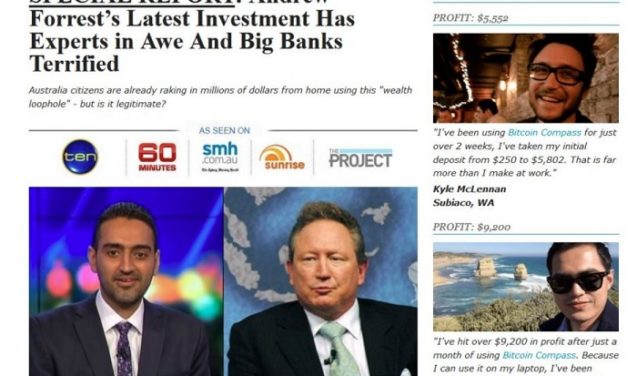
Australia’s consumer and competition (ACCC) watchdog is investigating Facebook’s parent company Meta for a long running series of fraudulent cryptocurrency advertisements of the platform. The news comes just a day after Cointelegraph reported that billionaire businessman Andrew “Twiggy” Forrest was pursuing criminal action against the social media giant for allegedly serving users crypto scam ads and fake articles which used his name and likeness. Numerous other high profile celebrities from Hugh Jackman to Nicole Kidman have been fraudulently employed to draw users into investment scams.The ACCC alleges that Meta allowed the crypto scammers to breach Australian consumer law, defrauding victims hundreds of thousands of dollars. In Feb 3 comments to The Australian, ACCC chair Rod Sims said that although their investigation shares similarities with Forrest’s case, the “ACCC’s investigation is separate and concerns different questions of law.”While Forrest’s case concerns potential breaches of Australia’s Commonwealth Criminal Code, the ACCC will be examining whether Meta has “raised concerns” under the Australia Consumer Law. “Like Dr Forrest, we consider that Meta should be doing more to detect, prevent and remove false or misleading advertisements from the Facebook platform so that consumers are not misled and scammers are prevented from reaching potential victims.”Forrest claims that by failing to take sufficient steps to eliminate the scam from being shared on its platform, Meta is not only in breach of Australia’s money-laundering laws, but also behaved in a “criminally reckless” manner. He will initially bring his case to the West Australia Magistrates Court on March 28, with a committal hearing expected later in the year.He also launched a simultaneous civil proceeding with the Superior Court of California last September, seeking injunctive relief. The case is still pending, with the date of the civil case yet to be set.In 2020, the Australian Securities and Investments Commission (ASIC) issued a warning on fake celebrity-endorsed crypto ads, including Jackman, Kidman and even Waleed Aly.Other celebrities including Elon Musk, Bill Gates and Richard Branson have also had their images stolen to front crypto scams.Australian Facebook users have reported losing hundreds of thousands to the scam, including one alleged victim who told The Australian that they thought the scam was legitimate because it featured Forrest.“Andrew Forrest is an icon for millions of Australians and you hold him in high regard, anything involving him you‘d think is legitimate because it’s coming out in public through Facebook,” they said. Related: Aussie billionaire sues Facebook over crypto scams with AG’s consentIn 2019, Forrest was among several Australian celebrities, including Kate Winslet, who were falsely quoted as giving testimony for a fraudulent cryptocurrency. One version of the scam quoted the celebs in fake mainstream news articles advertising a fake Bitcoin investment platform.As reported by Cointelegraph in Aug 2021, investment scams cost Australian investors more than $50.5 million in the first six months of 2021, with crypto scams contributing to more than 50% of the losses.

Čítaj viac

Fed and MIT's CBDC research: Distributed Ledger tech has ‘downsides’

Theoretical research into a Central Bank Digital Currency (CBDC) in the U.S. has found that distributed ledger architecture has “downsides.” The Federal Reserve Bank of Boston and the Digital Currency Initiative at the Massachusetts Institute of Technology published their findings of their initial research into a CBDC on Feb 3. The research project, dubbed “Project Hamilton,” tested a “hypothetical general purpose CBDC” using two potential models. The first one processed transactions through “ordering server” distributed ledger technology (DLT), which organized the validated transactions into blocks to create an ordered transaction history. The researchers were able to use this architecture to complete over 99% of transactions in under two seconds and the majority of transactions in under 0.7 seconds.However, the ordering server resulted in a number of issues due to being run under the control of a single actor, the researchers concluding that “a distributed ledger architecture has downsides. ““For example, it creates performance bottlenecks, and requires the central transaction processor to maintain transaction history, which one of our designs does not, resulting in significantly improved transaction throughput scalability properties.”They added that despite using ideas from blockchain technology, a “distributed ledger operating under the jurisdiction of different actors was not needed.”The second architecture processed transactions in parallel on multiple computers, rather than relying on a single ordering server to prevent double spends. The researchers wrote that although “this results in superior scalability,” it did not “materialize an ordered history for all transactions.”It demonstrated throughput of 1.7 million transactions per second with 99% of transactions durably completing in under a second, and the majority of transactions completing in under half a second. Related: Fed issues discussion paper on benefits and risks of a digital dollarProject Hamilton was first announced in 2020 to explore the use of existing and new technologies to build and test a hypothetical digital currency platform. The code is the first contribution to OpenCBDC, a project maintained by MIT which will serve as a platform for further CBDC research. Boston Fed Executive Vice President and Interim Chief Operating Officer Jim Cunha said that the project illustrates that it is “critical” for change makers to not only understand how emerging technologies could support a potential CBDC, but also what challenges remain. “This collaboration between MIT and our technologists has created a scalable CBDC research model that allows us to learn more about these technologies and the choices that should be considered when designing a CBDC.”The director of the Digital Currency Initiative at MIT Neha Narula said that “there are still many remaining challenges in determining whether or how to adopt a central bank payment system for the United States.”

Čítaj viac

Grammy-winner John Legend launches new music and art NFT platform

American singer-songwriter John Legend is solidifying his position among the ranks of celebrities flocking to the world of nonfungible tokens (NFTs), helping to launch a new NFT platform for musicians and other entertainers. The platform called OurSong allows artists to tokenize and sell their work, awarding buyers with privileges like access to unreleased music and private chatrooms. “Everyone can now turn stories, music, photography, and any kind of art into NFT trading cards called Vibes,” the platform states. “Vibes allow you to unlock exclusive updates and access private chat communities where you can meet like-minded others.”Legend will act as Chief Impact Officer, tasked with attracting up-and-coming artists and their fan bases. In an interview with Bloomberg, Legend said that although he spends most of his mental energy thinking about music, he hopes the platform will help to connect people. “When I think about what I want to do, I try to get involved with projects that I think will make the world more connected.”Well known names attached to the project, including the cofounder of digital music streaming service KKBOX, Chris Lin, who will serve as the new company’s CEO. Cofounder of the live video streaming platform Twitch, Kevin Lin, and founder of early-stage venture capital firm Cherubic Ventures, Matt Cheng, will also be joining the team.According to Lin, the platform won’t require users to have a crypto wallet. According to the Terms of Service you can only buy Vibes with OurSongDollars (OSD). “You can deposit OSD in OurSong by purchasing it with credit card, debit card, wire payment, or USD Coin deposited in your wallet on Circle’s blockchain,” it states.The musician and his co-founders didn’t provide any additional financial details about the project. This isn’t Legend’s first foray in the world of NFTs. In May 2021, Legend was announced as a partner of the “OneOf” NFT platform among the likes of Doja Cat and Whitney Houston. Related: The Metaverse will change the live music experience, but will it be decentralized?He isn’t the first celebrity to dip his toes in the world of NFTs and cryptocurrency either, although most celebrities opt to mint their own collection rather than creating an entire platform. One notable exception is the Super Bowl champion Tom Brady, who launched a sports-focused NFT platform called “Autograph” in April 2021. Although many big names are keen to get involved in the space — such as Paris Hilton, who recently announced she would be dropping her first NFT collection with Superplastic — others aren’t so impressed. Most recently, Kanye West dragged the NFT world in an Instagram post, writing ““Do not ask me to do a f*cking NFT.”

Čítaj viac

Aussie billionaire sues Facebook over crypto scams with AG's consent

Australian billionaire Andrew “Twiggy” Forrest is taking Facebook to court over scammy cryptocurrency ads that he alleges used his name to defraud victims.The Fortescue Metals chairman is accusing Facebook of breaching Australia’s money-laundering laws, claiming that it “knowingly profits from this cycle of illegal ads” that it failed to remove. An initial court hearing in the Western Australian Magistrates court is scheduled for Mar. 28, with a committal hearing expected later in 2022. Forrest is bringing forward the charges under Part 10 of the Commonwealth Criminal Code, with the consent of the Attorney-General Michaelia Cash.According to the filings, one Australian victim lost $952,000 AUD after falling for the scam. The court documents stated that the scam “defrauded victims out of millions of dollars.”“These scenarios played out in the underlying scam which used Dr Forrest’s name, likeness, and reputation to find victims, who often reported being swindled after believing Dr Forrest was actually endorsing the investment scheme.” Forrest’s lawyers said that although they do “not know the precise number or identities of the individuals defrauded by reason of this vicious scam, the scope of the harm is vast.” They added that he has spent “hundreds of thousands of dollars” to distance himself from the scam since March 2019, when it first started being promoted on Facebook. The complaint claims that Facebook’s access to user data has been a leading “contributor to the proliferation of illegal advertisements, “fake news” and other unwanted internet material”. Forrest added that the company’s failure to remove the fraudulent ads was “criminally reckless.” A spokeswoman for Facebook’s parent company, Meta Platforms, told The Australian that it is taking a “multifaceted approach to stop these ads” by detecting the ads, blocking the fraudulent advertisers, and in some cases, taking court action. However, Forrest believes that the social media giant should be doing more to prevent fraud from being spread on its platform. Because the scammers are mostly located overseas, Forrest says that they “can’t be easily tracked down.” He added that “the best way to protect Australians is to deter Facebook — through a criminal prosecution — from allowing itself to be used as an instrument of crime.”“Facebook has shown little appetite to self-regulate or take basic steps to protect Australians from the misuse of its platform by crooks and scammers, so I’ve been left with no other option than to take this action,” he said.Twiggy Forrest has been fighting against these crypto scams for years now.If found guilty by the Australian courts, Facebook could face fines and be compelled to change the way its advertising works.The businessman also lodged a separate lawsuit with the Superior Court of California last September, seeking injunctive relief. The case is still pending, with the date of the civil case yet to be set. Scam has been ongoingIn 2019, Forrest was among several Australian celebrities who were falsely quoted giving testimony for a fraudulent cryptocurrency, including Kate Winslet. One scam quoted the celebs in fake mainstream news articles advertising a fake Bitcoin investment platform. In 2020 the Australian Securities and Investments Commission issued a warning on fake celebrity-endorsed crypto ads, including Aussies like High Jackman, Nicole Kidman and Waleed Aly. Other celebrities including Elon Musk, Bill Gates and Richard Branson have also had their image stolen to front crypto scams.Related: Australians lost over $25 million to bogus crypto investments: ReportForrest sent an open letter to Meta Platforms CEO Mark Zuckerberg in Nov 2019 requesting the platform to remove the fraudulent ads and prevent his image being used in the future. As reported by Cointelegraph in Aug 2021, investment scams cost Australian investors more than $50.5 million in the first six months of 2021, with crypto scams contributing to more than 50% of the losses.

Čítaj viac

Získaj BONUS 8 € v Bitcoinoch

nakup bitcoin z karty

Registrácia Binance

Burza Binance

Aktuálne kurzy