Autor Cointelegraph By Keira Wright

Green and gold: The crypto projects saving the planet

It seems as though the potential benefits of cryptocurrency are often overshadowed by the technology’s inherent vulnerability to exploitation. And it’s true, crypto adoption does come with risks. Over the past year, governments from around the world have raised concerns that crypto could be used to finance terrorism or other illicit activity like money laundering. There have been prohibitive measures everywhere from China to Nigeria, with many crypto exchanges forced into a legislative chokehold. While crypto has its challenges, it has also become a tool for policymakers and activists wanting to make the world a better place. The climate crisis During 2021, public scrutiny of Bitcoin (BTC) energy-intensive mining practices dominated headlines all year long — and for good reason. According to Digiconomist, Bitcoin mining consumes a similar amount of energy to an entire small country like the Netherlands or the Philippines.However, many environmental activists are already using the very same technology as a tool in the fight against climate change. For example, smart token contracts have allowed charitable institutions to raise funds in a way never seen before.Many of these “charity tokens” have a tax system that charges a fee with every transaction, which can then be wired to a charity of choice. For example, the World of Waves (WOW) token is on a mission to restore the planet’s oceans and combat climate change. In 2020, world’s oceans may have stored up to 1 sextillion more joules of heat energy than in 2019. Warmer water contributes to melting sea ice. Seas may have absorbed enough heat last year to boil 1.3 billion kettles of water. Buy $WOW & support climate conservation efforts. pic.twitter.com/4ehOOc2iq0— World of Waves (Official) (@World_Of_Waves) November 13, 2021The project has a transactional tax of 11% that is redistributed back to all holders, 3.3% to the liquidity pool and 4.4% to the WOW charity wallet. As the charity wallet grows, funds are extracted monthly for donations towards nature conservation activities and the preservation of wildlife. According to the project’s Twitter page, over $49,000 has already been donated. WOW chief operating officer Kristijan Tot told Cointelegraph:“It’s all about making a positive impact on causes around the world while shining the spotlight on NGOs and creators.”In this way, charitable giving is hardwired into the token’s underlying algorithm. Not only that but holders are also incentivized to invest and stay invested in the project. WOW isn’t the only crypto project using this type of technology to raise funds for an environmental cause. Solarcoin distributes tokens as a reward to people who install solar arrays in their homes or businesses. The theory is that when the price of the coin exceeds the energy production cost, solar will effectively become free. The project’s website states:“As of today, cryptocurrencies are worth over US$2 trillion. Most of that value was distributed in exchange for carbon-intensive crypto mining. What if it was given out to people who produced energy for free?”Black Lives MatterOf course, environmental conservation isn’t the only issue crypto projects have attempted to tackle over the past year. In June, the world watched in outrage as George Floyd was murdered by a police officer. His death sparked renewed momentum for the Black Lives Matter movement — and no shortage of controversy in the crypto community. As previously reported by Cointelegraph, a group attempted to cash in on the turmoil by releasing a George Floyd token, a project rife with shaky tokenomics and an unclear payment system. It was also reported that a person attended the protests holding a sign claiming “Bitcoin will save us.”Despite the obvious bad taste of these isolated instances, the wider community mainly rallied for the cause. For example, the Giving Block introduced a solution for their users to specifically donate to nonprofits supporting the Black Lives Matter movement such as the Chicago Community Bond Fund, Movement for Black Lives and the Bail Project. Back in 2020, the crypto fundraising platform partnered with Gitcoin to launch its #CryptoForBlackLives campaign. Initially, Gitcoin matched donations up to $25,000 through a community grant. However, that tally was boosted to over $100,000 by the campaign’s completion.Black activists have also worked tirelessly to ensure their communities are able to benefit from the monetary gains that crypto has to offer. Founder and lead engineer of Guapcoin (GUAP) Taviona Evans says that her platform was able to accomplish more in 2021 than any year prior. GUAP was created to help close the wealth gap in Black communities and support Black-owned businesses in the United States. She told Cointelegraph:“We’ve sparked awareness about crypto among a population with less access and education in crypto and finance — and we continue to do so.”Improving healthcare Another area of charitable giving where crypto projects have made a difference this year has been healthcare and mental health. In 2021, the health of many people around the world suffered immensely as the COVID-19 pandemic continued to spread. Perhaps one of the more unexpected results of the coronavirus was its profound effect on crypto and blockchain, which can be traced to the pandemic’s genesis in late 2019. From Australia to Mexico, blockchain technology is already being used to verify the authenticity of COVID-19 test results and vaccination certificates. A number of crypto funds and tokens have also emerged to support communities around the world that have suffered from outbreaks of the virus. In April this year, Polygon co-founder Sandeep Nailwal created the COVID-Crypto Relief Fund as a crushing second wave of the virus tore through his home country of India.The fund was able to raise a whopping $429.59 million by mid-October, with Ethereum founder Vitalik Buterin, Australia cricketer Brett Lee and Coinbase chief technology officer Balaji Srinivasan among its contributors.#India @CryptoRelief_ @VitalikButerin @RyoshiResearchThe #India #Covid #Crypto Relief Fund donation has been spent! This is good news for everyone! For the ones that supported the donation, and also for the ones that opposed! What do you think #ShibArmy?https://t.co/dbxNx84bVF pic.twitter.com/fe7w5swdge— SHIB INFORMER (@ShibInformer) September 26, 2021

Is crypto a force for social good or bad?If there has ever been a year to prove that crypto is truly morally agnostic, it was 2021. Around the world, the same technology used to finance terrorism was also used to fund healthcare amid the COVID-19 pandemic. While the world argued about the impact that energy-intensive BTC mining projects have on the environment, others created crypto projects and tokens to save our planet.As we move into 2022, whether crypto is a force for good or bad remains in the eyes of the holder.

Čítaj viac


World’s biggest podcaster Joe Rogan has a ‘lot of hope’ for crypto

Controversial comedian and commentator Joe Rogan said that he “has a lot of hope” for cryptocurrencies in a recent podcast interview.In the 1760th Jan. 8 episode of his podcast, “The Joe Rogan Experience,” Rogan discussed the future of crypto with fellow podcaster, Adam Curry. Rogan’s podcast has an estimated 11 million listeners per episode, despite Spotify’s attempts to censor some of the more offensive episodes. Rogan, whose podcast took the top spot as most popular on Spotify during 2021, stated:“It’s either going to fall apart completely, or we’re going to use this as an opportunity to right the ship and come up with a better way to live our lives,” Curry is the host of right-wing podcast “No Agenda” which has been criticized by the mainstream media and medical community for promoting conspiracy theories.Curry explained that “there is a whole slew of young people who are just opting out, and they are moving to build parallel systems and parallel networks,” before adding, “I’m on the Bitcoin train because I believe my money is safer there.” “The money system is broken. It causes inflation, it causes misery, it causes wars because it is linked to oil.”Rogan’s vision for the MetaverseRogan and Curry also discussed the possibilities of a “Silicon-Valley-controlled” digital Metaverse, and the potential role of NFTs in this space. Rogan theorized a future where companies come up with their own digital tokens which customers would need to use to purchase their products. “Apple could easily do that,” Rogan said, “you would buy coins, and through those coins you would buy products… It’s almost like another version of stocks or something.”However, Curry wasn’t convinced, saying “that’s not the plan,” and he expects powerful institutions and governments will instead set their sights on central bank digital currencies (CBDCs).“You will have crypto. You will have a digital wallet. It will be directly from the Federal Reserve to you. And there will be little retail banking – that just won’t happen anymore.”Related: Cash App for Comment: Joe Rogan Tells 200M Listeners to Buy BitcoinDespite the podcasters’ positive appraisal of crypto, many members of the community remained skeptical. In a Reddit post to the r/Cryptocurrency subreddit, one user “thenudelman” commented, “An endorsement from Captain Pseudoscience. Coulda done without it.” Another user, “Dubsy 101” added, “He’s an idiot and the last person we want associated with Crypto.”Both Rogan and Curry have proved to be highly controversial figures in the crypto space and beyond. Rogan is known for his vocal rejection of “political correctness” and has received criticism in the past for making racist, sexist, and transphobic jokes. In July 2021, CashApp paid Rogan to tell his listeners to buy Bitcoin (BTC), and he accepted a BTC payment of $100,000 in November.

Čítaj viac

Associated Press to launch Polygon-based photography NFT platform

The Associated Press (AP) is launching a nonfungible token (NFT) marketplace where collectors will be able to purchase tokenized photographs from the global news platform.The initial collection of NFTs will include photographs of subjects like space, climate, and war from AP photojournalists. They will be released over several weeks starting on Jan. 31 for varying prices, according to the marketplace’s website.The photographs will be minted as NFTs on the Ethereum layer-two scaling network, Polygon. The platform will support secondary transactions using debit or credit cards, and payments in Ethereum. The marketplace is being built by Xooa, a blockchain infrastructure platform specializing in building “white-label NFT marketplaces for brands and IP owners.” Head of marketplaces at Xooa, Zach Danker-Feldman, said the partnership will serve as a “powerful connection between the virtual world and the real world.”Crypto wallet provider Metamask is also supported, with future collaborations with Fortmatic, Binance, and Coinbase on the cards. Additional upcoming features will include “withdrawals to other marketplaces,” “social media capabilities,” “new content concepts,” and “off-chain benefits” for NFT holders. Once every two weeks, there will be a “Pulitzer Drop,” which will include Pulitzer Prize-winning photographs. Each NFT will include the photograph’s detailed metadata such as the time, date, location, equipment, and technical settings used for the photograph. According to an announcement from the AP, funds from the NFT sales will go back into funding AP journalism. The Associated Press is a 175-year-old non-profit news cooperative based in New York City. Although the platform will allow secondary market sales, it will charge a hefty 10% fee. Related: CNN selling historic news ‘moments’ as NFTsThis is not the news agency’s first foray into blockchain technology. In October 2021, The AP partnered with Chainlink Labs to ensure any data from its U.S. newspaper and broadcaster members would be cryptographically verified.In 2020, the AP used the Ethereum and EOS blockchains to publish the results of the presidential election. Furthermore, in 2018 it partnered with blockchain-based journalism startup Civil to facilitate its plans to track content usage and secure intellectual property rights. The AP is not the only news organization showing interest in the potential uses of blockchain in the journalism industry. In June 2021, CNN launched its NFT project “Vault by CNN: Moments That Changed Us.” The collection tokenized a series of historic “news moments” from the news company’s 41-year history.

Čítaj viac

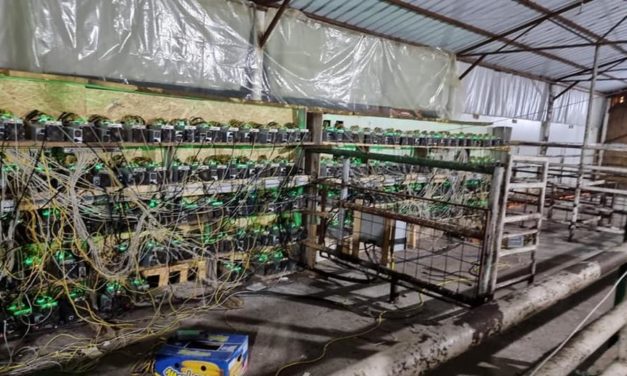
Kosovo police seize 300 crypto mining machines amid electricity shortages

The police in Kosovo have ramped up their efforts to crack down on crypto miners in the country, confiscating more than 300 mining machines on Jan. 8 alone. An announcement issued by the Kosovo police on Jan. 8 revealed that it had seized 272 “Antminer” Bitcoin mining machines in the municipality of Leposavic, and another 39 mining machines near Prishtina. The Kosovo Police confiscated 272 “Antminer” crypto mining machines in Leposavic on Jan 8. Source: Kosovo PoliceMeanwhile, the police also stopped a driver carrying 6 crypto mining machines with 42 graphics cards (GPUs) near Druar, in Vushtrri. The driver has since been interviewed and released. The Minister for Economy Artane Rizvanolli tweeted her support for the Kosovo police, writing: “Tens of thousands of Euros per month of taxpayers’ money is saved = energy for hundreds of Kosovar families during the crisis.”Kosovo’s energy squeeze In December, Kosovo declared a state of emergency for 60 days amid an energy crisis and electricity shortages. Since then, the Minister of Economy introduced a blanket ban on crypto mining on Jan. 5. Kosovo currently imports over 40% of its energy.As previously reported by Cointelegraph, Bitcoin mining uses 101 TWh per year or more energy than the entire country of the Philippines. Despite this, miners are increasingly turning towards renewable energy sources, especially in the United States which has become the new hub for mining operations. According to Netherlands-based news platform The Paypers, crypto mining has been on the rise in Kosovo for some time. Until very recently, electricity has been free for those living in the Serb-majority Northern municipalities since the end of the Kosovo War in 1999. Related: Iran pauses electricity exports due to crypto mining and hot summerAt the end of Nov 2021, Electricity network system operator KOSTT announced that it will no longer supply free power to the four municipalities in the country’s North: Mitrovica North, Zvecan, Zubin Potok, and Leposavic.The Balkan country was part of Serbia until 2008 when it declared independence and has upheld these subsidies since. In recent months, several other nations have also expressed concerns about mining-related power outages, including Iran and Kazakhstan.

Čítaj viac

Disney patents technology for a theme park Metaverse

Disney has been approved for a patent that would create personalized interactive attractions for theme park visitors. The technology would facilitate headset-free augmented reality (AR) attractions at Disney theme parks.The tech would work by tracking visitors using their mobile phones, and generating and projecting personalized 3D effects onto nearby physical spaces, walls, and objects in the park. The entertainment giant was approved for a “virtual-world simulator in a real-world venue,” patent on Dec. 28, 2021. It was originally filed to the United States Patent and Trademark Office in July 2020. The “Metaverse” has largely been imagined as existing on the internet, accessed using virtual reality (VR) or AR headsets. However, the technology proposed by Disney would bring the Metaverse to the physical world. This is not the first time Disney has indicated its interest in the Metaverse. During the company’s fourth-quarter earnings call during November 2021, CEO Bob Chapek said the firm is preparing to blend physical and digital assets in the metaverse. “We’ll be able to connect the physical and digital worlds even more closely, allowing for storytelling, without boundaries in our own Disney Metaverse.”In Nov. 2020, Disney Resorts Chief Strategy Officer Tilak Mandadi shared in a Linkedin article that he had his sights set on blending the digital and physical world. “As we look to the future, connected park experiences that transcend the physical and digital barrier and unlock new layers of storytelling are a very exciting focus of ours,” he wrote at the time. “These experiences are perennial, and the guest engagement is inside and outside the parks. They are unique to you, but are also social and connected. They are constantly changing, so there is always something new to discover.”Related: Samsung launches metaverse store in DecentralandAlthough Disney told the LA Times that it has “no current plans” to use the simulator in the near future, the recently-approved patent echoes Mandadi’s vision for a “Theme Park Metaverse.” There are 12 official Disney theme parks worldwide, in the U.S., Paris, Hong Kong, Japan, and China. In 2021, Disney generated a total revenue of nearly $17 billion with its parks, experiences and products segment despite global lockdowns due to the COVID-19 pandemic.

Čítaj viac

Získaj BONUS 8 € v Bitcoinoch

nakup bitcoin z karty

Registrácia Binance

Burza Binance

Aktuálne kurzy