Autor Cointelegraph By Judith BannermanQuist

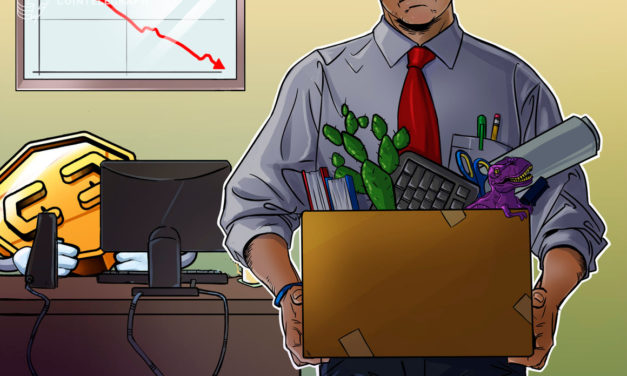
Kraken cuts workforce by 30% in an effort to survive crypto winter

Cryptocurrency exchange Kraken announced on Nov. 30 that it has made one of its “hardest decisions”  and is cutting down its global workforce by approximately 1,100 people, comprising approximately 30% of its total workforce, amid current market conditions.According to CEO and co-founder Jesse Powell, Kraken had to triple its workforce due to the fast-growing crypto ecosystem, and the current pullback takes the size of the company’s team back to where it was 12 months ago. Powell shared in a tweet, “Macro was already tough and we held out but recent industry woes diminished near-term optimism about a crypto rebound.”Rough day at @krakenfx. Headcount rolled back 12 mos. Macro was already tough and we held out but recent industry woes diminished near-term optimism about a crypto rebound. Better positioned now. Glad we were able to take good care of our former colleagues. Been a privilege. ‍♂️ https://t.co/xfwShapS2N— Jesse Powell (@jespow) November 30, 2022Lower trading volumes and fewer client sign-ups amid turbulent market conditions have contributed to Kraken’s decision to cut down its expenses by slowing down hiring efforts and avoiding large marketing commitments. According to the exchange, these changes are necessary “to sustain the business for the long-term while continuing to build world-class products and services in selective areas that add the most value for our clients.”The company stated that employees being let go were given a decent severance package, which includes separation pay covering 16 weeks of base pay, performance bonuses, four months of healthcare coverage including counseling, immigration support and career support, among other benefits. Related: US lawmaker questions major crypto exchanges on consumer protection amid FTX collapseEarlier this year in June, Kraken announced that it would continue to hire over 500 roles in various departments amid a market downturn. The company’s hiring efforts were at the time in stark contrast to major layoff announcements from major blockchain firms such as Coinbase and BlockFi.In support of the decision to continue to expand its staff earlier in the year, Kraken had said: “We have not adjusted our hiring plan, and we do not intend to make any layoffs. We have over 500 roles to fill during the remainder of the year and believe bear markets are fantastic at weeding out the applicants chasing hype from the true believers in our mission.”Current layoffs, however, show a contrasting picture from the CEO’s statements made in June, when he took the opportunity to throw shots at supposed “woke activists” while discussing the company’s decision to hire hundreds of new employees.

Čítaj viac


Digital identity platform integrates with zkSync for on-chain KYC

RNS.id, a digital Web3 identity platform developed to support the application and issuance of sovereignty-backed IDs, announced on Nov. 30 that it is integrating with zkSync for on-chain KYC. RNS.ID indicated in a release shared with Cointelegraph that its on-chain KYC solution is designed on a “privacy engine” to encrypt users’ identity attributes or properties into different “hashed slices” with multiple signature verifications.RNS.ID aggregates users’ fragmented identity properties data and uses ZK-proofs to generate encrypted proofs from metadata. Additionally, the company stated that RNS.ID enables users to create their own “minimal disclosure identifying information system” for constrained usages, thereby preventing a breach of personal data and reducing the chances of identity theft. zkEVM’s integration with RNS.id aspires to enable self-sovereignty-based solutions in the realm of digital identity, an emerging space in the digital world. The integration also seeks to leverage blockchain technology to allow identity verification without revealing users’ sensitive data to allow users to maintain privacy, while they interact with the Web3 ecosystem. At present, the company said its RNS.ID is supported by over 80% of crypto exchanges in the world, such as Binance, Coinbase, Bitmart, Kucoin, Gate.io, Bybit, and Huobi, among many others.RNS.ID also partnered with the Republic of Palau, to make it the first sovereign nation in the world to issue digital residency IDs to global citizens. It is said to be the first national identification card issued on the blockchain as “soulbound ID NFTs”. Related: How Web3 resolves fundamental problems in Web2It appears countries around the world are slowly beginning to take interest in Web 3 by incorporating blockchain technology into their structures. On Nov 29, Cointelegraph reported that Dominica had launched a digital identity program and national token in partnership with Huobi. Dominica’s government has agreed to a partnership with Huobi to issue Dominica Coin (DMC) and digital identity documents (DID) with DMC holders set to be granted digital citizenship in the country. DMC and DID will be issued on Huobi Prime and will serve as credentials for a future Dominica-based metaverse platform.

Čítaj viac

FTX hacker reportedly transfers a portion of stolen funds to OKX after using Bitcoin mixer

Hackers who drained FTX and FTX USA of over $450 million worth of assets just moments after the doomed crypto exchange filed for bankruptcy on Nov. 11, continue to move assets around in an attempt to launder the money. A crypto analyst who goes by ZachXBT on Twitter alleged that the FTX hackers have transferred a portion of the stolen funds to the OKX exchange, after using the Bitcoin mixer ChipMixer. The analyst reported that at least 225 BTC — worth $4.1 million USD — has been sent to OKX so far. 1/ Myself and @bax1337 spent this past weekend looking into the FTX attacker’s deposits to ChipMixer. It appears they’ve likely been transferring a portion of the stolen FTX funds to OKX after withdrawing from CMSo far we’ve accounted for at least $4.1m (255 BTC) sent to OKX pic.twitter.com/C46JZWtktn— ZachXBT (@zachxbt) November 29, 2022According to ZachXBT, the FTX hacker first began depositing BTC into ChipMixer on Nov. 20, after using Ren Bridge, a protocol that acts as a bridge for cryptocurrencies. In his analysis, ZachXBT shared that he had observed a pattern with addresses receiving funds from ChipMixer. According to him, each of the addresses follows a similar pattern; “withdrawal from CM”, “50% peels off” and then “50% deposited to OKX”.Following the discovery of the deposits made to the OKX exchange, the Director of OKX shared on Twitter that; “OKX is aware of the situation, and the team is investigating the wallet flow.” #OKX is aware of the situation, and the team is investigating the wallet flow.— lennixlai.eth (OKX) (@LennixOKX) November 29, 2022

Related: OKX releases proof-of-reserves page, along with instructions on how to self-audit its reservesOn Nov, 12, Cointelegraph reported that the hack was flagged right after FTX announced bankruptcy. At the time, out of the $663 million drained, around $477 million were suspected to be stolen, while the remainder is believed to be moved into secure storage by FTX themselves.On Nov. 20, the hacker began transferring their Ether (ETH) holding to a new wallet address. The FTX wallet drainer was the 27th largest ETH holder after the hack, but dropped by 10 positions after dumping 50,000 ETH.The fact that hackers managed to drain assets from FTX global and FTX.US at the same time, despite these two entities being completely independent, became a hot topic of discussion within the crypto community, and raised speculations about it possibly being an inside job. 

Čítaj viac

Serum exchange rendered 'defunct' following the collapse of Alameda and FTX

The Solana-based decentralized exchange (DEX) has notified its community that the collapse of its backers — Alameda and FTX — has rendered its program “defunct”. The team behind the project shared that “there is hope”, in spite of its ongoing challenges, because of the community option available to “fork” Serum. What’s next for @ProjectSerumWith the collapse of Alameda and FTX, the Serum program on mainnet became defunct.As upgrade authority is held by FTX, security is in jeopardy, leading to protocols like @JupiterExchange and @RaydiumProtocol moving away from Serum.— Serum (@ProjectSerum) November 29, 2022According to the announcement, “a community-wide effort to fork Serum is going strong”. OpenBook, the community-led fork of the Serum V3 program, is already live on the Solana Mainnet with over $1M daily volume, supported by continuous efforts to expand it and grow its liquidity. The existence of OpenBook however poses a threat to Serum, because “with Openbook’s existence, Serum’s volume and liquidity has dropped to near-zero” as users and protocols prefer Openbook because it’s a safer option following the security risks associated with the “old Serum code” which was compromised in the FTX hack. When it comes to its SRM token, the DEX shared that the “future of SRM is uncertain”, as community members appear divided on the subject. Some believe it should still be used “for discounts”, while others believe it should not be used at all due to its exposure to FTX and Alameda. Related: BlockFi bankruptcy filing triggers a wide range of community reactionsOn Nov 12, Cointelegraph reported that FTX was hacked with wallets tied to FTX and FTX US drained of $659 million in cumulative outflows, as reported by Nansen. Following the FTX hack, ​​Solana’s developers forked the widely used token liquidity hub, Serum, after it was compromised in the series of unauthorized transactions. On Nov 12, Solana co-founder Anatoly Yakovenko tweeted that developers depending on Serum were forking the code after the upgraded key was compromised, sharing that many “protocols depend on serum markets for liquidity and liquidations.”

Čítaj viac

FTX collapse impacts Miami’s nightclub scene: Report

The fallout from the collapse of FTX spans beyond the Web3 and crypto ecosystem. Reports gathered by the Financial Times suggest that nightclubs in Miami have been negatively affected by the collapse of the once-reputable cryptocurrency exchange.According to nightclub owners, young, nerdy crypto bros went from lavishly spending on champagne showers and buying $50,000 tables at clubs to completely vanishing from the nightlife scene.Andrea Vimercati, director of food and beverage at the Moxy Hotel group, told the Financial Times: “They were ordering 12 or 24 bottles of the most expensive champagne and just showering themselves without even drinking.” According to the nightclub staff, the young, nouveau riche entrepreneurs walked around the clubs pulling out their digital wallets and bragging about the amount of money they were making.However, the unexpected implosion of FTX, loss of funds and fall in the value of cryptocurrencies have completely changed the nightlife scene in Miami. The young crypto entrepreneurs who once splurged in nightclubs now appear to be visibly absent following the collapse of FTX. Gino LoPinto, operating partner at Miami nightclub E11even, shared that once his establishment started accepting cryptocurrency payments, it processed $6 million worth of transactions between April and December 2021. However, over the last three months, the club has only recorded about $10,000 worth of transactions. Related: FTX collapse put the Singapore government in a parliamentary hot seatSince the collapse of FTX, many companies and individuals have been affected. On Nov. 28, BlockFi announced that it had filed for Chapter 11 bankruptcy, citing the collapse for its troubles. On Nov. 15, Cointelegraph reported that FTX-owned Japanese cryptocurrency exchange Liquid took to Twitter to officially announce it had suspended fiat and crypto withdrawals on its Liquid Global platform.

Čítaj viac

Získaj BONUS 8 € v Bitcoinoch

nakup bitcoin z karty

Registrácia Binance

Burza Binance

Aktuálne kurzy