Autor Cointelegraph By Joseph Hall

Bitcoin in space is good for user privacy, says Adam Back

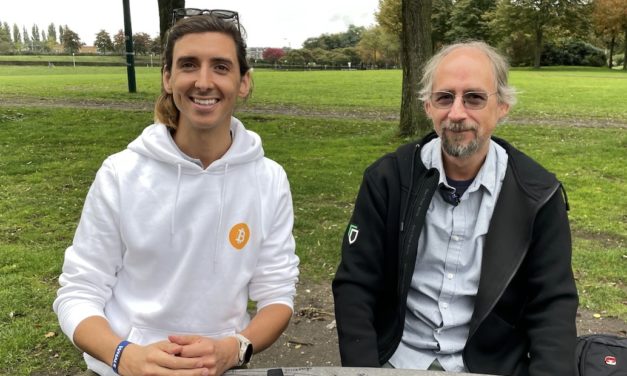
Adam Back, the co-founder of Blockstream, took a timeout from the mainstage of Bitcoin Amsterdam, a three-day Bitcoin conference in the Netherlands, to talk with Cointelegraph. Perched at a park table amidst tulips and bicycles, the man behind the Proof-of-Work algorithm challenged Cointelegraph to a game of Jenga and made a case for beaming Bitcoin into space. One of the few people to be cited in the Bitcoin whitepaper, (BTC) Back also discussed his childhood and his first interactions with computers. The video will soon be published on Cointelegraph’s Youtube channel. But why do we need the Bitcoin blockchain–a decentralized peer-to-peer network already secured by nodes on earth–in space? Do aliens need Bitcoin the way humans do? Back joked with Cointelegraph nonchalantly:“Well, I mean, there are a few reasons [to having Bitcoin in space]. One because it’s cool, and you can.”However, it also brings benefits such as privacy: “You can receive the data anonymously because it’s broadcast, and basically nobody can tell you’re receiving it. So that’s good for privacy,” Back continued, moments before winning the game of Jenga. Adam Back with Cointelegraph reporter Joe Hall. Furthermore, having Bitcoin in space is also “Good for companies because they really need to make sure they’re on the right blockchain. If there’s a local network issue or if a router is hacked,” then the satellite Bitcoin connection ensures that companies can continue to transact and use the Bitcoin blockchain without hindrance.Indeed, the news is awash with governments and groups intent on inhibiting access to Bitcoin or cryptocurrency-related activities; so having a connection to a satellite Bitcoin protocol is invaluable and enables greater censorship resistance.For the global south, the argument for connecting and downloading the backlog of Bitcoin data in order to synchronize a node is the price. Whereas in the developed world, the cost of downloading and synching Bitcoin core could be negligible:“For emerging markets, the cost of an Internet connection fast enough to keep up with Bitcoin is actually expensive compared to salaries.”Back explained that you can sync a node at no cost in the developing world using Blockstream satellites. While the process is undoubtedly slower–taking a week or two to update–it means that the barrier to entry for participating in the Bitcoin protocol trends lower and lower.Related: Adam Back Denies Having a Beer With Satoshi NakamotoFinally, Back is still very bullish on Bitcoin. In a tweet on Monday morning, the mathematician shared that Bitcoin will “conservatively” do a 10x in the next five years. That means the Bitcoin price would reach over $200,000 before 2027. 

Čítaj viac

To HODL or have kids? The IVF Bitcoin Babies paid for with BTC profits

Hold Bitcoin till the very end or sell a little bit to start a family? For one Bitcoiner in orthwest London, it was a no-brainer.Noodle, (a nickname) a Brit who first heard about Bitcoin around 2012, took profits on his Bitcoin buys to pay for in vitro fertilization (IVF) treatment for his wife. He told Cointelegraph he has “no regrets,” about his decision to start a family using fiat-denominated profits from buying, holding, a then selling Bitcoin. Welcoming Noodle Jr II to this crazy world. After a tough 6 days in hospital due to unforeseen complications, Mrs Noodle and I, couldn’t be happier to bring this little hodler home! pic.twitter.com/JvlLfzABgg— Noodle ⚡️ (@NoodleNakamoto) June 14, 2022Noodle first found out about Bitcoin at the tail end of 2012, when one Bitcoin was worth roughly $13.“I was in the gym chatting to this guy that I get on well with. We were speaking in the changing rooms, and it’s funny because he was trying to explain this Silk Road thing to me — which was on the dark web.”The now-defunct marketplace Silk Road was a place where early Bitcoin users could buy and sell pretty much anything using Bitcoin as the in-house currency. At the time, Noodle didn’t necessarily dismiss Bitcoin despite his gym buddy’s recommendation, but it passed him by until a close friend explained how to buy cannabis with Bitcoin on the Silk Road. The Silk Road was a popular website for buying and selling just about anything using Bitcoin.Once his close mate had explained that they might be able to use the Bitcoin to buy real-world items, Noodle was convinced: “And I thought Let’s do it… So we bought seven Bitcoins and at the time — they were $57 a pop.”The price of Bitcoin has since risen almost 400 times higher, to a $20,000 bear market value in 2022. For Noodle in 2013, he explained it was actually quite difficult to obtain Bitcoin — it was “a really convoluted process.” However, he persevered and managed to obtain Bitcoin to buy goods. Unknowingly, Noodle had also tripped down the rabbit hole and his Bitcoin journey had just begun.Once the weed arrived, I was fully down the rabbit hole, like I was looking into everything. I never, ever thought I would have any interest in fiscal policy, in macroeconomic outlooks, etc — any of this stuff!For Noodle, Bitcoin opened his eyes to finance, education and a whole world of new information. From fractional reserve banking to the Federal Reserve to currency debasement and how money works, Noodle was hooked. Naturally, Noodle’s wife with whom he’d been since 2008, was exposed to Noodle’s newfound passion. The passion eventually rubbed off as in 2014, Noodle’s wife took some of the newly married couple’s wedding money to buy Bitcoin. Noodle jokes, “And who would know […] that that Bitcoin would then go on to effectively fund IVF — which is not f**king cheap!”The Noodle family had always planned to have kids. Sadly, due to Mrs. Noodle’s medical condition, conceiving was a challenge. They sought medical advice and soon realized that they may have to undergo fertility treatment:“We struggled for a long time. We’ve never really liked the stigma around IVF, which means we prefer to talk about it then kind of keep it sort of hush.”IVF is a fertility technique in which an egg is removed from the woman’s ovaries and fertilized with sperm in a laboratory. The fertilized egg is returned to the woman’s womb to grow and develop. The process is time-consuming, expensive and has a success rate of 4% to 38% depending on various factors. Plus, as Noodle alluded to, there is still a stigma attached to IVF treatment, despite being a regular occurrence in Noodle’s home country, the United Kingdom. Noodle continued:“The costs behind IVF are astronomical. Most people can’t afford it or they go into debt to afford it. Some people said ‘you shouldn’t sell Bitcoin; you should have got a loan.’ But I wasn’t prepared to be that pigheaded about it.”So Noodle sold some Bitcoin. In sum, Noodle converted north of $70,000 in Bitcoin into government-issued pounds sterling over the course of a few years. The fiat-denominated profits paid for several rounds of IVF treatment for both of his children leading to two healthy babies.Without Bitcoin, Noodle explained he would have likely taken out a loan to pay for the treatment: “Family is important to me and I would have thrown anything and everything at it in order to try and make it work. But we were very fortunate that we had some Bitcoin and I didn’t sell it for a long time.” Related: The UK ‘Bitcoin Adventure’ shows BTC is a family affairWith Bitcoin, Noodle and his wife were able to live their dream of starting a family, but debt free. As for whether or not there might be any more Bitcoin baby Noodles running around northwest London soon, Noodle joked, “I think we’re done with two kids unless the price goes super crazy!”Noodle’s story is part of an upcoming crypto story on Cointelegraph’s Youtube channel. Subscribe here.

Čítaj viac

Solar ‘Bazooka’ Bitcoin mine warms warehouse amid Europe’s energy crisis

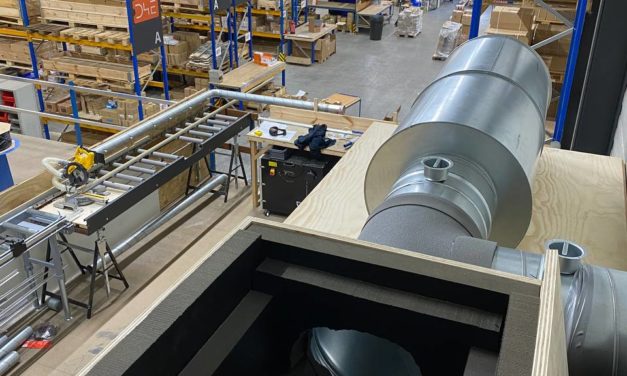
It’s another win for Bitcoin miners and the environment. A Dutch Bitcoiner has installed a Bitcoin (BTC) miner in a warehouse to replace the heating system powered by natural gas. Why? Because it’s cheaper, more environmentally friendly, and uses solar power.Our latest installation heats a warehouse with electricity instead of natural gas. We’ve installed manual valves to guide airflow. The sound has been attenuated under 40db with a large damper. The people that work in the warehouse enjoy the warm temperature and low sound. pic.twitter.com/fcdEUlqiuN— Bitcoin Brabant (@BitcoinBrabant) October 5, 2022Bert de Groot is the founder of Bitcoin Brabant, a Dutch company that helps “businesses adopt the Bitcoin standard.” He’s always on the lookout for untapped energy sources, and ways in which Bitcoin mining can improve business efficiencies while saving money and the planet. At a greenhouse this year, for example, Bert installed Bitcoin miners to maintain the perfect temperature for flowers to bloom while reducing reliance on polluting natural gas. So naturally, when Bert learned that a warehouse owner had 50-megawatt hours (MW/h) of electricity going spare while their natural gas heating bill went through the roof, he sensed an opportunity for Bitcoin mining. Bert told Cointelegraph that the warehouse (whose owner prefers anonymity) had a 50 MW surplus of electricity from a solar panel installation on the roof. That’s “quite a lot,” he joked. The roof panels power warehouse operations but the company burns natural gas to warm the warehouse. Worse still, despite having a surplus of energy that could be sold to the grid, grid controllers in the Netherlands do not reward contributing spare capacity — even if it’s solar energy. Bert continued:“You put so much solar on the roof and you don’t get anything back for the extra that you put back into the grid. So what we did is we put the (Bitcoin) miner in.”Bert installed one Bitmain Antminer S19j Pro (104Th), known as an application-specific integrated circuit (ASIC) that consumes roughly 25 MW per year. It lives in a “Bazooka,” an aptly named housing that shoots out hot air to heat the whole warehouse. As it’s a Bitcoin miner, not only does it generate heat but also income as it solves valid blocks on the Bitcoin blockchain.The Bazooka heater which takes aim at the warehouse. Source: BertThe introduction of the Bitcoin miner solves three issues: First, the Bitcoin miner is an effective way of exploiting surplus renewable energy for something profitable. Second, Bitcoin miners generate vast amounts of heat, which can be used like a radiator if harnessed correctly. Third, while burning natural gas to heat the warehouse is polluting, a solar-powered Bitcoin miner is environmentally friendly.  Currently, natural gas prices in Europe are soaring due to scarcity. As a result, the cost of heating the warehouse continues to rise. Solar energy, by comparison, is abundant and once the startup costs are paid off, solar energy is almost free. To cap it all off, the warehouse’s carbon footprint is now negative. Bert sums up:“So we had [burned] a lot of natural gas as well as electricity which was already there — which was renewable. So we basically switched to a carbon negative warehouse with heating.”In figures, the switch from natural gas heating to Bitcoin miner will prevent the burning of 2,000 cubic meters of gas each year, which equates to roughly “One and a half households” of the average Dutch home. The Bitcoin miner occupies a space in the corner of the warehouse. Source: BertBetter still, the Bitcoin miner pumps out constant heat — ideal for a Dutch winter where temperatures sit between 0 and 6 degrees Celsius — as opposed to an intermittent natural gas heater. Related: ‘Green oasis’ for Bitcoin mining: Norway has almost 1% of global BTC hash rateThe solution is a win for the warehouse, the environment and for Bitcoin. In a tweet, Bert shared, “The Bazooka version 8 is now in full swing. Thank you for all your support in being able to keep businesses warm while natural gas prices are so high.”So presumably, Bert’s phone must be ringing off the hook as warehouse owners across the land get wind of the Bitcoin miner heat revolution? Not quite, Bert explained: “In his network [of the warehouse owner] everyone thinks he’s crazy. So let’s see in a couple of months when it becomes winter, like proper winter what happens.”Bert remains optimistic about the future of Bitcoin miners being used as a heat source so he’s kept a few ASICs on hand. “I expect more to come. You know, it gets colder, it [natural gas prices] gets more expensive. It’s worthwhile for businesses to do it,” he concluded.

Čítaj viac

Michael Saylor snubs claims he doesn’t use Bitcoin Lightning Network

Executive chairman of Microstrategy, Michael Saylor, does not like to be called out. He responded to a poll shared by Eric Wall, a crypto researcher, that suggested he had not used Bitcoin’s (BTC) layer-2 Lightning Network more than three times with a Twitter poll of his own.The correct answer is Yes, and I will make three more transactions of 1,000,000 sats each to the 3 posters of the most liked #Lightning⚡️ memes in the comments below. https://t.co/qXZ90q4Ly9— Michael Saylor⚡️ (@saylor) October 4, 2022Saylor replied to the poll with a resounding yes, and kickstarted a meme competition with a 1,000,000 sats giveaway (0.01 Bitcoin, $200) to the most liked meme. In giving away Sats to prizewinners, Saylor will literally use the Lightning Network three times. Saylor first tweeted about the Lightning Network in May 2021, and has since become a proponent for the layer-2 payments solution built on Bitcoin, as well as LiFi, or Lightning Finance. Wall, a former chief investment officer at Arcane Research, has called out Saylor several times, and his initial optimism about the Lightning Network in 2018 has dissolved into critiques. Other prominent Bifluencers, including Udi Wertheimer and Lilli, head of business development at Foundation Devices, regularly knock the LN. Lilli recently called the network a “failure,” and Udi said, “Nobody uses it.”The poll as well as recent commentary from Wall bring into focus a bigger issue. Is the Lightning Network a fringe solution to Bitcoin’s scalability problem that even the biggest names in the Bitcoin space struggle to use? Or, is the Lightning Network — following eight years of development — a failure? Related: Busking on Bitcoin: How Lightning Network outperforms Ethereum for tippingWall shared a series of videos highlighting difficulties in transferring funds over the LN from old Bitcoin wallets to a new phone. He also predicted that Bitcoin capacity on the LN will not exceed 6,000 Bitcoin before 2023. Bitcoin network capacity surged through 4,000 BTC in June and 5,000 BTC in October. With two months to go until year-end, Wall tweeted it’s “gonna be a nail-biter.”Perhaps major companies entering the space will bolster LN usage and improve sentiment. Saylor is doubling down again on his Bitcoin strategy, as Microstrategy is hiring Lightning developers. Furthermore, NYDIG, a leading Bitcoin company, announced in their Q3 report that “Now it’s time for Lightning,” stating their intention to contribute to the LN. For smaller, Bitcoin-first companies, deals are struck and announcements are made on a weekly basis. Strike recently led a successful $80 million funding round while Galoy, the team behind El Salvador’s Bitcoin Beach wallet, has implemented dollars onto the LN — a boon for emerging markets. In Gibraltar, a highly sophisticated financial market, Lightning Network adoption is thriving. Finally, in a recent panel discussion moderated by Cointelegraph in France, prominent Lightning Developers including “Dr. Bitcoin” himself, Christian Decker, as well as data scientist, Rene Pickhard mulled over whether transaction failure on the LN is acceptable in 2022.To all the talk about ‘failure’ of Bitcoin’s lightning network right now, watch this clip ⬇️ LN experts discuss transaction success & failure and progress to date ⚡️ @SurfinBitcoin by @StackinSat_FR ‍♂️ August 22 @renepickhardt , @Snyke , @therealkingonly pic.twitter.com/ehHuYGg78Y— Joe Hall ⚡️ defendingbtc.com (@JoeNakamoto) October 5, 2022

The overwhelming sentiment from the panel that day is that the LN is still a work in progress. It’s neither a resounding success as it’s still early. For Nicolas Burtey, CEO at Galoy, the group behind the Adopting Bitcoin, a Lightning Summit in El Salvador, “The adoption of Bitcoin in El Salvador was the tipping point for Lightning.” The El Salvador Bitcoin Law hit its year anniversary just one month ago.In the meantime, there are now hundreds of memes in reply to Saylor’s tweet.  Cointelegraph reached out to Eric Wall, who declined to comment. Cointelegraph will update the article if Saylor, Wertheimer or Lilli share commentary.

Čítaj viac

Bitcoin price plummets while miner hash rate soars to all-time highs

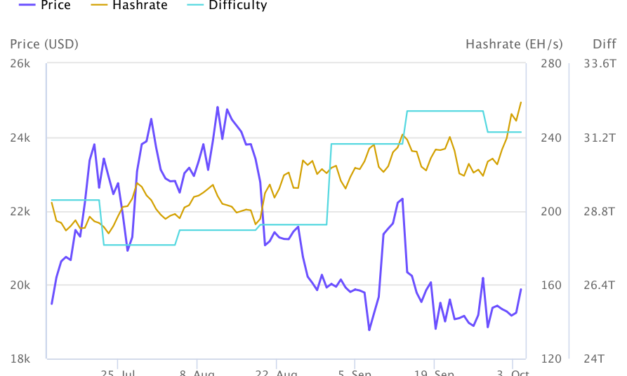
Bitcoin miners can’t stop, won’t stop. The Bitcoin (BTC) hash rate continues to surge to new all-time highs, despite a heavy price drawdown. The Bitcoin mining hash rate peaked at 258 exahashes per second (EH/s) on Oct. 4, according to Braiins Insights, a mining data tools and metrics company. Although the Bitcoin price is down 58% year-to-date against the United States dollar, the mining hash rate is up 43%.The past 3 months Hashrate. Source: Braiins. Bitcoin Gandalf from the marketing team at Braiins told Cointelegraph that, “The hash rate hitting another all-time high shows that miners are bullish about the future prospects of Bitcoin.” Nonetheless, the current macroeconomic environment could pose an issue, as “the present isn’t so rosy for Bitcoin miners,” Gandalf said, adding:“Bitcoin continues to trade in this tight band between $19,000–$20,000 and this recent increase in hash rate will result in a sharp upward adjustment in mining difficulty meaning that miner margins will be further squeezed.”In a series of tweets, mining engineers and hobbyists shared their thoughts regarding the hash rate hitting all-time highs while the price remains low. Rob W of Bitcoin mining company Upstream Data summed up the sentiment: I’m really proud of all of my mining friends, things are going great. pic.twitter.com/dIzh2ITTfq— Rob W. (@BikesandBitcoin) October 3, 2022Market analyst Zack Voell explained that the surging hash rate could be as a result of “XPs coming online.” The S19 XP Antminer is the latest model from Bitmain, one of the world’s most popular Bitcoin mining hardware suppliers. The number of hashes produced in a second is commonly referred to as the hash rate. In Bitcoin speak, hash rate is a critical security metric as well as one that many BTC miners keep their eyes on. In simple terms, the more hashing — or computing power — that the network churns out, the greater the overall security of Bitcoin. As a result, Bitcoin is more resistant to attack, the most common of which is known as a 51% attack. Currently, more and more miners are coming online to attempt to solve valid blocks to receive the Bitcoin block reward, which is currently 6.25 BTC, roughly $120,000. Blocks are solved and added to the Bitcoin blockchain on average every 10 minutes. Related: Nuclear and gas fastest growing energy sources for Bitcoin mining: DataThe difficult adjustment determines the rate at which blocks are solved. It fluctuates roughly every two weeks and is expected to increase on Oct. 10 based on the surging hash rate. The difficulty adjustment has been on a steady march upward in 2022 — meaning blocks are, on average, getting harder to solve — after falling for the first time in March 2022. In sum, despite the fact that the Bitcoin price continues to wallow under $20,000, more and more miners find value in supporting the network. James Check, an analyst at Glassnode, explained in a tweet, “With hash rate pushing to new all-time-highs once again, despite all the promises to the contrary, it appears that #Bitcoin is still not dead.”

Čítaj viac

Získaj BONUS 8 € v Bitcoinoch

nakup bitcoin z karty

Registrácia Binance

Burza Binance

Aktuálne kurzy