Autor Cointelegraph By Joseph Hall

The UK has a new name for stablecoins and a new bill to regulate crypto

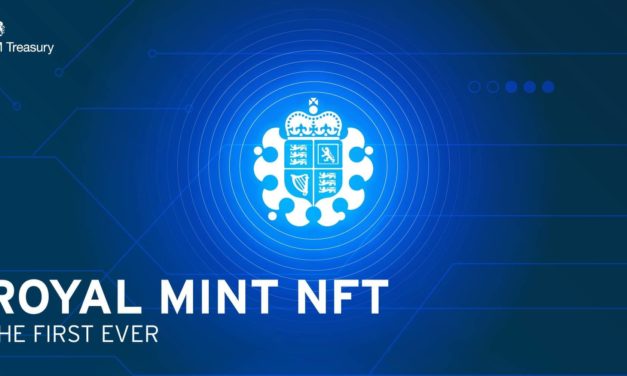
The United Kingdom moved forward on the Financial Services and Markets Bill on Oct. 25, hardening its vision for Bitcoin (BTC) cryptocurrency and “digital settlement assets” in the country.The Bill, proposed on Oct. 18, suggested would propose “A range of measures to maintain and enhance the U.K.’s position as a global leader in financial services, ensuring the sector continues to deliver for individuals and businesses across the country.”The Bill reasserts the U.K.’s intention to become a global cryptocurrency hub, comments echoed by Dr. Lisa Cameron, Member of Parliament and the chairperson of The Crypto and Digital Assets All-Party Parliamentary Group. In an exclusive interview with Cointelegraph over the weekend, she explained that crypto is on the lawmakers’ radar, although there is a lot of education to be done.The bill builds upon existing measures to broaden regulations of stablecoins and mentions “Digital Settlement Assets” (DSA) as a new term, moving away from the use of “crypto assets.” According to the U.K. government, “crypto assets use some form of distributed ledger technology (DLT),” whereas DSA includes stablecoins “given their potential to develop into a widespread means of payment.”The U.K. government had previously commented that there will be a “package of measures” aimed at improving regulation and clarity surrounding blockchain, crypto and Bitcoin. Elsewhere, the new Prime Minister, Rishi Sunak, has also expressed interest in certain areas of cryptocurrency, such as his support for the creation of a Royal Mint Nonfungible token. Rishi Sunak was a supporter of the first ‘royal mint NFT’ which has yet to materialise. Source: HMRCThe youngest leader to take up office in Number 10 Downing Street has also been vocal in support of central bank digital currencies.Related: UK inflation rate hits 10.1%, British Bitcoin community respondsThe recognition of crypto and digital assets as financial instruments is yet to be scribed into law. The Bill must pass crucial steps: The House of Lords will be required to approve or amend the Bill before final royal approval by the new monarch, King Charles III.

Čítaj viac

British MP Lisa Cameron on Bitcoin and UK becoming international crypto hub

The United Kingdom could be warming to Bitcoin (BTC) and crypto. Taking a timeout from Scotland’s first major Bitcoin conference, Cointelegraph spoke to Dr. Lisa Cameron, a Member of Parliament who is spending more and more time working with digital assets. Cameron told Cointelegraph: “I have spoken to companies who are involved in CBDCs and stablecoins. We’ve looked at crypto tokens, and Bitcoin is obviously part of the sector.”As the Scottish National Party Member of Parliament for East Kilbride, Strathaven and Lesmahagow (areas of Scotland), Cameron works in Westminster–a metonym for the Parliament of the United Kingdom. She rubs shoulders with the new crypto-curious Prime Minister, Rishi Sunak. Cameron is also the chairperson of The Crypto and Digital Assets All-Party Parliamentary Group (APPG). The forum discusses “The challenges and opportunities relating to the crypto sector and explores the need for future regulation of the sector.” While the creation of the APPG would suggest that Bitcoin and crypto might be making it mainstream, the future of money remains a fringe discussion topic in the United Kingdom. Interest in “digital assets” waxes and wanes with the crypto bear and bull runs. A Royal Mint NFT was recently floated by the then Chancellor, now Prime Minister, Sunak, and the Bitcoin and crypto community are increasingly vocal in response to surging inflation rates. However, U.K. regulators have also cracked the whip on crypto advertisements and queried the creation of digital asset laws.British MP Lisa Cameron speaking with Cointelegraph’s Joe HallFor policymakers in such an environment, Cameron mentioned the importance of education in parliament. Cameron explained: “We are on a learning curve and it’s just very, very important because the U.K. government has a policy vision that the U.K. will become an international hub of cryptocurrency and digital assets.”Speaking from her home country, the Scot told Cointelegraph that the “Key sort of issue is about consumer protection; it’s about looking at regulatory frameworks moving ahead in the UK. In a nod to treating Bitcoin differently from other cryptocurrencies, Cameron continued: “In my understanding and from the session we’ve had at the Bitcoin conference, you know, some of that relates to Bitcoin, some perhaps not all so greatly because of the decentralized nature of it.”Days after the conference, Cameron took to the stand in Parliament to pitch the Chancellor of the Exchequer, Jeremy Hunt, to discuss the UK’s vision of becoming a global crypto hub.Chair of the APPG @DrLisaCameronMP asks to meet with Chancellor @Jeremy_Hunt about @hmtreasury’s commitment to regulation and consumer protection and the vast potential of #crypto & #DigitalAssets in job creation, innovation and growth. #cryptocurrency pic.twitter.com/yiuC89Ytf2— Crypto & Digital Assets APPG (@cryptoappg) October 23, 2022Cameron mentioned her participation at the U.K. Bitcoin Conference and the Digital Assets Summit as part of her request. Related: UK inflation rate hits 10.1%, British Bitcoin community respondsPersonally, Cameron conceded that she does not hold any crypto personally–and joked that she wouldn’t become a Bitcoin maximalist any time soon: “It would skew the report. It could, you know, mean that I’m less objective.” When quizzed on whether she preferred the time spent at the crypto and NFT-friendly Digital Assets Summit or the Bitcoin conference in her home turf in Edinburgh, she mentioned, “I do have a bit of a leaning towards my home town,” although having a conference in London and a conference in Scotland’s capital is a good thing: “They complement each other.”This interview is part of an upcoming Cointelegraph Youtube interview. Subscribe here.

Čítaj viac

How not to Bitcoin: User pays 1,000x fee to send 4 BTC

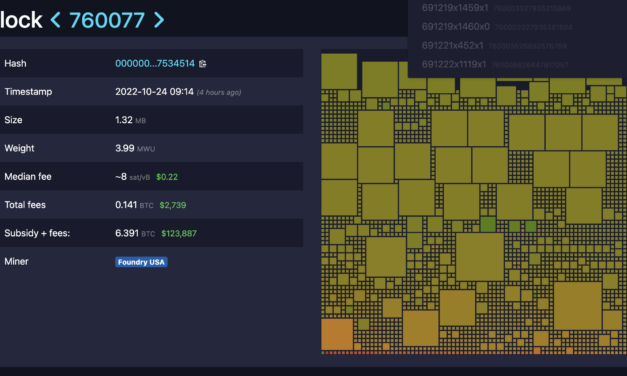
Fat fingers? A Bitcoin (BTC) user spent over $200 to make a transaction, paying astronomically above the average fee. In a transaction that entered Bitcoin block 760,077, a user paid 1,136,000 satoshis, (0.0136 BTC or $220.52) to move 3.8 BTC ($63,000). This extraordinarily high fee is a whopping 1,000 times the usual Bitcoin transaction fee, as at block height 760,077, the average transaction fee was roughly $0.20. Twitter user Bitcoin QnA first spotted the out-of-the-ordinary transaction, asking, “Y tho?” The Bitcoin educator told Cointelegraph that “Ultimately, we’ll never know [why they paid high], but there are a few possible answers.” QnA listed the following:“1. Using a wallet with terrible fee estimations 2. A user making a typo when manually entering their fee rate 3. An exchange processing an urgent payout. They often overpay but never normally by this much!”Finally, QnA told Cointelegraph that it could be that the user hasn’t done their homework, and the error could be explained by “a user not understanding how miner fees work (unlikely given the amounts seen in the tx in question).”Visual of block 760,077. Source: Mempool.spaceTransaction fees on the Bitcoin base chain vary from pennies to hundreds of dollars, depending on congestion levels in the Bitcoin memory pool, or “mem pool,” as well as transaction sizes. Transaction fees are priced in satoshis per unit of data, abbreviated to sats/vByte. The sats/vByte rate is multiplied by the size of the transaction made to get the total fee you’ll pay. Generally speaking, the more money (or data) sent, the higher the transaction fee — although several other factors are at play. If a user is in a hurry, they can choose to pay a higher sats/vByte fee to almost guarantee that miners will include their transaction in the next confirmed block. The cost of this luxury is a higher fee rate. The lowest fee is 1 sats/vByte; higher fees are generally considered as anything over 7 sats/vByte. For this fat-fingered Bitcoiner in question, they paid a whopping 8,042 sat/Byte, or 1,136,000 sats. That’s more than 1,000 times the typical fee. The median transaction fee for block 760,077 was ~8 sat/vB or $0.22. Related: Average Bitcoin transaction fee drops under $1 as network difficulty recoversUpon further investigation, the same wallet was involved in another Bitcoin transaction 40 minutes prior that also paid an exorbitant fee. The wallet transferred 4.28 BTC ($83,000) for 564,096 sats or (0.056 BTC or $109). Miners received a rate of 4,022 sat/vB for the pleasure, adding the payment into block 760,073. Due to the Bitcoin blockchain’s pseudonymity, it is unclear why the user paid such a high transaction fee. Nor is it clear why they repeated the same action four blocks later. As a final suggestion, QnA joked that it could be “a rich Bitcoiner doing it to flex (unlikely).”

Čítaj viac

The Madeira Bitcoin adoption experiment takes flight

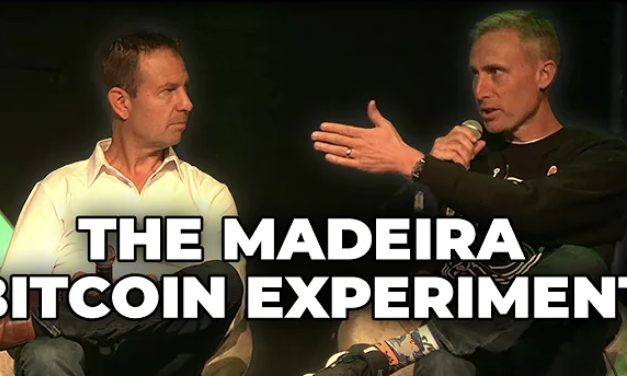
This spring, the Madeiran archipelago “adopted” Bitcoin (BTC). Madeira’s President, Miguel Albuquerque, was invited onto the stage at Bitcoin Miami 2022 by Jan3 CEO Samson Mow to announce the promise.The president announced, “I believe in the future, and I believe in Bitcoin.” Days prior, Albuquerque was breaking bread with Michael Saylor, executive chairman of MicroStrategy, at his luxury villa. Albuquerque was “orange-pilled” by one of the world’s wealthiest Bitcoin hodlers. Nonetheless, as Cointelegraph later reported, the island of Madeira was not adopting but, in fact, “embracing” Bitcoin. The European Union governs the Portuguese islands, therefore, they cannot legally adopt Bitcoin as a legal tender. Plus, regulatory hurdles and reliance on EU subsidies and energy pose a challenge to outright Bitcoin adoption.Author Jeff Booth (left) and podcaster Daniel Prince (right). Source: Youtube  So Cointelegraph caught up with André Loja, the Madeiran entrepreneur and driving force behind the island’s Bitcoin strategy, following his appearance on stage at Bitcoin Amsterdam 2022. Taking advice from F.R.E.E MadeiraOver the past six months, Loja has founded The Regional Forum of Economic Education, or F.R.E.E Madeira, alongside Bitcoin big-hitters including Bitcoin author Knut Svanholm and podcaster Daniel Prince. The board’s advisers boast entrepreneur and author Jeff Booth, Fedmint CEO Obi Nwosu, as well as Mow. The group serves to ensure the president upholds his “serious commitment,” Jeff Booth explained, to making Madeira a home for the “new base layer of the new internet.” The island now boasts a series of Bitcoin-first investments, developments and even Bitcoiner residents, as well as a steady trickle of crypto-curious people who have embarked on their first trip to the island. Loja told Cointelegraph that while Bitcoin is at the core of economic development and investment, “Madeira is not only investing in Bitcoin, but all kinds of technologies.” For example, a center for ocean-oriented startups and an advanced medical center are under construction. These economic activities fit under the president’s purview of adopting new technologies and working toward Madeira, shedding its reputation as uniquely a haven for older generations. Nonetheless, these developments in wider technology dwindle in comparison to the progress made in embracing the world’s largest cryptocurrency.Following a series of talks with Bitcoin OGs, including privacy advocate Matt Odell and Unchained Capital’s Parker Lewis, Madeira has the green light to set up a Bitcoin Commons. “It’s basically a big Bitcoin-only coworking space. It’ll also be a place to park the association,” Loja explained. The Bitcoin Commons is a space for the nonprofit, F.R.E.E. Madeira, to thrive:“We’ll have a podcast room there, we’ll do the [Bitcoin] meetups, we’ll do the education part there. We’ll also have the remittances also set up there with the ATM and so on to connect to the diaspora.”The Madeiran diaspora sprawls across the globe. Lucinda Castro, a Madeiran lawyer on the governance board of F.R.E.E., told Cointelegraph in June that “Madeirans emigrated to Venezuela, the United States and Canada in their thousands;” inclusive of second and third-generation immigrants, there are now over one million Madeirans living in Venezuela. The use case of Bitcoin as a remittance tool for Madeirans is, therefore, compelling. Sending money home from overseas played a part in El Salvador’s move to adopt Bitcoin as legal tender, while another small island nation, Tonga, has also been vocal in supporting Bitcoin remittance payments.The Bitcoin Commons will also support human development with the founding of a coding academy. The academy encourages Bitcoin companies around the world to travel to Madeira to learn new skills while providing locals with a space to hone their digital skills on the island. The Bitcoin Academy, as it will become known, also shines a light on the Lightning Network, the layer-2 payments network.Will Bitcoin be the standard in Madeira?As things stand, Bitcoin believers can purchase property, invest and mingle with the budding Bitcoin community on the island, Loja explained. On stage at Bitcoin Amsterdam 2022, Jeff Booth announced his intent to invest in the island, adding, “an island such as Madeira can compete globally and can be the new Silicon Valley.” However, in order to facilitate payment in Bitcoin, investors should enlist the help of a third-party intermediary, such as Archipelago Investments. Bitcoin merchant adoption is slowly spreading across the island, but much like the mainland, it’s a challenge to live on a Bitcoin standard. Across the Atlantic in Lisbon, there’s a thriving Bitcoin community, but very few merchants accept Bitcoin as a means of exchange. The panel in Amsterdam was frank in response to questions regarding merchant Bitcoin acceptance. The team at F.R.E.E. is set on guiding the president and the administration into the new Bitcoin era. Ultimately, the autonomous region must roll out Bitcoin adoption without burning bridges with the EU on which Madeira remains heavily dependent. Merchant adoption will come, however, and “that’s what the [Bitcoin] plebs are for,” Svanholm said. Related: Portugal proposes 28% tax on annual crypto trading profits next yearJust like mainland Portugal, Madeira’s first language is Portuguese, and Portuguese business resources are growing. Nico Laamanen, a co-founder of the Konsensus Network, established business operations on the island as part of his mission to “make Bitcoin knowledge accessible to everyone, in every country, in every language.” Naturally one of their priorities is translating books into Portuguese:“Madeira is great for remote workers which overlaps with many bitcoiners myself included. The tax regime, friendly environment and Bitcoin curiosity are just big bonuses.”The Looking Glass Education, backed by F.R.E.E. adviser Greg Foss, is another sound money educational resource to support Madeira.When pressed on whether Madeira is effectively becoming a European hub for Bitcoin development, Loja joked, “that’s the idea.” Notwithstanding headwinds posed by Portugal jockeying to tax crypto gains, the Madeira initiative should put the island firmly on the map for Bitcoin adoption.Finally, Bitcoin filmmakers PlebMusic and Cinemuck shot F.R.E.E.’s initial meetings with policymakers and politicians on the island and showed the trailer at Bitcoin Amsterdam 2022. The full documentary will screen by December 2022 and will likely equip the island with another Bitcoin-friendly marketing tool. Laamanen concluded, “I think Madeira will become a hotspot for bitcoin entrepreneurs and users in Europe and I want to be a part if it.”

Čítaj viac

UK inflation rate hits 10.1%, British Bitcoin community responds

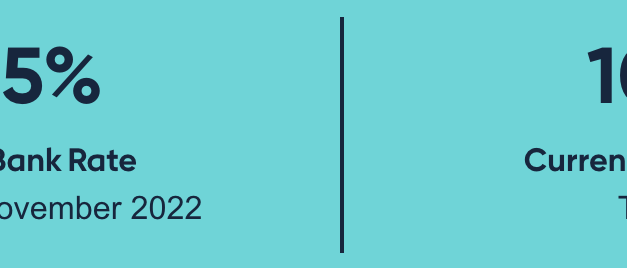
Prices in the United Kingdom continue to rise, hitting another 40-year high of 10.1%. According to figures from the U.K’s Office for National Statistics, the Consumer Prices Index (CPI) rose by 10.1% in the 12 months to September 2022, up from 9.9% in August. The 10.1% figure mirrors July’s recent high.The Bank of England is 8% off the inflation target, while interest rates are 2.25%. Source: Bankofengland.co.ukAccording to ONS data, “Rising food prices made the largest upward contribution to the change in both the CPIH and CPI annual inflation rates between August and September 2022.” The BBC reported that the Ukraine war led to an increase in grain prices, also sharing that dairy products have risen by over 30% in cost in one year.But what do incessant price rises mean for the British Bitcoin (BTC) and the wider cryptocurrency community? In recent months, British pound trading volumes soared on exchanges, while the pound almost hit parity with the dollar before the Bank of England got back to the business of printing money. Jordan Walker, CEO of the U.K based Bitcoin Collective told Cointelegraph: “Given the current policies in place by BoE [Bank of England] and our government, double-digit inflation is quite obvious. I feel like it is a wake-up call for many people in the UK to start learning about why this is happening to our money.”Walker explained that hosting the U.K Bitcoin Conference should help to teach people about “The ‘why’ and offer a solution which we believe is Bitcoin.”James Dewar, founding partner of U.K based Bridge2Bitcoin told Cointelegraph, “There are two components to inflation. One is supply/demand mismatches caused by disruptions such as Covid, responses to Covid, and war. All we normally hear about are these, as politicians argue these are events ‘outside’ our control.” Dewar continued, shedding light on the underbelly of inflation:”What we don’t hear so much about is that the other component of inflation is monetary and that since 2008 governments have encouraged central banks to both directly buy their debt (money printing) and indirectly to encourage them to get banks to increase lending (money printing).”His colleague Simon at a volunteer organization that seeks to help local businesses in the U.K. reduce payment processing costs by accepting Bitcoin told Cointelegraph,  “Everyone on this planet has unfortunately been born during a period of government-controlled money and this fiat system is now in its death throes.” “Massive money printing and Covid lockdowns have sped up its demise. Fortunately, Bitcoin emerged as a solution just when humanity needed it. Bitcoin is money for the people, by the people and can’t be controlled by the state.”Bridge2Bitcoin recently hit the streets of the UK to boost Bitcoin merchant adoption–to varying results.  In brief, Bitcoin adoption is growing in the U.K but it’s a slow and challenging journey.Related: UK Law Commission to review international laws on crypto to consider legal reformsFinally, British crypto influencer Laiyah Heilpern, a staunch Bitcoin advocate in the face of CBDCs, reached for Twitter to express her emotions at the increase:Breaking: Inflation in the UK is back up to 10.1% – a 40 year high!— Layah Heilpern (@LayahHeilpern) October 19, 2022Paul Dales, a chief economist at Capital Economics, commented to the Financial Times that the U.K will have to get used to rising prices. Dales explained that the rate of inflation would remain in the double figures well into the new year.

Čítaj viac

Získaj BONUS 8 € v Bitcoinoch

nakup bitcoin z karty

Registrácia Binance

Burza Binance

Aktuálne kurzy