Autor Cointelegraph By Joseph Hall

How to transfer $1 billion for basically free: Bitcoin whale watching

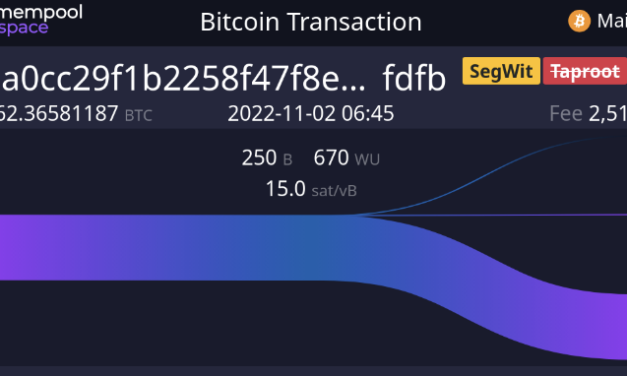
Billionaires, take note. It’s one million times cheaper to send huge sums of money on the Bitcoin (BTC) blockchain. A Bitcoin user sent over 50,562 BTC ($1 billion) to an address on the blockchain, paying a fee of just 2,513 Satoshis (the smallest denomination of a Bitcoin), equivalent to half a dollar for the pleasure. Transaction sankey diagram showing fees, value and time. Source: mempoolThe unknown wallet address paid a tiny fraction (less than 0.0001%) of the total value transacted. Put simply, the user paid 50 cents to move double the GDP of the Bitcoin-friendly islands of Tonga. The billion-dollar transaction was processed in block 761374, at a transaction fee of just 15 satoshis (sats) per unit of data or sats/vByte.Cointelegraph experimented with various online banking services to estimate the cost of sending vast sums of money through legacy finance tools. For the transfer of $10 million, a well-known remittance provider charges a tiny fraction, 0.3%, which equates to $30,000. That’s one million times more expensive than using the Bitcoin blockchain to send money.Experimenting sending vast sums of money with legacy financial tools. Source: WiseBefore a new Bitcoin block is mined, every Bitcoin transaction request sits in the memory pool, or “mem pool”, which is kind of like a Bitcoin bus stop. On average, miners take 10 minutes to mine a new block.Bitcoin miners sort through transactions, processing the passengers that have the most expensive bus tickets (transaction fees) first. Typically, the higher the transaction fee, the faster the transaction is confirmed. At 15 sats/vByte, the cost of sending over 50,000 Bitcoin is very low, indicating that this Bitcoin whale was not in a hurry. By way of comparison, in late October, a fat-fingered Bitcoin user paid a whopping 8,042 sat/Byte, or 1,136,000 sats to move 3.8 Bitcoin ($65,000).The process of sorting through transactions in the mempool is relatively straightforward for miners. Contrary to many Bitcoin critics’ beliefs, it is not an energy-hungry process. Ultimately, Bitcoin’s energy consumption comes from block reward issuance, not transactions. Related: BTC miner CleanSpark scoops up thousands of miners amid ‘distressed markets’The Bitcoin whale address continued to send over 50,000 Bitcoin to various other addresses on the blockchain. The addresses are not publicly known addresses, such as Binance’s cold storage wallet or the Bitcoin mined in 2009, which was subsequently lost in a landfill in Wales.

Čítaj viac
Bank of England raises interest rates to 3%, largest jump in 33 years

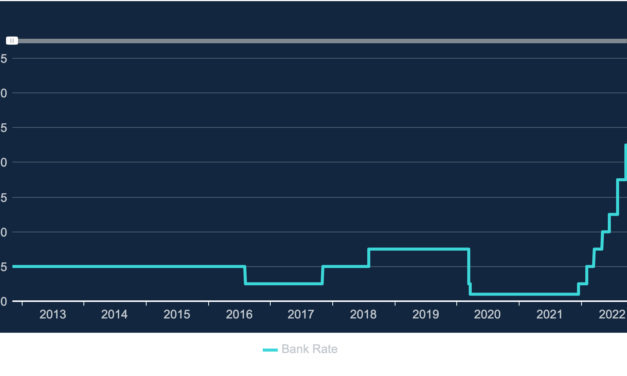
Desperate times call for desperate measures. The Bank of England, effectively the United Kingdom version of the Federal Reserve, has raised interest rates by the highest rate in 33 years.The Bank of England’s Bank Rate, or the cost of borrowing money, rose by 0.75% to 3%. According to the Monetary Policy Committee (MPC), the Bank of England voted by a majority of 7-2 to increase interest rates to 3%. U.K. Interest rates hockey stick to 3%. Source: BankofEnglandThe U.K. is battling with high, double-digit inflation. The economic situation has not improved in recent months. The U.K. recorded 10.1% inflation in October, the second time in three months.The MPC is responsible for setting official interest rates in the U.K.The Monetary Policy Committee report noted:“Inflation is too high. It is well above our 2% target. It’s our job to make sure that inflation returns to our 2% target.”The pound sterling tumbled to $1.12 upon the news, as investors lost confidence in the pound sterling. The pound recently hit $1.04, an all-time low, and another indicator of waning investor confidence. The pound rose to a recent high against Bitcoin (BTC), kissing 1 BTC = £18,000.The pound sterling dropped 4% on the news. Source: GoogleInterest in crypto has been burgeoning in such an environment. British pound trading volume soared 1,150% in September, while the United Kingdom recently hosted the Bitcoin Collective Conference, which the Chairperson of The Crypto and Digital Assets All-Party Parliamentary Group, MP Lisa Cameron attended. Cameron affirmed to Cointelegraph in an exclusive interview that the U.K. will become an international hub of crypto and digital assets. However, various challenges and regulatory hurdles stand in their way.Related: United Kingdom banks are a threat to crypto, and that’s bad news for everyoneStablecoins were recently renamed by the group, and the new Prime Minister, Rishi Sunak has expressed interest in crypto. Notwithstanding, the economic backdrop in the United Kingdom is increasingly concerning. British Economist Ed Conway commented that the U.K. is already in a recession, which could be the longest since records began. The MPC predicts inflation will fall sharply from the middle of 2023.

Čítaj viac

We need to move a lot faster on Global South Bitcoin adoption: Paxful CEO

Cointelegraph hit the gym with Ray Youssef, co-founder and CEO of Paxful, to tackle Bitcoin adoption in the Global South. In between sets and a little out of breath, Youssef told Cointelegraph, “The global South is where we should be looking” for Bitcoin (BTC) adoption.[embedded content]A New Yorker born in Egypt, Youssef regularly visits Africa and the Global South to promote Bitcoin and peer-to-peer finance. He is determined to bring Bitcoin to those living and working across Africa and to undermine the “Economic apartheid” created by government-issued fiat money. Youssef is a firm believer that government-backed, fiat money is a scourge on human progress. He posited, “Creating money is the greatest creative opportunity of any government,” before launching into a diatribe against western governments as he pumped iron. Nonetheless, thanks to Bitcoin, people around the world and especially those in the Global South, now have the means to fight back against economic repression:“The good news is we have a few tools at our disposal. We have the Internet, we have mobile phones, and now we have Bitcoin peer-to-peer, electronic cash.”Youssef’s business, Paxful, currently numbers 10 million users worldwide. But the CEO explained that we need to move a lot faster in order to reach a billion users in the next five to ten years. He referred to the explosive growth of telecommunication companies such as M-Pesa in Kenya as examples that adoption can flourish rapidly: “The telcos have shown us the path, but we aren’t listening. We’re still trying to replace banks with wallets, and that is not the path to a billion citizens. We need something more.”Ultimately, the key to unlocking growth in emerging markets is teaching citizens about Bitcoin and the properties of hard money. “A focus on education is great. But primarily we have to shift away from this mindset that we have right now of just replacing banks with wallets.”It’s true that Bitcoin wallets do act as a replacement for banks. In El salvador, for example, a heavily unbanked country, Bitcoin adoption onboarded four million users in a year: 70% of the unbanked population gained international payment and remittance services. However, Youssef goes one step further, Youssef envisions a world in which Bitcoin helps the unbanked trade and transact freely, creating an abundance of entrepreneurship.Related: Bitcoin in space is good for user privacy, says Adam BackFinally, Youssef also joked that Ronnie Coleman, the bodybuilder and 8-time Mr. Olympia winner, would be a Bitcoiner. Cointelegraph reached out to Coleman for comment and will update when possible. 

Čítaj viac

McDonald’s, pizza and coffee paid in Bitcoin: The Plan B for crypto payments

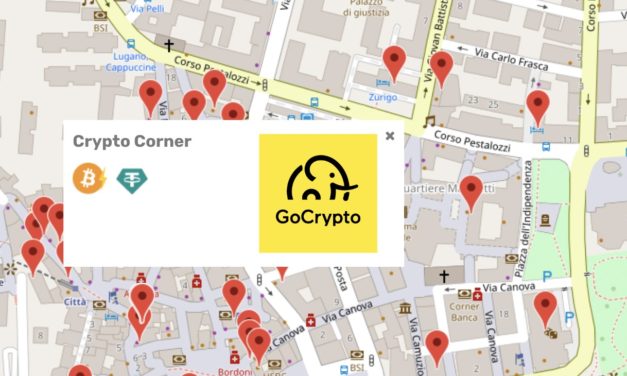
Over the weekend, thousands of Bitcoiners and crypto enthusiasts descended on the small, sleepy Swiss town of Lugano. More specifically, they piled onto a McDonald’s restaurant. Perched on Lake Lugano, Mcdonald’s Lugano received countless visits from Bitcoiners keen to trade Satoshis (the smallest denomination of a Bitcoin) for Big Macs, McFlurrys and coffee.But why were European crypto enthusiasts excited to pay in Bitcoin (BTC) at one of the world’s most recognizable brands? Well, firstly to demonstrate the Lightning Network, a Layer-2 technology built atop Bitcoin. But also to live up to Satoshi Nakamoto’s promise that Bitcoin is, in fact, an electronic cash system. McDonald’s order paid with #Bitcoin over the Lightning Network. Went for a Saifedean style order. pic.twitter.com/srIsj9SAfB— ₿ GANDALF (@BTCGandalf) October 27, 2022The entire McDonald’s team had been educated and onboarded onto the Bitcoin network just days before the major European Bitcoin and blockchain conference, the Plan B Forum, Tether chief technology officer Paolo Ardoino told Cointelegraph. The Italian ex-pat gave Cointelegraph an overview of Bitcoin and crypto adoption in Lugano, joking that the hands-on process of educating merchants on how to accept crypto can be time-consuming: “At McDonald’s, we spend like one week because they have a ton of people working there.”Ardoino’s company, Tether, orchestrated a broad plan for the economic capital of Italian-speaking Switzerland to adopt Bitcoin and crypto. What commenced as a plan for citizens to pay their taxes in crypto has morphed into a summer school called Plan B, a conference named the Plan B Forum and crypto merchant adoption — spearheaded by McDonald’s. Cointelegraph investigated Bitcoin and crypto merchant adoption to better understand how countries, regions — or in this case — cities can adopt crypto in a meaningful way. Is it possible, for example, to live on crypto in Lugano?Over 60 merchants accept crypto in Lugano. Source: PlanBArdoino explained that over the past few months, the Plan B team has onboarded over 60 merchants to accept crypto, but growth in merchants and crypto payments is really starting to ramp up:“Basically when we had 30 merchants before reaching 600 hundred [crypto] transactions. And in the last five days ago we had 600 transactions.”The team at Plan B intends to hit 1,000 merchants accepting crypto by Q2 2022. “We have a business team that will run around the city,” Ardoino explained. The team onboards more and more merchants and ensures that Lugano becomes the best place to spend crypto in Europe.Unlike El Salvador’s top-down approach to Bitcoin, in which the president announced Bitcoin as legal tender and there was reportedly little hands-on educational assistance for people on the ground, Plan B has the luxury of a team of onboarding personnel.Indeed, Tether and Plan B have the resources to guide merchants through the crypto onboarding process. Plus, they are able to receive feedback from merchants and update their systems accordingly, Ardoino shared:“But also, the problem is the maintenance. We install [the Point of Sale solutions] and then we have people that periodically check in and say, okay, you have problems, get feedback and so on because you know, otherwise you will never work.”True to form, on the first day of the Plan B conference, the onsite pizzeria cheffed by Mauro, had issues with the payment terminal. The Plan B team soon rectified the situation. At Cointelegraph’s hotel, upon arrival, the receptionist said they would accept crypto payments from the following day. Cointelegraph endured paying in fiat for an entire day, before as promised, the hotel’s PoS solution was put to use.Plan B payment terminal. Source: PlanBAll Plan B merchants accept payments over the colorful payment terminal in LVGA token, Bitcoin Lightning, and Tether (USDT). LVGA is a stablecoin proxy of swiss francs and is available to local residents. Related: Pro-crypto city of Lugano and El Salvador sign economic agreement based on adoptionThe merchant partnership is between GoCrypto, a crypto payments company, and Tether. Curiously, Ardoino told Cointelegraph that so far, not a single merchant has rejected the opportunity to accept crypto. The experience is a stark contrast to crypto merchant adoption in the United Kingdom, for example. Ardoino explained:“If your neighbor has it and he’s starting to get more people walking around any paying, you know, people can get over there their biases. When it comes to money; people are more prone to come over their biases.”Cointelegraph succeeded in living off crypto during their stay in the Swiss city, barring one exception. Not a single pharmacy accepts crypto (yet), so if you are planning on a visit to Lugano, don’t forget your toothbrush.

Čítaj viac

14 years since the Bitcoin white paper: Why it matters

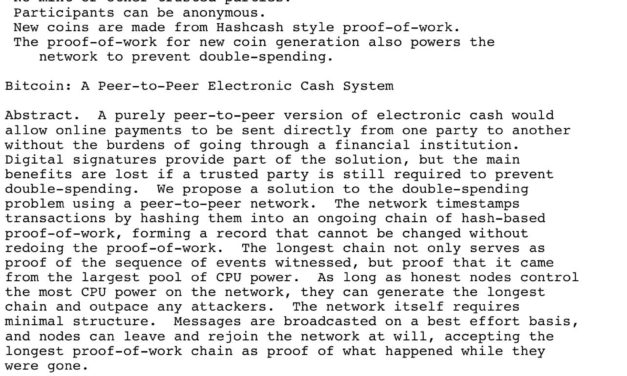
Happy white paper day, Bitcoin. It’s been 14 years since Satoshi Nakamoto first sent an email to the Cypherpunk mailing list with the subject line, “Bitcoin P2P e-cash Paper.” The email included a link to the white paper, an outline of what would soon become a one trillion-dollar market. The first sentence of the email has become iconic among the Bitcoin community:“I’ve been working on a new electronic cash system that’s fully peer-to-peer, with no trusted third party.”Over the past 14 years, Bitcoin (BTC) has morphed from a hobbyist pastime into a globally recognized brand. Bitcoin has been adopted as legal tender in regions of the global south such as El Salvador and the Central African Republic. It is used by freedom fighters and campaigners while being a tool for financial emancipation and economic empowerment worldwide.The speculative fervor that Bitcoin became known for still lingers while Bitcoin’s reputation as being a tool for illicit activities clings on, despite the fact that the United State dollar remains a far more effective tool for hiding financial activity. In 2022, Bitcoin has evolved into so much more. Cointelegraph spoke to Bitcoin OGs, enthusiasts and newbies during the Plan B Conference in Lugano, Switzerland, to investigate what the white paper means to the world. Doing its ₿it for good For world-renowned charities such as Save the Children, the white paper and the subsequent creation of Bitcoin have benefited the organization. Antonia Roupell, Web3 lead at Save the Children, told Cointelegraph that the organization recognizes “Bitcoin’s potential to be a force for good and a force for financial inclusion,” adding:“On Bitcoin’s 14th anniversary, and at a time of increasingly global financial inequality, the phrase ‘bitcoin is for anyone’ really resonates.”Roupell explained that Save the Children US was the first iNGO to accept Bitcoin in 2013, stating, “Since then, we’ve raised almost 75 BTC thanks to generous donations to our relief efforts supporting children impacted by conflict in places like Afghanistan and Ukraine as well as families impacted by climate disasters such as Hurricane Ian in Florida.”Crisis zones have underscored the resiliency and effectiveness of Bitcoin. In the first 48 hours of the Ukraine war, for example, the Ukraine government received $7.5 million in Bitcoin. Stand with the people of UkraineNow accepting cryptocurrency donations. Ethereum. Bitcoin and Tether (USDTtrc20)BTC — 357a3So9CbsNfBBgFYACGvxxS6tMaDoa1PETH — 0x165CD37b4C644C2921454429E7F9358d18A45e14USDT (trc20) — TEFccmfQ38cZS1DTZVhsxKVDckA8Y6VfCy— Mykhailo Fedorov (@FedorovMykhailo) February 26, 2022The speed at which Bitcoin hit government wallet addresses inspired the United Nations International Computing Centre (UNICC) to take crypto donations seriously, UNICC Director Sameer Chauhan explained in a Cointelegraph interview at the World Economic Forum in Davos. USD, British pounds, euros and government-issued money were much slower to trickle in to support the Ukrainian defense than Bitcoin. Decentralization and empowermentFor Bitcoin Gandalf, a marketer for Braiins — a Bitcoin mining tools company — the white paper and the subsequent pseudonymous network guarantee a basic level of privacy. Gandalf, who chose to obfuscate his name and face on the internet, told Cointelegraph:“With the increased surveillance propagated by the state and huge centralized tech companies that control the majority of information distribution, it’s more important than ever that we have decentralized alternatives that guarantee us basic freedoms.”Bitcoin is a permissionless network that anyone can use. It does not discriminate. Even for those without an internet connection, thanks to innovations in mobile network technology, Bitcoin can be sent like a text. Bitcoin’s mantra of being a “freedom technology” has bloomed across its 14-year history. During the Plan B conference in Lugano, Switzerland, “Freedom” was a central theme. Julian Assange’s family hosted talks about his incarceration for exposing military secrets, while speakers from Togo to Lebanon shed light on “Bitcoin the tool for financial freedom.” A drone show emblazoned the night sky with the cliché, bringing the Bitcoin and blockchain conference to a close:#Bitcoin is Freedom pic.twitter.com/WjVvVsSBPB— CARLA⚡️(thecryptoc0up1e) (@thecryptoc0up1e) October 29, 2022

Several announcements at the conference in Switzerland underscored the Bitcoin community’s commitment to freedom. Paolo Ardoino, chief technology officer of Tether, introduced Pear Credit, a peer-to-peer credit software that could undermine the proliferation of centralized authorities (or blockchains) that issue credit and tokens. Founded by Tether, Holepunch and Synonym, Pear Credit should “put control of the economy back in the hands of the people.”In an exclusive interview with Cointelegraph, Ardoino explained the thinking behind Pear Credit, stating, “Everything that is not Bitcoin is credit. Everything that is not Bitcoin is inherently centralized.” His team has built a peer-to-peer service that offers the ability to issue credit — without a blockchain or product and without endless monetization. In the spirit of the Bitcoin white paper, Pear Credit is “just open source libraries,” Ardoino commented. Pear Credit focuses on “scalability and privacy” and favors freedom to build open-sourced technology over chasing profits. Gandalf said that the Bitcoin white paper “marked the beginning of the resistance to this trend” of centralizing power. Tech companies increasingly exploit customer data and online behaviors. Bitcoin, by contrast, is the largest demonstration of a peer-to-peer and privacy-centric network that continues to inspire projects that could undermine centralization. Why do you care about the white paper?John Carvalho, CEO of Synonym and contributor to Pear Credit, called for calm and introspection on the anniversary of the white paper. Carvalho, who also announced the creation of a new Bitcoin wallet app, Bitkit, during the conference, told Cointelegraph that even some of Satoshi Nakamoto’s biggest fans “will admit that he got some things wrong and how he thought things would play out. Even in the code.” In a possible nod to the Bitcoin fanaticism and adulation for Nakamoto that sometimes transcends the space, Carvalho explained that even though Bitcoin continues to grow in importance due to greater levels of adoption, users and the amount of people trying to copy Bitcoin. “For me, and I think for most people, your Bitcoin birthday isn’t when Bitcoin was invented, it’s when you discovered Bitcoin.” “I’d rather associate it with when you bought your first Bitcoin or when you had your own ‘eureka’ moment.”Ultimately, while Nakamoto’s email on Oct. 31, 2008, marked the first brick in the foundations of the Bitcoin blockchain, it’s the developers, the builders, the node runners, the miners and the Bitcoin buyers that have kept the idea alive. Bitcoin is indeed an effective form of remittance; it’s a spark that could ignite a path toward greater online freedoms, and it’s a meaningful shift away from centralized powers. But, Bitcoin is also a long line of code that millions of people worldwide choose to follow and contribute to every day. Raise a glass to Satoshi, sure, but also take the time to reflect on your own Bitcoin journey. When’s your Bitcoin Birthday, anon?

Čítaj viac

Získaj BONUS 8 € v Bitcoinoch

nakup bitcoin z karty

Registrácia Binance

Burza Binance

Aktuálne kurzy