Autor Cointelegraph By Joseph Hall

Colombia clamps down on crypto tax evasion as adoption thrives

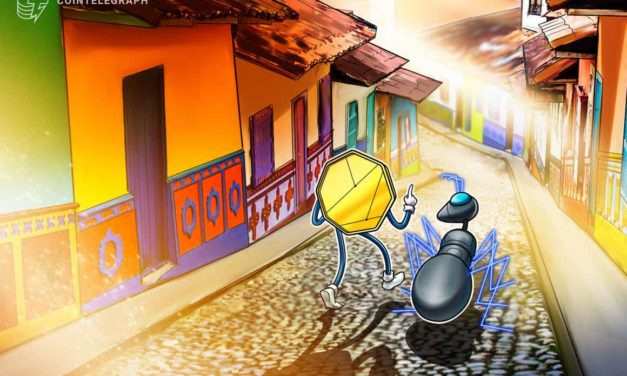
Down in Bogotá, cryptocurrency adoption is raging on. Colombia’s tax authority, the DIAN, (Dirección de Impuestos y Aduanas Nacionales de Colombia) has begun to catch up. It seeks to take “special measures” to crack the whip on cryptocurrency tax avoiders. In a statement released on January 28th, the DIAN stated that it would attempt to better regulate the cryptocurrency space, to work toward a more “honest” Colombia. The statement admits that Bitcoin (BTC) and cryptocurrency use is growing worldwide:“Currently, operations with crypto assets are a reality worldwide and with the boom in the use of so-called virtual currencies or cryptocurrencies, the DIAN has initiated actions aimed at to control the taxpayers who carry out operations with them.”In effect, the DIAN wishes to establish a framework that would establish a tax control for “omitted” or “inaccurate” taxpayers. That includes Colombian citizens who failed to record income obtained from crypto operations, or those recording inaccurate cryptocurrency activities.It comes as little surprise as Colombia is an increasingly active country for Bitcoin and crypto adoption. Colombia is consistently the second most active Bitcoin trading country in Latin America according to usefultulips.org, an online service tracking peer-to-peer BTC trading across the world. Meanwhile, a search on Coinmap shows hundreds of merchants and ATMs across the country for Bitcoin services. Indeed, according to the Venezuelan newspaper El Nacional, there are 687 Bitcoin-friendly retailers in Colombia. While hardcore crypto libertarians may roll their eyes at the tax authorities attempting to regulate the space, the move may in fact be encouraging for greater crypto adoption. Recent news, as well as the DIAN’s approach to regulation, would suggest that Colombia’s institutions are in fact warming to crypto.Currently, Colombia’s laws dictate that its financial institutions are prohibited from protecting, investing, brokering, or managing cryptocurrency operations. However, Colombian citizens can invest, and some legacy financial institutions are paving the way for greater adoption of cryptocurrencies in the country known as the “gateway to South America.” In March last year, one of Colombia’s oldest banks, Banco de Bogotá, surprised incumbents, announcing it would explore crypto-related services as part of a regulatory sandbox project. The Winklevoss twins’ Gemini trading firm has since partnered with a rival bank, Bancolombia, for clients to trade four crypto assets: Bitcoin, Ether (ETH), Litecoin (LTC) and Bitcoin Cash (BCH).It would appear the Colombian government consents to crypto, launching a game that teaches young people how to invest in the stock market and cryptocurrencies in September 2021.Related: Volatility, hyperinflation and uncertainty: How everyday Venezuelans are using stablecoins to protect their livelihoodsNonetheless, before jumping to conclusions that Colombia may become the next Latin American country to adopt Bitcoin as legal tender, understand that the DIAN’s efforts are simply an attempt to fight tax evasion. The country will need to up its user numbers, trading volumes and win over more government ministers before such a move could take place.

Čítaj viac

Another solo Bitcoin miner solves valid block, making it fourth in 2022

Hopium is back on the menu for solo Bitcoin (BTC) miners. A circa $240,000 reward, or 6.25 BTC, was generated by yet another solo miner this morning. This time, the odds were less than 20%, according to Con Kolivas, a Bitcoin software engineer and administrator for ckpool, whose name takes his initials. It’s the fourth “blockfind” for the ckpool since Jan. 11. Kolivas tweeted his congratulations to the miner who joins the ranks of the few and fortunate successful solo BTC miners. Congratulations to a miner with 1.14PH who solved the 264th solo Bitcoin block at https://t.co/UWgBvLkDqc ! https://t.co/5BsWlYkYJt There was once again ~20% chance that one of the miners at the pool would have solved a block by now. pic.twitter.com/NrlAbhhKCk— Dr. Con Kolivas (@ckpooldev) February 1, 2022The plucky miner belongs to the Solo ckpool, the service that offers anonymous solo Bitcoin mining with a fee. At 1.14 petahashes per second (PH/s), the miner is considered a ‘whale’ miner, with a considerable hash rate for one single entity.A new BTC block is solved roughly every 10 minutes by miners competing against the entire bitcoin network hashrate. By way of comparison, United States Bitcoin miners Foundry are currently the largest contributors to the network hash rate, with 33,803 PH/s.One Twitter user estimated that while 1.14PH/s is a lot, it is still less than a room full of S19s, the flagship mining product by Antminer. Related: Bitcoin miners believe global hash rate to grow ‘aggressively’The ckpool has taken the mining world by storm recently. A Bitcoin miner with a tiny hash rate of just 126 terahashes per second (TH/s)–possibly a single S19 machine–solved a valid block on January 12th. Two weeks later, another underdog with a mere 86 TH/s achieved the improbable by solving another valid block. Over the course of the Bitcoin blockchain’s existence, 264 blocks or 0.037% of the circa 721,240 blocks were solved by ck’s solo Bitcoin miners. While the odds are clearly against the soloists, they continue to surprise and delight Bitcoiners.

Čítaj viac

Kanye West says no to NFTs

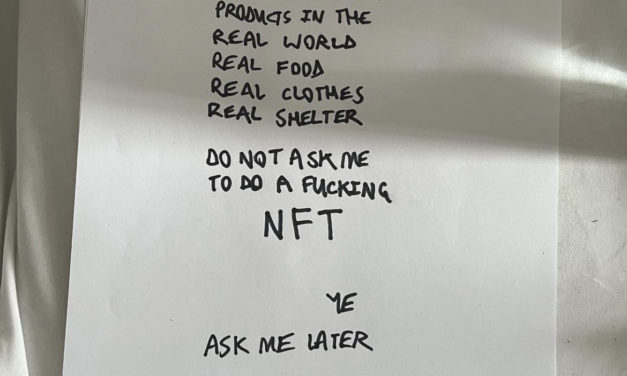
Kanye West won’t be purchasing a Bored Ape Yacht Club nonfungible token (NFT) any time soon. In a strongly worded Instagram post made on Monday, Ye stated “Do not ask me to do a f*cking NFT.” The message in the photo, shared with his 10.5 million followers, explains he is focused on “building real products in the real world.”He didn’t mince his words in a follow-up comment to the Instagram post:“STOP ASKING ME TO DO NFTs I’M NOT FINNA CO-SIGN … FOR NOW I’M NOT ON THAT WAVE I MAKE MUSIC AND PRODUCTS IN THE REAL WORLD”.Whereas celebrities including Neymar, Eminem and Jake Paul who made cash grabs for NFTs in 2021, the billionaire and former presidential candidate Kanye West is categorically in opposition to the virtual tokens.Related: NASA blasts NFTs, says they won’t take off with its imageryKayne West joins a growing list of NFT-skeptics, including celebrities such as Keanu Reeves. Movie star Reeves joked in an interview for the Matrix Resurrections that NFTs are “easily reproduced.” Unlike Reeves’ character Neo, who is trapped in the Matrix, Ye will continue to work on “real products” in the “real world”. West’s album Donda 2 is scheduled for release on Feb. 22. Meanwhile, NFT fans will wonder how Ye could be so heartless?

Čítaj viac

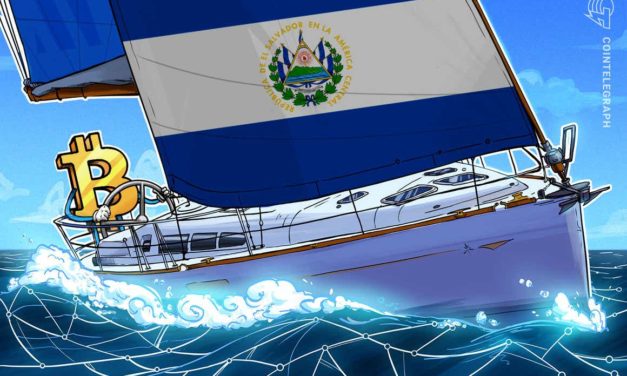
Around El Salvador in 45 days: A Bitcoin-only travel story

El Salvador adopted Bitcoin (BTC) as legal tender over four months ago on Sept. 7, 2021. Bitcoiners around the world have been watching with intent as the president of El Salvador, Nayib Bukele, attempts to “orange-pill” an entire nation.The president regularly buys the dip, has promised a low-tax Bitcoin “Citadel” in the form of Bitcoin City, and is exploring renewable energy BTC mining using volcanoes.But what is it like for those living day to day in the smallest Central American country, known as “the land of volcanoes”? Moreover, what’s it like trying to live off only Bitcoin?An Italian couple, Rikki and Laura, have done just that. Rikki is a Bitcoin podcaster and human rights activist, active in the space since 2016. Laura works as a community manager in the blockchain space and has been laser-focused on crypto since 2019.After the Bitcoin Law was passed, Laura came up with the idea of traveling all around El Salvador for 45 days. The challenge? Living off only Bitcoin. No bartering, no euros and certainly no U.S. dollars. Their experiences offer fascinating insights into the country’s history, its charming landscapes and, of course, its laser-eyed Bitcoin future. The stories of their travels can be read in English and Italian, and their podcast is called Bitcoin Italia Podcast. On the flip side, Rikki and Laura also stumbled across weighty challenges arising from being orange-coin-only, including gaps in education and difficulties transacting with Bitcoin. They chatted with Cointelegraph via video call from Santa Ana, a coffee-rich region of El Salvador, on Jan. 24.They are now bona fide fountains of knowledge for Bitcoiners looking to try out a BTC-only trip to El Salvador. Here are their top tips for crypto enthusiasts traveling to the tiny tropical nation.Do you accept Bitcoin? Oh, you don’t? Ciao!In San Salvador, lots of places accept Bitcoin — from McDonald’s to Starbucks to mom-and-pop stores. In El Zonte, known as “Bitcoin Beach” — the birthplace of the Bitcoin Law — most vendors advertise that they accept BTC. However, off the beaten track, Bitcoin is poorly understood and sometimes misconstrued as the state-sponsored wallet, Chivo Wallet. When faced with a vendor who doesn’t accept Bitcoin, the couple’s top tip is to carry out a theatrical experiment. The customer should ask the vendor if they accept Bitcoin, and if the vendor says no, the customer should turn on their heel and leave. They shouldn’t reach for their bucks. As Rikki explained, “Just walk out!” Merchants want the business, so if a customer makes a scene showing that they only have Bitcoin, the vendor will want to accept their sats. If a vendor doesn’t want to accept Bitcoin, it’s generally not due to infrastructure deficits, as “You can buy a cheap Chinese smartphone in the market with a sim card and a data plan for $20, and the connection here is huge.” It’s the “perfect country to conduct the Bitcoin experiment.”This brings us to the interesting bit, which is getting to the “why,” the reason behind not accepting Bitcoin. Sometimes, it’s simply because the owner of the restaurant or hotel has confused Chivo with Bitcoin — it’s more common than you think. Other times, all it takes is a quick conversation and a few taps in Chivo for them to see how it works.Rikki and Laura found joy in discussing and educating locals about Bitcoin, creating fond memories along the way. Prepare, then prepare againWhile the adventure was a lot of fun, Rikki said, “It’s not easy, and it takes a little preparation. You have to plan your routes in advance. Particularly as you get out of the main touristic parts where Bitcoin is less accepted.” In some instances, the couple called 20 or 30 hotels before finding a Bitcoiner. Undeterred by the challenge, these struggles were, in their view, the cream in the coffee of their travel adventure. “Sometimes, we ended up in the craziest places just because we were scouting for places that accepted Bitcoin.” They joked that Satoshi Nakamoto was the driving force behind their day-to-day decision-making.Riding Bitcoin solo also meant that the couple was obliged to engage with locals on a more intimate level, building human connections along the way.Sorry, Satoshi, but museums don’t accept BitcoinRikki badly wanted to see the Mayan ruins of Tazumal, a historical site and archaeological museum near Santa Ana. However, heritage sites are strictly cash-only. Rikki was crestfallen, and if given the chance, he would interrogate President Bukele on such a bizarre Bitcoin omission. “Why are museums managed by the Salvadoran Ministry of Culture cash only?” The decision may change as the Bitcoin Law slowly rolls out to affect all areas of society, but currently, cultural experiences, museums and some hikes are cash only. The couple was unable to enter such sites due to their strict rules. Cultivated Bitcoiners ought to bring some dollars just in case.Education, education, educationFew Salvadorans understand what Bitcoin is, how it works, or the difference between Lightning Network and on-chain transactions. As Laura points out, some Salvadorans “think that you can only pay in Bitcoin if you use the Chivo app.” They are unaware of other Lightning wallets such as BlueWallet or Wallet of Satoshi.In the Chivo app itself, there are no teaching tools for users who want to learn about Bitcoin. Rikki explained that “Nobody here knows anything about Bitcoin. They didn’t provide one second of education to the people of El Salvador.” Laura added, “If people had learned about Bitcoin, they wouldn’t be using the app.” Given the lack of information and education available to Salvadorans, it is, therefore, the responsibility of Bitcoiner tourists to take their time with locals. They ought to share their knowledge about Bitcoin and be patient as Salvadorans begin to understand the monetary network. As Michael Saylor often says, it takes thousands of hours to understand Bitcoin. The Bitcoin Law was quickly passed and implemented, and many locals haven’t had the time to come to grips with the technology. “Come to El Salvador, and spend your Bitcoin here”This is not so much a piece of advice as it is a plea from Rikki and Laura on behalf of the Bitcoin community in El Salvador. Come to El Salvador, and spend your Bitcoin. It raises awareness, it swells education levels through network effects and word of mouth, and ultimately, it encourages more and more people to use the Bitcoin network, they said. For Rikki, “The more we transact, the more we learn. The more they learn, the more they will study — and use it for good.”

Čítaj viac

Can DeFi and CeFi coexist? Three takeaways from experts panel

As price action bewilders market makers and traders, experts in the crypto industry reached an agreement on several important points last week. Notably, centralized finance (CeFi) and decentralized finance (DeFi), can coexist, and a “blend” of financial products and services will be available to users in the future. On Jan. 21, Cointelegraph moderated the panel discussion, “Can CeFi and DeFi Coexist?” for the Global Blockchain Business Council. In the video, panelists hash out questions related to adoption, banking the unbanked, and whether innovation means disruption of traditional financial services.[embedded content]Salient points included the need for greater education and transparency in the cryptocurrency space, while financial inclusion could be reached thanks to smooth onboarding techniques and clear-cut regulation. Popular blockchains like Solana and the Bitcoin Lightning Network cropped up as well as DeFi protocols including Uniswap.In terms of education, Mary Beth Buchanan, president, Americas and chief legal officer at crypto risk and intellegence fMerkle Science, commented:“A lot of people are not being served in traditional finance. The winner in the disruption race will be the project that has the ability to reach those in the community who are not currently accessing DeFi, and there has to be education.”Ambre Soubiran, CEO of digital asset data provider Kaiko, agreed that the solution to broadening DeFi’s reach is through “education, onboarding, and knowing the risks. People want the easy ability to reset a password as opposed to remembering 24 words.”Daniel Peled, founder and president of public blockchain Orbs, is passionate about bringing financial inclusion to “the two billion people around the world,” but “the industry is early.” He echoed Soubiran’s point that “many people don’t have access to DeFi applications; the products are complicated and tech-heavy. People still don’t know how to secure their funds securely.”However, for Peled, it is more than just educating people, it’s about providing a level-playing field on which everyone follows the same rules: “There is huge quantitive easing and 70% of all the money in the world has been printed in the past two years. The young don’t hold existing scarce assets such as real estate, equity, or gold; and they are not accredited investors who can get in on opportunities at the early stage. They (the young) are the ones adopting DeFi because they see the opportunities compared to other alternatives.”Ultimately, the creation of Bitcoin (BTC) sought to remedy such issues. As the first successful separation of money from the state, it possesses a clear issuance rate that renders the monetary network more transparent and equal for participants. Michael Moro, CEO of digital currency broker Genesis Global, shared Peled’s view on demographics: “The folks in the west are the most engaged into various DeFi protocols. The user interface and experience isn’t great as you have to be fairly tech savvy to be able to engage directly with Defi today. It generally needs to become a lot easier for folks to engage.”Ultimately, the panel eventually agreed that a combination of education and onboarding will pave the way for greater financial inclusion. Related: DeFi vs. CeFi: Comparing decentralized to centralized financeRegulation is high on the agenda in 2022. But it should ignite more growth in the space, because “as long as the on ramps and off ramps are regulated, then there will be a lot more freedom,” Moro continued.”Soubiran shared a similar view regarding onramps: “There is an opportunity for the existing institutions to leverage blockchain technology and the underlying infrastructure in order to provide the same services they are providing today.” As for the future of the DeFi and CeFi space, Nicolas Bertrand, former head of derivatives markets and commodities at Borsa Italiana had the last word. When asked whether the level of innovation could disrupt traditional cefi services, he replied, “Definitely.” He went on to say, “what happened to the telegraph after the advent of computers?”

Čítaj viac

Získaj BONUS 8 € v Bitcoinoch

nakup bitcoin z karty

Registrácia Binance

Burza Binance

Aktuálne kurzy