
Autor Cointelegraph By Joseph Hall

Crypto is not criminal: US Secret Service launches 'crypto awareness hub'

The tide is turning on the way in which law enforcers discuss cryptocurrencies and treat crypto users. The United States Secret Service has launched a cryptocurrency awareness hub featuring a cheesy public service announcement video. The educational tool seeks to combat the “illicit use of digital assets as well as provide public awareness information on digital asset security and how to ensure it remains secure.”Watch the video here: [embedded content]”Secret Service: Safeguarding the next generation currency”, Source: U.S. Secret Service YoutubeU.S. Secret Service Office of Investigations Assistant Director Jeremy Sheridan said that the hub focuses on “investigating financial crimes.” It aims to “identify, arrest, and prosecute those engaging in crimes involving digital assets.” Nonetheless, it’s critical to note that the language and tone used regarding cryptocurrency are positive. The launch website concedes that “digital and cryptocurrencies continue to become more popular forms of payments,” hence the need for the Secret Service to be at the top of its game. The launch of the cryptocurrency awareness hub comes two years after the Secret Service founded the Finance-Related Cybercrime Task Force. The first iteration of cryptocurrency-related activities merely showed concern for the ways in which cryptocurrencies could be used to make illegal online transactions. In what could be a small win for the cryptocurrency community, the industry may finally be shedding its reputation as being a haven for cybercrime and illicit activity. Cryptocurrency used to be reserved for Silk Road criminals and drug users.Related: 4% of crypto whales are criminals, and they hold $25B among them: ChainalysisHowever, in 2022, the Secret Service admits that:“Investments and transactions using cryptocurrencies and digital assets are not inherently criminal.”Broadly speaking, using cryptocurrencies on a transparent, backdating blockchain makes little sense for illicit financial activity due to the way in which blockchains can be easily monitored and tracked. The Netflix-worthy Bitfinex story involving unlikely criminals made this point very clear: it is very hard to launder money using blockchain.Ultimately, if people want to get paid to do bad things, it’s still best to take the money in cash.

Čítaj viac
‘Deep bullishness’ for crypto: Analyst comments on Deutsche Bank report

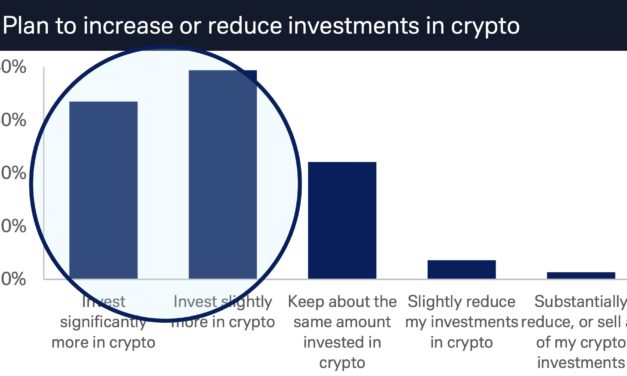
As an unlikely but welcomed source of hope during crypto market jitters, Deutsche Bank’s report, the “Future of Cryptocurrencies,” sheds light on potentially bullish cryptocurrency activity. A survey critical to the report suggests that neither traders nor investors are likely to part with their crypto holdings in the event of a bear market. Marion Laboure, a director of macro strategy at Deutsche Bank, told Cointelegraph:“It is interesting to note the deep bullishness for cryptocurrencies. Even in an extremely bearish crypto market in which values were to drop 80%, less than half of investors say they would reduce their investments or exit the market.”DB surveyed 3,250 United States consumers in early December 2021, 680 of whom use cryptocurrency. The survey was intended to be representative of the U.S. census, covering different genders, ages, incomes, regions and races or ethnicities.The report splits the findings into three groups: traders, investors and transactors. The lion’s share were investors: 80% of those surveyed admitted having invested in crypto in the past six months.Even in an extremely bearish crypto market, less than half of traders (who comprise over 35% of those surveyed) said they would reduce their trading. Plus, over 70% plan to increase (either significantly or slightly) their crypto activity in the next six months.Bear in mind that Deutsche Bank conducted the report in December, and while months can feel like years in the crypto industry, the report surmised that “very few crypto bears are active in the space.”Laboure has spoken in favor of cryptocurrencies, explaining that while volatility is a given, it “could become the 21st-century digital gold.” Her employer agrees. Deutsche Bank stated in March last year that Bitcoin (BTC) is “too important to ignore.”Related: Credit Suisse data leak reveals decades of shady clients and activityFinally, in a sign that perhaps the get-rich-quick sentiment is subsiding, the survey also revealed that “only a small percentage of investors believe that crypto is a golden ticket.” However, it’s possible that traders had instead simply shifted over to nonfungible tokens, where speculation and euphoria reigned in 2021. 

Čítaj viac

$250K bounty 'not too low to be insulting,' says Coinbase white hat hacker

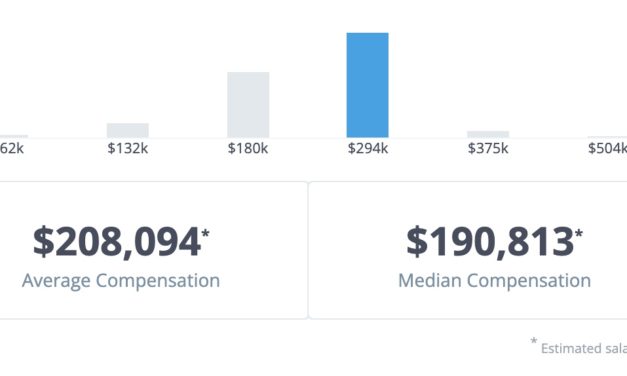
On February 11th, two days before the Super Bowl and Coinbase’s $14 million color-changing QR code advert, an engineer was desperately trying to reach out to Coinbase management and the development team.Anyone here can get me a direct line with someone at @coinbase , preferably management or dev team, possibly @brian_armstrong himself?I’m submitting a hacker1 report but I’m afraid this can’t wait. Can’t say more either, this is potentially market-nuking.DMs open.— Tree of Alpha (@Tree_of_Alpha) February 11, 2022Tree of Alpha had discovered “a flaw in the new Advanced Trading feature would have allowed a malicious user to sell BTC or any other coin without owning them.” The flaw in the code had the potential to “nuke” the market.Commenting on the flaw, Tree of Alpha told Cointelegraph that the “vulnerability itself was indeed worrying,” sharing that “some oversight on both the dev team and the QA/testing team was needed to let this happen.” “While the advanced trading product was not available for everyone and was still in beta testing, a significant number of users could have used the exploit.” However, thanks to the hacker’s quick reactions and an “overwhelming community response,” the danger was averted and Coinbase avoided a “possible crisis.”As is common with white hat hacking, a bounty was duly awarded. Coinbase has initially awarded $250,000–an insignificant sum for the Silicon Valley-born unicorn. Twitter was quick to judge the quarter-million sum as a “bear market” bounty, particularly considering the scale of the hack and that Coinbase executives earn that figure annually.Coinbase executive salaries according to Comparably. Source: ComparablyTree of Alpha told Cointelegraph that the amount was “not too low to be insulting.”“While a higher bounty might have been wise to deter more grey hats from exploiting vulnerabilities, it is common in the crypto sphere to lose touch with the value of money. For most working human beings, $250K is a very decent sum.”Related: MakerDAO launches biggest ever bug bounty with $10M rewardUltimately, the events shone a light on the importance of white hat hacking for a relatively nascent industry. The U.S. State Department recently announced it would offer up to $10 million in crypto rewards to white hat hackers; however, Tree of Alpha affirmed that “white hat hacking is crucial yet criminally overlooked by companies.”In a word to the wise, they concluded:“Companies won’t hesitate to spend tens of millions on marketing but won’t spend a fraction of it on making sure there is something left to market.”Coinbase CEO Brian Armstrong was among the first to thank the white-hat hacker for saving his company:.@Tree_of_Alpha you’re awesome – a big thank you for working with our teamlove how the crypto community helps each other out!— Brian Armstrong – barmstrong.eth (@brian_armstrong) February 11, 2022

Čítaj viac

Georgia punches well above its weight for Bitcoin mining: Report

At first glance, the pint-sized Republic of Georgia is an unlikely suspect for Bitcoin (BTC) mining activity. An underdog for mining, the country boasts abundant hydropower while ranked seventh worldwide for the World Bank’s ease of doing business index –ahead of the United Kingdom and Germany.Nestled on the Black Sea at the intersection of Europe and Asia, Georgia hosts Bitfury’s industrial mining operations as well as smaller, solo miners that tap into enormous amounts of hydroelectric power. Dutch miner Bitfury’s Bitcoin mining operation at the foot of the Tblisi National Park. Source: NPRThe country packs a punch for Bitcoin mining. While the Cambridge Bitcoin Electricity Consumption index puts Georgia’s hash rate at 0.18%, a detailed and long-term report by Arcane Research suggests the number is closer to 0.71%. Jaran Mellerud, an analyst for Arcane Research and author of the report, told Cointelegraph:“Home mining is big in Georgia, especially in regions with subsidized electricity. As long as there are electricity subsidies in certain regions of the country, people will continue setting up small home mining operations.”The report identifies at least 125 MW of crypto mining capacity, of which 62 MW derives from industrial-scale data centers. “The remaining 63 MW should then come from lots of small amateur setups scattered around the country in homes, garages, abandoned warehouses and factories.”Mellerud concludes that the real number for Georgia’s total hashrate is in the region of 0.71% because “100 MW of Georgia’s 125 MW total crypto mining capacity is dedicated to Bitcoin and that Georgia’s hardware is as efficient as the network average.” It is multiples higher than CBECI’s 0.18% estimate, he added.However, while the trend of Bitcoin miners moving to untapped energy resources, cheap energy, or merely cost-efficient places to do business is not new, it is a double-edged sword. In nearby Kazakhstan, which recently hosted as much as 18% of global hashrate due to cheap power and loose rules, regulators are already considering stepping in, proposing power price hikes and taxes.Mellerud is aware that despite Georgia’s “business friendliness,” “rising electricity prices” could deter miners from setting up operations. He told Cointelegraph:“I don’t believe the Georgian government wants more mining operations in the country as miners are already using almost 10% of the country’s electricity, contributing to the country’s growing electricity deficit.”Bitcoin and the flag of Georgia Source: Georgiawealth.infoNonetheless, in a boon for BTC miners in Georgia, lawmakers might grant crypto miners tax exemptions in a new bill, while Mellerud assures that “for industrial-scale mining, I believe there is no room for more capacity.”Instead, home mining–miners with units under 1 MW–may continue to flourish. Despite calls that residents of Svaneti in Georgia must swear a holy oath to Saint George to stop crypto mining, the country, on the whole, has a “positive attitude towards the emerging asset class.” Small-time crypto-enthusiasts can continue to use Bitcoin mining waste heat to warm their homes in the mountains, using Georgia’s abundance of “cheap and clean hydroelectric power.”

Čítaj viac

'Off the charts:’ Zynga blockchain exec praises P2E gaming talent

Hot off the news that the FarmVille and Words With Friends developer Zynga will release the first NFT game this year, Zynga’s blockchain gaming aspirations are taking shape. Matt Wolf, the marketing veteran with experience at EA and SEGA, is the new vice president of blockchain gaming for Zynga. He’s setting up the new team, bringing a wealth of “traditional gaming” experience to play-to-earn (P2E). In an interview with Cointelegraph, he said the talent pool in P2E gaming is:“Off the charts in terms of economics and traditional finance firepower; incredible people. Also, on the innovation side and on the technology side it’s off the charts.”However, he surmised many gamers’ thoughts when commenting on the gamification elements of NFT and P2E games. He conceded that the level of talent with regards to gaming is “thin;” which is undoubtedly where Zynga’s credentials come in.Famous for FarmVille, CSR Racing and Words With Friends, Zynga builds addictive “social” games that work well on mobile and while on the go. They regularly register over 100 million regular users per quarter, featuring on social media platforms and enticing users with multiplayer gaming types. FarmVille 3, released in 2020. Source: The DrumThe P2E gaming space by comparison, has been a space that prioritizes speculation over gamification. Ultimately, Zynga’s entry into P2E and NFTs could breathe life into a space dominated by entry-level graphics combined with excellent tokenomics.Wolf comments that Zynga has a “strong game muscle and we’re developing our DeFi muscle.” They’re recruiting more specialists that “have that piece of the equation.” In all, Zynga’s focus is “on the intersection of creating fun, value and purpose-built games with stability and trust at the core.” Related: YGG-backed Oasys blockchain hopes to take P2E gaming mainstreamWhen put on the spot about whether the anti-blockchain and anti-P2E sentiment could pose a challenge to a “traditional” game developer, Wolf was balanced. “As you look at the historical nature of the gaming community, you’ve witnessed folks standing on the sidelines and are resistant to change. They had the same sentiment when free-to-play was launched and you’re seeing much of that now.”Ultimately, Wolf reckons the “overall anti-blockchain sentiment will fizzle out.” With NFT games released daily, here are five NFT games that could put up a fight to Zynga’s games in 2022.

Čítaj viac

Získaj BONUS 8 € v Bitcoinoch

nakup bitcoin z karty

Registrácia Binance

Burza Binance

Aktuálne kurzy