Autor Cointelegraph By Joseph Hall

Bitcoin mining difficulty drops for the first time this year

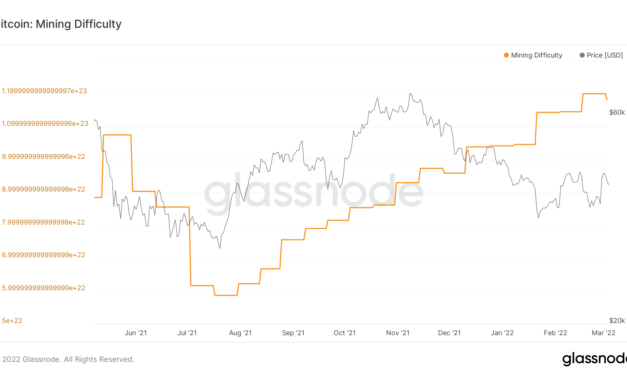
For the first time since November 2021, the Bitcoin (BTC) mining difficulty adjustment has dropped, correcting 1.49%. The move follows a succession of six consecutive positive difficulty adjustments, in which the mining difficulty and hash rate hit all-time highs.The average hash rate over the past two weeks fell to 197.19 exahashes per second (EH/s), making the average block time exceed the 10-minute target at 10 minutes 9 seconds. As a result of the difficulty adjustment, miners competing to solve the next valid block found it marginally easier. Bitcoin mining difficulty marginally dropping after an 8 month climb. Source: GlassnodeThe difficulty adjustment is one of the Bitcoin protocol’s most prominent features. Every two weeks or 2,016 confirmed blocks, the difficulty for mining a new block “adjusts” based on the average of the past 2,016 blocks, making it easier or more difficult to mine blocks.From the Bitcoin white paper, Satoshi Nakamoto wrote, “the proof-of-work difficulty is determined by a moving average targeting an average number of blocks per hour. If they’re generated too fast, the difficulty increases.” By inference, over the past 2,016 blocks, blocks were generated too slowly at an average of 10 minutes 9 seconds. As a result, the difficulty adjustment automatically decreases and miners will, henceforth, find it marginally easier to solve valid blocks over the next 2,016 blocks.According to Denver Bitcoin, a well-known Bitcoin miner, the -1.49% correction could be the only one for the year. Bitcoin just had its first downward difficulty adjustment of 2022.Will it be the only downward adjustment of the year?Experts still calling for 300eh+ average by December.Fun times. pic.twitter.com/l3x8hNevaU— Adam O (@denverbitcoin) March 3, 2022Related: New York Bitcoin mining moratorium bill garners more supportA correction of 1.49% dwindles compared to the mining dark ages of May to July of 2021, when a ban on Bitcoin mining in China caused a catastrophic drop in the hash rate. Thankfully, it swiftly climbed up over the course of 2021, surging by 31% as countries like Kazakhstan and Canada picked up the slack, proving the network’s resilience. The Bitcoin mining industry is increasingly competitive, with tech industry players including Intel keen on making a dent in the hash rate and introducing their own miners. As Denver Bitcoin alluded, the 300 Eh/s hash rate could be an attainable goal in 2022, particularly as mining shows growing resilience and geographic flexibility.

Čítaj viac

Experts weigh in on new crypto regulations in South Africa

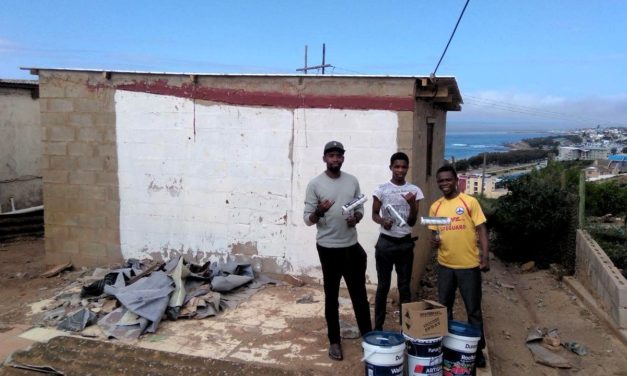
As part of a series of amendments to South Africa’s financial laws, crypto-asset service providers will become accountable institutions. A report from the South African treasury announced further crypto regulations “to be finalized during 2022.”In brief, the proposed changes will ensure that “any person providing advice or intermediary services related to crypto assets must be recognized as a financial services provider under the act and must comply with the act’s requirements.”Marius Reitz, the Luno crypto platform General Manager for South Africa shed light on the changes, commenting that “credible crypto players welcome regulation,” adding “regulation is a vital part of the cryptocurrency ecosystem.” Reitz told Cointelegraph:“Regulation will make it easier for the public to distinguish between licensed and unlicensed crypto service providers and find a safe place to store and buy their cryptocurrencies.”However, for Hermann Viver, the founder of Bitcoin Ekasi, a South African Bitcoin Beach-inspired project, it’s a different story. They told Cointelegraph that sharper “KYC and AML rules push already marginalized people even further towards the margins of society. And ultimately, “authorities tend to approach the situation with a one size fits all solution, which for many, turns out not to be a solution at all.” Bitcoin Ekasi township project. Source: Bitcoin Ekasi TwitterVivier told Cointelegraph:”Ideally, there should be a threshold where people who earn below a certain level require zero compliance/verification, because really, if, for example, that threshold was at R5,000 / month [$330], what possible harm can a person do with that amount?”Nonetheless, the treasury’s decision to tighten  “money laundering and terror risk financing controls through crypto assets,” comes as little surprise to Bitcoin Ekasi and other members of the South African cryptocurrency industry.The South African authorities have previously warned large players such as Binance from operating in the country. Elsewhere, Unathi Kamlana, the commissioner of South Africa’s Financial Sector Conduct Authority, was vocal on the protection of vulnerable crypto investors. Luno’s skyscraper in Cape Town, ZA. Source: LunoFor Luno, “a notable aspect of the SA Reserve Bank’s approach is that of including industry in its discussions from the very beginning.” The situation for Reitz is clear cut:“Regulation will also boost the number of formal partnerships between banks and crypto companies which will facilitate greater crypto adoption.”Related: South Africa to revise national policy position on cryptocurrencyIn further developments, the treasury report alludes to the “risks posed by so-called stablecoins,” to be addressed later this year. In southern Africa, plans for central bank digital currencies (CBDCs) are public and broadly discussed. Ultimately, a CBDC is a be a way for governments to better manage money flows, in contrast with private stablecoins such as Tether (USDT).Reitz is persuaded that South Africa may “see the launch of more CBDCS in 2022,” as South Africa is “investigating a digital currency.” The CBDC could provide a “comfortable space for regulators.” 

Čítaj viac

The Bitcoin Family talks about traveling, giving and orange-pilling

Seasoned crypto enthusiasts will remember Didi Taihuttu as the man who went all-in on Bitcoin (BTC) in 2016. He sold his and his family’s possessions. camping out in the Netherlands while he waited for Bitcoin to the moon.In an interview with Cointelegraph, Taihuttu recalls how it felt to own almost nothing but Bitcoin, 6 years ago:“I don’t have any cars, motorbikes, nothing. And I’m happier than ever. And she [Taihuttu’s wife] agrees! At that moment we decide to break that chain and lead by example for the kids.”He explains his realization that life is about accumulating happiness, “instead of accumulating wealth.” Hence, the Bitcoin Family was born. The three daughters “only have Bitcoin, not bank accounts,” while the parents have never looked back on their former lives. The fivesome has spent the past five years traveling the world, settling on Southern Portugal as one nomadic base for living. They’re in good company to promote the Bitcoiner lifestyle down there; Portugal is a growing hub for the seminal cryptocurrency.Taihuttu concedes that there are, of course, challenges regarding how to travel the world living off a Bitcoin standard–particularly while looking after three teenage daughters. However, it hasn’t stopped other explorer families from following in their footsteps. Taihuttu cites that “six families” have since sold all their possessions, à la Bitcoin Family, to enjoy the Bitcoin lifestyle. The Bitcoin Family. Source: thebitcoinfamily.comCloser to home, Taihuttu orange-pilled his brother and sister, even persuading them to take part in the traveling lifestyle. He concludes that “the decentralized digital nomad lifestyle is the future.” Taihuttu is wildly generous, giving away something in the order of 40% of his wealth to charities. Profits from trading, affiliate links, book sales, merchandise sales and other “digital nomad” activities are funneled into charity projects. Bitcoin Family charity projects. Source: thebitcoinfamily.comFor example, they have built a school in Mexico for disadvantaged children as well as an orphanage in Venezuela. Naturally, though, there’s a Bitcoin twist. As the video details with a Mario illustration, it’s a three-step process to orange pill and establish a charity.Teach BitcoinLearn how to exchange itGrow adoptionWhile the projects are not born Bitcoin-only, they are certainly not centralized:“The CEO of a centralized organization [charity] will be driving a BMW. We don’t want that, we do peer to peer.” The objective for Taihuttu is to engage with other orange-pilled people wherever they travel. They then sit down together and scope out the sources of concern, addressing the issues that would make the biggest positive impact. The process stems from one of Taihuttu’s many mantras, “Everyone with a heartbeat and a telephone should be able to transact value all over the world.” Bitcoin is that solution and it should inevitably become an intrinsic part of charity projects. In all, although the Bitcoin Family will continue their world travels, their focus is now firmly on Europe. El Salvador and the next country to adopt Bitcoin as legal tender are of course attractive travel destinations, but Taihuttu is passionate about his home continent’s journey towards Bitcoin adoption.

Čítaj viac

Ukraine accepts DOT, founder Gavin Wood donates $5.8 million

Calls from the crypto community for Ukraine to accept other cryptocurrencies have been answered. The official Ukraine Twitter account shared that it will now accept donations from Polkadot (DOT), while other cryptocurrencies will soon be added. The people of Ukraine are grateful for the support and donations from the global crypto community as we protect our freedom. We are now accepting Polkadot donations too: $DOT: 1x8aa2N2Ar9SQweJv9vsuZn3WYDHu7gMQu1RePjZuBe33Hv.More cryptocurrencies to be accepted soon.— Ukraine / Україна (@Ukraine) March 1, 2022Gavin Wood, the co-founder of Polkadot had previously shared that if the Ukraine wallets were to add DOT, he would personally contribute $5 million. He made true on his promise donating 298,367.2269896686 DOT, roughly $5.7 million to Ukrainian wallets.https://t.co/bFyYkKDseL— Gavin Wood (@gavofyork) March 1, 2022

Total crypto donations for Ukrainian charities, the military, and the government have received over $37 million by Cointelegraph estimates. Wood’s single donation comprises over 10% of the total crypto donations.Indeed, Wood’s donation is one of the largest individual crypto donations to date. Sam Bankman-Fried’s platform, FTX, donated $25 to each Ukrainian on his exchange platform, while CEO Deepak Thapliyal of Chain.com donated 100 ether (ETH), or over $280,000 USD.Besides Wood, the Polkadot ecosystem had already contributed over $210,000 to the official DOT wallet for Ukraine since this morning, according to Polkadot blockchain data.For cryptocurrencies not accepted by Ukraine, Coingate, a Lithuanian-based fintech offers a workaround. As a payment gateway for cryptocurrencies, Coingate allows holders of other cryptos to donate to Ukraine.The coingate cryptocurrency donation portal. Source: CoingateCoingate manages the crypto payments for a list of over 70 cryptocurrencies, eventually crediting the Ukraine bank account with Euros. Coingate told Cointelegraph, “in the past 5 days, we have raised 7000 EUR from various crypto communities.”Related: Crypto exchanges consider Ukraine’s call to freeze Russians’ Bitcoin To date, the crypto community has been quick to come to the aid of Ukraine’s plight, with donations and words of encouragement. Twitter observers noted that Ukraine’s innovative crypto activity was an attempt at “making history.”Making history here if it does end up happening, the first creation of digitally native national valueDid you donate, anon? https://t.co/zbfjveg7k0— Zhu Su (@zhusu) March 1, 2022

Čítaj viac

Hodl, don’t trade, says the AI Bitcoin trading bot

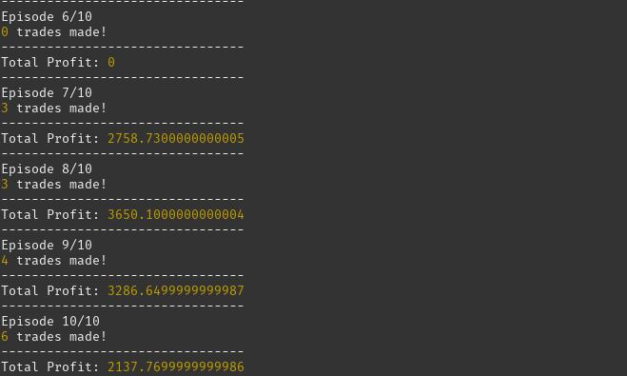
“Hodling” really is the way when it comes to accumulating Bitcoin (BTC). At least, that’s the conclusion made by an artificial intelligence (AI) trading bot coded up by a Portuguese software developer.Bitcoiner Tiago Vasconcelos is the man behind the trading experiment. Vasconcelos built an AI trading bot that would help him accumulate more Bitcoin and test his coding skills. Almost inconceivably, instead of trading, the bot quickly concluded that the best way to trade Bitcoin is to buy and hold onto it.Vasconcelos is the lead founder of Aceita Bitcoin, a Portuguese organization promoting the adoption, education and sharing of information about Bitcoin. A keen Bitcoiner, he also dabbles in Bitcoin-related side projects.He told Cointelegraph, “It was a reinforcement learning AI experiment, where I went and got a truckload of historical data from BTC/USDT.” The code sourced and scraped the daily price action from 2014 to 2021.Vasconcelos then “trained it, or told him [the bot] the rules, here are the candles, you can either buy, sell, or do nothing.”For every profitable trade, the bot would be rewarded with one point. The bot loses one point as a “punishment” for lost trades. Finally, a reward is granted to the bot for the total amount of Bitcoin the bot finishes with:“The goal is for the bot to get the highest score possible and the exercise is that he makes thousands/millions of tries on that set of data, making a ‘mental’ path of when is best to buy, best to sell, etc.”Screenshots of the “figuring out that less trades work best!”The beauty of AI is that the bot begins to observe “patterns” and what Vasconcelos describes as “moves” that the bot makes to maximize its trading score. “Eventually, the bot concludes the best move is to buy as soon as possible and never sell!”There you have it, now it’s not just popular talking heads and even banks in the Bitcoin space that are crying “Hodl.” Even the robots are hodlers.Related: Bitcoin inactive supply nears record as over 60% of BTC stays unspent for at least 1 yearHodl is a popular meme in the Bitcoin space, originating from a Bitcointalk forum post in 2013 by an inebriated contributor who misspelled hold. The reason why the original commenter, GameKyuubi decided to hodl is “because I’m a bad trader and I KNOW I’M A BAD TRADER.” Turns out, he might have been just as smart as artificial intelligence all along.

Čítaj viac

Získaj BONUS 8 € v Bitcoinoch

nakup bitcoin z karty

Registrácia Binance

Burza Binance

Aktuálne kurzy