Autor Cointelegraph By Joseph Hall

Gas heater broke down? I'll just heat my caravan with a Bitcoin miner

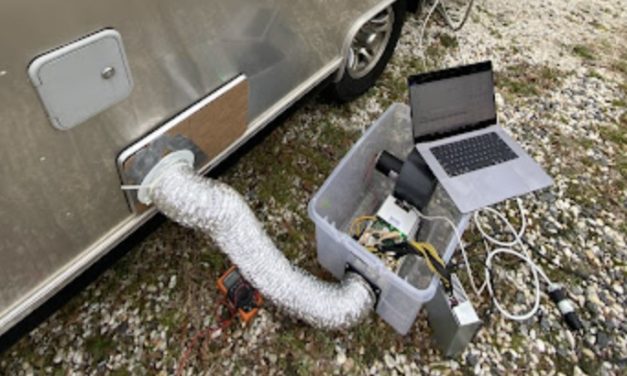
Michael Schmid first made contact with Bitcoin (BTC) in 2013; he installed Bitcoin core, mined a few BTC then bought some Bitcoin from MtGox. Schmid told Cointelegraph that shortly after the infamous Mt. Gox hack, in which Schmid lost his Bitcoin, he also “lost interest”.Timewarp to 2020 and Schmid got “very active again,” as concerns about the “endless money printing” troubled him.“With that [money printing] I found that I don’t agree at all with Fiat money and believe that Bitcoin should be the global reserve currency and a store of value.”A studious and curious mind, Schmid bored back down the BTC mining rabbit hole, building upon the foundations of knowledge he had excavated 7 years prior. He learned about “ASICs, Antminers and all the other things that happened in the last years in the Bitcoin mining space,” before having a eureka moment.“It makes much more sense to replace a resistive heater (like a space heater) with a bitcoin miner, as both of them will turn electricity into heat, while the bitcoin miner also generates bitcoin.”As Schmid was working in an office at the time, he “bought an S9 from a friend and used the S9 miner instead of the space heater to heat my office which worked perfectly.” Schmid has discovered a winning combination.Schmid’s S9 miner in a box below his laptop, with a heat exhaust. Source: Michael Schmid He could solve valid Bitcoin blocks and reap the rewards while keeping his working and living space nice and warm. Office work aside, Schmid also enjoys traveling across America–often in his American-style campervan, an Airstream.So when during Schmid’s next trip with his Airstream (see photos), the heating unit suffered intermittent problems, Schmid thought he “could use the S9 heater also to heat the Airstream as a fallback solution.”The airstream, parked in snowy Colorado heated by a Bitcoin miner. Source: Michael Schmid They say necessity is the mother of invention so Schmid “started to think about how I [he] could build the system.” Space is at a premium in an Airstream and if the S9 were to be placed inside the camper “it would easily overheat the airstream.”“So I came up with the idea to keep it in a box outside and route the warm air into the airstream.”Putting the S9 outside saves space and avoids overheating. Source: Michael SchmidAfter a series of iterations and a few superficial burns, a short circuit and one day in which the airstream’s ambient temperature rivaled a Scandinavian sauna: “[I] got the airstream inside temperature to 90F [32 degrees Celsius] during one day as the heater was running while it shouldn’t,” Schmid finally cracked it. The caravan was kept warm while mining Bitcoin, powered by solar panels on the roof and free campsite electricity–negating the need for burning propane gas. Schmid adds that “we have a quite small airstream (only 22ft), bigger RVs have much bigger propane heater systems and would pay much more for the propane (they could also run more S9 of course).”But why go to all the effort equipping an RV with a Bitcoin miner? Why not try to fix the propane heater issue? Granted, it’s a cool Bitcoin side project. However, not only has it solved the intermittent heating issues, but Schmid “saves around 50% of the propane costs which is around $2.7 per day,” and at current estimates, he generates “0.00006259 BTC per day.”All in, Schmid and his fiancé “technically heat the airstream for free” all while securing the Bitcoin network.Satoshi would probably be proud of the tidy bitcoin heating setup. Source: SchmidRelated: Flower powered: Bitcoin miner heats greenhouses in the NetherlandsSchmid shared a message to any aspiring miners:“I really encourage anybody to play with home mining, I truly believe that one of the most important things of Bitcoin is the decentralization of not only the coins but also the mining infrastructure.” In a word of encouragement, he concludes “the more home mining setups that are out there the better.”

Čítaj viac

Honey, I orange-pilled the kids! BTC children's authors on learning about money

Bitcoin is for everyone. That includes teenagers, children, toddlers and even newborns.When these kids grow up, they’ll use the Bitcoin (BTC) protocol, so it “makes sense to start to integrate Bitcoin into learning as early as possible.” At least, that’s according to Scott Sibley, one-half of the couple behind the creation of the Shamory Bitcoin game and the ‘Goodnight Bitcoin’ children’s bedtime book. He joins a growing list of Bitcoin children’s book authors who care deeply about educating children on Bitcoin and money. Goodnight Bitcoin book. Source: SHAmorySibley and his wife are firm believers that “kids can learn much faster, and earlier than most people think.” It’s one of the reasons why they wrote their Bitcoin bedtime story, a tale for infants that riffs on the “plethora of “Goodnight” books (Goodnight Moon, Goodnight Baseball, etc.)” Incidentally, it also serves as a nice primer for their semi-educational game about Bitcoin mining, SHAmory. The Sibleys noticed there’s a “product and content gap when it comes to fun ways for kids and adults to learn about Bitcoin,” and are bringing educational content that extends beyond the podcasts, books and long-form essays which Bitcoiners usually gorge upon. “Financial education that includes Bitcoin is something that kids aren’t going to receive in most “traditional” schools. So right now it’s on Bitcoin parents to find ways to weave that education in at home.”Bitcoin for Kiddos book. Source: bitcoinforkiddosChris and Frieda Bobay are the brains behind Bitcoin for Kiddos, the story of Bitcoin. They’re another couple passionate keen to impart knowledge into “children about money early,” so that “they will have the best opportunity to recognize it [uncorruptible money] when they see it.”They told Cointelegraph:“We wanted to expose our kids early to Bitcoin and broader concepts of money early so they are more comfortable using the technology and talking about it when they are older.”They add that “money for most adults is a taboo subject, but it doesn’t have to be.” In educating children about Bitcoin (and inherently, money) with books, it breaks down social barriers, unlocking “an incredible learning experience for the whole family.”Michael Caras aka The Bitcoin Rabbi, author of Bitcoin Money: A Tale of Bitville Discovering Good Money, compliments the other authors’ musings about children and finance. He told Cointelegraph “it’s important that children learn about working for money, saving, spending responsibly, and also giving to charity.”Bitcoin money, a tale of Bitville. Source: AmazonHe notes the unintended advantage of teaching children about Bitcoin–it’s an “intro for adults,” too. Sibley explains: “kids, as well as the adults, will still be better off in the sense that we all have been exposed to and learned more about money, where it comes from, what makes it valuable, etc.” Sibley adds:“These are all questions [about money] that most people probably go their entire life without thinking or learning about.”Furthermore, given that “children don’t have all the biases that adults have,” they might approach the decentralized monetary network with an open mind. The Bitcoin Rabbi expands the idea, sharing “children understand the digital aspect of Bitcoin because they are digital native.”“Not having preconceived notions about how traditional money and banks makes it easier for them to see Bitcoin as real money.”Ultimately, not only do the Bitcoin children’s books subtly teach kids (and their parents) about Bitcoin, orange-pilling them along the way; they also only help to break down an enduring taboo: talking about money.

Čítaj viac

Bitcoin transaction fees briefly doubled yet remain exceptionally low

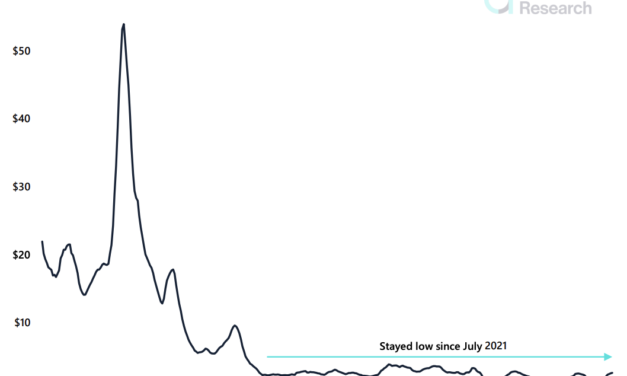
Got some Satoshi to send or Bitcoin (BTC) wallets to reorganize? It’s increasingly cheap to do so. According to an Arcane Research report, Bitcoin “transaction fees have stayed low since July 2021, showing no signs of rising.” Bitcoin mean tx fees remaining very low despite small hike last week. Source: Arcane ResearchThere was, however, a small bump in transaction fees last week. Shown as a small jump at the tail end of the graph, clustering of the mempool pushed “up the average transaction fees per day over the past seven days to $691,000, a doubling since last Tuesday.” Nonetheless, the doubling in transaction fees is insignificant: transaction fees remained in a low range. Miners churned through the mempool transactions over a two-day period, securing the network while keeping transacting affordable.Eric Yakes, author of the Bitcoin book the 7th Property told Cointelegraph that there were three main reasons why transaction costs are so low: Segwit adoption, hash rate redistribution, and Bitcoin layer 2 infrastructure such as the near-instant payment lightning network kicking in. “June 2021 saw a large increase in the % of Segwit transactions on-chain increasing from ~50% to ~70% which has steadily risen to above 80%, which fundamentally should be increasing transaction throughput for the network.”Cointelegraph reported on the growing number of exchanges using Segwit addresses over the course of 2021. In July 2021, Yakes explains that “network difficulty bottomed and has since risen to ATHs,” following the China ban and redistribution of hash rate. Combined with the rise in the number of Segwit transactions:“This rebound in hash rate has found blocks more rapidly than the difficulty adjustment can keep up with and that has created a more rapid clearing of transactions than otherwise, thus lowering the price of transactions.”However, Yakes mentions that transaction fees “should not be expected to remain persistent. Eventually, and this is all contingent upon price, hash rate, and difficulty will find their equilibrium, making the fee market less competitive and increasing transaction costs.”Tomer Strolight, editor-in-chief at Swan Bitcoin, names another factor for why transaction fees are low:“We have the biggest exchanges all batching transactions now. This means they are sending out 100 or more withdrawals on a single transaction instead of the terrible practice from several years ago of sending out each withdrawal as a single one.”Plus thanks to the lightning network’s ability to open “channels when the blockchain is uncongested and then using them over and over again prevents the chain from becoming congested whenever a faster, cheaper lightning transaction is an option.”Lightning Network nodes and channels map. Source: explorer.acinq.coThe Arcane research report indicates that while these four factors are important, it’s also “likely that a lower number of transactions per day has driven down the average transaction fee.”For Yakes, “transaction fees could increase in the short term but there are so many trends counter to higher transaction fees that I think they will be persistently lower over the long term.”Related: Bitcoin returns to $42K as markets await potential 7.9% CPI inflation dataTromer is also positive: “I genuinely see that we can gradually build the network capacity to handle all the commerce in the world without the blockchain becoming an insurmountable bottleneck.”It’s another feather to the BTC cap: the protocol continues to successfully scale, making it more affordable to transact on the network.

Čítaj viac

Mama Bitcoin: Fishing for female empowerment with crypto in West Africa

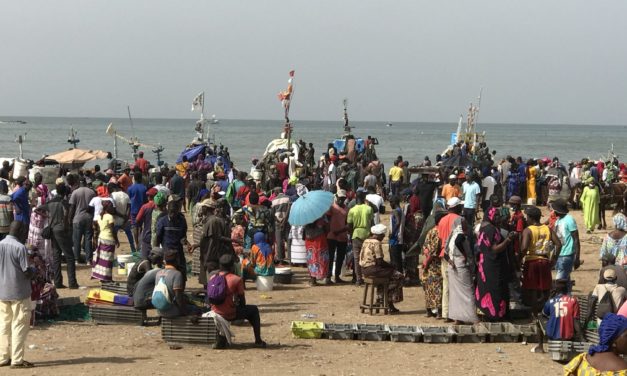
Mama Bitcoin is the pseudonym claimed by a young Senegalese Bitcoiner called Bineta. Her business, Bleu comme la mer, was the first retailer in Senegal (and possibly West Africa) to accept crypto as payment. She’s also the first generation of her family to read and write proficiently. The name Mama Bitcoin takes inspiration from the initials of her name, while the “mama” not only reflects her motherly instincts but serves to inspire other women in West Africa to get into blockchain technology and Bitcoin (BTC). She told Cointelegraph:“There are very few women that are active in the blockchain space around the world and the situation is no different in Senegal. I wanted to shine a light on being a woman in the crypto industry.”Bineta first stumbled across Bitcoin in early 2017 thanks to a curious combination of good intentions and incongruous circumstances. Bineta had dreams of opening her village’s first bakery, a small fishing village called Mbour 90 minutes south of Senegal‘s capital, Dakar. But, in order to deliver warm pains au chocolat to the community each morning, Bineta needed money.Mbour village beach, SenegalIt’s incredibly difficult to get a bank loan for a business idea in West Africa, and it’s even harder for women. Bineta had to search for alternative means. She tried a multi-level marketing scheme (MLM) before hearing from a friend in Cameroon that Bitcoin might fit the bill.After copious research, Bineta‘s curiosity sparked. She quickly realized that Bitcoin was far more important for her vision than a potentially risky MLM scheme. Fast-forward to mid-2017 and Mama Bitcoin had spent hours and hours devouring Bitcoin-related content in French and in English, translating where possible. She’d arrived at the conclusion that Bitcoin is more than just a “number go up” technology — it could build far more than a new village bakery:“The more I learned, the more I realized we need this. This kind of money will help overcome so many issues. Not only is Bitcoin a tool for freedom, but the technology underpinning Bitcoin such as blockchain and decentralization will change Africa‘s development.”The journey down the Bitcoin rabbit hole shifted Bineta‘s plans up a gear. The bakery (Bineta jokes it would have been called the Bitcoin Boulangerie) was dropped and a vision for Bitcoin in West Africa took its place. As the progress and the price of Bitcoin rose during the 2017 bull run, her understanding of the protocol evolved. “Bitcoin isn’t just a means of self-financing without using a bank, it’s a technological revolution and a way of unlocking growth and development in Senegal.”Questions such as “why is it so big yet why do so few Senegalese people talk about it, why is the media avoiding this critical topic, why doesn’t Senegal use this tool and why are there so few women talking about it?” kept swirling in her head.Bineta set to work, penning articles about Bitcoin on social media websites, reaching out to the Senegalese Bitcoin and crypto community and reevaluating her goals.Drawing from past experience in business and given the proximity of Senegal to the Atlantic ocean, Bineta allowed herself to dream bigger. She conceived then established an ambitious seaside operation called Bleu comme la mer.A fishing commerce platform, Bleu comme la mer connects fishermen directly with consumers, removing the middleman. It is the first business in Senegal to accept Bitcoin as payment. They also accept Ether (ETH) and Tezos (XTZ). In fact, Mama Bitcoin founded the Tezos community in West Africa. Sardines, shrimp, octopus and squid — anything that can be fished from the Atlantic — are available to buy with cryptocurrency on the platform. Bineta adds:“Payment with cryptocurrencies shows that, contrary to what many people think, Bitcoin is a peer-to-peer payment solution, not a speculative asset.”Bineta showing a potential buyer how to buy fish with crypto. Source: Mama Bitcoin The blockchain vision extends merely beyond cryptocurrency payments. Bineta has focused on making Bleu comme la Mer into a decentralized e-commerce platform where fishermen log their catches and consumers can see exactly what was fished and from where. Not only does the decentralized platform aim to streamline the fishing industry, but it also strives to undermine overfishing, a harmful yet common activity in West Africa’s waters.Related: One man’s plan to orange pill a nation: Bitcoin SenegalNonetheless, “Senegalese and West Africans are quite skeptical about Bitcoin.” Getting more women into crypto, a passion project of hers, remains a long-standing challenge. However, there is hope. At Dakar’s first in-person Bitcoin meetup in 2022, there were three women out of 20 participants. It’s a small but strong start, undoubtedly boosted by Mama Bitcoin‘s infectious energy and zest for cryptocurrency. Celebrating Senegal‘s win in the football tournament The Africa Cup of Nations. Source: Mama Bitcoin

Čítaj viac

Auctioneer willing to sell $70M artwork for BTC or ETH

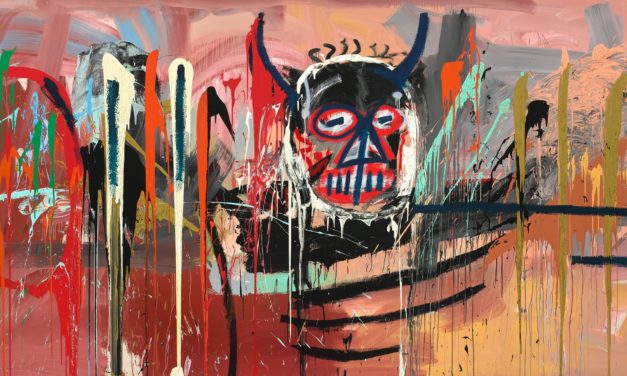
In further signs of crypto adoption among the art world, a leading United States auction house will accept crypto as payment for a series of paintings. A Jean-Michel Basquiat collection is up for auction by Phillips, with Bitcoin (BTC) and Ethereum (ETH) listed as payment options.The showstopper 16-foot painting, Untitled, 1982, is “estimated in the region of $70 million” (roughly 1650 BTC or 25,513 ETH). It will go under the hammer in New York on May 18th.Scott Nussbaum, Senior International Specialist, 20th Century & Contemporary Art from Phillips told Cointelegraph that buyers “are interested in the option of cryptocurrency as a method of payment for traditional artworks.” The Baqueirat painting. Source: Phillips Given that “the beauty of Basquiat is his ability to inspire both seasoned and new collectors,” extending “the option for buyers to pay in cryptocurrency,” is a deft move. Ultimately, Nussbaum explains, accepting cryptocurrency as payment for other works “will only continue to increase.”Nussbaum told Cointelegraph: “The interest in cryptocurrency and NFTs from the traditional art world is growing rapidly. And though it’s impossible to predict the future, we believe the intersection of digital and traditional art worlds will only continue to flourish.”It’s not the first time that the auction house has explored cryptocurrency, although the previous sale was an order of magnitude smaller. In June 2020, Phillips auctioned a Banksy piece, Bitcoin and Ether as accepted payments. It sold for roughly $3.2 million. Coincidentally, a price target for the Basquiat of around $70 million is the hammer price for the infamous Beeple NFT auction, which closed in March 2021. Christie’s auction house managed the sale, inspiring further cryptocurrency-related auction house activities. In November 2021, rival auctioneers Sotheby’s took ETH bids in real-time for a Banksy auction. In May of the same year, Sotheby’s partnered with Coinbase to manage auctions in Bitcoin and Ether before taking charge of crypto payments in-house. Related: The city of Lugano will accept Bitcoin, Tether and LVGA tokens as ‘de facto’ legal tenderNussbaum sums up the fashion for cryptocurrencies in the art world, explaining that “there are many new collectors who are very engaged in cryptocurrency.” “It was only a matter of time before it would be of interest as a method of payment.”

Čítaj viac

Získaj BONUS 8 € v Bitcoinoch

nakup bitcoin z karty

Registrácia Binance

Burza Binance

Aktuálne kurzy