Autor Cointelegraph By Joseph Hall

Miners that hodl the most Bitcoin are ‘relentlessly expanding’

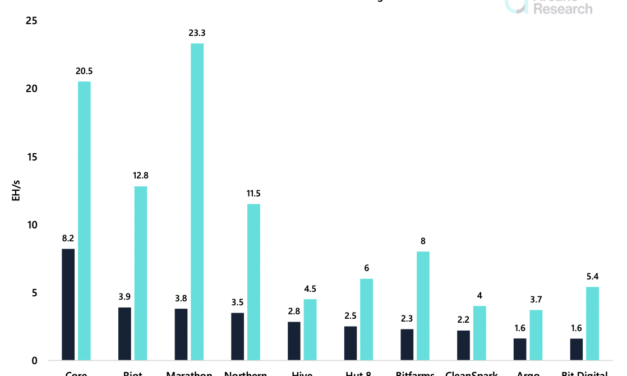
Bitcoin (BTC) miners are holding more and more Bitcoin while “relentlessly expanding” their operations in 2022. A report by Arcane Research indicates that publicly listed Bitcoin miners are “constantly looking for expansion opportunities,” as they “plan to increase hashrate faster than the whole network in 2022.” Publicly listed Bitcoin miners projected hashrates. Source: Arcane Research44.95% of the global hash rate derives from North American miners, according to the latest figures from the Cambridge Bitcoin electricity consumption index. With the massive projected increases in target hash rate among the publicly traded Bitcoin miners, it‘s “likely to increase.”Jaran Mellerud, an analyst for Arcane Research, told Cointelegraph that “most publicly listed miners pursue a hodl strategy, doing their best to keep as much they can of their mined Bitcoin.”“This hodl strategy enables them to serve as Bitcoin investment vehicles for investors who want to own bitcoin indirectly through an investment structure.”Whit Gibbs, the founder and CEO of Compass Mining, explained to Cointelegraph that “public mining companies definitely have an advantage when it comes to hodling Bitcoin because they have access to the capital markets.”“They don‘t need to liquidate their Bitcoin in order to buy more machines, increase their rack space, etc. They‘re able to go to the capital markets and get that money to continue to expand. So, they‘re able to hold large positions in Bitcoin.”Some of the largest miners hold huge amounts of Bitcoin, Gibbs adds, ”it‘s crazy how much some of them are holding.” As published on BitcoinTreasuries, Bitcoin mining company Marathon hold the third-largest amount of Bitcoin among businesses worldwide, right behind Tesla and MicroStrategy.Bitcoin holdings of publicly listed Bitcoin miners. Source: Arcane ResearchSince January 2021, miners’ reserves have been steadily increasing, reflective of their HODL strategy. Gibbs suggests that the publicly traded Bitcoin mining companies are “taking more of a bullish approach to Bitcoin.”“The companies are looking at Bitcoin on their balance sheet as a way to drive up their market valuations.”Miners’ reserves in blue are steadily increasing. Source: CryptoQuantMellerud also understands that Bitcoin mining stocks are increasingly popular in legacy financial markets. “The demand for Bitcoin investment vehicles is high, particularly in the U.S. since the Bitcoin exchange-traded fund market is immature.” The Bitcoin exchange-traded fund (ETF) saga is an Achilles heel to the network, as successive Bitcoin ETF applications have been rejected.Related: Bitcoin mining difficulty drops for the first time this yearWhile market interest for Bitcoin miners swells, Mellerud sums up why the mining business model is attractive and effective, echoing Gibbs‘ comments:“Miners are some of the biggest Bitcoin bulls out there, and they utilize the highly developed equity and debt markets in the U.S. to raise money to pay for their expansions and operating expenses, allowing them to keep the Bitcoin they mine.”Bitcoin Miner Hut 8, for example, recently posted record revenues, with its overall BTC holdings surging by 100%. 2022 may not be the year of the bull, but it‘s certainly a good time to publicly mine the orange coin. 

Čítaj viac
‘We don’t like our money:’ The story of the CFA and Bitcoin in Africa

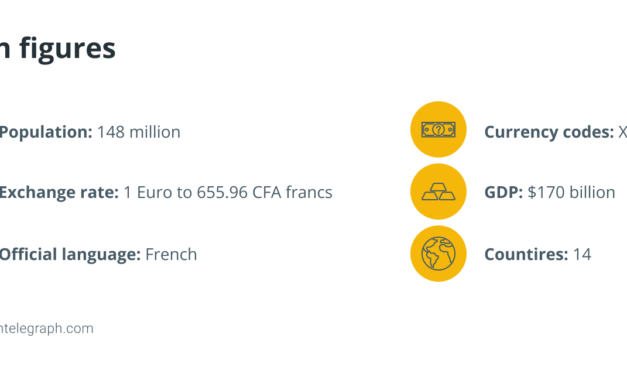
Nearly 150 million people use the franc of the Financial Community of Africa (CFA) on a daily basis, from Senegal in the extreme west to Gabon in the center of the continent.Used in 14 countries, the CFA is pegged to the euro, printed in France and its monetary policy is controlled by Western powers. As Fodé Diop, a Bitcoin (BTC) Lightning developer hailing from Senegal details, “the IMF and the French government still control the currency.”While the official peg to the euro is 1 euro to 655.96 CFA francs, its purchasing power has eroded over time. In 1994, the World Bank devalued the CFA franc against the franc from 1:50 to 1:100. That year, West Africans woke up to realize the value of their life savings had been slashed in half. Gloire, the founder of Kiveclair, a Bitcoin Beach-inspired refugee project in the Congo, told Cointelegraph that the CFA “makes whole countries dependent,” and “it is usually the poorest who suffer.” He explained the situation in 1994: “The most striking example is that of 1994 when France and a privileged few decided to devalue the CFA Franc. There is no guarantee that such a thing will not happen again, especially since the global economy is threatened.”Prior to the creation of Bitcoin, West Africans could store their money in euros, U.S. dollars or traditional stores of value: real estate and commodities. For everyday people, however, those options are not readily available. Mama Bitcoin, the first retailer to accept cryptocurrency in Senegal, told Cointelegraph that the CFA is “disempowering.” She suggests that Bitcoin could provide a way out.“Our money belongs to France, the CFA is made in France and is — for want of a better word, colonial money. Bitcoin, however, Bitcoin belongs to everyone.”With the arrival of Bitcoin and cryptocurrencies, indeed, there is now a viable alternative. Gloire suggests that “Bitcoin can help the countries of the CFA Zone to free themselves from France to finally turn the dark page of colonization.” In Senegal, Mouhammad Dieng, co-founder of SenBlock, a nonprofit organization for crypto promotion and adoption, told Cointelegraph that he doesn’t “like the CFA, because its monetary policy does not allow us to develop. Bitcoin is a less risky alternative to make the transition to an African digital currency.”Interestingly enough, the hope to replace the CFA is not restricted to grassroots cryptocurrency advocates. Governments of West African countries have been vocal in their efforts to improve the CFA and develop some autonomy. With the current monetary policy, CFA zone countries are obliged to send more money to France than other countries due to colonial ties — there is zero sovereignty over the currency.A new currency called the ECO was flouted as a replacement for the CFA. However, it would still be pegged to the euro and biased to France. Concerning digital currencies — which Dieng mentions — the e-Naira, the digital version of neighboring Nigeria’s currency, has influenced the view of the CFA governments with regard to digital currencies and CBDCs. However, an e-ECO or e-CFA has not yet been planned. Notwithstanding, the opportunity for a stronger currency in the CFA African territories is vast. The GDP of the CFA region is roughly $170 billion and covers 14 independent countries. It’s a huge region with tremendous untapped resources, particularly agriculture and minerals. Pape Alioune, a software engineer who founded Shintsha, a cryptocurrency exchange that allows payments via mobile money, told Cointelegraph: “‘What country can develop without its own money or, better yet, a neutral money?”The Senegalese–South African team behind Shintsha — which will soon rebrand to Mole App — has created an innovative way of addressing the low banking levels in Africa. The exchange hopes to onboard more and more Africans into Bitcoin and crypto through mobile money, an Africa-centric solution.Mobile money, originally derived from a Kenyan invention called M-Pesa, allows sim cardholders to pay each other with credit. It is incredibly popular in Subsaharan Africa, from Senegal to Somalia to Malawi. Orange money is one of the most popular outlets, although Free Mobile and Wave also exist. The myriad of mobile money options available to West Africans. Source: Cointelegraph  Alioune estimates that “more than 80% of the adult population uses mobile money in Senegal, and it’s similar in other countries that use the CFA.” Africans use the tech the same way Northern Europeans use contactless payments — it’s become a reflex, part of the daily routine. While there is a sense of optimism in West Africa with regards to the future of cryptocurrency and more routes to purchasing crypto, “education remains the most significant hurdle to overcome.” That’s according to Nourou, the founder of Bitcoin Senegal who is on a mission to facilitate Bitcoin adoption in his home country. For Nourou, given that literacy rates in his home nation are just 50%, he speaks with business owners, entrepreneurs and educated members of the community. “Most people in West Africa have at least heard of Bitcoin. It’s a question of getting through to the right people and spreading awareness,” he told Cointelegraph.Nourou agrees with Gloire in that it’s not just about Bitcoin, it’s “absolutely necessary to educate people about money.” Gloire adds that while learning about money is key, people must “understand that it is possible to decide one‘s destiny without asking permission.” He brings up the example of smartphones which are “penetrating Africa at a good pace,” to illustrate that Africa can pick up new technologies and run with them. As much as 46% of the Subsaharan population in Africa has a smartphone and, as evidenced, mobile money is booming.“The biggest challenge is to teach young people that a simple telephone and an internet connection are effective weapons to protect themselves from the CFA by adopting Bitcoin.”For Idrissa Seck, a Bitcoin enthusiast and a payment agent at French bank Société Générale, understanding money is the key to unlocking an understanding of Bitcoin. “In order to understand and ultimately fall in love with Bitcoin, you have to understand money and the current financial system,” he told Cointelegraph.Mobile money payments next to MasterCard, Visa and now Bitcoin. Source: CointelegraphDieng repeats, “education education education,” adding that you must spend “at least 50 hours learning before investing in crypto.” With regard to the future of Bitcoin and cryptocurrencies in the CFA zone, Gloire takes inspiration from the “Salvadorian experience,” which is “going quite well.” The first country to adopt Bitcoin as legal tender, El Salvador’s hotly-awaited Bitcoin bonds are imminent. For Gloire:“Several other countries could certainly include Bitcoin among the means of raising funds without going through institutions with rarely positive interests for the abundance of populations.”Africa has all the ingredients to make meaningful use of cryptocurrencies, according to Mama Bitcoin. It’s on a path to greater freedoms. It comes back to the notion that “Bitcoin belongs to everyone.”Nourou of Bitcoin Senegal sums up Bitcoin and Africa’s relationship best. When asked if the creator of Bitcoin, Satoshi Nakomoto could be an African, he replies:“What do you mean? Satoshi is African.”

Čítaj viac

Bitcoin runs the world: Traveling to 40 countries in 400 days with BTC

A fast-moving Bitcoiner has run through 7 of 40 countries on his Bitcoin-powered marathon around the world.Paco the Runner, also known as Paco de la India, set off on Sept. 17, 2021, paying for his entire running trip thanks to all the Bitcoiners around the world. He’s showing that “Bitcoin gives everyone freedom in the way they desire it.”Buying an icicle for Sats early on his journey. Source: TwitterPaco went from “living a lie on the fiat standard,” to traveling the world living off Bitcoin (BTC) only when a dear friend gifted him the book, The Bitcoin Standard. The reading and subsequent conversations with friends about money and the nature of the world led him down the Bitcoin rabbit hole.He told Cointelegraph that “once you see it, you can’t unsee it.” He’d been orange pilled:“It was a full moon night and my friend asked, do I wanna travel the world? I said yes. He says you have to travel on Bitcoin.”From that moment onward, Paco’s travel plans morphed into a “Bitcoin awareness, mass adoption, and showing the kindness of humans” campaign. He documents the journey and every Bitcoin transaction via travel vlogs and social media updates. He is keen to “share Bitcoin with people from different walks of life is a blessing. To be able to share the importance of bitcoin compared to shit coins with everyone is like one of the best works.”So far he has successfully lived off BTC through the first seven countries of his travels. He only uses “cash for public transport.” Nonetheless, the Bitcoin-only journey has not been without hitch.While visiting Sri Lanka, he lost his “room keys and the hotel owner was upset.”“I requested for a spare copy and ran to a neighboring town, and there was no electricity. Finally, it came and I asked him will he accept Bitcoin, he said yes. LIKE WTF. BITCOIN KEY MAKER.”Paco with the room key he paid for with Sats. Source: TwitterHe also recalls the moment he arrived at the Koh Samui in Thailand, an island known for its anti-Bitcoin sentiment. He was scared as it was a new island, 100 km big. Panic set in as Paco thought to himself, how I am going to live on such a large island with no money? Fortunately, he started walking the island and “In 200 meters I saw a sign that said the place accepts Bitcoin. Like the universe conspired for this to happen.”There’s also: “A train ride in India and my neighbor had a Trust wallet, gave him few sats and got me dinner for the night. A guide in India, [who I] convinced him to accept Bitcoin. [In] Cambodia, I went for a pub crawl ad paid for it on Bitcoin.”The list goes on and on: a banana bread baker in Cambodia, “haircuts, burgers, Tuk-tuk, Dentists,” even a “silver coin” paid for with BTC. A Tuktuk, a guide and Banana Bread in Siem Reap, Cambodia – all paid for with Bitcoin.  Source:  TwitterIt’s not easy, but Paco recommends that for other aspirational Bitcoin travelers, it’s best to start small:“Orange pill your neighbor, your favorite shop, bar, cinema, start sharing your sats. It’s easy for them to learn from a known face like yours. Be that little pebble that you throw in the lake and it will create ripples that coming generations will benefit.”In the meantime, Paco will continue his runs around the world, meeting Bitcoiners and pre-coiners while spending Sats. He concludes, “every step you take now will shape your future.”

Čítaj viac

Bitcoin stealing malware: Bitter reminder for crypto users to stay vigilant

An unfortunate Bitcoin (BTC) user was duped out of 0.255 BTC, almost $10,000, due to malware running on their computer. Louis Nel, a tech blogger and crypto enthusiast, flagged the issue on Twitter, referring to his friend as ‘C.’A friend sent 0.255BTC from his bitcoin wallet to an exchange.He copied and pasted the wallet address on his computer.After 4 hours he was worried when the funds did not arrive at the exchange…— Louis Nel (@LouisNel) March 14, 2022Nel told Cointelegraph that C’s “Bitcoin was sent from Kraken to VALR, a South African exchange,” however, “malware running on his computer intercepted the copied data and inserted a new wallet address when he pasted this without realizing.”Kraken exchange confirmed that the wallet address does not belong to them; in further warning signs, Nel added that “there are 9 transactions into that wallet, so others have been duped as well.” The wallet address in question now has a value of 0.27 BTC but the funds have not moved. Nel shared a photo of the wallet address with connected addresses: The Bitcoin wallet with affected addresses. Source:  Louis NelMalware attacks are nothing new to the world of crypto finance or indeed to Bitcoin transactions. Chainalysis estimates that as much as $500,000 was stolen by just one malware bot over the course of 2021.Plus, malware attacks can happen to seasoned cryptocurrency enthusiasts: C first got involved in Bitcoin and cryptocurrency in 2018. The malware attack is rotten luck for C, but a poignant reminder for cryptocurrency users.Transactions on Bitcoin are irreversible, or “immutable”, meaning that once the funds have left a wallet, no party can manipulate or falsify data, or send back the money. While it’s one of the protocol’s strengths, in situations such as this malware attack, it’s a double-edged sword. Nel suggested:“When working with Bitcoin and cryptocurrency you are responsible for your own security. When copying and pasting wallet addresses, always check the first four to six characters and the last four to six to ensure that they match.”Related: No crypto for criminals: Coinjoin BTC mixing tool to block illicit transactionsIt boils down to one of the most crucial Bitcoin mantras, “don’t trust, verify.” If sending money, always reread addresses, checking “the entire address.” If it’s a large amount, send a test transaction of a few Satoshis to ensure the funds arrive safely at the desired wallet address.For C, despite discovery then removal of the malware software, “the issue was still there and he sent me [Nel] a video where the wallet address would still dynamically change.” The laptop, which was running Windows 10, appears to still be compromised:“All we know is that the malicious software became embedded in his operating system and was still doing its thing.”

Čítaj viac

Inflation spikes in Europe: What do Bitcoiners, politicians and financial experts think?

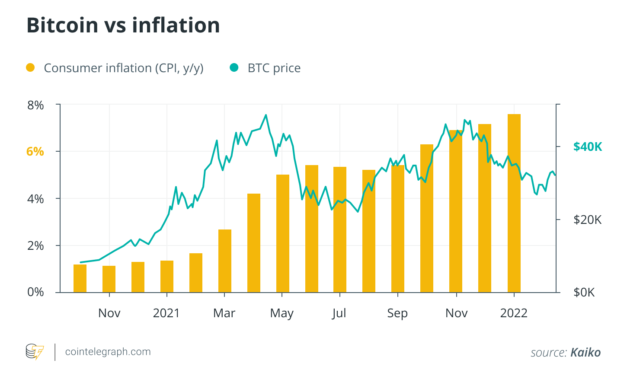
Rising prices are grabbing headlines all over the world. Across the pond in the United States, inflation recently broke a 40-year record. The situation is severe in Europe, with prices rising over 5% across the Eurozone and 4.9% in the United Kingdom. While prices rise, Bitcoin (BTC) is flatlining at around $39,000. It poses many questions: Is Bitcoin an effective hedge against rising prices, what role can Bitcoin play in a high inflation environment and did Bitcoiners know that inflation was coming? Experts from the world of Bitcoin, finance and even European politics responded to these questions, sharing their views with Cointelegraph about the alarming price rises in Europe. From data analysts Kaiko’s monthly report, the Bitcoin price marched ahead of inflation, implying that Bitcoiners may have foreseen a rise in prices and stacked sats to hedge against inflation. Danny Scott, CEO of the U.K.’s leading Bitcoin exchange CoinCorner, backs this argument. He is not “surprised at the inflation levels we are seeing around the world.”“This has been in the making for the best part of a decade and COVID just expedited it. True inflation is being brushed under the carpet to keep a positive spin on how inflation is ‘under control.’”Another Bitcoiner, this time a member of parliament, is again “not surprised” by inflation running hot. The Belgian key opinion leader, Christophe De Beukelaer, was the first European politician to take his salary in Bitcoin.He told Cointelegraph that “when we inject trillions, as we have done, at some point you have to pay the bill.” But, it doesn’t just take a financial toll, “people don‘t see it and don‘t realize it, but inflation has a major impact on their well-being.” Nicolas Bertrand, a Global Blockchain Business Council ambassador and financial executive hailing from Borsa Italia and the London Stock Exchange, told Cointelegraph: “Expansive monetary policies are contributing to higher levels of inflation and I would not be surprised to see this situation lasting for longer than people expect.” For De Beukelaer, however, he reckons that “at some point, we will experience a big monetary crisis.”With the crisis in Ukraine now compounding the problem, what does this mean for short-term inflation levels? Ambre Soubiran, CEO of Kaiko told Cointelegraph that “surging commodities prices are likely to keep inflationary pressures strong and dampen growth due to Europe‘s strong economic ties to Russia.” She added that the current price action in which Bitcoin has slid from highs of $69,000 is likely due to the fact that “markets are pricing out a rate hike from the European Central Bank this year.”Inflation is here to stay so should you HODL Bitcoin? Bitcoin as an inflation hedge is a popular narrative in the United States. In Europe, the jury is out or, as De Beukelaer mentions, “it’s hard to say with certainty.” That said, “since its growth is limited and transparent, it can be expected to be an effective bulwark against inflation.”For Bertrand, with his wealth of expertise in legacy financial markets, the situation is clear:“Contrary to fiat currencies other widely available investment assets and even gold, Bitcoin’s value cannot be negatively impacted by the issuance of new coins. This constitutes a solid base and makes Bitcoin an interesting asset in a context of higher inflation.”Nonetheless, there are a few caveats. There is not “enough data to prove that Bitcoin is statistically a good hedge against inflation.” Moreover, Bertrand shared that we are not “yet there in terms of adoption to consider Bitcoin a good hedge.”Soubiran has a similar view, explaining that “Bitcoin has moved in tandem with risk assets over the past few months and is unlikely to decouple in the current uncertain monetary environment.” In contrast, Bendik Norheim Schei, head of research at Arcane Crypto, and Scott are laser-eyed focused on the role of Bitcoin in an inflationary environment. Schei told Cointelegraph:“Bitcoin is a great option for those who want to bet on inflation running crazy. Or, rather, hedge against that scenario. A scarce asset with a fixed supply is a strong alternative if global economies move into extreme inflation levels.”For Scott, “Bitcoin solves the problem of separating money from the state but comes with many other benefits such as a hedge against inflation in a decentralized and global manner.” Given that in some large emerging countries like Argentina “pass 50% inflation, people look for solutions — Bitcoin being one of them.” In a note of warning, he surmises, “you don‘t need Bitcoin until you do.”Bitcoin and an inflationary futureWhether Bitcoin acts as a store of value or an inflationary hedge is up for discussion, but according to De Beukelaer, the important thing is that “we have a choice.”  If a citizen “no longer has confidence in the euro, the dollar or other fiat, he can turn to Bitcoin/crypto. And, that‘s positive. Power on its own always ends up doing stupid things. It is healthy that a monetary counter-power appears to balance it to cure it of its excesses.”Bertrand also believes that balance is key. “As always, one needs to think about their consolidated asset allocation very carefully and with the concept of balance in mind.” However, with “purchasing power being eroded by half over 10 years,” according to De Beuekalaer, there’s an added level of pressure. In essence, if there was ever a time to get smart on Bitcoin, it’s now. Scott is succinct. “Education is still massively key, not just on Bitcoin but on finance and the economy as a whole.” Incidentally, Cointelegraph has put together a handy explainer on Bitcoin and inflation.Schei has the last word on the seminal cryptocurrency:“This is a long-term bet on an asset that will thrive in a world where large fiat currencies become valueless because of uncontrolled money printing and extreme inflation.”With more and more thought leaders and billionaire investors coming out in favor of Bitcoin or claiming that fiat currency is going to zero, it might be worth hodling onto some.

Čítaj viac

Získaj BONUS 8 € v Bitcoinoch

nakup bitcoin z karty

Registrácia Binance

Burza Binance

Aktuálne kurzy