Autor Cointelegraph By Joseph Hall

‘Satoshi Island’ crypto utopia receives 50K citizenship NFT applications

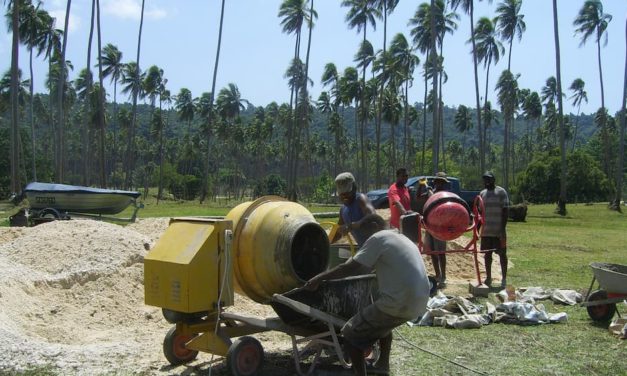
Step aside, El Salvador, there’s a new Bitcoin-centric destination on the map. As a 32-million-square-foot private island sanctuary in the remote South Pacific, Satoshi Island is a “place for the crypto community to call home.”A combination of honeymoon getaway, Bond-villain hideout and naturalist paradise, there’s one enigmatic exception to Satoshi Island: it’s 100% crypto. Talking to Cointelegraph, the Satoshi Island team of Denys Troyak, James Law, Taras Filatov and Benjamin Nero mentioned that it is:“A true crypto-economy where everything will be paid for in crypto and all ownership on the island is represented with NFTs.”With its name inspired by the creator of Bitcoin (BTC), Satoshi Nakamoto, the team added that “the island intends to host events all year round, house and headquarter crypto projects as well as being a gathering place for crypto enthusiasts worldwide.” Further down the road, the island could “operate as a decentralized autonomous organization.” To date, they’ve bought an island, secured build permits and reached a milestone of 50,000 visa nonfungible token (NFT) applications to become permanent crypto residents. An NFT marketplace is currently hush-hush.The construction of Satoshi Island’s infrastructure is cemented. Source: SIThe creation of a crypto utopia may seem unassailable even for the ambitious crypto community. Still, the founders have already received “50,000 applications for our free Citizenship NFT, acting as a whitelist to enter our Land NFT sale, while also permitting the holder to live on the island with many other benefits.” Every home will be an NFT, or a “Satoshi Island Land NFT,” which can be traded. For the traditionalists, NFT holders can “turn their digital rights into physical documentation on the official land registry of Vanuatu.”Unlike famous flops such as Fyre festival or CryptoLand — or any other failed fantasy project from an overly enthusiastic team of venture capitalists — Satoshi Island has mapped out a strategy, ticking off key developments in an orderly fashion. The team scoured the globe to choose a location, respected the legal process and avoided paid marketing or influencer campaigns. Watch our video & see how we’re turning a dream into reality!Yes, we already own the islandYes, we can develop as advertisedYes, the government supports our plan Yes, our team has relevant expertise️#satoshiisland a home for crypto enthusiasts & professionals worldwide! pic.twitter.com/1O05kmfrN1— Satoshi Island (@satoshiisland) January 27, 2022The Satoshi Island vision began during the 2017 bull run, as the “concept started out as an idea to have a place for the crypto community to call home and the actual island was chosen years after.” In fact, “it took many years to find the right island and to get everything together to be able to release to the public.”First, the island had to be remote enough for privacy but not so remote that development would be too difficult. Second, the island should not be at risk of climate change and be protected from natural disasters. The slog to find an adequate location was compounded by the knowledge that, while it was “undoubtedly exciting” to pore over the world in search of an island for sale, they “had to be realistic.”“This project started out as a crypto project looking for an island, not an island looking to become crypto city.”Plus, the government managing the territory must be “open to the idea of a crypto city.” Finally, after years of searching, the team was onto a winner with Vanuata: “The government showed a willingness to innovate and were open to discussions right away.” Indeed, the Pacific island nations are building a reputation for being crypto-friendly. Nearby, in Tonga, Bitcoin as legal tender has been widely discussed while just across the same body of water, the Marshall Islands has “opened the gates” to DAOs. Vanuatu lacks “jobs and tourism,” while in terms of animals, the island — which used to be called Lataro — was overfished and over-poached. The population of coconut crabs was driven “close to extinction” prior to the land purchase. The Vanuatu government warmed to the idea of creating a future-thinking space where job creation would be high. As for the crabs, the plan is to revive dwindling wildlife populations. “The minister of finance was already interested in the idea of a digital economy and using blockchain technology when we spoke to him, so he was very excited about the idea of having our company and many of the brilliant minds in our industry call Vanuatu home.”The team has since received a letter of support from the government to start building on the island using the “latest and greatest sustainable technology,” as solar power features are just one example of being added to the new builds of modular homes. The architect for the project added that “it’s a wonderful opportunity for them to build a land from the ground up.”Artistic rendering of the modular homes powered by the sun. Source: SIAll of the energy generated from the island will be from renewable sources. Meanwhile, the team said that they’re “not really focused on cryptocurrency mining.” Instead, the plan is to use “solar panels built on top of the homes to run the entire community basically on a shared grid.”When pressed on whether Bitcoin mining enthusiasts could pack an S19 into their suitcase to be able to mine sustainably, the team said that‘s still no problem at all. The sustainability-centric modular homes under construction. Source: SISustainability aside, the team stressed the importance of the overall feel of the island. “It’s not a resort” because it will be a “home” with “a permanent population.” According to the website, the goal is to be considered the “crypto capital of the world” — an unachievable goal without permanent residents.21,000 investors or residents, echoing the 21 million Bitcoin that will ever be mined, will be the island’s headcount. Naturally, residency is granted via an NFT minted on the blockchain. To date, 50,000 people have registered interest in the project, buying into the vision of a “community where they can live, work and visit all year round.”Nonetheless, NFT residency does not grant Vanuatu citizenship. If crypto enthusiasts want to say goodbye to fiat and hello to a year-round cryptocurrency life in the sun, the Vanuatu government states that citizenship costs $130,000. The Land NFT marketplace for Satoshi Island. Source: SIThe NFT marketplace is imminent while building the physical island development is underway. A “private opening” of the island is planned for quarter four this year for short-term visits. By early 2023, NFT homeowners will “be able to begin residing on the island.”

Čítaj viac
Crypto tattoos to the moon! Bitcoin and Doge ink searches doubled last year

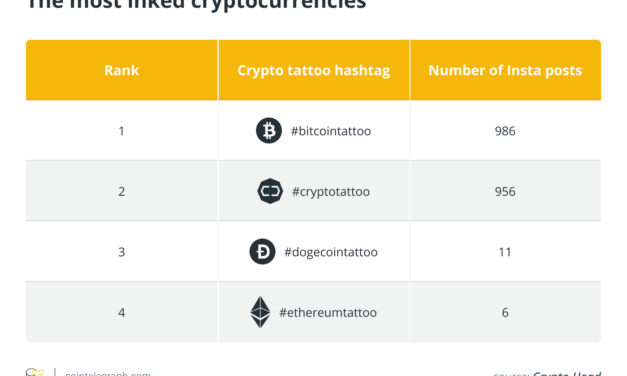
The crypto ecosystem houses some devoted followers who got the logo of their favorite cryptocurrency etched on their skin for life.According to the latest data from Crypto Head, more than 900 people worldwide have inked themselves with the Bitcoin (BTC) “B”, while Dogecoin (DOGE) tattoos and Ethereum (ETH) tattoos are on the rise. The research analyzed “Instagram hashtags and Google search volumes,” revealing crypto tattoo searches have increased by 222%. Despite lackluster price action, more and more crypto enthusiasts seek to get inked with a crypto logo. The making off my #bitcoin Freedom Tattoo!! Show me your #crypto tattoo as I want to make another one and need some inspiration #tattoo pic.twitter.com/HJI3PbNqhM— ₿ Didi Taihuttu ₿ ALLIN (@Diditaihuttu) March 21, 2022Followers of the first and seminal cryptocurrency, Bitcoin tattoos have been around for almost a decade while influential Bitcoiners were quick to ink themselves. Didi Taihuttu, a Bitcoin showman and father of the Bitcoin Family, was an early adopter of Bitcoin ink in 2017. His tattoo represents “freedom and no longer being part of the system.”Anita Posch, a Bitcoin author and podcaster, has a lightning bolt tattooed on her forearm. She explained in a German language Bitcoin documentary called “Human B” that to people that don’t know, the tattoo “represents energy.” A recipient of a recent Human Rights Foundation grant distributed in Satoshis, Posch is a passionate advocate for the lightning network. Anita Posch’ lightning tattoo on her right forearm. Souce: “Human B”, YoutubeWhile Dogecoin is deep outside the top five cryptocurrencies, it remains the second most popular cryptocurrency tattoo search with 700 average monthly searches. However, the Dogecoin hype of 2021 is clearly on the wane. A huge peak in searches for Doge tattoo in early 2021 has since dropped off, (in red) despite Doge’ biggest fan, Elon Musk, continuing to popularize the currency. Google trends for crypto tattoo searches. Source: GooglePlus, some of the Dogecoin tattoos on Instagram are a stretch from the logo of the original Shiba Inu dog.Dogecoin tattoo. Source: InstagramAs for cryptocurrency tattoos, Ethereum’s logo of an octahedron, a diamond-shaped geometric figure is less inked with only 6 instagram posts. However, NFT tattoos–which were popularised on the Ethereum blockchain have been gaining in popularity.Related: $1 million rock NFT sells for a penny in all ore nothing errorDuring the peak for NFT tattoos in late 2021 –as shown on the Google Trends graph– one Lazy Lion NFT collector said that if the floor price for the Lazy Lions reached 2 ETH, they would tattoo themselves. Lines done. Black shading time… then color.LFR!!!#nft #nfts #LazyLions @Lazylionsnfthttps://t.co/LR7RPNQVWT https://t.co/0zmQ0ZknPN pic.twitter.com/KQllsr8YKH— DO NOT C⭕MPLY (@AR_ON_tweets) October 27, 2021

In March 2021, as the floor price for the Lazy Lions grinds down to 1.5 ETH, the ink remains permanent.

Čítaj viac

Crypto users in Africa grew by 2,500% in 2021: report

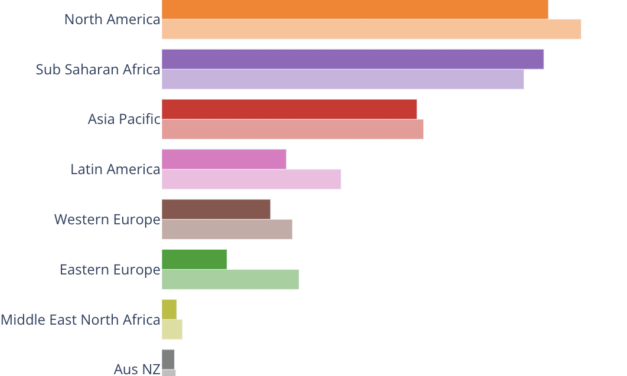
Cryptocurrency adoption in Africa is on the march, despite socioeconomic factors and headwinds. A positive report by cryptocurrency exchange KuCoin shows that crypto transactions increased by up to 2,670% in 2022.An astonishing growth trend, the steep influx relates to the low values that have been observed during previous periods. The number of crypto transactions in Africa constitutes roughly 2.8% of global volumes.Johnny Lyu, CEO of KuCoin, told Cointelegraph that “the adoption of digital assets in Africa will continue to grow exponentially,” adding that “African countries have the highest crypto adoption rate in the world, outperforming even the biggest regions, such as the United States, Europe and Asia.”Nourou the founder of Bitcoin Senegal, is convinced that the thousand percent growth rates for Bitcoin (BTC) adoption “will continue in coming years.”“Take a look at the way in which cars, mobile phones, and consumer electronics took off on the continent. Africa is a continent where lightning-fast progression and adoption is common.”Worldwide crypto transactions over a 90 day period. Subsaharan Africa is second. Source: UsefulTulipsIn particular, the report cites that “more than 88.5% of cryptocurrency transactions made by Africans are cross-border transfers.” Low fees mean that “users pay less than 0.01% of the overall amount of the transaction transferred in cryptocurrencies.”From high inflation levels and swelling smartphone penetration –effectively allowing anyone to become their own bank, Africa also has a young, digitally native population that is accustomed to digital currencies. Africa is a robust testing ground for the problems which cryptocurrencies attempt to solve. Lyu did caveat add a note of caution to the staggering growth levels:“That rate of growth can depend on both local policy-makers and separate officials’ stances on cryptocurrencies. Still, I believe that a promising future for digital money in Africa is inevitable.”In Central and West Africa, for example, BTC  adoption is growing against a backdrop of mistrust and discomfort using the local currency, the CFA. Cointelegraph has previously analyzed the state of crypto adoption in Africa, noting that “economic opportunities presented by the region are immense.”A merchant that accepting Bitcoin in West Africa. Source: CointelegraphFor Lyu, Africa is in an interesting position given that the combination of “growing inflation, high unemployment rates, poor access to bank services, and enormous fees for international payments,” creates an environment conducive to crypto adoption. Ultimately:“Financial problems the region is experiencing are forcing people to look for new instruments and technologies that can give them some of the economic freedom they currently lack.”Related: One man’s plan to orange-pill a nation: Bitcoin SenegalHowever, in long-term Africa hosts a wealth of advantages, “which cannot but contribute to the widespread use of digital assets among locals.” The median age in Africa is very low –at just 19 years old–and over 40% of the population is urban.“Another positive phenomenon is the growing technological awareness of the local population, with many young people exploring programming and internet technologies.”

Čítaj viac

‘How I met Satoshi’: The mission to teach 100M people about Bitcoin by 2030

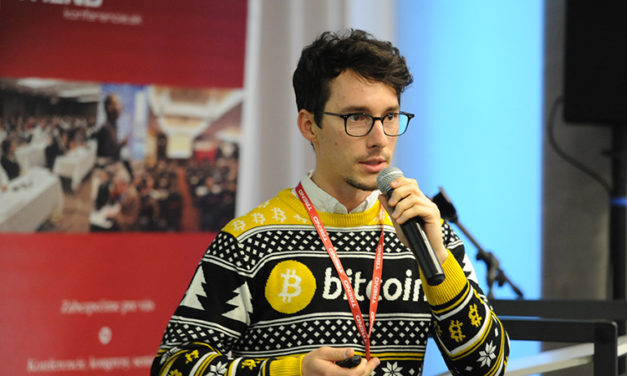
Dušan Matuska is — among many other things — a Bitcoin educator and consultant. The Slovak’s dream is to educate 100 million people about Bitcoin by 2030 through talks, podcasts, webinars, workshops and even a Bitcoin education center in a far-flung destination (plans are currently under wraps). Alongside his Bitcoin teaching aspirations, he assists on a small-scale Bitcoin mining facility in Slovakia, he co-founded the crypto café known as Paralelni Polis in the country’s capital, Bratislava and he’s translated well-known Bitcoin books into his native tongue, Slovak. But, how did he get here? And, what does meeting Satoshi have to do with it? It starts with Bitcoin, which he first heard about Bitcoin in 2015. But, like many people, “I didn’t take a lot of notice. I thought it was a scam, it was a pyramid scheme and all these kinds of things,” he told Cointelegraph.Nonetheless, equipped with a background in mathematics and buoyed by the enthusiasm of a tenacious friend fascinated by open source technologies, Matuska not so much fell but swan dived down the rabbit hole during the 2017 bull run. He suddenly realized, “Oh my God, this Bitcoin thing is something really amazing.”Matuska in his trademark Bitcoin sweater. Source: MatuskaHe took time off his teaching and consulting jobs to study Bitcoin. Within months, he deployed his public speaking skills to give the first free talks of many about Bitcoin. At his first “open workshop, where 40 or 50 people came” in early 2018, something had begun to click.“Teaching something that I have a passion for feels natural to me. I gave webinars, consultations, free talks, all these kinds of things related to Bitcoin. Then, we founded Paralelná Polis in Bratislava.”The crypto cafe — as it’s also known — is the baby brother to the Paralelni Polis café in Prague, Czechia. It’s a cafe rooted in alternative learning, or “parallel education,” which harks back to when Czeckoslavia endured communist rule. Paralená Polis or the “crypto café” coffee shop and meeting space. Dušan Matuska is on right crouching with glasses. Source: Matuska. It is an apt epithet for a safe space to learn, tinker with and eventually use cryptocurrency, “no fiat is allowed,” Matuska added.The parallels of teaching about restricted worlds during the communist regime and learning about an alternative financial world where fiat currency is surplus to requirements are clear-cut at the cafe. Matuska explained:“So, the idea was not to fight against the system but to build up a parallel system. The same as Bitcoin. Bitcoin is a peaceful protest against the system. It‘s not going to break things, but slowly it will make them obsolete.”While helping out as a barista at the cafe, Matuska spoke to unassuming crypto enthusiasts, from 73-year-old former bankers to senior citizens curious about transacting with crypto.Elderly women learning about Bitcoin at a bazaar run by the crypto café in Slovakia. Source: Matuska“I often use the example of the 73-year-old man when educating people about Bitcoin. If he can learn how to use a Bitcoin wallet and how to pay with Bitcoin, anyone can.”Better yet, the reason why the septuagenarian transacted via Bitcoin is that it was “easier for him than it was to use online banking.” Matuska confirmed to Cointelegraph that the elderly man was not, in fact, Satoshi Nakamoto. While sadly, the Bratislava crypto cafe closed last year due to the COVID-19 pandemic, the Prague cafe lives on. Plus, the foundations were laid and Matuska had two epiphanies: Bitcoin is for everyone and Bitcoin solves problems. For Matuska, whether it’s sending money to a cousin in the United States, bequeathing money to grandchildren or simply “helping people save money to fight inflation,” it’s not just some cool tech or  “number-go-up technology.”One day, when his girlfriend queried “my teaching colleagues are asking about how to educate kids about Bitcoin. Is there a book for them?” Matuska shifted his focus from teaching adults to teaching children as well.Thanks to the help of other Bitcoin educators in the space, as well as a successful crowdfunding campaign, Matuska has sent over 2,000 Bitcoin books to schools across Slovakia, translated by himself and his team into Slovak.Slovakian schoolchildren reading “Bitcoin Money.” Source: Matuska Expanding his Bitcoin education aspirations into schools was a deft move. He‘ll need all the help he can get to reach the goal of educating 100 million people about Bitcoin by 2030. To keep track of the numbers, Matuska used to keep “an excel spreadsheet, then I used to count YouTube video views but there was too much overlap.”He’s now working on a series of metrics to reach his goal, undoubtedly tracking the number of downloads on the Bitcoin podcasts he records. In the podcast series, the Slovak answers common questions and thought experiments he was exposed to during his Bitcoin teaching. Among the most popular questions and, in fact, the first podcast he recorded, is a riff on Satoshi Nakamoto’s anonymity. It’s called, “How I met Satoshi,” and refers to a theoretical meeting with the creator of Bitcoin. Matuska explained:“Just like Pythagoras and his theorem, we don’t actually need to know if he was a good guy or a bad guy; if he was orange, blue, yellow or black, whatever. The key thing is that the Pythagoras theorem works again and again.”Related: One man’s plan to orange pill a nation: Bitcoin SenegalIt is possible to mathematically prove that the Pythagoras Theorum works thousands of years after his death. “It will be the same for Satoshi‘s calculations.”While Matuska “meets” with Satoshi, it‘s more about the real “meeting” that occurs when you begin to engage with the works of a genius, whether it‘s Einstein, Michelangelo or Aristotle.Ultimately, for the founder of Bitcoin, Matuska shares that we “should be happy that we don‘t know who this person is.”“The best thing that Satoshi did was to create Bitcoin. The second best thing Satoshi did was to evaporate.”

Čítaj viac

$1 million rock NFT sells for a penny in all ore nothing error

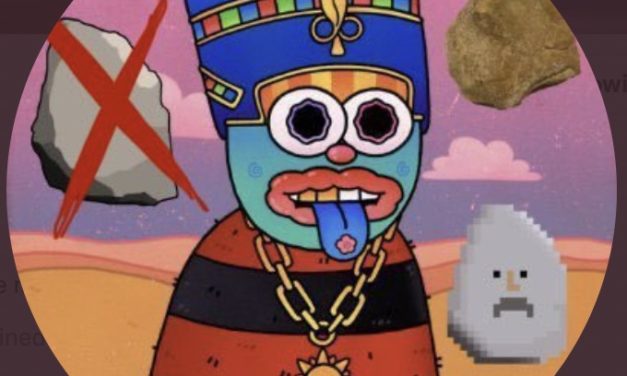
It’s a hard rock life for one crypto user. A clumsy keystroke and the actions of a sniper bot caused a million-dollar mistake on March 10. A rock valued at 444 ether (ETH), or $1.2 million, sold for 444 Wei ($0.0012) to a bot as the seller, DinoDealer confused WEI and ETH. In a tweet, the seller said “in one click my entire net worth of ~$1 million dollars, gone.”How’s your week?Mine? I just erroneously listed @etherrock #44 for 444 wei instead of 444 eth‍♂️Bot sniped it in the same block and trying to flip for 234 ethIn one click my entire net worth of ~$1 million dollars, goneIs there any hope?Am I GMI?Can snipers show mercy? pic.twitter.com/yq9Itb2Ukb— Rock dust (@dino_dealer) March 10, 2022The “bot sniped” refers to bot snipers, which initially came into usage on auction site eBay. Buyers looking to time their bid to the last second would use the tools, however, they are now prolific on NFT listings. The popular freelance website Upwork now lists bot sniping tools for the NFT platform OpenSea from as little as $200. Once the bot snaps up the NFT or digital receipt, there’s no going back. Blockchains are constructed to be immutable so simple mistakes, such as confusing ETH and WEI, can be extremely costly. Indeed, human error abounds in the crypto world. An unfortunate Bitcoin (BTC) user recently lost $10,000 (0.25 BTC) in a mistake that could have been avoided had they double-checked the receiver wallet address. The seller, DinoDealer, seems to have come to terms with the loss, publicly sharing the address of the rock’s bot snipe. They made light of the situation by uploading a new Twitter profile picture and adding a crying emoji after their Twitter handle. Their avatar stands next to the precious rock, crossed out in red.DinoDealer’s new Twitter picture with sad rocks and cancelled rocks in the background. Source: TwitterMore jokes came from DinoDealer’s futile attempt to reach out to the “crypto customer service.” Their attempts to speak to members of the crypto community were met with replies from suspicious users purporting to help, offering email addresses and WhatsApp numbers. Screenshots of the conversations DinoDealer had with “crypto customer service.” Source: TwitterDo not reach out to these numbers or email addresses. The past month has been tumultuous for seemingly minor errors with potentially dire consequences. In some cases, a simple mistake can wipe millions of dollars of market value increasingly common.Related: Rare Bears Discord phishing attack nabs $800K in NFTsA Coinbase white hacker discovered a mistake in the Coinbase Pro code which could have nuked the market, while frantic bot trading behaviors drained the WTF token launch of 58 ETH. “Poor liquidity pool management” left the launch exposed.In better days for DinoDealer, other crypto rock enthusiasts have come to his aid, one user sending the geologist salesman a picture of the rock with glasses and headphones, signed “mfer rocks.” Rock bottom consolation for one million dollars.  Source: Etherscan

Čítaj viac

Získaj BONUS 8 € v Bitcoinoch

nakup bitcoin z karty

Registrácia Binance

Burza Binance

Aktuálne kurzy