Autor Cointelegraph By Joseph Hall

Coinbase to reportedly buy the $2.2B Brazilian unicorn behind Mercado Bitcoin

Coinbase is set to continue its global acquisition strategy, reportedly buying the Brazilian company 2TM, the parent company of Mercado Bitcoin. According to information from Estadão, the third-largest newspaper read by Brazil’s 212 million populace, the Coinbase acquisition could be complete by next month. Negotiations for the purchase have been taking place over the course of 2022. Mercado Bitcoin is Latin America’s largest crypto brokerage, whose parent company, 2TM cemented its unicorn status as a billion-dollar company in 2021. Valued at $2.2 billion, 2TM has also pursued an acquisition strategy, particularly in lusophone countries. 2TM’s Mercado Bitcoin snapped up Portuguese CriptoLoja, a Lisbon-based crypto exchange in January.The 2TM holding company umbrella now covers Meubank, MB Digital Assets, CriptoLoja, Bitrust, Blockchain Academy, MezaPro, Wuzu and Portal do Bitcoin.For Coinbase, the reported planned purchase of 2TM demonstrates that their global acquisition strategy is snowballing. Following the acquisition of an Indian AI startup to improve customer service as angry feedback from customers proved too much, the San-Francisco-based exchange also recently purchased blockchain-infrastructure platform Bison Trails. Coinbase’s most recent institutional investor report from Coinbase on Latin America, “crypto in Latam”, mentions Brazil 31 times, while Mexico (with a larger GDP but plenty of crypto interest) was mentioned just 17. The report states that in Brazil:“Direct crypto trading is growing rapidly. Locally based crypto exchange Mercado Bitcoin has seen transaction volumes increase seven-fold year-on-year to August.”A keystone of the group’s Latam expansion plans, the world’s second-largest cryptocurrency exchange has also been on the lookout for business development managers and executives as part of a Brazilian hiring spree. Related: Tribal partners with Visa to expand credit options for businessesIt’s no surprise why; Brazil is a hotbed for Bitcoin adoption. The capital, Rio de Janeiro will accept crypto for certain taxes in 2023, and according to triple-A, more than 10 million Brazilians own cryptocurrencies. Cointelegraph reported that 2021 was the year of “mass adoption” in Brazil, as UFC stars and politicians got in on the action. Please note, Cointelegraph reached out to Coinbase, 2TM and Estadão for comment and will update where possible.

Čítaj viac
Shitcoins are ‘garbage’: Bitcoin-only brokers on freedom and finance

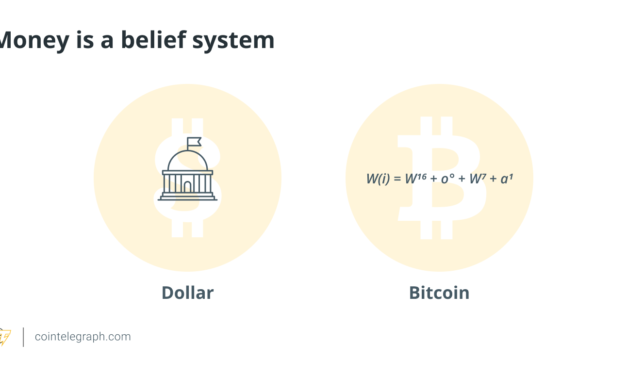
In Europe, “Bitcoin only” is a growing trend, as more and more consumers and companies are hardening their resolve that Bitcoin (BTC) is the only digital asset worth holding. Bitcoin-only exchanges and brokers are places to stack sats, not “gamble” on Ether (ETH), or trade “garbage” that looks like “venture investments.” That’s according to the CEOs of major Bitcoin-only exchanges and brokers, including CoinCorner, FastBitcoins, Relai, Bittr, Pocket Bitcoin and Bitcoin-lyon. Cointelegraph spoke to the CEOs and founders of these European Bitcoin brokers to find out why they are Bitcoin only, and why you should build a company on this conviction.The separation of money from the stateFirstly, according to Danny Brewster, CEO of FastBitcoins, “Bitcoin is our only hope of separating money and state; it is the one opportunity that we will have to accomplish such a feat.” It’s a once-in-a-generation — perhaps, lifetime — opportunity to pry the money printer from the government’s hands. Bitcoin takes the belief in money out of the state’s hands, replacing it with math. Source: Bitcoin VisualsJulian Liniger, CEO of Relai in Switzerland, builds on the notion, adding that Bitcoin is incomparable: “It is the only asset that is truly decentralized — i.e., has no leader or leading team — and, therefore, truly uncensorable and unseizable.” Indeed, “digital scarcity can only be created once — i.e., the state of the world where no working cryptocurrency existed in 2008, can never be recreated, simply because Bitcoin exists today,” Ruben Waterman, CEO of Switzerland-based but Dutch-led Bittr, told Cointelegraph. Brewster explains that for every new digital coin post-Bitcoin that is created, there is an inherent risk of government intervention:“No government will ever let another network or technology gain as much traction as Bitcoin has accomplished ever again should Bitcoin fail.”Jimmy Chambrade, co-founder of Bitcoin-lyon — the only exchange in France where you can buy Bitcoin with paper money — highlighted that while separating the money from the state is key, Bitcoin is a “Résistance” money. Fundamentally, “censorship resistance is essential to the freedom of individuals.”He explained that France was founded on “liberté” or freedom, and the famous painting by Eugène Delacroix “Freedom Leading the People” is so well-loved that in an incongruous twist of fate, it featured on the 100 franc fiat banknote. On Bitcoin adoption, Chambrade added that “philosophically speaking, Bitcoin allows the citizen to regain financial control and gain freedom.”The “Freedom Leading the People” painting ironically features on the former French 100 franc banknote (center right). Source: NumisCollectionWhile the thread of freedom sews the Bitcoiner belief-system together, according to Matthias Koller, co-founder of Pocket Bitcoin, the underlying implications of separating the power of money creation from the government by using a “money that works the same and is equally accessible to everyone” are huge. It can “change the world,” said Danny Scott, CEO of CoinCorner. Bitcoin will be “for the greater good, for ourselves and others in the long term,” Scott continued, stating:“We’re here to change the world, not take money from gamblers.”Belief in Bitcoin > Taking profit from peopleInterestingly, the Bitcoin-only business model brandishes a concerted effort to avoid selling “garbage,” according to Brewster and Waterman, and what Scott calls “taking money from gamblers” for the purchase of altcoins or “shitcoins.” Every single Bitcoin-only exchange leader commented on the altcoin business model, lamenting the ease with which altcoin exchanges, such as Coinbase, Kraken and Gemini make “short term gains” by selling “as many shitcoins as possible.” Waterman continued, explaining that the more trading that goes on in an app, the more trading fees are earned, the more revenue goes up. He understands that “it [altcoin sales] makes sense from a business point of view.” Incidentally, Coinbase makes most of its revenue from trading fees —something Strike’s Jack Mallers (another Bitcoin-only believer) has taken aim at in the past. For the Bitcoin-only brokers, the belief in the long-term benefits of adopting Bitcoin far outweighs what Scott describes as “forfeiting short-term revenue by not adding the hundreds of altcoins.”Brewster agreed, wielding a hardline view: “We are also willing to forgo early and somewhat easy profits that we could make by providing customers with yet another altcoin/shitcoin casino, that distorts the public understanding of what Bitcoin is and why it even exists.”Scott, who is technically Brewster’s neighbor, as both CoinCorner and FastBitcoins operate from the Isle of Man (a budding Bitcoin hotspot), suggested that “‘crypto exchange’ business models seem to be focused mainly around price speculation on cryptocurrencies. They appear to have lost their way and are no longer helping the wider adoption of Bitcoin as a currency.Bitcoin adoption curve. Source: Bitcoin VisualsLiniger added that they “want to be a savings app, not a speculation app. That‘s why Bitcoin is the only cryptocurrency we support” — everything else is “speculation.” Or in Brewster’s view, non-Bitcoin projects are “noise, a scam, a distraction or purely speculative,” a way for insiders of a project “to dump on retail at the earliest opportunity.”2021 was littered with examples of pump-and-dump schemes, cryptocurrencies that made up for poor utility with blockbuster marketing campaigns. The Squid Game Token went from $2,800 to effectively $0; memecoins flew before abrupt crash-landing; and spotting a “rug pull” has become a skill in its own right for traders. Ultimately, Waterman is “totally fine” with “playing the long-term game at the expense of missing out on some short-term gains.” Bitcoin is a savings technology Store of value, digital gold or simply a saving technology, at the heart of each Bitcoin-only business is to make it easy and convenient for customers to buy Bitcoin. Waterman explained that “it should be easy and accessible to anyone in Europe to preserve their wealth and become financially independent from the banking system.”Globally, Bitcoin has been gaining traction as what Michael Saylor calls a hedge against inflation, while Bitcoin’s deflationary monetary policy and its hard cap of 21 million are growing in appeal to Europeans due to the inflationary environment in the European Union and the United Kingdom. “We believe that Bitcoin is the best way to save money in the 21st century, and we want to give everybody access to the world’s best savings technology,” Liniger told Cointelegraph. Koller, a Swiss compatriot, chimed in, “We want to help and encourage our clients to use a secure and hard form of money for their savings. One that is built on sound technology and policy.”It’s that sound technology that separates Bitcoin from other crypto assets. Waterman explained how Bitcoin satisfies the blockchain scalability trilemma, an adequately cryptic phrase born out of the creation of Ethereum, but which Bitcoin seemingly satisfies. Bitcoin and the “scalability trilemma.” Source: Bitcoin Visuals“Bitcoin has gained the most adoption; it’s the most secure network to move value over the internet; and it’s the most decentralized (as everyone can still run a Bitcoin node. Nodes are widely distributed across the world and Bitcoin cannot easily be changed, which is a feature, not a bug).”Related: ‘How I met Satoshi’: The mission to teach 100M people about Bitcoin by 2030For the bevy of Bitcoiners with whom Cointelegraph communicated, there was agreement on many aspects of Bitcoin, such as Chambrade’s “technical, commercial and philosophical,” reasons. Plus, their conviction in Bitcoin guides their business principles.However, the tl;dr is that Bitcoin-only companies are laser(eye)-focused on selling Bitcoin to Europeans simply because it’s a better form of money. That’s why Brewster “point-blank refuse[s] to sell people garbage that is not going to enable Bitcoin to fulfill its potential.”Leaving altcoin abuse to one side, Koller concluded: “There is no other form of money that comes anywhere close to what Bitcoin has to offer.”

Čítaj viac

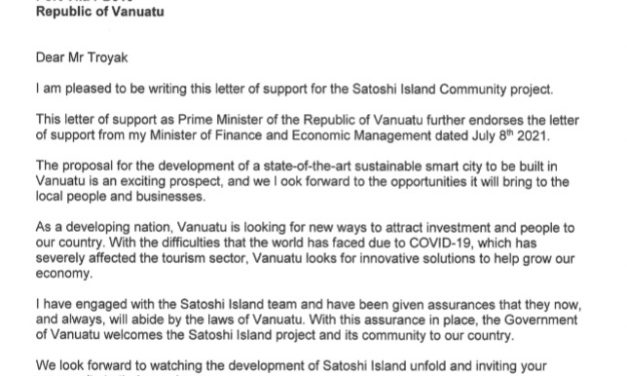
Vanuatu Prime Minister says yes to Satoshi Island crypto project

It’s not every day that a country’s leader endorses a cryptocurrency project. Nayib Bukele, the President of orange-pilled El Salvador, was the first leader to endorse Bitcoin (BTC). Now, the Prime Minister of Vanuatu, the Honourable Bob Loughman, has officially given the green light to Satoshi Island. The Vanuatu government approval, which Satoshi Island was happy to share with Cointelegraph. Source: SISatoshi Island is the megaproject crypto utopia in the South Pacific, which recently disclosed to Cointelegraph the vision, progress and preparation. Hot on the heels of news that they received 50,000 citizenship NFT applications, the PM of Vanuatu has given his blessing to “watching the development of Satoshi Island unfold.”For the team at Satoshi Island, the endorsement is welcome news:“With this full endorsement from the Prime Minister of Vanuatu in hand, we can show everyone that Satoshi Island is as real as it gets, and the kind words of the PM inviting our community to their home could not be a warmer welcome.”Satoshi Island from above. Source: SIThe official letter states that “the Government of Vanuatu welcomes the Satoshi Island project and its community to our country,” while highlighting that “Vanuatu is looking for new ways to attract investment and people to our country.”The Covid-19 pandemic “severely affected the tourism sector,” a mainstay of the Vanuatu economy, contributing 34.7% to total GDP in 2019. According to World Bank data, visitor numbers to the paradise archipelago 2,000 km Brisbane dropped from circa 300,000 to 80,000 in 2020. The team at Satoshi Island had previously told Cointelegraph that the “lack [in] tourism” was one of the pain points they wished to alleviate with their project. Fundamentally, however, the “crypto industry finally has a physical home” in Satoshi Island. Satoshi Island is a space for crypto enthusiasts to reside–not visit–living in sustainable build homes in a community organized by DAOs, where ownership is represented by NFTs. Artist’s rendering of the Satoshi Island sustainable build homes. Source: SIMany of the past crypto megaprojects, from Akon City in Senegal to CryptoLand in Fiji, have failed. Satoshi Island’s successful team recommends to “keep ideas on a need-to-know basis within the team until everything is in place to turn the idea into a reality.” Related: ‘Satoshi Island’ crypto utopia receives 50K citizenship NFT applicationsThe team recommends to “be very selective with the location and ensure it logistically, environmentally and legally possible,” the continue suggesting to:“Be very selective with the location and ensure it is and most importantly, owning the land before you release your project is an essential step to showing your target market that what you are promoting is real and not just a pipe dream.”With the Prime Minister of Vanuatu’s approval, the Satoshi Island crypto “pipe dream” is nearing reality.

Čítaj viac

Bitcoin veteran tricks crypto scammer into learning Lightning

There’s poetic justice to scammers getting beat at their own game. A cryptocurrency scammer met their match when trying to trick Bitcoiner Felix Crisan into sending them Tether (USDT). The scammer tried to impersonate John Carvalho, the CEO of Synonym, a Bitcoiner Cointelegraph regularly cites. The scammer, who we will call “Fake John” from now on, wanted Crisan to send USDT, but Crisan, who’s been learning and getting involved with Bitcoin (BTC) for almost a decade, had other ideas.Today I’ve convinced a scammer to install a Lightning Network wallet. BTW @BitcoinErrorLog there’s someone impersonating you on Telegram pic.twitter.com/Qd0I9pAney— felix crisan (@fixone) March 23, 2022In brief, Crisan, chief technology officer of Netopia Payments, convinced the scammer to install a Lightning Network (LN) wallet, as he only deals with “LN assets.” So, Fake John installed a Bitcoin LN wallet, Blue Wallet. However, instead of sending Fake John the money, Crisan sent a message saying “Eat shit you fucking scammer!”Justice was duly served — all while providing a free lesson in how to use Bitcoin LN. On the other hand, it does raise questions as to whether Fake John will continue scamming people but now with Bitcoin LN addresses at their disposal. The Bitcoin Lightning Network is a fast-growing near-instant layer-2 payment network built on top of the Bitcoin base chain. It’s brought innovations such as a quick way to pour a pint, while the aforementioned (real) John Carvalho is building his company on Lightning in partnership with Tether. Crisan told Cointelegraph that he “constantly get DMs shilling one investment scheme or another.” Prudence and precaution are key when interacting and transacting online: Scammers, bots and cryptocurrency shills are commonplace on social media platforms, such as Twitter, while malware bots can sometimes interfere with wallet addresses to steal Bitcoin.In terms of pursuing and maybe catching the miscreant, Crisan said that “if the scammer opened a channel with this node, then it would be possible. But there are also services that offer sort of on-demand channel creation, so that’s not a very reliable method.” However, ultimately, “only the node operator would be able to do this enhanced tracing.” It’s not Crisan’s first time playing tricks on scammers. In 2019, he outsmarted a Bitcoin illiterate scammer into sending 21 million (and one) Bitcoin to their address. Bitcoin has a hard cap of 21 million Bitcoin, so the scammer clearly needs to do some homework. 1/ I spent some time today trolling a scammer. At one point I was “ready” to send him 21mil BTC to “trade”. He was being considerate, though, only wanting 100k pic.twitter.com/4sxgf0d4DI— felix crisan (@fixone) July 7, 2019

The above Tweet thread makes clear that some scammers are misinformed at best, while Bitcoin needs more people like Crisan. Related: ‘How I met Satoshi’: The mission to teach 100M people about Bitcoin by 2030Asked whether Crisan had any advice to share with cryptocurrency and internet users faced with a seemingly constant threat of scams, Crisan told Cointelegraph: “Avoiding scams should always stem from a common history with the requestor — i.e., to determine if they are who they claim they are — to ask for a common reference. (Yesterday, this type of question was the first I asked this scammer, and the response almost confirmed that he’s not John.)”

Čítaj viac

Almost half of Germans to invest in crypto: Report

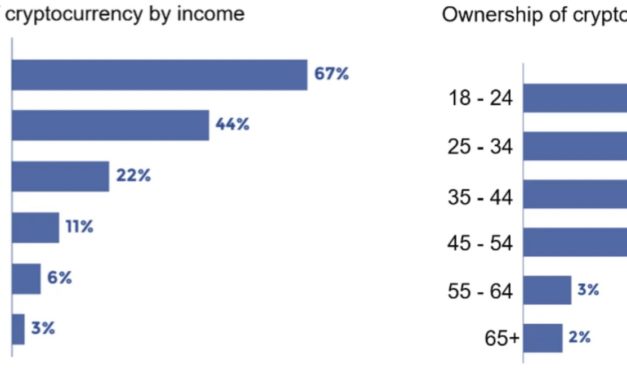
The richest country in Europe is coming round to crypto. That’s according to a report by KuCoin which shared some flattering statistics towards the future of crypto in Deutschland. Notably, 44% of Germans are “motivated to invest in cryptocurrencies to be a part of ‘the future of finance’”; while over a third, “37% of German crypto investors have been trading cryptocurrencies for over a year.” Cointelegraph had previously picked up on crypto’s impressive and productive year in Germany, but it’s crucial to check the crypto sentiment on the ground.Johnny Lyu, CEO of KuCoin–the company publishing the report–explained to Cointelegraph the state of play of Germany crypto investors:”Cryptocurrencies are very popular among the supporters of the accumulation strategy, especially among the younger generation. They prefer to save for retirement on their own and diversify their savings through the use of cryptocurrencies.”Lyu caveats that “despite the high demand for cryptocurrencies among Germans, the country does not yet have specific regulations that unequivocally regulate the use of digital money.”Indeed, while Germany was the first country “to recognize that Bitcoins are ‘units of value’ and could be classified as a ‘financial instrument,’” according to the report. So far the local regulator has merely had “some success in regulating crypto.”However, Germany was the first country worldwide to adopt a blockchain strategy and interestingly, Germany’s political position relative to cryptocurrencies came up for discussion during recent parliamentary elections. For Florian Döhnert-Breyer, managing director of F5 Crypto, “Germany is a role model for other EU countries, whose populations are generally more open to long-term investments.” Furthermore, “As the largest country in the EU with a notoriously risk-averse view of financial assets, Germany has a special role to play.” He adds:  The high number of women interested in crypto is particularly encouraging, as this target group is on average less active in the financial market (e.g. stock market).”The report states that “69% of crypto investors are men, while women account for 53% of the crypto-curious,” which according to Döhnert-Breyer shows that women are more interested in the future of finance than legacy finance. Triple A statistics showing a breakdown of crypto ownership by age and income. Source: Triple-AKatharina Gehra, CEO & Co-Founder of Immutable Insight also picks up on the changing demographics of crypto investors, “younger demographics show more self-directed and equity-focused investment style and are generally significantly more aware of inflations risks in particular.”However, the future remains uncertain, particularly regarding the regulatory environment, as “BaFin never tires to warn about the risks.” BaFin is the Federal Financial Supervisory Authority for Germany, responsible for regulating crypto. They recently gave the green light to neobank N26 to launch crypto trading in 2022. Related: The city of Lugano will accept Bitcoin, Tether and LVGA tokens as ‘de facto’ legal tenderDöhnert-Breyer is“confident that Germany will continue to pursue crypto-friendly legislation,” while BaFin’s recent actions such as approving custody licenses and Bitcoin-based security tokens are promising signs. Germany may not have the same level playfield when “compared to Switzerland, UK,” says Gehra, but“ there is some movement on the legislative side.”Lyu has the last word: “Last year, Germany took the first official step towards accepting crypto investments by approving special funds for investing in digital assets. I think the country has established a good bedrock to create a favorable climate for crypto users.”

Čítaj viac

Získaj BONUS 8 € v Bitcoinoch

nakup bitcoin z karty

Registrácia Binance

Burza Binance

Aktuálne kurzy