Autor Cointelegraph By Joseph Hall

Banking uses 56 times more energy than Bitcoin: Valuechain report

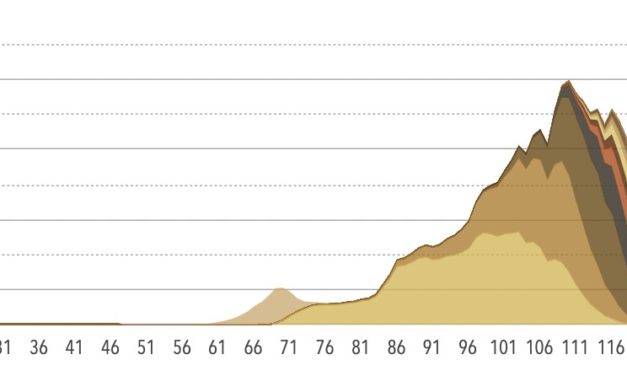
Fresh figures on Bitcoin’s (BTC) energy consumption, efficiency and scalability serve to expose the banking sector while bathing the world’s largest cryptocurrency in a new light. A research report published by Michel Khazzaka, an IT engineer, cryptographer and consultant, calculates that Bitcoin payments are a “million times more efficient” than the legacy financial system. Plus, the Banking sector “uses 56 times more energy than Bitcoin.”The report compiles almost four years of research and suggests a new calculation for estimating Bitcoin’s Proof-of-Work energy consumption. In an interview, Khazzaka told Cointelegraph:“Bitcoin Lightning, and Bitcoin, in general, are really great and very efficient technological solutions that deserve to be adopted on a large scale. This invention is brilliant enough, efficient enough, and powerful enough to get mass adoption.”Khazzaka, who founded payments consultancy Valuechain in late 2021, proposes an alternative to the energy estimates provided by Cambridge Bitcoin Electricity Consumption Index (CBECI). The index, often cited by Cointelegraph, estimates that Bitcoin consumes roughly 122 TW/H per year. Taking into account the average lifespan of Bitcoin mining machines as well as the rate at which new IT materials are created, Khazzaka suggests that Bitcoin consumes 88.95 TWh per year, considerably less than Cambridge’s estimate.Graph to show total count of mining units over time over 160 months. Source: Khazzaka reportA payments specialist who wrote his dissertation about cryptography in 2003, and discovered Bitcoin in 2011, Khazzaka also puts the banking sector under the microscope in order to effectively compare the two monetary systems. Khazzaka told Cointelegraph he “really underestimates every aspect of the banking sector,” and contrary to critics, his report is “biased to the banking system.” Nonetheless, taking into account the creation of money, transporting money, physical banking infrastructure energy consumption, etc, he arrives at a figure of 4,981 TWh. Rounded up, 5,000 TWh is consumed by the “classical payments” sector every year. Consequently, banking uses 56 times more energy than Bitcoin. The report examines transaction efficiency revealing that “Today, at current block size and if the blocks are filled to their maximum capacity ηmax = 5.7× better energy efficiency than the classical system.” However, that’s without taking into account the Lightning Network. In the interview, Khazzaka explained: “Lightning will allow the bitcoin protocol to do more transactions without consuming more energy. And this is magic.”Related: The Lightning Network Lunch: A Bitcoin contactless payment storyThe report concludes that the combination of Bitcoin and the Lightning Network allows Bitcoin to become “194 million” times more energy efficient than a classical payment system. For Khazzaka, the report lays bare that the “Banking and payments industry needs to adopt blockchain and maybe even Bitcoin.” While Khazzaka’s conclusion may come as a surprise to the cypherpunks and anarchocapitalists who favor the crypto space, Khazzaka believes that Bitcoin could actually benefit banking:“If they are courageous enough blockchain technology, it will improve their efficiency and their scalability.”Although Bitcoin’s energy use is frequently critiqued, the investigation into the banking sector will come as welcome news to many. 

Čítaj viac
'Buy Bitcoin, plant a tree, lower your time preference': a Sequoia story

When the market falls faster than a tree in the forest, the phrases “zoom out,” and “lower your time preference,” take root. “Zoom out” refers to taking a break from the omnipresent price charts that populate news feeds and Twitter threads. Consider looking at the price of Bitcoin (BTC) over the past five years–as opposed to over the past 6,12 or 18 months.HODLing Bitcoin has far outperformed HODLing stocks over the past five years. But what does “lower your time preference,”–popular parlance among Bitcoiners, actually mean? Commonly attributed to Saifedean Ammous, the polarizing author who penned The Bitcoin Standard, lowering one’s time preference translates to thinking long-term, and to valuing the future over the present. In contrast to a fiat standard, where money loses value due to inflation; a system in which quick gains, immediate satisfaction, and instant gratification make the medicine go down, a Bitcoin standard promotes delayed gratification. The theory is that in a Bitcoin Standard, the value of money saved in Bitcoin goes up over time to be enjoyed at a later stage. This lesson is a tough pill to swallow, (particularly during a crypto winter) but it’s a vital step to understanding Bitcoin. At least, that’s what Fangorn, a passionate Bitcoiner turned tree-planter believes. A software developer and history major with a background in biology, he stumbled across Bitcoin on a Hacker News site in the summer of 2017 (when one BTC was worth around $3,000). Something twigged during 2017 and 2018, but it took the Covid-19 market crash of 2020 for Fangorn to really “go down the rabbit hole.” He read more broadly, engaging with popular Bitcoin author Gigi’s works, who wrote 21 lessons as well as an article called Bitcoin is Time. At this point, a lightbulb went off: “Holy shit, this [Bitcoin] is way more than just like digital gold. This is profoundly advanced engineering for civilization.”His appetite for understanding sound money grew and hasn’t “looked back since.” He shared “the one thing to focus on is Bitcoin–the rest is a bunch of fluff.” Sequoias are the largest trees in the world. What better way to visualize a low-time preference? Source: TwitterAn outdoorsy family man with a penchant for planting trees–he regularly gifts his father Sequoia trees for Father’s Day–Fangorn’s ideas, much like the giant trees, began to germinate. He connected the dots between a low-time preference, Sequoia trees, and the Bitcoin network:“I can look at these trees when I’m 100 years old and think, damn it’s going to persist for another 3,000 years. And my grandkids’, grandkids’, grandkids’ will think ‘Thanks, great great grandpa for planting this tree thousands of years ago!”Like many Bitcoiners, Fangorn has faith that the Bitcoin network will sustain civilization as sound money for years to come. Moreover, Bitcoin and Sequoias are pretty similar, they take “a lot of work, they stand the test of time, and they lift the human spirit.”“Here’s this thing that allows us to cast our minds forward for thousands of years, plan long term, and reconnect with that core aspect of civilization, which is lowering one’s time preference and planning for the future.”Indeed, while Bitcoin is a tool famed for its “number go up” properties, it’s also a tool that allows for securing a long-term outlook.He shares that “planting trees is a super easy, super cost effective way of explaining” what a low-time preference is. The tree is a visual representation of a low-time preference; the roots are the network. Moreover, planting trees flies in the face of the environmental FUD to which Bitcoin is often subjected. I planted a sequoia from @btcfangorn so my ancestors can harvest a 30 ft wide behemoth! pic.twitter.com/0PKwvwhmqe— Sidd – #BitcoinTour Harley Rider (@CaptainSiddh) June 13, 2022Fangorn encourages Bitcoiners and no-coiners to plant trees to visualize a low-time preference. He shipped seeds to Andre Loja, the man behind the island of Madeira’s Bitcoin strategy; he distributed seeds at the Bitcoin Miami conference in 2022 as well as at meetups in Winsconsin where he resides. The Sequoia seeds received by Andre Loja in Madeira. Souce: LojaHe jokes that when Hal Finney (the first person to receive a Bitcoin transaction) comes round from his cryogenic freeze, “In 3,000 years, I want there to be 21 million trees that are fully grown and 30 feet in diameter–trees that were planted in the first few epochs.”Bitcoin will enter its fourth epoch sometime in 2024 and its last epoch–when the last Bitcoin is mined–in the year 2140. By 2140, the Sequoia seeds Fangorn and other Bitcoiners plant now will still be considered young trees: they reach full maturity after 500 years. For Fangorn, the Bitcoin mined today should still be in existence, maybe even used to pay for goods and services by his great-great-grandchildren.

Čítaj viac

Binance aims to become a super app with Splyt crypto partnership

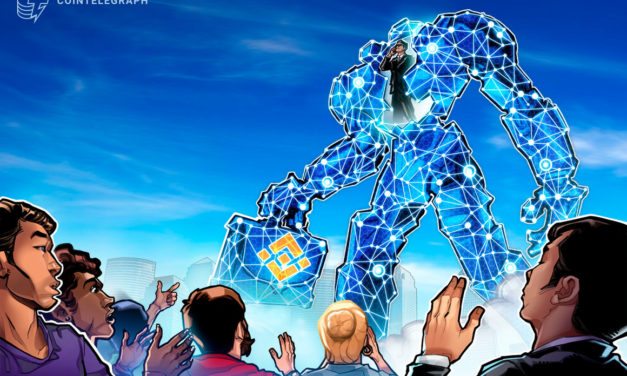
The world’s largest cryptocurrency exchange, Binance has partnered with Splyt, a “super app enabler,” to bring payment options to the Binance application. Payment options made for Splyt services include cryptocurrency. When live, the integration will allow Binance users to pay for ridehailing services, but “also bikesharing, scooters, airport transfers, public transport and even food delivery,” a Splyt spokesperson told Cointelegraph.As per usual, CZ, Binance’s CEO helped to break the news on Twitter:Book your ride with #Binance, and pay in crypto (no need to convert to fiat).https://t.co/ueGYyy6XVm— CZ Binance (@cz_binance) June 14, 2022The news comes as some relief to Binance, which suffered issues related to “stuck transactions” when withdrawing Bitcoin (BTC) on Monday. The problem was resolved eight hours later. A Splyt spokesperson told Cointelegraph that it would be the “first partnership in the cryptocurrency space” and faced with perilous price action with Bitcoin sub $25,000, “Splyt is enthusiastic about its development.”“Increasingly, users are turning to their crypto wallets to pay for everyday services. […] Fully integrating everyday services as an obvious next step for crypto wallets.”For Binance, it’s no secret they’re keen to get a foothold in the crypto payments space. For CZ, payments and app integrations are meant to up the omnipresent Binance brand awareness. Since the world has gradually reopened following the depths of the Covid-19 pandemic, CZ has undertaken a world tour, pitching crypto and Binance Pay to countries and investors all around the world. Related: Binance Australia CEO: Regulations will establish higher standards in cryptoThe report says that Binance is already used by 90 million users in over 150 countries worldwide. For Splyt, the partnership opens the door to a broad customer base:“The other perspective is equally important: mobility and other on-demand services can dramatically increase acceptance and transaction volumes, by being available through crypto platforms, who together have hundreds of millions of users.”Critically, as companies such as BlockFi, Gemini and most recently Coinbase report staff reductions, the news is further evidence that Binance is doubling down into the bear market. Another feather to its cap, Binance continues to expand operations and roll out capital expenditure.

Čítaj viac

Binance suspends Bitcoin withdrawals: CZ says funds are 'SAFU'

Crypto’s Black Monday continues to wreak havoc. Changpeng Zhao, the CEO of crypto exchange Binance, tweeted that there would be a temporary pause on Bitcoin (BTC) withdrawals.Temporary pause of $BTC withdrawals on #Binance due to a stuck transaction causing a backlog. Should be fixed in ~30 minutes. Will update.Funds are SAFU.— CZ Binance (@cz_binance) June 13, 2022CZ, who often lends his opinion to projects and the market, regularly tweets on behalf of Binance to his 6.4 million followers. He quickly updated the tweet to show: This is only impacting the Bitcoin network. You can still withdraw Bitcoin on other networks like BEP-20.SAFU is a meme that plays on the word ‘safe,’ first appearing in a Youtube video three years ago, while it also refers to Binance’s trading protection fund, the Secure Asset Fund for Users (SAFU). The fund was built during the previous bear market, but in light of Celsius’ apparent insolvency, investors may be right to raise the alarm.In a follow-up tweet, the exchange setback may be worse than first thought:“Likely this is going to take a bit longer to fix than my initial estimate. More updates soon. Thanks for your patience and understanding.”Binance official Twitter account confirmed the delay, suggesting that the issue was due to a “stuck on-chain transaction.” For some commentators, the Lightning Network on Bitcoin would have avoided such an issue.Related: In this together: Musk and Saylor down a combined $1.5B on Bitcoin buysIndeed, despite Binance’s size and global presence, it has yet to keep up with its competitors regarding Lightning integration. Sam Bankman-Fried, head of competitor FTX exchange recently tweeted he would encourage developers to work on integrating the layer-2 protocol into the exchange but Coinbase and Binance lag behind. Kraken also recently allowed its customers to withdraw funds from accounts instantly, using the LN. In welcome, positive news, the total number of Bitcoin on the network recently crossed the 4,000 BTC milestone. 

Čítaj viac

In this together: Musk and Saylor down a combined $1.5B on Bitcoin buys

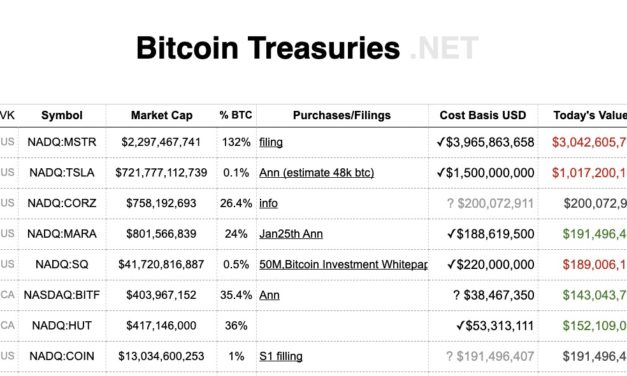
As the bear market bites, holding crypto investments can be a tough pill to swallow. Consider two of the largest bag holders of publicly traded companies. They are down by almost $2 billion dollars on their Bitcoin buys. According to Bitcointreasuries.net, the 130,000 and 43,00 Bitcoin (BTC) held by Microstrategy and Tesla respectively are worth considerable sums less.The top “Hodlers” of Bitcoin according to Bitcointreasuries.netFor Microstrategy, Michael Saylor splashed out almost $4 billion ($3,965,863,658) on 129,218 BTC, approximately 0.615% of the 21 million total supply. The Bitcoin price nosedive has ripped away earlier gains: the investment is worth $3.1 billion ($3,074,987,824), a loss of $900 million. Plus, in premarket trading on June 13, Microstrategy stock (MSTR) plunged to its lowest levels in months.For Elon Musk, whose Tesla automotive company bought over 40,000 Bitcoin during the 2021 bull market, his $1 billion profit has gone south. The cost basis of $1.5 billion for 43,200 BTC, or 0.206% of the total Bitcoin supply, is now worth $1 billion ($1,017,789,280), down almost $500 million. The total impairment loss (the loss in value) shared between the billionaire Bitcoin believers is roughly $1.4 billion. Given that both companies are publicly traded, the July quarterly results will dissect precisely how much each company is down on its Bitcoin assets. At one point during November last year, Bitcoin surpassed Tesla’s market capitalization. Currently, Tesla’s market cap is roughly $721 billion while Bitcoin languishes at less than half a trillion dollars. Equally, the total market cap for crypto is plummeting, falling below one trillion dollars. For Microstrategy, the situation is darker still. Saylor will have to top up a loan if and when the price of Bitcoin hits $21,000. little reminder that Saylor needs to add collateral around $21k $BTCsnippet from Q1 earnings: pic.twitter.com/OM7haXSk6A— yeezus 幸栄 (@yeezuscapital) June 13, 2022Saylor had previously patched things up with investors, sharing that the $205,000,000 loan it had taken out requires $410,000,000 collateral. Nonetheless, moneybags Microstrategy has more than 115,000 BTC it could pledge if the price continues to flatline. Related: Crypto winter survival guide: Community shares game plan for the bear marketUltimately, if the fallout from Celsius’ reported ‘insolvency’ spreads, there could be more pain on the horizon. For some Bitcoin believers, such as Bitcoin’s first restaurant chain Tahini’s, “nothing has changed.” They will continue to accumulate, albeit at much lower prices.

Čítaj viac

Získaj BONUS 8 € v Bitcoinoch

nakup bitcoin z karty

Registrácia Binance

Burza Binance

Aktuálne kurzy