Autor Cointelegraph By Joseph Hall

The UK 'Bitcoin Adventure' shows BTC is a family affair

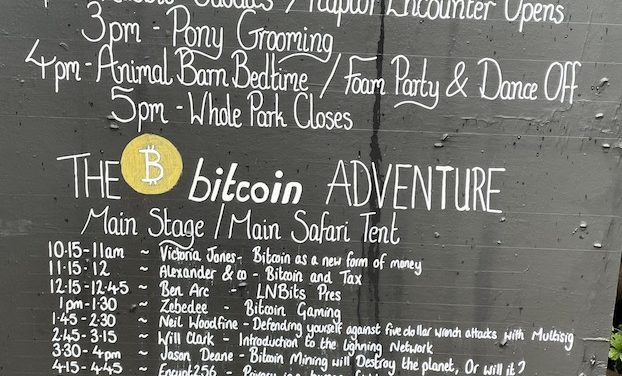
Bitcoin (BTC) is for everyone: toddlers, kids, hard rockers and even racing pigs. At the “Bitcoin Adventure” held in Avon Valley, near Bristol, Bitcoiners and hobbyists shared their knowledge, quips and personal journeys down the Bitcoin rabbit hole despite the predictably wet United Kingdom weather. Better still, Bitcoin’s “toxic maximalism” was MIA. pic.twitter.com/7IOtpYuSDh— The Bitcoin Adventure (@TheBTCAdventure) July 3, 2022A world-first for a Bitcoin meetup, the “Adventure” took place at a wildlife park. So while some of the U.K.’s household name Bitcoiners headlined the main stage, the 250 attendees who bought tickets, (payment in BTC, naturally) could also play with the park’s furry Bitcoiner mascots: petting goats, cuddling rabbits and spectating pig racing. The day’s adventure laid out. Source: CointelegraphOrganizer DB told Cointelegraph that the “Aim was to create a family-friendly Bitcoin event to bring people together from across the U.K., to share ideas and learn in a relaxed, family environment.” “Although confident it could be a success, this was stepping into the unknown in many ways. However, the positive feedback from all involved has been incredible and the event exceeded our expectations.”From Zoomers to Boomers—and with a gender balance that most Bitcoin meetups can only aspire to—the Bitcoin Adventure was a grassroots display to compliment the decentralized movement. There were zero corporate sponsors, “shadowy super coders” or bad actors using Bitcoin to bewilder the banks — there was only “people giving up their time to educate others.”In fact, the slipperiest customers were probably the mob of mischievous meerkats:We’re ready to go…#Bitcoin accepted here. Thanks to @CoinCorner and @CoinCornerDanny . Fun for all the family #TheBitcoinAdventure! pic.twitter.com/ay8BPw02Ul— The Bitcoin Adventure (@TheBTCAdventure) July 2, 2022

For some punters, the Bitcoin Adventure was a day to lose their Lightning Network virginity. Bars accepted Bitcoin over the Lightning Network using CoinCorner point of sale (PoS) devices—of Bitcoin #LightningLunch fame—while QR code stickers with “free sats here were hidden around the wildlife park. Plus, Bitcoin stickers, novelty socks and even cufflinks could be bagged for a few Satoshis. Be like @SophieNakamoto. Buy me pints with #bitcoin over the #lightningnetwork pic.twitter.com/G2Wouom7zD— Joe Hall (@JoeNakamoto) July 2, 2022

Ben Arc of LNBits, a self-proclaimed Bitcoin FOSS (free open sourced software) hobbyist, delivered a  stimulating presentation on open source tools. He could be found tinkering away on LN hardware devices and QR code readers, on hand to answer questions no matter how dippy or detailed. The day’s talks ranged from lessons on multi-signature wallets, thanks to Neil Woodfine of Unchained Capital; the risks and rewards of Bitcoin mining from analyst and miner, Jason Deane; and popular podcaster Daniel Prince and Nathan Day topped off proceedings with a discussion about Bitcoin, homeschooling and travel. Their kids then “stormed the stage” to answer questions. “World schooling for Bitcoiners” talk. Source: CointelegraphJordan Walker, CEO of the Bitcoin Collective (the U.K.’s first Bitcoin conference) and event MC, the U.K Bitcoin Master mingled among those new to the digital, decentralized currency. And while the over 18s congregated at the bar to pay for pints using the Lightning Network and discuss the day’s finer details, kids had a wealth of Bitcoin-themed activities to keep them occupied and entertained. Organizer DB explains:“Learning through play for children is important and Bitcoin Ballers, Zebedee, Gamertron and Robotechy gave children the opportunity to have fun and learn about Bitcoin.”Coach Carbon, the Bitcoin football coach behind Bitcoin Ballers was helping toddlers to teenagers “get off zero” with an inflatable football goal. Elsewhere, Bitcoin gaming and even “explaining Bitcoin using playdoh” were featured as child-friendly Bitcoin presentations. Education for kids is a growing subset of Bitcoin learning as more and more authors and educators create content with their offspring in mind.The team from Bitcoin Racing showcased one of the fastest-moving advertisements for Bitcoin and El Salvador. Bitcoin “minors” took to the driving seat of the Citroen C1 adorned with an El Salvador flag that will be racing around the United Kingdom in the coming months: The #bitcoin racing team were at the @TheBTCAdventure at @AvonValleyPark Flying the flag for #bitcoin and #ElSalvador !!@bitcoin_racing @jessicabukele @VanessInteriano pic.twitter.com/C37CeOxm8c— Daniel Prince (@PrinceySOV) July 3, 2022

Arguably, the Adventure’s highlight and the hidden gem was Roger 9000, a vivacious Bitcoin musician. The one-man band rounded off the day by rocking out to Satoshi-inspired songs. Lyrics included “Bitcoin is the love machine,” while the song “Alle Canada,” is a battle cry for the Bitcoin-backed trucker protests in North America. As the sun set on the inaugural event, many attendees pitched tents in the campgrounds. For organizer DB, the plan is to “let the dust settle, sit down in the coming weeks and run through the day—what we could have done differently and what we could improve on.” “We will then put the wheels in motion for The Bitcoin Adventure 2023″.Let’s hope that by next summer’s Bitcoin Adventure, there will be no more signs of a bear meerkat. 

Čítaj viac
Keys lost in the Vauld: Singapore crypto exchange freezes withdrawals

Crypto contagion claims another casualty. In a statement, Singapore-based crypto exchange Vauld has made the “difficult decision to suspend all withdrawals, trading and deposits on the Vauld platform with immediate effect.”In what appears to be a run on the crypto bank, the group intends to “apply to the Singapore courts for a moratorium,” as Vauld customers have tried to withdraw an “excess of a $197.7 million since 12 June 2022.”The decision to suspend withdrawals is a screeching U-turn. Reportedly, Vauld boasted $1 billion assets under management in May this year, while on June 16, a company email stated that business would “continue to operate as usual.” Just 18 days later, the company is exploring “potential restructuring options.”On June 21, CEO Darshan Bathija tweeted that Vauld had cut its team by 30% — the first sign that the company was under duress. Separately, Bathija also stressed that Three Arrows Capital (3AC) was an early investor in the company, but had exited in late 2021.We’ve sent an email about this. We do not have direct exposure to 3AC or Celsius. Full disclosure: 3AC was a seed investor in us since 2020, who we facilitated a complete exit in Dec 2021.— Darshan Bathija (@darshanbathija) June 23, 2022The statement from Vauld suggests that “volatile market conditions, the financial difficulties of our key business partners inevitably affecting us, and the current market climate” were reasons behind their decision to freeze customers’ money.Nonetheless, 3AC’s demise is cited and considered a significant contributor to capitulation among centralized finance (CeFi) companies. 3AC had substantial exposure to Luna Classic (LUNC), which blew up in spectacular fashion, reducing 3AC’s holdings from $560 million to $670. Indeed, Vauld follows in the footsteps of large CeFi platforms such as Celsius, Voyager and BlockFi. Voyager explicitly blamed 3AC for their recent decision to freeze customers’ funds and BlockFi is close to a $240 million deal with FTX following financial difficulties, while plans to salvage Celsius from bankruptcy were recently shared by lead investor BnkToTheFuture. For crypto investigative journalist Otterooo, Vauld’s strife is more motivation for investors to hold their own keys. Holding onto one’s private keys is a guiding principle of crypto investing: If you do not hold your own keys, you do not own your coins.VAULD closes withdrawals, undergoing debt restructuring another cefi lender bites the dustits a broken business modeleither withdraw today or spend years battling lawyers for YOUR MONEYDON’T BE STUPID ANON, withdraw to cold wallet NOWhttps://t.co/X3H8iLCuYi pic.twitter.com/hS2vv2IBJo— otteroooo (@otteroooo) July 4, 2022

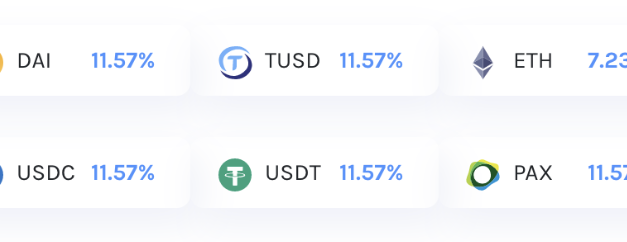
As Cointelegraph reported in a March 2021 press release, Vauld boasted double-digit interest rates on popular stablecoins such as Tether (USDT) and Dai (DAI), while Bitcoin (BTC) interest could reach 7.23%. In effect, in “lending” your cryptocurrency tokens to Vauld, you would generate a yield. However, the company effectively owns your assets. Vauld’s interest rates from March 2021. Source: VauldThe rates were competitive with lenders and interest bearers such as Celsius, BlockFi and Nexo — one of which continues to function. Nexo tweeted that there may be delays to customer transactions due to Independence Day in the United States. 

Čítaj viac

Bitcoin in Zimbabwe: Importing cars and sending money to family

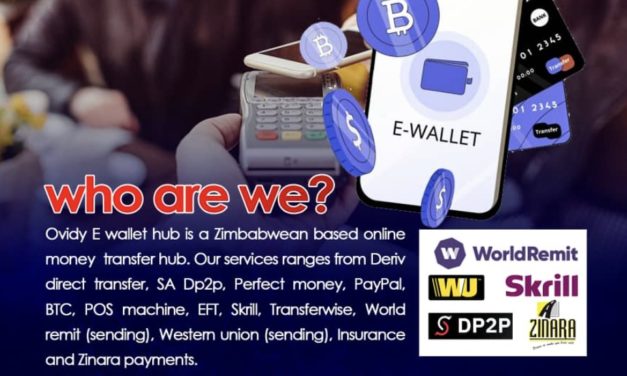
Bitcoin (BTC) is a tool for freedom and economic empowerment. For one young Zimbabwean, Ovidy, it turned his life around when he returned to his home country at the onset of the COVID-19 pandemic. An entrepreneur who first learned of Bitcoin while living in the United States, Ovidy has since built a business with Bitcoin at its core. Below, Ovidy (center) is pictured with Paco the Bitcoin traveler (left):Day 276Obidy imports cars in Zimbabwe using #bitcoin pic.twitter.com/Y2TmZZX6Bv— Paco de la India⚡ (@RunwithBitcoin) June 20, 2022Ovidy imports cars using Bitcoin. “I really like to import BMWs,” he told Cointelegraph, as well as enabling peer-to-peer remittance payments to friends’ families in Kenya and overseas. In short, Bitcoin makes him hopeful for the future.Ovidy told Cointelegraph that he “came across Bitcoin when it was around $10,000,” during the 2017 bull run. However, he didn’t invest “because I didn’t have any knowledge about it.”“I thought that you could Bitcoin one day and have $500; the next day you have $1,000 and it goes up and up.”He stacked some sats over this period, but it took a few years’ learning and small experiments tinkering with Bitcoin — such as using BitPay to pay for clothes on Amazon — before he could get to grips with the decentralized digital currency. However, it was no more than a hobby and an experience that was soon forgotten. Jump to the dark beginnings of the COVID-19 pandemic in 2020, and Ovidy was obliged to return to Zimbabwe from the United States. In an unfortunate twist of events: “I didn’t have anything to do when I came back to Zimbabwe. There were no jobs, so I considered foreign exchange (forex) trading.”The forex account asked for him to deposit some Bitcoin and Ovidy remembered he had some “Bitcoin in an old Coinbase account.” He checked, and to his delight, the $500 he bought during 2017 and 2018 was worth more than $2,000. A eureka moment, Ovidy immediately realized he could leverage Bitcoin for payments and investments. He could create work, and more importantly, a salary for himself. The Ovidy E-Wallet transfer hub was born. A flier for Ovidy’s money transfer business. Source: Facebook He tapped into his network of contacts and began facilitating the import of cars from Japan. From BMWs to Toyotas to off-the-shelf Hondas, his Zimbabwe clients give him dollars after which he sends Bitcoin to Japanese car dealerships. Weeks later, the cars arrive. He explained:“It is impossible for me to send dollars to Japan as the only way to do so is through banks. When something gives me $5,000 in Bitcoin, I send the Bitcoin to Japan almost instantly, and I already have the cash here and the transaction is confirmed. Bitcoin is a faster and safer process.”The process would take more than two weeks and involve high commissions if it were done through banks, he added.Related: ‘We don’t like our money’: The story of the CFA and Bitcoin in AfricaOvidy takes a small commission on the sale of cars and balances the dollars he earns with a money transfer service that uses Bitcoin remittance in reverse. As dollars are in scarce supply in Zimbabwe, Ovidy receives Bitcoin from “family members across Zimbabwe,” or from friends’ families in Kenya or overseas, and sends the dollars he makes on cars in return.Two of the cars Ovidy imported recently, all paid for with Bitcoin. Source: OvidyOvidy told Cointelegraph that while Bitcoin adoption in Zimbabwe is growing, it’s not plain sailing. Many people “really don’t trust Bitcoin,” and there is a significant education gap:“At first people didn’t appreciate Bitcoin because most people investing get scammed. Even me, I was scammed $500 when I was learning about Bitcoin! A convincing “invest company” asked me for money, and I didn’t realize.”He mentioned that the trickiest part about Bitcoin adoption — particularly for older generations — is that it is not tangible. A friend of his, William Chui, built a “Bitcoin house, using funds from Bitcoin,” as “a testimony to prove to people that with Bitcoin you can actually be financially free.”Bitcoin House, built by Ovidy’s buddy William Chui. Source: OvidyWhile education remains a hurdle in the country experiencing hyperinflation, he is hopeful. “We start small and 10 to 15 years from now — and given that the younger generation appreciates Bitcoin — there will be a significant number of people adopting Bitcoin in Zimbabwe.” 

Čítaj viac

Bitcoin mints more than 13,000 'wholecoiners' in the past seven days

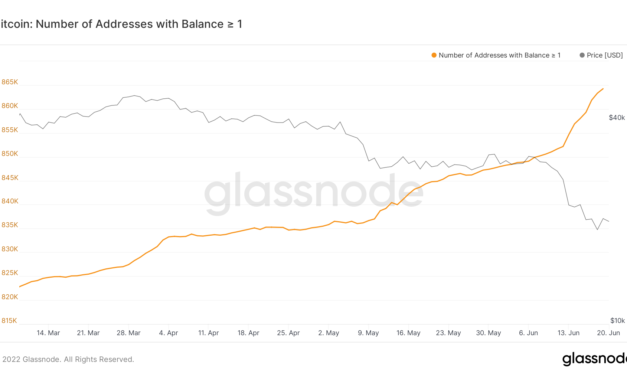
Bye-bye bear market blues; welcome to the network, Bitcoin (BTC) believers. Over the past week, the number of Bitcoin wallet addresses containing one BTC or more increased by 13,091. The total number of “wholecoiners” surged to 865,254.The number of whole coiners has rocketed during the downward price action, highlighted by the hockey stick growth on the Glassnode graph: Since the 10th June the orange line has jumped. Source: GlassnodeChristian Ander, the founder of the Swedish Bitcoin exchange BT.CX told Cointelegraph that “This is good for the ecosystem that it’s growing from the ground up because want the economy to be bottom up.” Ander continued:“People have a strong belief in the future of the Bitcoin network and the value of the currency.”Over the past 10 days, since the May 10th market slump to $30,000, over 14,000 whole coiners have joined the network. As there will only ever be 21 million Bitcoin mined, these wallet addresses will own one twentyone millionth of all Bitcoin.At an approximate price of $20,000 per Bitcoin, the sharp increase in the number of whole coiners would suggest that retail–or “plebs” as they are affectionately known–are buying Bitcoin as fast as their incomes will allow. The number of addresses adding 0.1 BTC ($2,000) or more has also begun a parabolic run over the past 10 days. In contrast, the number of wallets containing more than 100 BTC has dropped by 136 over the same period. By inference, “whale” wallets (large BTC wallet addresses) could be unloading their bags.Related: El Salvador president addresses bear market concerns with Bitcoin hopiumWhen Satoshi Nakamoto mined the first Bitcoin on 9th January, 2009, the Gini coefficient was 1, i.e income inequality on the network was the highest it has ever been. The Gini coefficient, developed by statistician Corrado Gini, represents income inequality or wealth inequality within a social group. In Bitcoin, it can be mapped onto wallet addresses. As soon as Hal Finney, the first Bitcoin believer began mining and receiving Bitcoin, the gini coefficient dropped from 1. It has trended lower and lower ever since, indicating that the wealth distribution on the Bitcoin network is becoming fairer and fairer.As for Ander, he told Cointelegraph that he “stacked some more SATs yesterday!” 

Čítaj viac

From games to piggy banks: Educating the Bitcoin ‘minors’ of the future

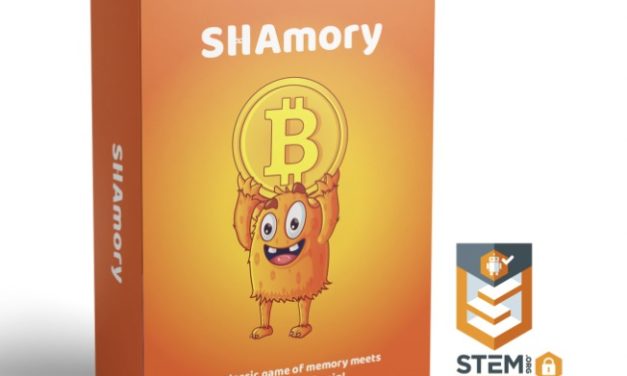
The crypto winter is here. It’s a trying time as prices grind down, but it’s the best moment to build and learn. For some Bitcoiners, the bear market is a time to plant trees or create memes. For those with kids, it’s a welcome recess used to broaden the minds’ of Bitcoin (BTC) minors. Cointelegraph spoke to the creators of popular Bitcoin-related games and educational tools to understand why teaching kids about sound money is critical, and some of the best ways of doing so. SHAmory, a portmanteau of SHA-256 (the cryptographic function that hashes inputs in Bitcoin) and memory, is among the best-selling Bitcoin games. Targeted at kids aged four and over, creator Scott Sibley shared that he had his “toddler in mind for both the creation of the game and book.” The Bitcoin mining game, SHAmory. Source: Shamory.comSibley and his wife also thought up Goodnight Bitcoin, part of a burgeoning bookshelf of Bitcoin-related books. A passionate educator, Sibley told Cointelegraph that breaking the money taboo and educating kids about finance is critical:“Financial education, especially financial education that includes Bitcoin, is something that kids aren’t going to receive in most ‘traditional’ schools. So right now it’s on bitcoin parents to find ways to weave that education in at home.”Sibley suggested that kids seeing, interacting with and recognizing something as simple as the “Bitcoin logo” or even “playing our game and then asking how Bitcoin mining works,” is key for long-term adoption. Plus, the Gen-Z — the Zoomer — generation has a headstart understanding intangible digital products: “Transacting in Bitcoin is going to be no different than buying a new skin or level in a video game they are currently playing.”Will Reeves, co-founder of Fold App — a Bitcoin rewards debit card — co-founded the Bitcoin game Bitopoly. Reeves told Cointelegraph that “the first version of Bitopoly emerged from a conversation around a dinner table in which we were attempting to teach friends and family members about Bitcoin.” He said:“Games provide a great way for people to understand a complex concept by ‘experiencing’ it rather than be ‘taught’ it. Humans have always used games to play this role throughout history, helping people come to understanding on their own terms.”Much like Sibley, Reeves explained that the best thing for Bitcoin adoption is teaching children, especially as they have no “preconceived notions.”“Kids do not approach Bitcoin with a lifetime of preconceived notions, thus they are able to understand it faster and with less pushback against their own bias,” he said.Bitcoin is really just a game. We made a game about the game to get people to play the real game. It’s called Bitopoly. Wrench attacks, margin calls, mining farms, boating accidents and proof of keys— it has it all. Only 500 first editions available at https://t.co/L1mzWk2mqC pic.twitter.com/xO5jZ4w4qu— will reeves (@wlrvs) May 26, 2021In comments that may ring true for adult readers, Reeves said that Bitcoin is a hard process of “‘unlearning‘ their previously held thoughts and understandings about what money is.”MTC, the founder of Sats Ledger, told Cointelegraph, “I wanted to share Robert Breedlove and other Bitcoiners,” with his young family. As a Bitcoin influencer and freedom maximalist, he knows that realistically, no five-year-old would sit through a one-hour Breedlove podcast that waxes lyrical about sound money, libertarian first principles and the evolution of the tax system.MTC reflected on his own childhood, during which he “really liked to save.” He remembered the savings books that he would diligently fill out, watching his wealth grow. Combine that with the fact that “kids don’t like being cheated out of things, and ‘mine’ is one of the first concepts that a kid understands,” and Sats Ledger was born.MTC said Sats Ledger is a fun, physical savings book for kids to log their Satoshi savings, money that “nobody can take from them.”Sats Ledger savings book plus stickers. What kid doesn’t like stickers? Source: TwitterWith Sats Ledger, kids get to grips with Bitcoin and money — learning how to HODL using a low-time preference. MTC told Cointelegraph, “If you can encourage kids to see their savings growing then it puts them on the path to understanding sound money and Bitcoin.”Another childhood saver, Pigtoshi Nakamoto, hatched a Bitcoin twist on the premier childhood saving device — the piggy bank. The BitPiggy works with OpenDime, a Bitcoin USB stick that allows people to spend Bitcoin-like dollar bills, to teach kids how to save some or all of their money in Bitcoin. Bitcoin savings bank, a Bitpigg. Pigtoshi told Cointelegraph, “I figured it out early that if I saved early in life then things would get easier later in life. Especially when you’re young. It’s when you’re young, that’s when you can get ahead.” They have since partnered with Sibley from SHAmory, so more toys and games could be on the horizon.In the United Kingdom, Bitcoiner Coach Carbon has taken the “beautiful game” of soccer and combined it with Satoshi Nakamoto’s invention. A life and health coach — and lifelong soccer fan —Coach Carbon founded Bitcoin Ballers academy, where kids work to combine “proof-of-work, personal responsibility and fighting the FUD in a footballing journey,” he told Cointelegraph. An Instagram post from Coach Carbon’s BitcoinBallers.Bitcoin Ballers soccer training exercises include “51% attack;” a training game called “getting off zero” and difficulty adjustments within certain training exercises where defenders are added or the pitch size is boxed in. For Coach Carbon, it’s not just about promoting Bitcoin: “The main thing is to get at ‘what is money?’ It’s not just currency, it’s time, it’s value and it’s energy. This question is not asked enough, and if it’s not talked about in schools then where are people going to learn that?”Fundamentally, given that the Bitcoin network is barely a teenager — just two countries out of a possible 195 have formally adopted Bitcoin — and global adoption rates sit at less than 1%, “hyper-Bitcoinization” (when Bitcoin becomes the global store of value), is a distant prospect. As the educators explained, exposure to Bitcoin from a young age is another small step on that path. Related: Is education the key to curbing the rise of scammy, high-APY projects?Moreover, an unexpected upshot to educating children about sound money is the knock-on effect it has on parents. Reeves concluded that “teaching children about Bitcoin is one of the most efficient strategies for accelerating the adoption of Bitcoin.” Whereas for Sibley, games, books, and educational tools are “a stealth way of orange-pilling people,” notably the parents.

Čítaj viac

Získaj BONUS 8 € v Bitcoinoch

nakup bitcoin z karty

Registrácia Binance

Burza Binance

Aktuálne kurzy