Autor Cointelegraph By Joseph Hall

El Salvador’s ‘My First Bitcoin:’ How to teach a nation about crypto

The grassroots Mi Primer Bitcoin or “My First Bitcoin” program has picked up steam in El Salvador. The first cohort of Bitcoiner-come-students began studies in May this year. Founded by John Dennehy, an American activist and journalist, the program also has the support of the El Salvador government. El Salvador’s first #Bitcoin diploma program launched with the support of its Ministry of Education pic.twitter.com/ajIHPHzqap— Bitcoin Magazine (@BitcoinMagazine) May 2, 2022Cointelegraph spoke with Dennehy and Gilberto Motto, El Salvador’s Director of Education, to delve into the country’s struggles and successes in Bitcoin education and to understand the rate at which Bitcoin education is spreading among the land of volcanoes. The Genesis BlockWhen El Salvador adopted Bitcoin (BTC) as legal tender on June 8, 2021, very few El Salvadorans besides President Nayib Bukele could explain concepts like seed phrases, Satoshis or mining. There was “Bitcoin Beach,” the name donned to the sleepy surf town El Zonte, the birthplace of Bitcoin adoption in El Salvador. But, the 3,000 local residents would have their work cut out to teach the remaining 6 million population. Indeed, Salvadorans would require hundreds of hours of training, learning and “orange-pilling” to be able to save and transact in Bitcoin.The moment Bukele onboarded up to 6 million people into the Bitcoin protocol. Source: TwitterA mammoth task loomed for the Salvadoran government. Motto told Cointelegraph that as per Article 6 of the Bitcoin Law, approved on June 8, 2021, “The State will provide training on the use of this cryptocurrency.” However, what would that training look like? How could the state rapidly and effectively introduce Bitcoin classes when they themselves would also have to get to grips with new money? All the while, Bitcoiners, commentators and the mainstream media watched as the El Salvador experiment played out. Dennehy, who had spent the past living and working in Latin America, told Cointelegraph that upon the law’s announcement, he had to get to the country ASAP:“I knew that I wanted to do something to help make sure that it worked out, that it was a success here.”Dennehy had been “predisposed to the separation of money and state” for some time, and upon first learning of Satoshi Nakamoto’s innovation, while living in Ecuador in 2013, he became a fervent Bitcoiner. He jokes that as per most “OG” Bitcoiners’ experiences, the first exchange he bought BTC from was hacked, losing him around 2 BTC at the time — now worth over $40,000 at the time of writing. Almost 10 years later and after the arrival of the first country to adopt Bitcoin, he had to find a way to pitch in. He flew to El Salvador the second the opportunity would allow. However, similar to other Bitcoiners who have made the pilgrimage to El Salvador, he was struck by how few merchants and vendors accept Bitcoin. “There were effectively zero [merchants] when the law came into effect,” Dennehy told Cointelegraph in May this year.Rikki, a Bitcoin podcaster and human rights activist who spent 45 days living in El Salvador living on Bitcoin and nothing else, told Cointelegraph similar stories about his travels in Bitcoin Land: “Nobody here knows anything about Bitcoin. [The government] didn’t provide one second of education to the people of El Salvador.”[embedded content]Motto explained to Cointelegraph that Bitcoin has since been incorporated into financial education as well as financial literacy programs across the country. Motto told Cointelegraph that “The Ministry of Education, Science and Technology is working together with various institutions related to Bitcoin in the country:”“Including Bitcoin Beach Wallet, Mi Primer Bitcoin and others, in the development of a training module in Financial Education that incorporates updated content such as cryptocurrencies and electronic wallets.”Even so, relying on a government or third party to get things done would be counter to Bitcoin’s ethos, that of “don’t trust, verify.” A grassroots Bitcoin education campaign that would spread like the network, one which would complement and extend the government’s Bitcoin education plans, would be well suited.“Mi Primer Bitcoin,” or My First Bitcoin in English, founded by Dennehy in 2021, is a non-governmental organization that offers free Bitcoin education to Salvadorans. It has since received funding from the LookingGlass as well as IBEX Mercado, a Bitcoin and Lightning Network service provider.Now this is an initiative worth putting time and effort into. Got some spots open for Bitcoiners that want to help and make a difference, at the grass roots level.DM me if interested..https://t.co/y1cvrESJt1— Svetski. UnCommunist.com (@SvetskiWrites) July 7, 2022

The project came to Dennehy during his first conversations with Salvadorans when familiarizing himself with his new home. He’d ask casually, “Do you take Bitcoin?” and realized that many people not only didn’t accept Bitcoin, but they asked Dennehy to explain the decentralized currency to them:“They were interested to learn more. They saw something with varying degrees of knowledge level, but generally low, low but interested,” he said.Some of the first teachers on the program came for the preliminary meetings that Dennehy hosted in AirBnBs and meeting rooms. The first class took place on Sept. 24, 2021, in a yoga studio “because we were starting from zero,” Dennehy details. “We had no funds, we had no spaces. […] And in fact, in our first class, one student came,” he said.Unabashed and with a conviction forged across multiple Bitcoin bear markets, Dennehy and his team soldiered on. By October, classes had ramped up to almost 80 students, and November boasted over 250. The Bitcoin price was also beginning to soar — a likely catalyst:“The reality is that interest level changes depending on what the price does.”Nonetheless, interest was sustained during 2022’s price action. The class numbers reached all-time highs in April this year of over 800 students while the price sank to yearly lows. The classes boil down to financial literacy, from the history of money to what problems money solves, Dennehy explained. Financial literacy and Bitcoin education go hand in hand. Motto agreed with Dennehy’s assessment, stating that Bitcoin and financial literacy must work in tandem in El Salvador: “Savings, paying taxes, planning expenses, personal or family budgets and other concepts are still valid at the moment, and unfortunately not all the population knows and knows how to make good use of them.”Importantly, the Bitcoin Diploma program targets teenagers, i.e., those most eager to learn about money, as they know that money is intrinsically linked to their independence. It’s a smart move, Dennehy state, as they’re the most likely to diffuse the Bitcoin message around El Salvador: “If we could reach every 16-year-old or 17-year-old in the country, we will effectively teach the entire country in one year because that demographic is really strategic. They go home and they’ll talk to their parents, their aunts, their uncles, their little brothers and sisters.”The examination for the Bitcoin Diploma, taken in week 10, is split into four parts. The first part is to create a wallet and then restore it on another device. The second task is to make a transaction on-chain, find the transaction in the blockchain explorer then explain why the transactions can be considered final.One year since his arrival, Dennehy “would put the number at 10% of the population now is an active Bitcoin user.” Similarly, Cointelegraph reported that as much as one-fifth of merchants in El Salvador now accept Bitcoin.Related: Morgan Stanley encourages investors to buy battered El Salvador eurobondsProgress is evidently good, but Dennehy stressed that Bitcoin is a global currency. The progress made in El Salvador could be reflected across the world:“We are focused on El Salvador at the moment because we have limited resources and El Salvador is the signal. This is the front line. But our ambition is global. Our ambition is to change El Salvador, but also to change the world.He explained that “once we create a successful template here, then the idea is to rebrand it as Bitcoin, El Salvador and then open up Bitcoin.”

Čítaj viac
Bitcoin without internet: SMS service allows sending BTC with a text

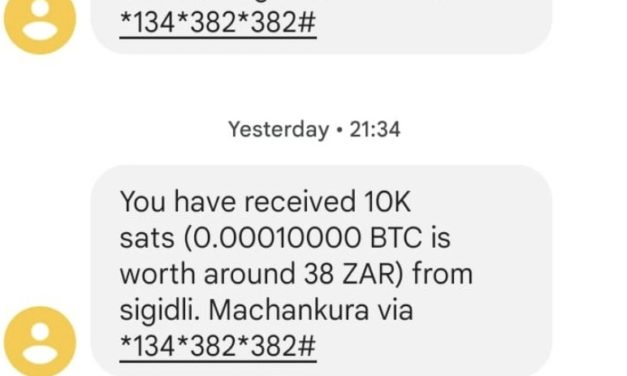
An innovation using the cellular network (GSM) could onboard millions of Bitcoin (BTC) users previously unreachable by the internet-dependent Bitcoin protocol. Built by South African developer Kgothatso Ngako, the new SMS-based service is named Machankura, a slang South African word for money.KG, as he’s known to his friends, spoke to Cointelegraph from Pretoria, South Africa, about his fascination with Bitcoin and the hope he has that sending it like a text will bring BTC to millions of Africans.Machankura, the #Bitcoin for feature phones service in Africa, is slowly growing. https://t.co/TZngXXVhu0— Derek Ross ⚡5️⃣ (@derekmross) August 8, 2022As an English speaker, when he first learned about Bitcoin, he listened to audiobooks and podcasts on the way to work. His commute kept getting longer to maximize Bitcoin education. A 20-minute cycle became a 2-hour commute to the Council for Scientific and Industrial Research (CSIR) in South Africa, where he worked as a software developer. KG also coded up Manchakura while working at the CRIS.In a separate interview, Master Guantai, founder of Bitcoin Mtaani, told Cointelegraph, “The number of cellphones in Africa is double the number of people.” However, internet-enabled smartphone penetration remains low.In Kenya, Guantai’s home country, he explains that topping up a phone with airtime is as common as credit card payments in the West. A report by Caribou backs up the statement: 94% of financial transactions in Africa are through USSD, the protocol used to send text messages, whereas just 6% of these transactions are made via mobile apps. ​​In sum, while there are millions of phones in Africa, they’re mostly used for texting. KG had stumbled onto something that could be huge for Bitcoin adoption in Africa.“This year, a lot of conversations in the space were around USSD or making Bitcoin accessible on feature phones–this could be a part-time project–let me just set it up. And that’s basically how Machankura came to be!”KG started by building an African language translation project Exonumia. Now providing Bitcoin-related education in dozens of languages, he explained to Cointelegraph that if we make Bitcoin more accessible to Africans, then, as a consequence, they will learn about money and find a way to improve their quality of life. Once Exonumia picked up steam, he questioned, “what are the other barriers to accepting Bitcoin? Language is one–the other is internet access.” He sums up the internet in Africa as a space dominated by big applications such as Instagram and Facebook. The problems inherent to smartphone users are having enough space on phones, internet connectivity and price. KG shares screenshots of Machankura in action.KG explains, “The major focus is on spending and receiving Bitcoin.” KG explains how it works. Users dial a number and then introduced to a menu where they can learn more about Bitcoin or register an account. “All you need to register an account is a 5-digit pin, and from there on, you are presented with a different menu: send and receive Bitcoin.”Here is Paco, the Bitcoin traveler who won’t stop teaching people about Bitcoin around the world–demonstrating Machankura to a teacher in Nigeria, at Cointelegraph’s request.Used @Machankura8333 to share some Sats with High school teacher in Lagos, Nigeria.@LumiExc went to this school.#btc #hyperbitcoinization pic.twitter.com/ba5SPAGPLE— Paco de la ⚡ (@RunwithBitcoin) August 8, 2022

As a result, Lightning wallet-compatible apps on phones or computers can send Bitcoin over the Lightning Network to the phone’s number–it has effectively become a lightning address. Machankura has integrated with Bitrefill, an increasingly popular prepaid gift card service for Bitcoin in Africa. Soon, South Africans will be able to top up their Lighting Wallets with credit from grocery stores in a partnership with “One for you,” a voucher provider. Machankura users can now redeem @Azteco_ (and 1 For You) Bitcoin vouchers using the USSD interface. pic.twitter.com/qkPRwGzkrL— Machankura 8333 (@Machankura8333) August 10, 2022

As Ngako summarizes, “A person literally without no internet access can go from having no Bitcoin to having Bitcoin and then go to spending Bitcoin.”Related: Bitcoin is for billions: Fedimint on scaling BTC in the global southMaster Guantai also shares that it works well in six African countries already. Plus, popular exchange Paxful has already shown interest, Guantai explains, as the ease with which people can be onboarded using GSM is understated.KG flags potential concerns with the innovation as the government banning or reacting negatively to Bitcoin. The commission fees for buying the voucher could put people off, and the fact that KG understands that in offering a centralized company to onboard people into Bitcoin, there’s a risk that they don’t spend the time getting to know the technology. Plus, the service is custodial, a point that works against the Bitcoin ethos of “not your keys, not your coins.” So, he is looking for a way to use SIM cards as private keys.

Čítaj viac

Proof-of-work: The Bitcoin artists on minting NFTs and OpenSea

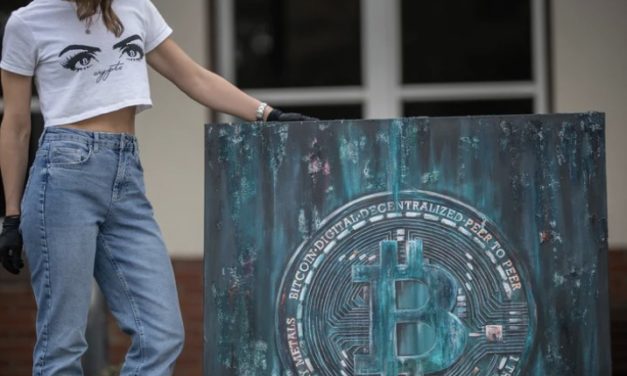
“Art is not a thing, it is a way,” said American writer Elbert Hubbard. For Bitcoin (BTC) artists, the way is inspired by Bitcoin, its code, its philosophy and its imagery. In some cases, it’s even inspired by memes. Bitcoin has become a “lifestyle,” for some Bitcoin artists, that inspires their way of doing business, accepting payments and interacting with customers. Cointelegraph asked Bitcoin artists what inspires them about Satoshi Nakamoto’s 13-year-old invention and whether minting a nonfungible token (NFT) would complement their “way” of doing art. After all, an NFT is a unique, digital receipt to prove ownership of a purchase that lives on a blockchain. Surely artists would want to prove ownership of the art at which they toiled away? Lena poses with one of her art pieces. Source: justlenasartLena, a Bitcoin artist who recently moved from Germany to crypto-friendly Dubai, began creating, painting and printing Bitcoin artworks after diving down the Bitcoin rabbit hole in 2018. She says that while she started her crypto career as a crypto-agnostic, Bitcoin changed her approach and eventually took over. She now operates a Bitcoin “maxi-style” portfolio:“My mindset shifted and I began to work on myself, asking myself what to do with my lifetime because of Bitcoin. Bitcoin became like a lifestyle, so I should put all my savings in Bitcoin.”When speaking with people in the crypto community, she explains she’s a Bitcoin artist, to which crypto-lovers ask, “oh, so you do NFTs?” She told Cointelegraph she replies with, “No! Physical art!”“OpenSea is full of art that is like not art — I mean, art is always up to the person, but it was too much for me.”However, countless artists make a living generating AI artwork and selling or minting them as NFTs on platforms such as OpenSea. The biggest stories of 2021 involved collective cartoon chimps — the Bored Ape Yacht Club — and the CryptoPunks, further digitally rendered images or art.In the 2022 bear market, the hype around NFTs has reportedly evaporated. Yet, big name brands such as Starbucks continue to hop on the bandwagon, while luxury jeweler Tiffany caused a 1,700% increase in trading volume following an NFT move in August. When asked whether FractalEncrypt (an anonymous Bitcoin artist) would release an NFT of their art in the future, they told Cointelegraph: “Absolutely not.” FractalEncrypt sculpts large, imposing and time-consuming Bitcoin full node structures, which he has hidden in locations around the world: The Bitcoin Full Node Sculpture, A Cypherpunk Chronometer.#5 of 10 was hand delivered yesterday & I wanted to compile a GIGA-THREAD compiling photos, videos, explainers, and podcasts all into one place Let’s go back into time and down the rabbit hole and see #1 -4 pic.twitter.com/8IcGnl0tyE— FractalEncrypt ∞/21M (@FractalEncrypt) March 29, 2021“I created NFTs in 2017/18 and the deeper I investigated them, the more disillusioned I became. They felt inherently scammy, and me continuing down that path would make me a scammer in my eyes.”FractalEncrypt explained that the link between the art and the token was “ephemeral at best and an outright misrepresentation/fraud at worst.” They compare the issuance of NFTs as akin to centralized companies’ issuing tokens, which could be problematic and even litigious. But that doesn’t mean that FractalEncrypt wrote off NFT technology at inception. Like Lena, the two artists were curious about the Ethereum-based technology when it first came along: “An artist issuing an NFT token and selling it to others in the hope that it may appreciate in value puts the artist in the situation of possibly issuing securities.”Indeed, Wikipedia explains an NFT is a “financial security consisting of digital data stored in a blockchain.” The United States Securities and Exchange Commission is focussed on certain crypto projects during the bear market. At the same time, the case between the SEC and Ripple (XRP) regarding the latter’s XRP token rages on. One of FractalEncrypt’s sculptures. Source: TwitterBitcoinArt, who chose to remain anonymous, is among the few Bitcoin artists Cointelegraph spoke to who had also dipped their toes into the world of NFTs. He told Cointelegraph that he did manage to sell a couple of NFTs of his Bitcoin-related artwork but didn’t enjoy the medium or the concept:“I made some awesome Bitcoin pictures and wasn’t sure how to mint them and someone told me to mint on OpenSea, unfortunately they use ETH… But good news is I sold my nfts through Twitter for SATs instead and I cut the middle man out. I hate ETH.”A recurring theme by this point, BitcoinArt prefers having one-on-one interactions with prospective customers; he enjoys the back and forth that comes through discussing art pieces.One of BitcoinArt’s pieces, an astronaut in the Bitcoin universe. Source: TwitterLena also prefers the personal approach; she builds a connection with her clients and spends hours sketching, painting and painstakingly perfecting customers’ visions. In Lena’s words, the time spent on her art is a reflection of proof-of-work, the consensus mechanism that underpins the Bitcoin protocol. She told Cointelegraph that the process of creating one art piece is unique and limited — much like Bitcoin — so there’s no need for an NFT. Here Lena makes a statement with one of her pieces: Lena makes a statement with her art. Source: justlenasartFractalEncrypt mocked the “high-time preference culture” prescient in NFTs. Indeed, many of the biggest proponents of the CryptoPunks quickly traded allegiance to BAYC before jumping on the next shiny new collection. Related: NFT art galleries: Future of digital artwork or another crypto fad?Bitcoin, conversely, is a movement. Lena stated, “Bitcoin changed my way of thinking, Bitcoin changed me, […learning about Bitcoin] was a very, very meaningful chapter in my life.”Interestingly, a search for “Bitcoin NFT” on OpenSea yields more than 70,000 items. For Lena, the door is still open: “NFTs could have use cases in the future but the way that NFTs are right now, it doesn’t feel right,” she conceded. OpenSea has suffered hacks and wash trading but jpegs of pixelated images valued at seven figures continue to sell. “It feels like a bubble,” Lena sums up. Conversely, Bitcoin is down over 50% from its bubbly highs of $69,000, and the “tourists” have checked out. Plus, Bitcoin received as payment for an art piece will likely never be hacked or “drained” from a wallet.

Čítaj viac

Tourists flock to El Salvador despite Bitcoin bear market

Tourism in El Salvador has soared in the first half of 2022. Up 82.8% just this year, there were 1.1 million visitors to El Salvador this year, according to government figures. That’s despite the price of Bitcoin (BTC) sinking almost 50% since Jan. 1. Data from the World Travel Organization reinforces the claims. The tiny Central American country is internationally recognized as “one of the countries with the best rate of tourism recovery in the region as of January 2022.”El Salvador es reconocido internacionalmente como uno de los países con mejor ritmo de recuperación turística en la región a enero 2022.Según datos de la @UNWTO, el país posee una recuperación del 81%, más información en el siguiente enlace:https://t.co/Y9WVK1VJLe pic.twitter.com/wu7Jl25pEK— Ministerio de Turismo (@MITURElSalvador) March 31, 2022The report by the WTO states that some “Central American destinations have the best results compared to 2019,” including El Salvador at +81% compared with 2019, or pre-pandemic levels.Contrary to reports from the Wall Street Journal that El Salvador’s bet on Bitcoin to attract tourists “hasn’t worked,” visits for the first half of this year almost outpace total visits in 2019: 1.1 million people visited the country in six months, compared to last year’s total of 1.2 million.In a radio interview, the general director of Strategic Projects of the Ministry of Tourism of El Salvador, Alex Bonilla, explained that over the summer holiday period, the country can expect “57,500 international visitors, which will generate $60 million in foreign exchange during this vacation.” It is expected that the 1.2 million figure mark will be beaten soon. El Director de Proyectos Estratégicos, @alexboSV, ya se encuentra en radio @SonoraFM_sv para hablar del desempeño del turismo en estas vacaciones. ¡No te la pierdas por 104.5FM! pic.twitter.com/HLwVeugQK6— Ministerio de Turismo (@MITURElSalvador) August 2, 2022

Since El Salvador adopted Bitcoin as legal tender, thousands of Bitcoiners have made the trip. Big-name Bitcoiners such as Jeff Booth, entrepreneur and author of Price of Tomorrow, Obi Nwosu, CEO of Fedimint, the decentralized community custody solution, and Samson Mow, CEO of Jan3, have all taken pilgrimages to El Salvador.A 1) El Salvador has reaffirmed to me what I have learned from my travels throughout the world. The vast majority of people in this world are beautiful people.With similar hopes and dreams for a better life for themselves and their families, trying their best to achieve it— Jeff Booth (@JeffBooth) April 4, 2022

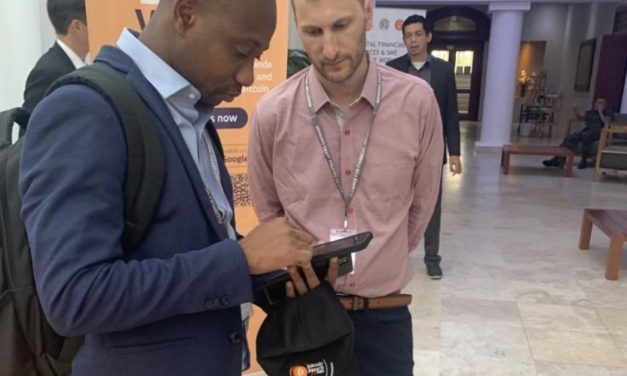
As Tone Vays, a Bitcoin analyst, said of his visit to El Salvador, “99.9% of the world had no clue where this country was; maybe 98% didn’t know this country ever existed–they’re [El Salvador] certainly on the map now.” Bitcoin advocates are keen to bring home exuberant tales of their trip to the land of volcanoes. At the same time, Bitcoin-centric companies are motivated to make El Salvador’s Bitcoin play a success.Max Keiser and Stacey Herbert, Bitcoin OGs, chose to take up residency in El Salvador and now base their podcasting and broadcasting operations on El Salvador. As part of the Bitcoin Bill, residency in El Salvador could effectively be bought for 3 BTC, or $66,000 at the time of writing, as part of an investment into the country.Related: Morgan Stanley encourages investors to buy battered El Salvador eurobondsEl Salvador, known as “El Hodlador” in some circles, also hosted a bevy of central bankers in May this year. The influential group of visitors “did not discuss Bitcoin,” according to the Central Bank of Paraguay, whose delegate was a tourist in El Salvador. However, there were numerous photos of the 44 central bankers and economists using the Bitcoin Beach Wallet in El Zonte, the birthplace of BTC adoption in the country.The capital, San Salvador, hosts the Adopting Bitcoin conference, a Lightning Summit in November this year. Over 80 Bitcoin and Lightning Network experts will take to the stage during the conference, with representatives from Blockstream, Spiral and the El Salvador government.

Čítaj viac

Dollars on the Lightning Network: a boon for emerging markets?

Dollars at the click of a button on the Lightning Network could soon become a reality. An innovation from Galoy, the provider of open source core banking platforms such as Bitcoin (BTC) Beach wallet, could provide safe haven from the volatility of BTC.The innovation, called Stablesats, uses derivatives contracts to create a Bitcoin-backed synthetic dollar pegged to USD. The founder of Galoy, Nicolas Burtey, told Cointelegraph in an ‘explain like I’m five’ kind of way that the wallet works as so: “When we receive sats over Lightning, we convert it into dollars so that even if the price of Bitcoin changes, the user is not affected by the liability.”But why do we need dollars inside of a Lightning wallet–isn’t that what stablecoins are for? In effect, stablecoins such as USD Coin (USDC) and Tether (USDT) already provide the functionality of synthetic or digital dollars. In a YouTube video, Burtey explains that “Lightning [Network] is the best payment protocol there is, so instead of using all these different payment protocols that stablecoins use.” It keeps users in one place in one app or wallet. According to the website, “Stablesats only relies on the Bitcoin payment network to work.”The idea was built upon a suggestion by Bitmex in 2015 of creating a synthetic USD. However, in a press release, Burtey suggests that the idea may have been before its time: there was no Lightning Network and no nation-state Bitcoin adoption. As Bitcoin continues to make waves in emerging markets, price volatility is often brought into question. For example, the Bank of England chief argues that Bitcoin is too volatile for legal tender. The ease with which users can now access dollars flies in the face of that argument. Burtey told Cointelegraph sums up the situation: “Because lightning is getting a lot of traction in developing countries, but this is also the place where people live paycheck to paycheck. So they can’t necessarily afford the volatility until they manage to have some savings.”As Cointelegraph reports, U.S. dollar-pegged stablecoins are “viable alternatives” in emerging markets, and appetite for them swells in countries with high inflation and unstable regimes. The innovation on the Lightning Network provides users with another means of Dollar-exposure. Sebastien Verreault, the lead contributor to the Stablesats GitHub repository, explained that Dollar exposure is just a first step: “Ultimately, we can unlock the ability for every Lightning user to choose their own units of account without ever leaving the network.” Related: Busking on Bitcoin: How Lightning Network outperforms Ethereum for tippingGaloy is behind the Bitcoin Beach Wallet in El Salvador, the Bitcoin Jungle App in Costa Rica, and Guatt Wallet in Panama, which is yet to be released. The Bitcoin Beach Wallet is the most popular wallet in El Zonte, the heart of Bitcoin adoption in El Salvador. Nicolas Burtey (right) with Central Bankers explaining the Bitcoin Beach Wallet in May. Source: Twitter Central Bankers from around the world tried out the Bitcoin Beach Wallet on a visit to El Salvador in Ma this year.

Čítaj viac

Získaj BONUS 8 € v Bitcoinoch

nakup bitcoin z karty

Registrácia Binance

Burza Binance

Aktuálne kurzy