
Autor Cointelegraph By Jordan Finneseth

3 possible reasons why Polkadot is playing second fiddle in the L1 race

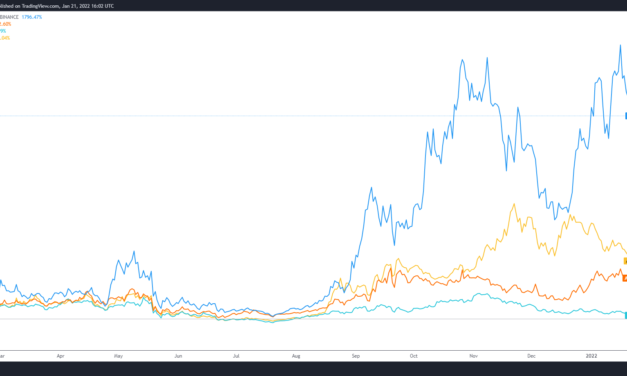
2021 was a sort of “coming-of-age” for many layer-one (L1) blockchain protocols because the growth of decentralized finance (DeFi) and nonfungible tokens (NFTs) forced users to look for solutions outside of the Ethereum (ETH) network where high fees and network congestion continued to be barriers for many.Protocols like Fantom (FTM), Avalanche (AVAX) and Cosmos (ATOM) saw their token values rise and ecosystems flourished as 2021 came to a close. Meanwhile, popular projects like Polkadot (DOT) underperformed, comparatively speaking, despite the high expectations many had for the sharded multi-chain protocol. FTM/USDT vs. AVAX/USDT vs. ATOM/USDT vs. DOT/USDT daily chart. Source: TradingViewSetting aside the specific capability that each protocol offers in terms of transactions per second and time to finality, here are several factors that may have played a role in DOT’s laggard performance when compared to other L1 competitors. Interoperability is a key factorOne of the major themes of 2021 was cross-chain interoperability between separate blockchain networks, with a bridge to Ethereum being the most important connection to establish due to the fact that a majority of projects currently run on the network. Protocols like Fantom, Binance Smart Chain, Avalanche and Harmony developed cross-chain bridges and this led to a noticeable bump in their token price, total value locked and on-chain activity. Despite the fact that Polkadot was specifically designed to offer multi-chain support as a “layer-zero” meta protocol, there was no major release of a bridge that connected Polkadot with Ethereum in 2021 and this left the protocol unloved by crypto traders looking to engage with DeFi and NFTs. Cosmos, likewise, didn’t see the release of a major bridge that connected its ecosystem with Ethereum, but there were minor integrations like the addition of Ether as a collateral asset on Terra which demonstrated that cross-chain compatibility was possible. The late launch of parachain auctionsAs 2021 came to a close, all of the previously mentioned networks were seeing a healthy amount of activity and cross-protocol interactions while projects on Polkadot were still finalizing their preparations to launch on the mainnet. This was in part due to the fact that the parachain auctions for Polkadot didn’t begin until November 11 when Moonbeam (GLMR), an Ethereum-compatible smart contract parachain, secured the first slot. DOT saw its price rise to an all-time high of $55 on Nov. 4 as those interested in contributing to the parachain auctions secured their tokens, but by the time the auctions had officially started its price was already on the downslope toward a low of $23.28 on Jan. 10. Moonbeam official went live on the Polkadot network on Jan. 11 and has managed to rack up more than 1 million transactions as users were finally able to transfer ERC-20 tokens into the Polkadot ecosystem. ⚡​ ONE MILLION TRANSACTIONS ⚡️Moonbeam hits 1M tx on the network! ​ Moonbeam is lighting up @Polkadot’s ecosystem with new integrations, 100k+ wallets, 700+ ERC-20 tokens & 1M GLMR tokens locked with collators.See the networkhttps://t.co/6ZhRLYDHgX pic.twitter.com/tczI7mAjlR— Moonbeam Network (@MoonbeamNetwork) January 20, 2022The price of DOT saw a slight bump higher following the launch of Moonbeam but has once again slid back down below $25. Related: Moonbeam (GLMR) launch brings EVM interoperability closer to the Polkadot networkThe benefits of holding DOTA third factor that may be weighing on the popularity and price of DOT is confusion about what the token is used for and what benefits it provides to token holders. Thinking about selling my $DOT. I don’t see the purpose of the project anymore, many of the cool projects that were going to build on it migrated to $MATIC or so.Why should I keep it?— Quinten François (@QuintenFrancois) July 29, 2021

On many of the competing networks, the native token is used to conduct contract actions such as token transfers or swaps whereas protocols that are in the Polkadot ecosystem use their native tokens to pay for gas. Aside from being used to participate in parachain auctions, the main uses for DOT include staking to support the operation and security of the network and for use in governance votes. While governance abilities are important for the overall health of blockchain protocols, the average cryptocurrency users still haven’t shown much enthusiasm for participating in votes and are more interested in things like gaming, DeFi and NFTs. Multiple layer-one solutions are launching developer and liquidity incentive programs and up and coming DeFi protocols are still offering high yield staking opportunities. Currently DOT offers 13.94% APR to stakers and its possibly that this is not enough to satisfy the appetite of yield farmers who are looking to get more bang for their buck. The long-term outlook for Polkadot remains strong and the project has an active and dedicated community of followers to go along with an experienced development team led by Ethereum co-founder Dr. Gavin Wood. The launch of Moonbeam might indeed mark a turning point for DOT as cross-chain compatibility is now live and other parachain projects should start to launch on the mainnet shortly, but it remains to be seen how long it will take the network to catch up to its L1 competitors who have a head start on cross-chain interactions and increased on-chain activity. The views and opinions expressed here are solely those of the author and do not necessarily reflect the views of Cointelegraph.com. Every investment and trading move involves risk, you should conduct your own research when making a decision.

Čítaj viac

Altcoin Roundup: 3 emerging P2E gaming trends to keep an eye on in 2022

Blockchain-based play-to-earn (P2E) gaming had a breakout year in 2021, and as the cryptocurrency ecosystem evolves in 2022, the P2E gaming sector and those that invest in it will need to consider what the next steps are. During bull markets, vaporware, speculation and euphoria can lead to unrealistic valuations and expectations, and this appears to also have impacted the P2E sector.Now that the hype is “over,” investors and developers will need to identify new value propositions that catalyze growth and steady investment into the blockchain gaming sector.Here’s a closer look at some of the trends that could emerge in the P2E ecosystem in 2022. Profit-sharing communitiesThe first trend to keep an eye on in 2022 is projects that are looking to harness interest in nonfungible tokens to create profit-sharing models and capitalize on the price appreciation of NFTs. These projects aim to offer opportunities for gamers and investors by providing a platform where investors who are not interested in playing games can invest and provide NFTs for players who would not otherwise be able to afford them.From there, players earn rewards for their gameplay, while investors earn a share of the profits. One example of this type of protocol is Yield Guild Games (YGG), a P2E gaming guild and decentralized autonomous organization focused on creating a community that lets players earn via blockchain-based economies. The DAO generates revenue through the sale of NFT assets or by renting them out to gamers as part of a profit-sharing model known as a scholarship. There are currently more players wanting #playtoearn scholarships than there are game assets to meet the demandTogether with our newest Sponsor-A-Scholar partner @coinbase, YGG will be able to onboard more new players worldwide pic.twitter.com/WXI8yniqt7— Yield Guild Games (@YieldGuild) January 11, 2022Some of the current games and investments that YGG is involved with include Axie Infinity, Illuvium, Guild of Guardians, Star Atlas, Splinterlands and The Sandbox. The most recent investment for the YGG community was a $50,000 investment in the seed round of Heroes of Mavia and a $330,000 purchase of NFT land assets in the game. Communities with educational supportAnother trend emerging out of the gaming and NFT sectors are communities that focus on educating community members on how to earn money through gameplay. Blockchain-based gaming can be a challenge for newcomers to learn, and some games have upfront costs that prevent some players from being able to play. To help simplify the process, a few protocols that invest in providing apprenticeships for players have come into existence. Merit Circle is a DAO project focused on developing its P2E economy by helping gamers transform their hobby into a steady stream of income. The Merit Circle DAO is maximizing value and accrue it to all the participants. The main activities can be separated into ⬇️ (pre)seed investments into ‘GameFi’Scholarship programTreasury management Developing products in-house All adding value to $MC pic.twitter.com/0bHAhbniKH— Merit Circle (@MeritCircle_IO) January 11, 2022

At the time of writing, the Merit Circle community has 2,750 active gamers from regions all around the world — including Asia, Africa, Europe and South America — who earn rewards daily by playing one of the supported games. Similar to YGG, Merit Circle also invests in community-held assets that can be used by gamers to earn rewards, with 30% of all proceeds being reinvested in the DAO or distributed to tokenholders. The project uses educational content and one-on-one coaching sessions to help improve the performance of scholars on the platform. These players have earned more than $2 million through gameplay to date. Related: New research expects a gloomy year for Bitcoin as DeFi and DAOs riseDeFi combines with NFTs and P2E gamingA third trend forming in 2022 is the development of projects and investment funds that aim to combine aspects of decentralized finance (DeFi), NFTs and P2E gaming.While the gaming sector only appeals to a niche crowd, NFTs have a wide range of capabilities that can be applied to many fields ranging from art to real estate by providing immutable proof of ownership. As blockchain technology continues on its path to mass adoption, an increasing number of real-world items will be digitally recorded on distributed ledgers, ultimately providing interested parties with an easier route to investment than exists at present. It also allows for the possibility of fractionally owning certain high-price items such as a hotel or the copyright to a popular movie or music album..@Nas May Be Offering Fractional Ownership Of His Music — But For Him, ‘This Isn’t Really For The Money’ https://t.co/34A2yhX6MP pic.twitter.com/yWWAqOlwLd— AfroTech (@AfroTech) January 11, 2022

BlackPool is one such project that is currently run by a team of portfolio managers, traders and analysts with the long-term goal of becoming “a leading provider of financial derivatives in digital asset marketplaces, including asset valuation indexes, insurance mechanisms and actively managed strategies.” Ultimately, the project is looking to provide democratized access to scarce NFT assets “that users might individually not be able to buy themselves.”Through the development of its DAO structure, BlackPool is now in the process of decentralizing its current operation to allow all of the NFT assets held by the fund to be managed by its community of token holders. Want more information about trading and investing in crypto markets?The views and opinions expressed here are solely those of the author and do not necessarily reflect the views of Cointelegraph.com. Every investment and trading move involves risk, you should conduct your own research when making a decision.

Čítaj viac
Bitcoin falls to $36K, traders say bulls need a ‘Hail Mary’ to avoid a bear market

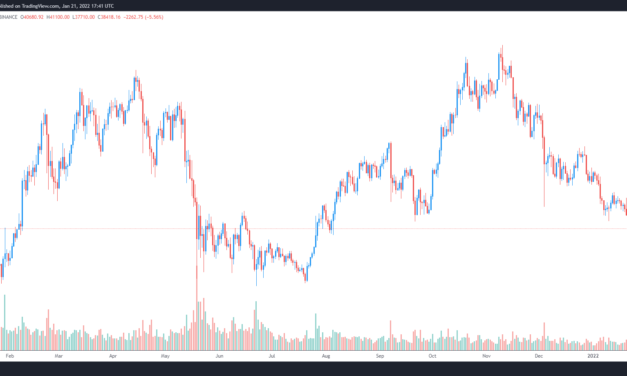
Bitcoin (BTC) price continues to sell-off and the knock-on effect is an even sharper correction in altcoins and DeFi tokens. At the time of writing, BTC price has sank to its lowest level in 6 months and most analysts are not optimistic about an immediate turn around. Data from Cointelegraph Markets Pro and TradingView shows that a wave of selling that began late in the day on Jan. 20 continued into midday on Friday when BTC hit a low of $36,600.BTC/USDT 1-day chart. Source: TradingViewHere’s a check-in with what analysts have to say about the current downturn and what may be in store for the coming weeks.Traders expect consolidation between $38,000 and $43,000The sudden price drop in BTC has many crypto traders predicting various dire outcomes along the lines of an extended bear market. Others like independent market analyst ‘Rekt Capital’, are not so quick to jump the gun and declare that all is lost. As shown in the following chart posted by Rekt Capital, “the recent BTC rejection means that BTC is now residing at the lower region of its current $38,000-$43,100 range.”BTC/USD 1-week chart. Source: Twitter.According to Rekt Capital, “Bitcoin is just consolidating inside the $38,000-$43,100 range,” but needs to hold this support level to avoid dropping down into a lower consolidation range. Rekt Capital said,“Technically, the $38,000 support area is what separates BTC from entering the $28,000-$38,000 consolidation range. Bitcoin last consolidated in said range in Q1 and Q2 of 2021.”Head and shoulders pattern confirmedAnalysis of the BTC price action from a purely technical point of view was touched on by David Lifchitz, managing partner and chief investment officer at ExoAlpha, who pointed out that the “giant head and shoulders pattern for BTC is now completed with the neckline broken with BTC at $38,300.” BTC/USDT 1-day chart. Source: TradingViewFrom a theoretical standpoint, Lifchitz noted that this pattern predicts a possible drawdown as low as $20,000, but he stated that the “fall has generally been less than that” and suggested that “the $31,000 region could definitely be in sight.” From a fundamental point of view, Lifchitz noted multiple factors that are creating headwinds for BTC, including tightening from the U.S. Federal Reserve, chatter from the EU regulators looking to ban proof-of-work mining, profit-taking from late 2021 and the continued uncertainty about the economic future as it relates to the Covid pandemic. Lifchitz said, “Therefore for Bitcoin, a move down to the low-mid $30,000 could be definitely in the cards soon before real dip-buyers show up.”Traders look to scoop up BTC at $30,000A look at how traders have responded to this drawdown as compared to the pullback in June of 2021 was provided by analyst and Cointelegraph contributor Michaël van de Poppe, who posted the following chart highlighting the major support zones for each period of weakness. BTC/USD 1-day chart. Source: Twittervan de Poppe said, “Back in June → People are waiting for $23,000 to $25,000 to buy. Right now → People are waiting for $30,000 to buy. Similar fake breakout on the upside to nuke afterward into support.”A similar point of view was offered by trader and pseudonymous Twitter user ‘Fomocap’, who posted the following chart outlining how BTC could perform in the days ahead. BTC/USD 1-day chart. Source: TwitterFomocap said, “Relief bounce to $44,000 – $42,000 retest, if rejection then $35,000 – $33,000. What do you think?”Related: Crypto Twitter responds to Bitcoin dump: ‘Ok cool’Bulls need a close above $39,600A final bit of insight into was offered by crypto trader Scott Melker, who posted the following chart showing the price breakdown below a key level that must be recovered. BTC/USD 1-day chart. Source: TwitterMelker said, “Bulls looking for a Hail Mary close above $39,600 on the daily. A close below (especially on weekly) is a break in market structure, lower low etc. Bears showing no mercy.”The overall cryptocurrency market cap now stands at $1.801 trillion and Bitcoin’s dominance rate is 40.4%.The views and opinions expressed here are solely those of the author and do not necessarily reflect the views of Cointelegraph.com. Every investment and trading move involves risk, you should conduct your own research when making a decision.

Čítaj viac
MetisDAO TVL surges by 99,800% as the layer-2 race heats up

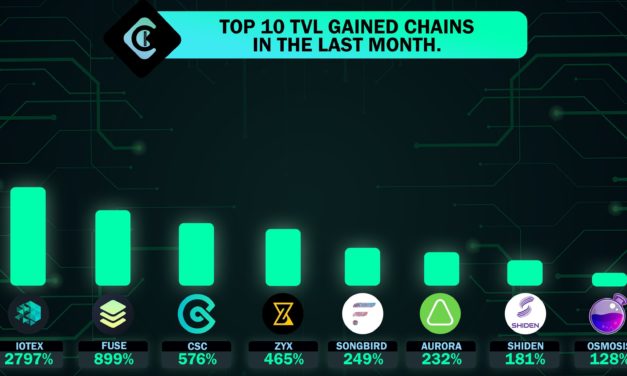
Attracting liquidity has become a de facto arms race in the growing decentralized finance (DeFi) landscape. Projects constantly battle to attract investors funds by offering enticing yields for crypto holders willing to take a risk and lock up their assets and protocols use this funds to build out their products and attract attention from larger investors. One protocol that has been gaining traction in the total value locked (TVL) race is MetisDAO (METIS), a layer-two rollup platform designed to fully support the application and business migration from Web2 to Web3.Top 10 TVL gainers over the past month. Source: CCK VenturesAlongside the growth in the TVL on its protocol, the METIS token has also received a boost of momentum with data from Cointelegraph Markets Pro and CoinGecko showing that the price of METIS climbed from a low of $49.83 on Dec. 14 to a new all-time high at $323.54 on Jan. 16. METIS/USD 3-hour chart. Source: TradingViewThree reasons for the growing TVL on the Metis protocol include the launch of multiple DeFi protocols on the network, added support for METIS-based trading pairs on cross-chain protocols and the network’s ability to offer Etherum users lower transaction costs and faster processing times. Multiple DeFi protocols launch on MetisThe largest boost in value on Metis comes from the launch of several new DeFi protocols that are exclusively on the Metis network. These include NetSwap (NETT), Agora (AGORA) and Tethys Finance (TETHYS). Top 3 protocols on METIS by total value locked. Source: Defi LlamaTogether, these three protocols account for $325.24 million out of the $353.36 million in value currently locked on Metis. The partnership between METIS and Agora was only revealed on Jan. 19, meaning that it only took two days for the current TVL to be reached. This suggests that the overall TVL on the Metis chain will soon be headed higher. NetSwap (NETT) is the longest-running protocol on METIS, having conducted its fair launch on Dec. 6, 2021, it currently offers APRs for liquidity providers (LP) that range from 56% for WETH/m.USDT to 1,034% for BNB/NETT LPs. NetSwap reached a total trading volume of $1 billion on Jan. 19 which represents $2.5 million worth of transaction fees that have been rewarded to LP providers. Cross-chain bridge supportA second reason for the growing value hosted on the Metis network includes the added support from multiple cross-chain bridges that provide wider exposure to the Metis ecosystem. Beefy Finance is one of the larger protocols that has added support for Metis-based tokens including METIS, NETT, and Metis-based versions of Tether (USDT), USD Coin (USDC) and Wrapped Ethereum (WETH). Welcome @MetisDAO to the Beefy family!https://t.co/A5bk5ZNAaE is building a hub for the Web3 economy: Layer 2 #Ethereum scaling with fast and cheap transactions.#Metis is live on Beefy with 11 @netswapofficial vaults.Check Metis Vaults at https://t.co/pJcEr4tgoG pic.twitter.com/MEu61vCYB1— Beefy Finance (@beefyfinance) January 16, 2022Since announcing the partnership on Jan. 16, the TVL from the Metis network on Beefy Finance has reached $24.56 million. Other cross-chain platforms that have added support for Metis include Pickle Finance, Poly Network, the Celer Network’s cBridge, BoringDAO, Relay Chain and Multichain. Related: Blockchain assessment: How to assess different chains?Metis goes cross-chainThe third factor attracting value to the Metis ecosystem is the low-fee, high throughput capabilities of the network that help Ethereum users save time and money. The overall goal of Metis is to offer transactions that settle in less than a second and cost less than $1 in fees. According to the project’s whitepaper, this will be achieved by using the theoretically infinite scalability of the Metis Andromeda network.These capabilities have led to the rapid growth of the Metis ecosystem as a whole, which now supports multiple DeFi protocols and NFT projects.Most recently, Metis has established a partnership with Curate, a cross-chain nonfungible token (NFT) marketplace that will enable gasless transactions. New partner: @curateproject! Curate is a cross-chain NFT marketplace allowing anyone to mint & buy/sell NFTs completely GASLESS(!), incl import/export of ETH/SOL/ALGO/BSC NFTs! Curate will deploy on $METIS Andromeda network end of Jan. https://t.co/sbX71ooYGc to get started! pic.twitter.com/ONGHiCJM6M— Metis (@MetisDAO) January 13, 2022

The views and opinions expressed here are solely those of the author and do not necessarily reflect the views of Cointelegraph.com. Every investment and trading move involves risk, you should conduct your own research when making a decision.

Čítaj viac

Moonbeam (GLMR) launch brings EVM interoperability closer to the Polkadot network

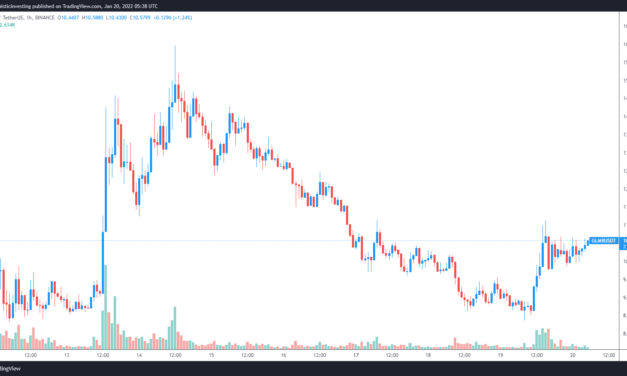
Cross-chain compatibility with the Ethereum (ETH) network has become a necessary component for any layer-one protocol looking to remain relevant because a majority of projects and funds locked in smart contracts are found on the top-ranked smart contract platform. After years of development and promises of interoperability, the Polkadot network moved toward its first Ethereum virtual machine (EVM) compatible smart contract protocol with the launch of Moonbeam (GLMR). The platform is designed to make it easy to use Ethereum developer tools to build or re-deploy Solidity projects in a Substrate-based environment.Data from Cointelegraph Markets Pro and TradingView shows that after a volatile start, which saw its price swing from a low of $8.40 on Jan. 11 to a high of $15.97 on Jan. 14, GLMR is now consolidating near $10.45. GLMR/USDT 1-hour chart. Source: TradingViewThree reasons why GLMR could see increased attention from investors are Moonbeam’s official launch on Polkadot with cross-chain support for Ethereum, its integration with multiple bridging protocols that provide access to the wider crypto community and the launch of Moonbeam-based projects that are attracting value to the network. Moonbeam could get the first mover advantageThe most significant development providing momentum for Moonbeam has been the project’s official launch on the Polkadot network,  a move which should bring cross-chain interoperability with the Ethereum network to the sharded multi-chain protocol. 1/ ​ Moonbeam is LIVE on @Polkadot! We are excited to announce that Moonbeam is the first fully operational parachain on Polkadot. Moonbeam will bring many new integrations, activity & users to light up Polkadot’s ecosystem. ⚡ #MoonbeamLightsUphttps://t.co/yBhgyWwaRn— Moonbeam Network (@MoonbeamNetwork) January 11, 2022After becoming the first project to secure one of the Polkadot parachain auction slots in early November, Moonbeam has become the first fully operational parachain on the network. This enabled more than 80 projects already built on Moonbeam to be deployed. The full launch process began on Dec. 17 and took a period of three weeks to gradually roll out functionality and enable EVM and balance transfers. GLMR token holders can now add the network to their MetaMask wallet and transfer assets within the Moonbeam ecosystem or across other EVM-compatible networks. Integrations with cross-chain bridgesAnother factor helping GLMR establish itself within the crypto ecosystem has been its integration into cross-chain bridge-equipped protocols that allow Moonbeam network assets to migrate to other protocols and networks. Excited to announce that cBridge now supports @MoonbeamNetwork asset bridging between 15 chains!Bridge your $USDT, $USDC and $CELR at https://t.co/35fICZsz3A and use on @zenlinkpro ! More dex partners and tokens to come!Inter-chain Message Framework available soon! pic.twitter.com/ahdHrUVm4f— CelerNetwork (@CelerNetwork) January 14, 2022

Some of the more popular bridges that have integrated Moonbeam include the cBridge from Celer and the Multichain swap protocol, which has announced support for ten assets that can be bridged between Moonbeam and Ethereum. Related: Industry players respond to Vitalik Buterin’s thoughts on cross-chain ecosystemsNew projects bring value to the Moonbeam networkA third factor helping the Moonbeam network get up and running has been the interest from developers who have launched their projects on the network. This has helped attract users and assets to the newly launched protocol. These include projects like the automated market maker protocol Solarflare, the decentralized exchange (DEX) StellSwap and the cross-chain DEX protocol ZenLink. As a result of multiple protocol launches on Moonbeam, the total value locked (TVL) on the network reached nearly $200 million during its first week live on the Polkadot mainnet. Total value locked on Moonbeam. Source: Defi LlamaThe top-ranking protocol on Moonbeam in terms of TVL is StellaSwap with $89.3 million followed by BeamSwap with $46.4 million. The views and opinions expressed here are solely those of the author and do not necessarily reflect the views of Cointelegraph.com. Every investment and trading move involves risk, you should conduct your own research when making a decision.

Čítaj viac

Získaj BONUS 8 € v Bitcoinoch

nakup bitcoin z karty

Registrácia Binance

Burza Binance

Aktuálne kurzy