
Autor Cointelegraph By Jordan Finneseth

CEEK VR gains 100%+ as push toward virtual reality and Metaverse development intensifies

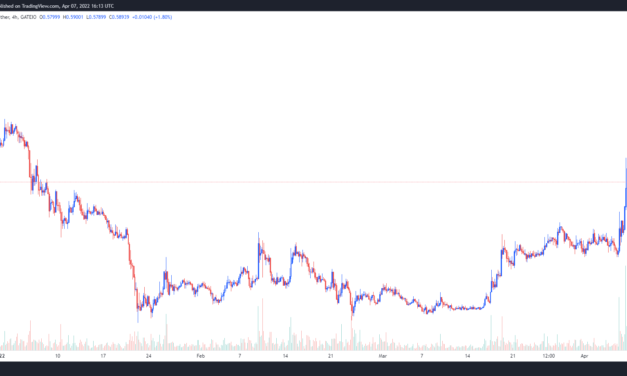
Nonfungible tokens (NFTs), decentralized finance (DeFi) and the Metaverse are three of the hottest trending topics in the cryptocurrency ecosystem and each is helping the world slowly move toward the mass adoption of blockchain technology. One project looking to capitalize on these trends is CEEK VR (CEEK), a entertainment and creator-focused platform aiming to use virtual worlds to connect music artists, athletes and digital content creators with their fans. Data from Cointelegraph Markets Pro and TradingView shows that since trading at a low of $0.289 on March 15, the price of CEEK has gained 123% to hit a daily high of $0.646 on April 7 as its 24-hour trading volume spiked 178% to $90 million. CEEK/USDT 4-hour chart. Source: TradingViewThree reasons for the climbing price of CEEK include being featured in the gift lounge at the Grammy awards, deeper integration with the BNB Smart Chain (BSC) and several new cryptocurrency exchange listings. Major partnerships and a booth at the Grammy’sCEEK hosted a booth in the gift lounge at the 2022 Grammy and this may have provided a new level of exposure for the project since a number of influencers and music fans would have visited the pop up.Day2 #Grammys Gift Lounge – Presenters, performers and nominees experience #VirtualReality Excited to bring more #music #superstars into the #Metaverse #Ceek #virtualconcerts pic.twitter.com/cQPU4YRMUh— Ceek (@CEEK) April 1, 2022Hosting the booth was made possible through CEEK VR’s partnership with Universal Music, which grants the protocol the rights to live performances for many popular artists including Lady Gaga, Bon Jovi, U2, Sting and Ziggy Marley. The project is also partnered with Meta Oculus, Apple and Microsoft, which are three of the biggest names working on the development of virtual reality (VR) technology. In future, this partnership could expand access to VR headsets beyond the protocol’s native CEEK VR headset. Integration with BNB Smart ChainA second factor helping attract more attention to CEEK has been its integration with the BNB Smart Chain ecosystem and the recent addition of cross-chain support in late 2021. CEEK originally launched on the Ethereum (ETH) network but the high-cost of conducting transactions on the network was hampering adoption, especially in terms of making micropayments for streaming content usage, tracking and artist payments.Meet the 4th batch of projects joining the #MVBIV Incubation Program! Congrats and welcome to @StarSharks_SSS @OfficialPearDAO @gat_network @subdao_network @Cosmic_Guild @hashflownetwork & @CEEK pic.twitter.com/UhSebUPP1W— BNB Chain (@BNBCHAIN) March 9, 2022

Since launching support for the BSC, CEEK has been selected for the BNB Chain MBVIV Incubation Program which provides the protocol with a series of incubation events, mentorship and community support.New exchange listingsA third development backing CEEK’s rally is new exchange listings on Huobi Global and KuCoin. Huobi Global Will List $CEEK on April 8, 2022@HuobiGlobal #CEEK #Metaverse https://t.co/LI1YjTJftw pic.twitter.com/fsjs2Jt0ye— Ceek (@CEEK) April 6, 2022

While trading for CEEK doesn’t begin until April 8 on both platforms, the announcements have led to a spike in demand for the token because users tend to accumulate tokens before any significant exchange listing. The views and opinions expressed here are solely those of the author and do not necessarily reflect the views of Cointelegraph.com. Every investment and trading move involves risk, you should conduct your own research when making a decision.

Čítaj viac
Altcoin Roundup: Interoperability push puts attention back on Polkadot

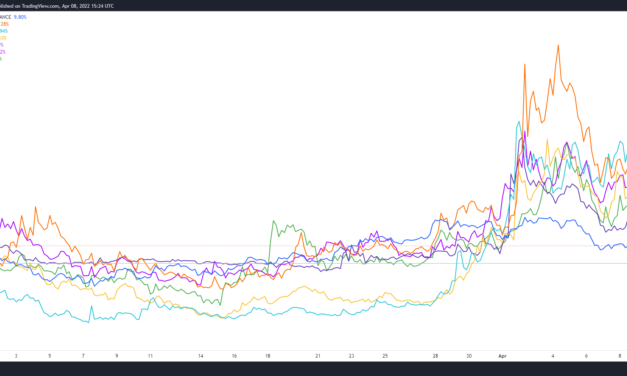
The Polkadot ecosystem sorely underperformed compared to other layer-1 networks in 2021, while the slow roll-out of parachain auctions and mainnet launches left the network playing catch-up in 2021.It appears that this trend came to an end in mid-March when numerous projects in the Polkadot ecosystem saw their prices climb higher after users began to engage with networks that expanded their offerings and made a push toward Ethereum Virtual Machine (EVM) compatibility.DOT, GLMR, ACA, ASTR, SAITO, CFG and KYL in USDT pairs. Source: TradingViewHere’s a look at six top moving protocols in the Polkadot ecosystem that are helping to establish a presence in the cryptocurrency market.Interoperability is the keyInteroperability has been one of the driving themes of the cryptocurrency market for the past year, and Moonbeam (GMLR) and Astar (ASTR) are two Polkadot parachains focused on bringing multichain compatibility with Ethereum other networks. Moonbeam is a smart contract parachain aiming to make it easier to use Ethereum developer tools to build or redeploy Solidity projects in Polkadot’s substrate-based environment. It was the first parachain to go live on the Polkadot mainnet and plans to bring on-chain governance, staking and cross-chain integration to the base Ethereum feature set. Astar is a decentralized application (DApp) hub that supports a variety of standards including Ethereum, WebAssembly (WASM) and layer-2 solutions like zk-Rollups. The goal of the protocol is to become a multichain smart contract platform capable of supporting multiple blockchain networks and virtual machines. Since its launch in late January, the Astar network has seen the total value locked on the protocol hit a high of $1.47 billion, and the metric currently sits at $1.31 billion, according to data from DefiLlama. Total value locked on Astar. Source: DefiLlamaMoonbeam and Astar provide an important service to the Polkadot ecosystem as the Polkadot Relay Chain does not support smart contracts.Polkadot’s DeFi ecosystem is still in its infancyThe decentralized finance (DeFi) ecosystem on Polkadot has started to gain traction, thanks to new developments from Acala and Centrifuge. Acala has filled an important role in Polkadot’s DeFi ecosystem by bringing the network its first native stablecoin — aUSD. Stablecoins have become a fundamental piece of the underlying DeFi infrastructure and the addition of aUSD brings a decentralized stablecoin to market that is collateralized by Polkadot (DOT), DOT derivatives and eventually, by cross-chain assets like Bitcoin (BTC) or Ether (ETH).With Acala and aUSD, the Polkadot ecosystem has now joined the likes of Terra, Frax Share and Curve Finance in the ongoing “stablecoin wars” that have become a dominant theme in the evolution of DeFi. Centrifuge is a decentralized asset financing protocol designed to bridge the real world with DeFi through the tokenization of assets like invoices, real estate and royalties.The main objectives of the protocol are to help users generate profits that are not tied to cryptocurrency assets, lower the cost of capital for small mid-size enterprises and provide investors with a stable source of income.With Centrifuge, companies are able to use tokenized real assets as collateral to access financing on the DApp lending protocol Tinlake. Acala, nine parachain teams, and a group of venture funds have launched the $250 million ‘aUSD Ecosystem Fund’ ️The fund is seeking early-stage projects from any @Polkadot or @KusamaNetwork parachain with strong $aUSD stablecoin use cases https://t.co/OJ2V47ZUry pic.twitter.com/NDgLg2bG8N— Acala (@AcalaNetwork) March 23, 2022Acala and Centrifuge are taking part in the $250 million “aUSD Ecosystem Fund” that was launched on March 23, shortly before the Polkadot ecosystem began to trend higher. Web3 pivot catalyzes growthWeb3 is another buzzword trending across the crypto ecosystem, and the term is really just a fancy term for the integration of blockchain technology with the internet. Saito and Kylin are two protocols in the Polkadot ecosystem that are focused on facilitating the evolution of Web3 through scalability and data management. Saito is a blockchain network designed to process Terabytes of data by paying rewards to nodes in the peer-to-peer (P2P) network, instead of using miners or staking, as its method of delivering a permissionless and scalable network. This functionality is needed to one day power decentralized versions of popular sites that currently hold a monopoly in Web2, like Twitter, Facebook and Amazon. As for data management in the Polkadot ecosystem, Kylin has led the charge by providing a decentralized data infrastructure solution known as DeData for Web3. The Kylin ecosystem consists of a data oracle, data analytics and a data marketplace. Kylin data analytics is a set of tools designed for data warehouses that extract meaningful data findings, patterns and interpretation, all while implementing low-cost commercialization functionalities for the public. The Kylin data oracle is an advanced decentralized data feeding protocol that is capable of processing any type of data on- and off-chain in a validated way. Want more information about trading and investing in crypto markets?The views and opinions expressed here are solely those of the author and do not necessarily reflect the views of Cointelegraph.com. Every investment and trading move involves risk, you should conduct your own research when making a decision.

Čítaj viac
xASTRO staking and upcoming ‘Terra wars’ send Astroport price to new highs

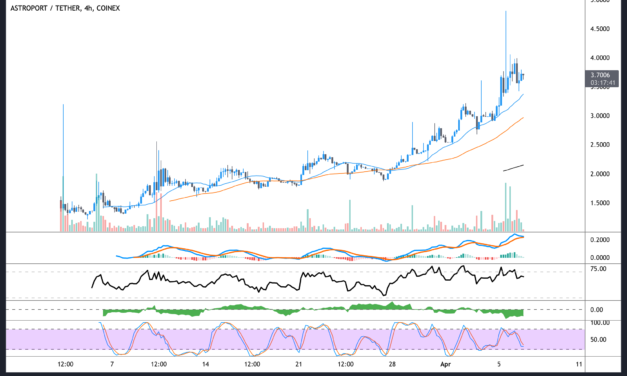
Projects that launch on up-and-coming blockchain networks can often benefit from a low competition environment that allows them to attract  new users and liquidity at a faster rate than crowded networks like Ethereum. A recent example of this is Astroport (ASTRO), an automated market maker (AMM) on the Terra (LUNA) network that has seen an influx of activity alongside the increased attention that is being focused on the Terra ecosystem and its Terra USD (UST) stablecoin. .Data from CoinGecko shows that since hitting a low of $1.28 on March 7, the price of ASTRO has exploded 194% to hit a new all-time high of $4.80 on April 5.ASTRO/USDT 4-hour chart. Source: TradingViewThree reasons for the price appreciation seen in ASTRO include the increased attention the Terra ecosystem has received related to the recent Bitcoin (BTC) purchases to back UST, the launch of xASTRO staking rewards and a rise in the total value locked on the protocol. Terra buys Bitcoin as collateral for USTThe rising popularity of the Terra network could be one of the most significant factors helping to attract attention and users to Astroport as the ongoing purchase of BTC by the Luna Foundation Guard (LFG) for the purpose of providing collateral to back UST is shining a light on the networks decentralized finance ecosystem. $UST with $10B+ in $BTC reserves will open a new monetary era of the Bitcoin standard. P2P electronic cash that is easier to spend and more attractive to hold #btc— Do Kwon (@stablekwon) March 14, 2022UST is now the largest decentralized stablecoin by circulating supply and following the addition of BTC to the LFG treasury, Astroport is the main AMM currently in operation on the network. Launch of xASTROA second development helping to boost demand for ASTRO was the release of xASTRO staking that offers ASTRO holders a way to increase their stack. ASTRO staking statistics. Source: AstroportASTRO stakers can currently earn an APY of 48.77% for staking their tokens on the protocol and 0.1% of all trading fees on Astroport are distributed to ASTRO stakers. More than 65% of the available supply of ASTRO is currently being staked on the protocol which helps put positive pressure on the price of ASTRO due to a reduced circulating supply amid the increasing demand. Along with a high APY and fee share, ASTRO stakers receive xASTRO in return. xASTRO is the governance token for the protocol and it allows holders to help contribute to future decisions involving the development of Astroport. ASTRO tokens can be un-staked at any time without a cool-down period.Related: Biggest future BTC whale explains why Bitcoin was chosen for ‘decentralized Forex reserve’Terra liquidity wars and a rising TVLThe increased attention on Terra and subsequently Astroport led to an increase in the total value locked on Astroport, which is currently at a record-high $1.71 billion according to data from Defi Llama. Total value locked on Astroport. Source: Defi LlamaThe increase in demand for both ASTRO and UST has given rise to the “Terra liquidity wars,” which are expected to mirror the Curve wars that have been taking place within the stablecoin ecosystem on the Ethereum network.Similar to the competition for liquidity direction and fees on Curve Finance, DeFi protocol Retrograde is positioning itself as a Convex Finance clone that aims to accumulate xASTRO for the rewards and the ability to influence the emission rates for different Astroport pools. If the number of protocols looking to accumulate xASTRO increases, more of the circulating supply of ASTRO will be locked and this is likely to place more buy pressure on ASTRO price. The views and opinions expressed here are solely those of the author and do not necessarily reflect the views of Cointelegraph.com. Every investment and trading move involves risk, you should conduct your own research when making a decision.

Čítaj viac
Bitcoin treads water at $43.5k as interest rate concerns weigh heavily on global asset prices

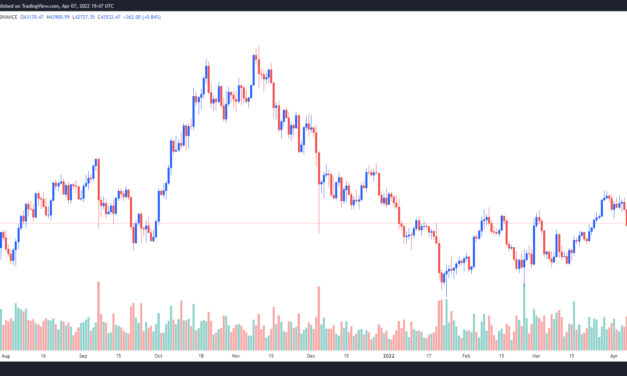
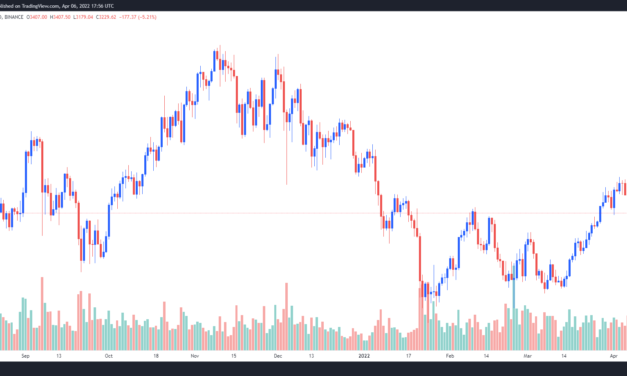
Global financial markets continued to face an uphill battle on April 7 following recent hawkish comments from the United States Federal Reserve hinting at a rapid rise in interest rates as one course of action to help curb rampant inflation. Data from Cointelegraph Markets Pro and TradingView shows that the price of Bitcoin (BTC) hit an overnight low of $42,744 following remarks by the Fed and has since entered a consolidation pattern near support at $43,500.BTC/USDT 1-day chart. Source: TradingViewHere’s a look at what several analysts in the market are saying about the outlook for Bitcoin at this level and which support and resistance zones to keep an eye on moving forward. Bulls need to hold support at $43,100Insight into what comes next for Bitcoin based on its previous performance in this zone was touched on by market analyst and pseudonymous Twitter user Rekt Captial, who posted the following chart highlighting the significance of the $43,100 support level. BTC/USD 1-week chart. Source: TwitterRekt Capital said, “If history repeats and BTC continues to maintain the ~$43,100 level as support… then BTC could once again enjoy upside into the high $40,000s and even as far as the low $50,000s.”BTC and the NASDAQThe correlation between price movements for Bitcoin and the NASDAQ was highlighted in the following chart posted by filbfilb, co-founder of trading suite DecenTrader, who noted that “Since 2019, multiple selloffs at all-time highs on the NASDAQ have resulted in sharp selloff, which saw BTC also correct at the same time.”NASDAQ vs. BTC/USD 1-day chart. Source: TwitterFilbfilb said, “What followed was an inverse head and shoulders bullish reversal, confirmed by testing the 50 DMA, and ATH on both legacy and BTC; a possible scenario ahead.”Further evidence to support a possible impending breakout for BTC was provided by crypto analyst and pseudonymous Twitter user TAnalyst, who posted the following chart looking at the price action for BTC when a bounce on the price oscillator occurs. BTC/USD 3-week chart. Source: TwitterTAnalyst said, “April 2012 price oscillator bounce, then a bull run. March 2020 price oscillator bounce, then a bull run. February 2022 price oscillator bounce… I’ll [leave it to] you to conclude.”Related: Bitcoin sentiment falls into ‘fear’ as BTC price action hits $42.9K breakdown targetA breakout to $57,000 or a pullback to $36,000The loss of support at $44,700 was “expected after losing that recent low” according to crypto trader and Cointelegraph contributor Michaël van de Poppe, who posted the following chart detailing the breakdown from $46,881. BTC/USD 1-day chart. Source: TwitterPoppe said, “Currently at an important breaker. If we hold this, all good, seems ready for another leg to $57,000. If we don’t, then I’m seeing a test around $36,000.”The overall cryptocurrency market cap now stands at $2.015 trillion and Bitcoin’s dominance rate is 41.2%.The views and opinions expressed here are solely those of the author and do not necessarily reflect the views of Cointelegraph.com. Every investment and trading move involves risk, you should conduct your own research when making a decision.

Čítaj viac

Ethereum traders eye the 61.8% Fib level if ETH fails to hold the $3.2K support

The cryptocurrency market is nearly completely red on April 6 after hawkish comments from multiple members of the Federal Reserve highlighted their opinion that aggressively raising interest rates and cutting bond purchases would need to happen in order to combat inflation. Members did concede that this would result in negative pressure being placed on financial markets and this seems to be exactly what happened on April 6. Data from Cointelegraph Markets Pro and TradingView shows that the downward move for Ether (ETH) accelerated on April 6 and dropped the top altcoin to a low of $3,178 before the sell-off subsided and the price recovered to $3,200. ETH/USDT 1-day chart. Source: TradingViewHere’s what several analysts are saying about this latest pullback for Ether and what levels of support to keep an eye on in case of a further move to the downside. Ether could dip to $2,600The outlook for Ether following a rejection of the monthly resistance at $3,400 was discussed by market analyst and pseudonymous Twitter user Rekt Capital, who posted the following chart noting that if this were to happen, “Ether could revisit $3,000” as indicated by the black line on the chart. ETH/USD 1-month chart. Source: TwitterRekt Capital said, “But September 2021 has shown that when black gets retested on a dip — downside wicks occur. So if Ether does dip to black, it could wick into the green higher low.”Based on the chart provided, this would result in a potential drop to $2,602. Will the $3,200 support hold?A word of reassurance for concerned Ether holders was offered by crypto trader and pseudonymous Twitter user CryptoBatUSDT, who posted the following chart highlighting a retest of an important support level. ETH/USDT 6-hour chart. Source: TwitterCryptoBatUSDT said, “The market structure is still bullish, currently in both the Range (Eq) and a Swing Low (HL) zone. Unless this level is lost, I will look to open a long position in these regions.”Related: Bitcoin price drops to $43.5K, but data and BTC’s market structure project strengthPrice is still between the 200-MA and 200-EMAFurther insight into the support for Ethereum at this current price level was provided by crypto trader and pseudonymous Twitter user Don Yakka, who posted the following chart noting the importance of the 200-day moving average (MA) and exponential moving average (EMA). ETH/USDT 1-day chart. Source: TwitterDon Yakka said, “Very similar to BTC chart, the 200MA is resistance and the 200EMA is support, as long as 200EMA holds on [the] daily, I would not panic.”The overall cryptocurrency market cap now stands at $2.003 trillion and Bitcoin’s dominance rate is 41.5%.The views and opinions expressed here are solely those of the author and do not necessarily reflect the views of Cointelegraph.com. Every investment and trading move involves risk, you should conduct your own research when making a decision.

Čítaj viac

Získaj BONUS 8 € v Bitcoinoch

nakup bitcoin z karty

Registrácia Binance

Burza Binance

Aktuálne kurzy