
Autor Cointelegraph By Jordan Finneseth

DeFi protocols launch stablecoins to lure new users and liquidity, but does it work?

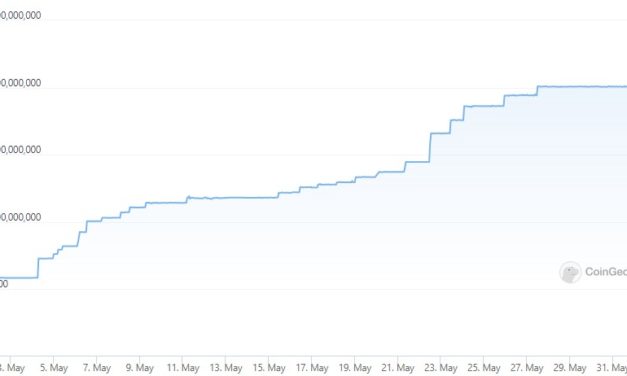
Stablecoin projects have been thrust into the limelight over the past month as the popularity of algorithmic stablecoins and the collapse of the Terra project put a spotlight on the important role dollar-pegged assets play in the crypto market.In response to the void left by UST, multiple protocols have released new stablecoin projects in an effort to attract new users and capture liquidity. Generally speaking, the DeFi sector is full of gimmicks that are designed to entice user participation and it’s possible that the recent stablecoin launch programs are simply the next trending tactic being used to boost TVL on DeFi platforms. Let’s take a look at some of the newest stablecoins to hit the market and what impact they may or may not be having within DeFi.USDDOne of the biggest stablecoin projects to launch recently is USDD, a decentralized algorithmic stablecoin on the Tron (TRX) blockchain. Since launching on May 5, USDD has experienced rapid growth in terms of its circulating supply, which currently sits near 601.86 million and its integration within the Tron ecosystem is relatively widespread.USDD market cap growth. Source: CoinGeckoUSDD is also available on the Ethereum (ETH) network and the BNB Smart Chain (BSC), which has helped to increase the tokens distribution along with providing additional yield opportunities. There are multiple liquidity provider pools available to USDD holders that offer 20% APY or more across various protocols, including JustLend, SunSwap, Ellipsis and Curve. In the time since USDD launched, the price of TRX has increased 17% from $0.07 to its current price of $0.0818 after briefly hitting a high of $0.092 on May 31. fUSD Fantom recently released fUSD, its first native stablecoin, which is an over-collateralized and can be minted using Fantom (FTM), USD Coin (USDC), Dai (DAI), SpiritSwap (SPIRIT) and wrapped Tether (fUSDT) as collateral. The new @FantomFDN’s native stablecoin, $fUSD…Brings all the goodness of decentralization while delivering stability: ✅Governed by the community.✅Full transparency.✅Overcollateralized stability.Plus, new collateral assets you’ll be happy to see! pic.twitter.com/JMaD4D5oWZ— Stader.Fantom (@stader_ftm) May 25, 2022In an effort to attract more liquidity, the Fantom Foundation set the fUSD staking reward at 11.3% and created a fUSD to USDC swap interface that allows users to purchase fUSD and repay their positions to avoid liquidations. At the time of writing, the circulating supply of fUSD stands at 60,993,403 and it is trading at a price of $0.7112, which is significantly below its $1 peg. aUSDFollowing the official launch of the first parachains within the Polkadot ecosystem, the Acala decentralized finance platform released aUSD as the first native stablecoin for Polkadot projects. aUSD is an over-collateralized stablecoin that can be minted by pledging Polkadot (DOT), staked Polkadot (LDOT), Kusama (KSM), staked KSM (LKSM), Acala (ACA) or Karura (KAR) as collateral. Pledging LDOT and LKSM as collateral allows DOT and KSM holders to continue earning staking rewards while simultaneously being able to borrow collateral against their holdings. On March 23, Acala joined with nine other parachain teams to launch a $250 million “aUSD Ecosystem Fund” that is designed to support early-stage startups planning to build strong stablecoin use cases on any Polkadot or Kusama parachain.Acala, nine parachain teams, and a group of venture funds have launched the $250 million ‘aUSD Ecosystem Fund’ ️The fund is seeking early-stage projects from any @Polkadot or @KusamaNetwork parachain with strong $aUSD stablecoin use cases https://t.co/OJ2V47ZUry pic.twitter.com/NDgLg2bG8N— Acala (@AcalaNetwork) March 23, 2022

As of May 31, 6.31 million aUSD have been minted and the amount of pledged capital locked on Acala stands at $91.53 million. Related: UK government proposes additional safeguards against stablecoin failure risksOUSDOrigin protocol’s OUSD is a stablecoin that is fully backed by more recognizable stablecoins like USDC, USDT and DAI. OUSD market cap growth. Source: CoinGeckoUsers can mint OUSD by pledging their stablecoin collateral on the Origin Dollar protocol and earn a yield of 12.79% by holding OUSD in a wallet. Yields that are paid to OUSD holders come from automated strategies managed by smart contracts that put the deposited funds to work in DeFi. After briefly dropping to a low of $0.967 on May 12 during the height of the UST fallout, OUSD has, for the most part, maintained a price above $0.996 and has a current circulating supply of 63,605,444. The views and opinions expressed here are solely those of the author and do not necessarily reflect the views of Cointelegraph.com. Every investment and trading move involves risk, you should conduct your own research when making a decision.

Čítaj viac
Chain (XCN) ignores the wider-market downtrend by rallying 100%+ over the past month

May was an incredibly challenging month for the cryptocurrency market as a majority of tokens booked heavy losses as a bear market was confirmed, but not every project dropped back to pre-bull market lows.Chain (XCN), a protocol designed to help organizations launch their own blockchain network or connect with other more established networks, managed to rally more than 120% since May 19. Data from Cointelegraph Markets Pro and TradingView shows that since hitting a low of $0.0712 on May 11, XCN reversed course to hit a record-high at at $0.176 on May 31. XCN/USDT 4-hour chart. Source: TradingViewThree reasons for the strong showing from XCN include multiple exchange listings, launching on BNB Smart Chain (BSC) and several notable partnerships, including a long-standing collaboration with the Stellar Foundation. Exchange listings pump up the volumeIn March 2022, Chain deployed a new smart contract for its token and rebranded from CHN to XCN. Following the rebrand, XCN listed at KuCoin and subsequent listings on Huobi, Gate, Bitrue and Hotbit were accompanied by sharp upticks in trading volume. Several of the supporting exchanges have also launched perpetual contracts for the XCN token including Gate, Huobi, ByBit and Poloniex, which has helped generate an increased awareness for the project and initially led to a spike in trading volume. XCN is also part of a cross-chain integration with BNB Smart Chain and this allows for inexpensive token transfers and trading on PancakeSwap where holders can earn yield for providing liquidity to the exchange. Following the integration with the BSC, the price of XCN rallied from $0.0712 on May 11 to $0.14 over the next week. Related: BNB Chain releases year-long technical roadmap to develop ecosystemNotable partnershipsSince 2014, Chain has had several notable partnerships and funding rounds, including an initial fundraise of over $40 million from Khosla Ventures, Pantera Capital, Capital One, Citigroup, Fiserv, Nasdaq, Orange and Visa.In 2018, the project was acquired and became part of the commercial arm of the Stellar Foundation known as Interstellar. Chain was reacquired in 2020 as part of a ledger-as-a-service platform called Sequence.It’s possible the recent developments with the Stellar protocol, including its partnership with MoneyGram to create a stablecoin-based platform for money transfers, could have positive effects on the price of XCN due to their close ties. In April 2022, Chain also announced a strategic partnership with Alameda Research which established the private equity and quantitative cryptocurrency trading firm as Chain’s primary market maker. While none of these partnerships appear significant enough to explain XCN’s current gains, it is notable that the altcoin’s price action has diverged from the wider crypto market for nearly an entire month.The views and opinions expressed here are solely those of the author and do not necessarily reflect the views of Cointelegraph.com. Every investment and trading move involves risk, you should conduct your own research when making a decision.

Čítaj viac
DeFi isn’t dead, it just needs to fix these 3 critical problems

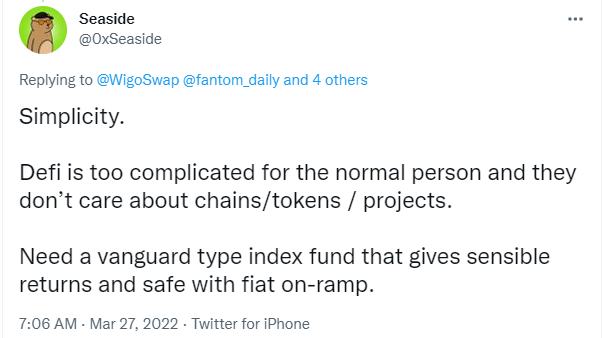
The persistent challenges decentralized finance face have been well documented by a handful of analysts and the recent collapse of the Terra ecosystem re-enforced the fact that something is critically wrong with DeFi.I think DeFi today is completely broken for 99% of the population.The promise of a more transparent financial system has been overtaken by greed.UST/LUNA is just the latest in a string of bad developments:— Peter Yang (@petergyang) May 11, 2022Let’s take a look at what experts say DeFi needs to do in order to have another revival. Improved usabilityTo date, the promise of open and uncensored access to a global decentralized financial system has been largely hampered by the complicated interface, confusing multi-step staking processes and lack of clarity surrounding the yields on various tokens.What do you think DeFi needs to reach mass adoption?a) Better ease of useb) Greater education about DeFic) Less exploits and rugpullsd) Greater liquidity and on-rampse) Clear government regulation pic.twitter.com/dX4Qpd2Dsh— Rugdoc.io (@RugDocIO) January 9, 2022

The user experience for most platforms is sub-par to what would be expected when dealing with multi-million dollar platforms and the layouts can be complicated, along with poor documentation that leaves users frustrated.Adding to the confusion, an ever-growing list of blockchain networks with their own DeFi ecosystems can seem daunting to newcomers who may have never used a software wallet before. Ultimately, a better system of educating the public about DeFi in a trusted setting is something that is needed to help the mass adoption process, otherwise you face the same problem of the current financial system where only a small portion of the population reaps the benefits. Security needs to become priority #1 The DeFi sector is often referred to as the wild west due to the ability for anyone to launch a project with flashy promises only to pull the string on naive investors and leave them with a worthless token. Well-meaning projects also fall victim to smart contract vulnerabilities that see their liquidity drained. A recent example of this was the February, 2022 hack of the Wormhole token bridge which resulted in the loss of 120,000 wrapped Ether (wETH) tokens.In order for more people to feel safe exploring the expanding DeFi ecosystem and to keep governments off the back of the industry, a greater level of security and protection from malicious actors and protocol exploits will be required. Related: Buterin: How to create algo stablecoins that don’t turn into Ponzis or collapseSelf-regulate, or be regulatedA third factor that is at the top of the list for many DeFi analysts is the need for greater regulatory clarity. While the mere mention of such a thing generates a slew of objections from many crypto investors who value its unregulated nature, the majority of the general public who are not yet involved with cryptocurrencies and DeFi are likely to remain wary until the government gives the asset class a stamp of approval.Thanks to the recent Terra ecosystem collapse, regulation could be one of the first challenges that DeFi has to resolve. What those regulations eventually look like is unknown, but they will help to establish a starting point which could help the DeFi sector evolve and mature. The views and opinions expressed here are solely those of the author and do not necessarily reflect the views of Cointelegraph.com. Every investment and trading move involves risk, you should conduct your own research when making a decision.

Čítaj viac
On-chain data shows Bitcoin long-term holders continuing to ‘soak up supply’ around $30K

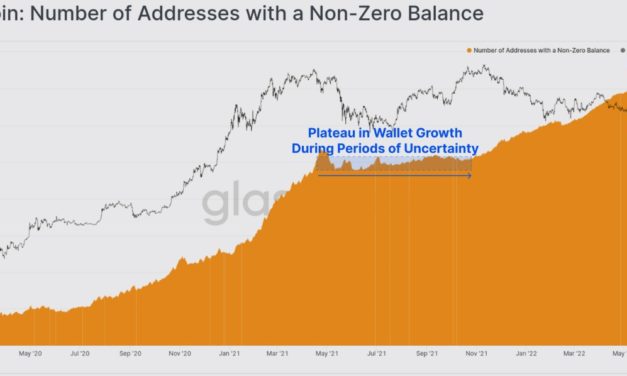
Bear markets are typically marked by a capitulation event where discouraged investors finally abandon their positions and asset prices either consolidate as inflows to the sector taper off or a bottoming process begins. According to a recent report from Glassnode, Bitcoin hodlers are now “the only ones left” and they appear to be “doubling down as prices correct below $30K.”Evidence of the lack of new buyers can be found looking at the number of wallets with non-zero balances, which has plateaued over the past month, a process that was seen after the crypto market sell-off in May of 2021. Number of Bitcoin addresses with a non-zero balance. Source: GlassnodeUnlike the sell-offs that occurred in March 2020 and November 2018, which were followed by an upswing in on-chain activity that “initiated the subsequent bull runs,” the most recent sell-off has yet to “inspire an influx of new users into the space.” Glassnode analysts say this suggests that the current activity is predominantly being driven by hodlers. Signs of heavy accumulationWhile many investors are disinterested in BTC’s sideways price action, contrarian investors view it as an opportunity to accumulate, a point evidenced by the Bitcoin accumulation trend score which “has returned a near perfect score above 0.9” for the past two weeks. Bitcoin accumulation trend score. Source: GlassnodeAccording to Glassnode, high scores on this metric during bearish trends “generally trigger after a very significant correction in price as investor psychology shifts from uncertainty to value accumulation.” The idea that Bitcoin is currently in an accumulation phase was also noted by CryptoQuant CEO Ki Young Ju, who posted the following tweet asking his Twitter followers “Why not buy?”A closer look at the data shows that the recent accumulation has been largely driven by entities with less than 100 BTC and entities with more than 10,000 BTC. In the recent volatility, the aggregate balance of entities holding less than 100 BTC increased by 80,724 BTC, which Glassnode noted was “remarkably similar to the net 80,081 BTC liquidated by the LUNA Foundation Guard.” Bitcoin supply held by entities with less than 100 BTC. Source: GlassnodeEntities with holdings in excess of 10,000 BTC added 46,269 Bitcoin to their balance during this same time period, while entities holding 100 BTC to 10,000 BTC “maintained a more neutral rating around 0.5, suggesting relatively little net change to their holdings.”Related: Bitcoin’s recent gains have traders calling a bottom, but various metrics remain bearishLong-term hodlers are still activeLong-term Bitcoin holders appear to be the main driving force behind the current price action with some actively accumulating and others realizing losses at an average of -27%.Bitcoin long term holder spent output profit ratio. Source: GlassnodeDespite the selling witnessed by some in the long-term holder cohort, the total supply held by these wallets recently returned to its all-time high of 13.048 million BTC. Glassnode said, “Unless significant coin redistribution occurs, we can therefore expect this supply metric to commence climbing over the course of the next 3-4 months, suggesting HODLers continue to gradually soak up, and hold onto supply.”The recent volatility may have pushed out some of the most dedicated Bitcoin holders but the data shows that a majority of serious holders are unwilling to spend their supply “even if it is now held at a loss.” The views and opinions expressed here are solely those of the author and do not necessarily reflect the views of Cointelegraph.com. Every investment and trading move involves risk, you should conduct your own research when making a decision.

Čítaj viac

Ethereum price moves toward $2,000, but analysts say it’s just another ‘relief rally’

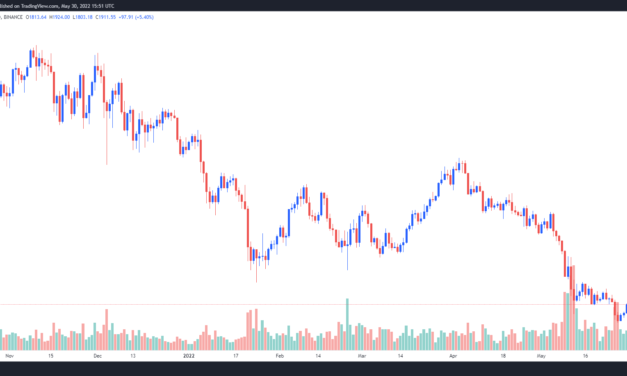
On May 30, the cryptocurrency market experienced a much-needed bounce that saw Bitcoin (BTC) climb above $30,900 and Ether (ETH) rally 5.84% to $1,930, but analysts warn that it could be too early to expect a reversal.ETH/USDT 1-day chart. Source: TradingViewHere’s a look at what several analysts are saying about the outlook for Ether moving forward and the major support and resistance levels to keep an eye on. A bounce off of major supportThe May 30 bounce in Ether came as “no surprise” to market analyst and pseudonymous Twitter user Rekt Capital, who posted the following chart, stating that “It’s more about how much #ETH will move from here.”ETH/USD 1-month chart. Source: TwitterRekt Capital said:“Technically, #Ethereum could rally to as high as ~$2269 to flip it into new resistance. General gist is that whatever this rally turns into, it will likely be weaker than mid-2021.”Possible recovery to $2,700Insight into the possible price trajectories for Ether was offered by crypto trader Ace of Alts, who posted the following chart showing ETH “currently holding the range lows again for the 4th time.”ETH/USD 3-day chart. Source: TwitterAce of Alts said:“IF we manage to hold this on the 3D I could see a bounce to the $2,700 region over summer. This area will most likely act as another LH [lower high] in the down trend. However, the R/R [risk/reward] is very good around this level.”Related: Market-cleansing bear cycles are healthy, say industry expertsLooking for “one more leg down”While the bounce in Ether price was a welcome sight to traders, Crypto Tony offered a word of caution, posting the following chart and warning to “never lose sight of the bigger picture.” ETH/USDT 1-day chart. Source: TwitterCrypto Tony said:“Yes things are looking nice at the moment, but to me this is simply a relief rally. We have no broken market structure on the time frame and until proven otherwise I am still looking for one more leg down.”Based on the chart provided, another leg down has the potential to drop the price of Ether into the $1,500 range. The overall cryptocurrency market capitalization now stands at $1.271 trillion, and Bitcoin’s dominance rate is 45.9%.The views and opinions expressed here are solely those of the author and do not necessarily reflect the views of Cointelegraph.com. Every investment and trading move involves risk, you should conduct your own research when making a decision.

Čítaj viac

Získaj BONUS 8 € v Bitcoinoch

nakup bitcoin z karty

Registrácia Binance

Burza Binance

Aktuálne kurzy