Autor Cointelegraph By Jillian Godsil

Blockchain games take on the mainstream: Here’s how they can win

Gaming is now one of the most profitable sectors of the entertainment industry, with consumer spending in the United States growing 8% in 2021 to top $60.4 billion in revenue. Worldwide, the games market generated an estimated $180.3 billion in 2021, up 1.4%.Within that segment are the hugely popular play-to-earn blockchain-based games, which are growing at an even faster pace given their virtual standstill some two years ago. But are blockchain games good enough to compete with more mainstream titles?In its 2021 annual report, The Blockchain Game Alliance says that NFT games generated $2.32 billion in revenue in the third quarter of 2021, or 22% of all NFT trading volume. Making the most waves was Axie Infinity — with its much-publicized popularity in the Philippines during COVID-19 lockdowns — which became the first blockchain game to top $1 billion in NFT sales.The report reveals that 68% of BGA members felt the growth was attributable to the P2E sector, and 85% said true ownership of digital goods in games is the secret sauce behind blockchain game successes.Can blockchain games compete on gameplay and appeal with mainstream titles?Jack Boreham, editor-in-chief of Metaverse Insider, has been following the trends over the past two years and believes blockchain gaming — or NFT games, as he likes to call them — will be adopted by mainstream publishers.“The beauty of NFT games is that they invert the institutional hierarchy of video gaming so that the power comes from the base of decentralized gamers and not the executives,” says Boreham. “And yes, big names will come in, but not for a couple of years, and the first ones are likely to be characterized as the more off-centre brands such as Nintendo.”So, is it just a matter of P2E goading traditional video gaming, or will the two parallel streams meet, merge or consume one another? The bigger names such as Ubisoft, Square Enix and Sega have already dipped their toes in the water by introducing NFTs, but they have witnessed backlash from traditional gamers. This article talks to those gamers who have already gone down the rabbit hole of P2E to see what the future of gaming might look like and discover if blockchain can compete for the hearts and minds of gamers everywhere.Gachapon is one of Lepricon’s first games, in which the gachapon machine gifts players mystery NFTs.Traditional gamers meet the futurePhil Ingram, a long-time gamer and CEO of blockchain-based gaming platform Lepricon, is bullish on P2E gaming — if the games get better.“If gaming is going to be the first killer [app] to on-ramp people for mass adoption, then we have to make blockchain gaming more like video gaming,” he says.“P2E is a bit like grinding in video gaming — the place where you need to kill multiple monsters or repeat actions to move up to the next level. It’s very different, and no one plays video games to grind.”The fact that rewards or assets earned or won in the game actually belong to the player is helping P2E get away with some fairly unappealing gameplay at present. “Blockchain is all about owning assets and that they can’t be taken away from you unless you leave your private keys at a bus stop. This is the point that enables a subtle shift from publisher-first economies to player-first,” he says.“The problem is that blockchain is dictating the gaming and not the other way around. Indeed, most blockchain games are glorified ways to sell NFTs.”Lepricon’s Street Food Pinball. A free-to-play, earn-by-playing, hypercasual platform with games like pinball is in development.On gamingFunnily enough, grinding is something that On Yavin doesn’t mind. In fact, he calls it his personal method of practicing mindfulness. Yavin is the founder and managing partner of Cointelligence Fund, which actively invests in the Metaverse — more specifically, blockchain games.A long-time gamer himself — rumor has it he was born with a keyboard in his hand — with a particular fondness for World of Warcraft, Yavin still plays between 30 and 90 minutes every day.“Part of my role is to undertake due diligence on new games, to see if we will invest in them or not. My hobby has become my job.”For Yavin, there are three critical elements essential for any successful game. The first is the story, and the second is the game’s mechanics — how it is built — and how the gameplay works out.“Then the quality of the graphics and visuals is a huge determination in how successful the game will be.”Decimated, a survival role-playing game, is one of Cointelligence Fund’s investments.The MMO, or massively multiplayer online gaming, is also of great importance.“When I first began gaming, it was against the machine, which could make it very sterile,” says Yavin. “Now, with MMO, the gameplay is very different and much more exciting, as I am playing against or with other humans. That and the social part. Gamers come together in guilds to handle joint operations. If you screw up, you can kill all the others on the team. Trust me, you don’t want to do that. But when it goes well, then you can find yourself talking about that particular operation for weeks.”As part of his work, Yavin played Axie Infinity, which he found relaxing (see the note on grinding above). While money does not form part of his motivation, he feels the unfairness of spending thousands of hours on a traditional game where the game owners still own the assets.According to Yavin, most P2E games are not fun. “Actually, most are shit,” he says, apologizing for the profanity.Cointelligence Fund also invested in Moonray, an action-RPG blockchain game.James Stell, head of investing at Blockpioneers — a venture capital firm investing in games and gambling in esports — also comes from the gaming world. Like Yavin, he really enjoys the social side of gaming. Stell plays between two and three hours a day after work and compares it to watching television.Stell’s poison of choice is Call of Duty, which he plays with a group of real-life friends. He also has a whole other business, running a pub near London Bridge. As the convivial barman, he hears a lot of news about P2E, as his crypto friends hang out in his bar and he also hosts events related to crypto interests.“Mind you, the last time we tried to host an event for Axie Infinity, the invite list got too big and they had to move to a larger venue.”Stell doesn’t see current incarnations of P2E becoming massively popular in the United Kingdom and other Western countries, given that there are easier ways to earn more money. However, he does see the nascent P2E gaming space as very innovative.“The large traditional gaming studios, which have deep war chests, are definitely eyeing the marketplace. They’ve shown a lot of interest in NFTs, but they are not going to shoot the golden goose by giving away profits before they have to. But they will come in, sooner rather than later.”In principle, they’re goodUnlike Stell, who sees the automatic entrance of traditional gaming companies, Yavin is betting on blockchain companies learning to think like gamers.Yavin says P2E games aren’t there yet but have two important aspects that will ensure the sector’s success.The first is the social aspect, epitomized by guilds and DAOs springing up alongside the more popular games. The second is the money generated through true ownership of in-game digital assets.“People’s lives have been changed already in places like the Philippines. I am so excited that people can leave potentially dangerous, manually difficult jobs and instead play games to support their family. As a gamer, this makes me very excited.”Axie Infinity not only led the space in replacing incomes lost during COVID-19 lockdowns but was also the focus for the formation of player guilds, providing next-level access and support. The most prominent of these is Yield Guild Games, a DAO.The concept behind YGG is that it holds valuable NFT assets from games and then lends them to the player community so they can play the games and earn cryptocurrencies. Axie Infinity was the first P2E game that caught its attention, but it now partners with more than 40 P2E games, including big names like The Sandbox, League of Kingdoms and Splinterlands.The YGG Managers Cup, an Axie Infinity esports tournament.Gabby Dizon, co-founder of YGG, explains that the guild is growing its community worldwide, setting up sub-DAOs across Southeast Asia, India and Latin America. Already, there are more than 100,000 members on Discord and 26,000 “scholars” — gamers who rent NFTs in exchange for returning 20% of profits to the community manager who recruited them and 10% to YGG.“Our community takes home 70% of the earnings. We built this to support the community, and it will always be like this.”The guild has its own treasury of assets and has borrowed money from venture capital firms — $4.6 million in August 2021 — to purchase NFTs. Enabling resource-poor scholars to start earning is a big incentive for P2E to compete with traditional gaming.A YGG League of Kingdoms stream.As for the fun side of things, Dizon was playing Axie Infinity for four hours a day before helping found YGG in 2020.“And it wasn’t so I could earn extra money but for the social side of things. It’s like setting up a business with friends — you win together, interact together and, yes, make money together. It’s the community layer that makes it fresh and makes our guild relevant.”Dizon believes that all games based on economies will use blockchain in the next five to 10 years.London-based OG John Gower of Blockchase and AngelDAO invests in events and games and has also played Axie Infinity for the fun of it. Like Yavin, he loves the true ownership of in-game digital assets, which he sees as the secret sauce for P2E games.“I also run a number of scholarships in Axie Infinity. That way, I can give back to the community and continue to make an income on my NFTs. It’s a win-win for both.”Traditional and blockchain gaming worlds collideThe WAX blockchain, a sister chain to EOS, set out to become the self-proclaimed King of NFTs, and it certainly can rival other blockchains for the sheer volume of NFTs being minted and high-profile collections dropping, including from Star Trek’s William Shatner, Nature Boy Ric Flair, The Princess Bride and Teenage Mutant Ninja Turtles.However, it’s the WAX-based games that are now building capabilities and drawing attention from a number of users.More evidence that the traditional gaming world is being sucked into blockchain games can be seen in the fact that Alien Worlds, the second-largest blockchain game by monthly active users, recently announced a bridge to Minecraft wherein its 170 million players can now sign up to mine and earn Trilium, the native currency of Alien Worlds.A Female Nordic from Alien Worlds.With six competing planets, its gameplay function is focused on hypersocial interaction via setting up Planet DAOs where players are able to vote on work proposals or invest in off-chain activities such as providing funds to charities or disaster-affected areas. Alien Worlds co-founder Saro McKenna says:“This bridge is significant in that we are linking one of the world’s most popular decentralized games to the blockchain and opening up a world of new possibilities for Minecraft players through our social metaverse. We think our combination of economics, team strategy and earning will convert Minecraft players of all ages into Web3 players.”Blockchain Brawlers, developed by WAX Studios, was launched in 2021. In the game, players can buy wrestlers (brawlers) of various rarity levels via auction. Prices for the quirky characters were initially in the hundreds of dollars but soon escalated to many thousands. Currently, the cost to buy an entry-level, common-rarity brawler and necessary equipment is around a hefty $1,000. When gameplay went live at the end of March 2022, a massive $430 million in volume was traded in the first two weeks.Blockchain Brawlers, the first P2E game developed by WAX Studios.To put it in context, the average player is earning 2,000 BRWL tokens and 4 Gold per day, worth around $480 at the time of writing. While lacking some of the intensity of traditional video games, Blockchain Brawlers cannot be criticized for lacking the levels of income seen in the West.Many startups are now seriously addressing the sector, combining fun gameplay with real earnings.Utopian Game Labs, headed by Anthony Charlton, has a strong management team with decades of gaming experience. His team’s approach to creating what he claims is the best NFT treasure hunt of all time is to create a game in which digital assets are operated like they are in traditional video games.Time Raiders from Utopian Games.“While a small indie player, we reckon our game, Time Raiders, will look and feel like a AAA game,” says Charlton.The company’s approach is only to use blockchain to mint assets off-chain. The gamer plays and then decides to cash out the assets by minting them into a MetaMask wallet where they can then be traded on a secondary sales platform.“We keep the game and earn separate. In fact, we call it play-and-earn,” says Charlton.Adam Bouktila, founder of Metaxy, uses the same term — play-and-earn — only his company is basing its P2E game on an existing video game. The team has incorporated some interesting aspects into the earning portion, with gamers not only able to win a native token but also Bitcoin and Ether.The new Metaxy game will allow players to earn Bitcoin in addition to native tokens.“We believe the combination of a real video game combined with an ability to earn recognized cryptocurrency will be a major game changer,” says Bouktila.“And since we are based in Ireland, we are going to take advantage of all the Web2 and Web3 professionals here. It’ll be guaranteed Irish.”Metaxy is building on several other elements, such as quests where rival teams can fight and loot BTC, and Bouktila says there is a mobile version in the roadmap too.Mobile gaming, as witnessed by the popularity of Axie Infinity, is a powerful tool in the toolbox for P2E developers. Enter mobile gaming professional Hugo Furneaux, CEO of PlayEmber, who describes his business model as producing hypercasual mobile games. The numbers are impressive, with PlayEmber games racking up 100 million downloads with an average of 6 million monthly active users.Bunker Budz, a P2E game developed by PlayEmber.Most titles, like Hyper Cards and Slingshot Crash, are generally played in short bursts — for example, while commuting on a train — and are played primarily by women. The company is launching Bunker Budz, its first P2E title, with Bunker Galz coming soon.“Our emphasis is low CPI, low cost, but very scalable. We call our games snackable,” says Furneaux. “We currently create for non-gamers and think adding the attraction of P2E is going to reach a whole new audience — who want to snack and earn on the way to work.”At the end of the day, P2E is more complicated than simply being the next iteration of video gaming. It combines social interaction, philanthropy, income-generation, mindfulness, and increasingly, mobile apps — meaning it more and more matters less that people have to grind, or that they need to have better graphics, or even that they can earn income.So, will big AAA names enter the P2E and NFT gaming space, or will the two tracks carry on in parallel paths? At the moment, both sides are jockeying for space, with P2E learning some tricks from traditional gaming, notably to increase the fun quotient.But traditional gaming is currently missing a core component of community engagement: incentivizing the community with earnings. Once the P2E sector figures out how to ramp up the fun element, the race will truly be on. In the future, traditional gaming companies will likely be forced to relinquish some of their profits and control back to the gamers, whether they want to or not.

Čítaj viac
How to make a Metaverse: Secrets of the founders

Cointelegraph Magazine talks to some of the leading Metaverse founders to discover their secret sauce for Web3.Featuring co-founder of The Sandbox Sebastien Borget, co-founder of Upland Idan Zuckerman, head of metaverse growth of Unique Network Irina Karagyuar, chief marketing officer of Univers Peter Nguyen, co-founder of Alien Worlds Sarojini McKenna, co-founder of Immersys Daniel Knott, head of metaverse and NFT of Zilliqa Sandra H and co-founder and chief marketing officer of Bloktopia Paddy Carroll.Sand duesThe Sandbox has established itself as a major player in the Metaverse and appears to some to have catapulted onto the main stage overnight. But, co-founder Sebastien Borget points out that The Sandbox began life as a mobile gaming studio, pursuing that for eight years before spending four more in blockchain. So, it’s not an overnight success, just in the right place at the right time — or, perhaps, it helped create the right place and time. “We’ve been unlucky at times and also lucky. I wouldn’t pretend we invented anything. The ingredients were all there and we were able to piece them together with meaning, value and utility. Now, we are focused on how we develop this form of entertainment,” he says. “We started with gaming but we are open to any kind of entertainment and want to bring in more culture, more lifestyle, more immersion and more socialization in ways not seen before.”There are many metaverses in Web3 and Magazine caught up with some of the more prominent founders to get unique insights into how these new digital lands emerged. After all, it’s not every day that someone gets to create a new land — or more importantly — people are enthused enough to come join them.Progressive decentralizationLike many of the Web3 projects being built, the Sandbox is currently being run as a centralized entity, but its economy is being decentralized through NFTs. Borget calls it progressive decentralization.It is big business, as Sandbox has demonstrated through the sale of its virtual real estate and the attraction of some of the biggest brands including Paris Hilton, Snoop Dog and Nike.The current value of the land base of Sandbox based on the secondary market price is close to $1.5 billion, while the SAND token’s market cap is $3.3 billion and ranked #37 overall by total market cap, per CoinMarketCap.Last month, JP Morgan issued a report on metaverses which concluded by saying that the Metaverse will most likely infiltrate every sector in some way in the coming years, with the market opportunity estimated at $1 trillion in yearly revenues. It’s a bit loose on specifics and the report leaned much more heavily into the hype than reality, but suggests that the only way is up. Since publishing that report, JPMorgan has opened a branch in Decentraland and only this week, HSBC followed suit.“The timing is right,” says Borget.An artist‘s impression of the Metaverse. Everyone will be good looking in the virtual world.The only way is UplandUpland is an NFT metaverse that is mapped to the real world where users can buy, sell and trade virtual properties akin to real-life counterparts.“Upland is all about the blurring between the real and digital worlds. While there is huge room for fantasy worlds in the Metaverse, Upland is focused on an experience that is mapped to the real world and real-world location delivered through a mobile-first mindset,” says Idan Zuckerman, co-founder of Upland.With its direct mapping, Upland mirrors much of reality, but when asked which part of IRL would he leave behind, Zuckerman says instantly:“Wars.” He had a very clear image of what he wanted to achieve from the beginning and says it’s important to understand the future ramifications of newly developed technology. He points out the domain extension for Upland is dot.me with the “me” standing for metaverse.“Our inspiration came from the earliest concept of NFTs. Back in 2018, we studied the ERC-721 contract, or the NFT standard on Ethereum, and early products that were built to utilize it for early iterations of blockchain games,” says Zuckerman. “We realized what this could mean for the future of digital economies and digital ownership. Web3, even before the term was coined as the future, has been the DNA since the beginning of the Upland operation.”Web3?Irina Karagyuar, head of metaverse at Unique Network, the leading Polkadot NFT platform, explains that Web3 is a “decentralized, consensual and token economy based model” compared with the existing Web2 “centralized platform-oriented model” of Facebook, Spotify, YouTube, Google, etc. “If we remain with the same Web2 model, any new development, including the Metaverse, will exacerbate the problems we’re facing already related to data privacy, human rights, the uneven spread of wealth for creators and other problems.” Karagyuar adds that “Web3 is adding real value to the Metaverse because it will allow sustainable business models and bring trust back again. All we need for this to become true is to educate the people so we get things right.”Zuckerman is looking forward to build out the usefulness of Upland to more than just land. He wants to make Upland into the most sustainable digital economy the world has ever seen and is keen on brands and entrepreneurs entering this space.Upland has Metaventures which are player-run shops that present micro-entrepreneurs and enterprises with the ability to create new revenue streams. Zuckerman believes that community is the single most important aspect of any digital economy.Peter Nguyen, chief marketing officer of Univers, a metaverse network that seeks to connect the metaverses, agrees. “Community is extremely important to Univers because we are a project built for the people, by the people. We want our ecosystem to benefit every type of user. Therefore, nurturing a passionate community interested in the evolution of Univers is crucial. We want community feedback. We want users to explore their own creativity and add to the project. We want to connect all of these amazing virtual experiences and give people a place to dream while they build meaningful relationships.”Without a community, then there is no Metaverse. Communities and competition“It’s all about the DAO,” says Sarojini McKenna, referring to decentralized autonomous organizations. He’s the co-founder of Alien Worlds, a metaverse with seven planets built on the WAX blockchain. Alien Worlds is converting people to mass adoption through strategy and governance. It’s like sneaking extra shredded vegetables into children’s dinners — they don’t even know they are eating them. Likewise, the gamers are often unaware that they are building something much bigger than mining Trilium on a planet in a galaxy far, far away.Launched two years ago, it’s the biggest game on WAX and flips in and out of first and second place of all decentralized applications globally with PancakeSwap and Splinterlands, according to DappRadar (https://dappradar.com/rankings.)Female Cyborg from Alien WorldsAlien Worlds allows people to earn Trilium through mining on the six planets in the game using different implements and rewards. Trilium can also be cashed out, and there are many videos on YouTube showing you how to do this, but McKenna is less interested in that aspect. The goal is not just to mine Trilium, it’s to mine it and stake it to a particular planet. The six planets are competing for the scarce resource. The bigger the planet with more users and the more Trilium staked, the more Trilium it attracts in daily inflation. From there, the planets can get a bigger treasury and more control over their planet. In time, adherents of each planet will be able to amend the codebase and change the rules of the game. Initially, a starter template is passed down, much in the same way as the ten commandments, with certain permission thresholds. But, over time, they are going to be able to scratch away at the rules and instate their own.“We are always encouraging players to team up, make friends and then go and dominate a planet. This is all in preparation for the arrival of governance to the six planets and whether or not they own land, and we want players to run events with people with common goals. In turn, this may lead to the actual management of a planet,” says McKenna.The bridge is all mineIn a new development, Alien Worlds also announced that it built a bridge to Minecraft, the popular gaming platform with more than 100 million players. It will offer a fast onboarding of non-blockchain gamers onto the WAX platform and allow traditional gamers the opportunity of earning cryptocurrency, in this case, Trilium, for completing quests.This was a daring idea, as the worlds of gamers and blockchain play-to-earn are not as neatly connected as one might imagine when looking in from the outside. For one, P2E games are focused on earning largely through repetitive tasks or card-based challenges. Gamers like to play games, often employing complex storylines — although there are also many shoot ‘em up popular models. Another P2E game on the WAX blockchain is Immersys. Founded by Daniel Knott, he originally started called Immersys a Multiverse.“After looking into the term metaverse and its meaning, we decided we were in fact not just a metaverse, but a metaverse ecosystem. The Metaverse is made up of many different levels. Each level is represented by some sort of future tech, decentralization and nonfungible tokens are just a small portion of the Metaverse. We call ourselves an ecosystem because Immersys is focused on developing technology that spans multiple layers of the Metaverse like augmented reality and virtual reality.”Immersys is a P2E game on the WAX blockchain.He sees land sales as being important, but the community is even more important. “Land, just like in the real world, is all about location and until all metaverses are connected, you’ll want to make sure you’re building in a world that has a strong community. A place where you can be confident that you’re not just the product, but a producer.”Knott is also well embedded in the Metaverse, with most of his assets in crypto. He wants to leave fiat behind. And, when asked if he will move to the Metaverse, he says: “I already have.”MetaverserviceSandra H is head of metaverse at Zilliqa and calls Metapolis the first-ever metaverse as a service, or MaaS, platform that is powered by a layer-1 blockchain. Launched in January, it is a highly immersive and gamified XR metaverse platform. Her focus is on continuous tech growth and building out cities for brands, partners and individuals to belong to. The project wants to integrate the real with the Metaverse.“The Metaverse in itself calls for a mixture of real-world elements and an eclectic mix of ideas and concepts. That is why our vision with Metapolis is to infuse the two — not only when it comes to designing how your city or dome would look like in the Metaverse, but also how you can integrate these elements together to create an immersive experience all around. For example, if you have an NFT on display in your physical house, you can scan a QR code and end up in your Metapolis dome where you can continue looking through your gallery of NFTs,” she says.Everyone can own a yacht in the Metaverse until the price of the NFT shoots through the roof and noobs get stuck with a dinghy.Metapolis is looking at having all the “earns” such as play-to-earn and learn-to-earn, including move-to-earn — another way of integrating the real world with the virtual. “We are deep diving to move-to-earn when it comes to wearables and how they can be attached to our physical world, leveling up our avatars, gain rewards and unlocking features. When asked if she will move into the Metaverse, H replies: “I am already operating on MST, or Metapolis Standard Time.”Yes, the rumours are true. Zilliqa will be hitting up #Miami to host an exclusive, early-access event for Metapolis!! ?Watch https://t.co/qrrcJtb7Dh later this week to find out how you can be a part of it. ? pic.twitter.com/p9i3sDvmK9— Zilliqa (@zilliqa) March 23, 2022BloktopiaA more recent metaverse is Bloktopia, which arrived in the past year, and is headquartered in the United Kingdom. Bloktopia is a metaverse platform designed as a skyscraper with 21 levels where users can purchase designated spaces from the floorplan with the platform‘s cryptocurrency token BLOK.Paddy Carroll, co-founder, says: “For me, a Metaverse is a virtual world and the next logical iteration of the internet. Anything that can be done in the real world should be able to be achieved. It should be focused on social connection but without the boundaries of geographical location. If something which claims to be a Metaverse isn’t doing that, then I don’t think it is one.”?ROADMAP RELEASED!?Check out the Bloktopia roadmap for 2022 here ?https://t.co/XmG0ohnsbD#Roadmap #VR #Metaverse #BLOK pic.twitter.com/Vhj0tCvyJa— Bloktopia (@bloktopia) March 28, 2022Brands are critical to the Blocktopia skyscraper metaverse. Brands provide identity. They maintain relevance and interest for visitors and they allow for commercialization keeping the Metaverse afloat.“The mission for our metaverse is to contain everything that anyone will ever need to know about Cryptocurrency and NFTs. We need brands in there, right from exchanges, blockchains, NFT projects and even other metaverses. We have attracted major brands in the crypto space like Binance, Solana and Animoca Brands, along with global influencers like Jake Paul who have opened retail spaces, shops or offices in our digital skyscraper.”Univers founder Nguyen also agrees on the importance of brands to the space.“Integrating these brands into the Metaverse is brilliant because brands can create entirely new and limitless experiences while their consumers benefit from the freedom blockchain presents, continuing to indulge in their favorite brands. We’ve already begun to see fashion bands creating NFTs for some of their most sought-after apparel. Not only do consumers get the chance to actually purchase the apparel, but using AR, they can see what it looks like on their body before purchasing. @Univers_network is excited to announce our strategic partnership with @NakamotoGames !Head over to Medium to learn more about our incredible partnership:https://t.co/uhFqddvtHN#Metaverse #blockchain #cryptocurrency pic.twitter.com/CoTFpRvzSb— Univers (@Univers_network) March 26, 2022Nguyen explains that once the apparel is accompanied by NFTs, consumers can prove authenticity and enjoy many other benefits attached to owning the NFT such as private showings, talks or exclusive previews. Brands in the Metaverse can enhance consumer experience while accessing new audiences and adding to the prestige and growth of the Metaverse as a whole. “It’s a symbiotic relationship where brands benefit from the technology, freedom and ever-growing audience of the Metaverse while gaining real-world utility, untapped audiences and bright new minds to continue developing it,” he says.Connecting the worldsUnivers aims to address how to connect the metaverses — like international travel but without the carbon footprint. It’s not a Metaverse but a Metaverse network.Nguyen says: ”This is because the Metaverse is singular, or, more accurately, a space within which all virtual experiences coexist and are pieces of the greater whole. Our objective is to change the dialogue around the Metaverse so that more people understand that we are all important pieces of the Metaverse and are more powerful when connected. “Univers is the Metaverse network. We are the thread that weaves all of these incredible projects together and allows for increased interoperability, utility and, ultimately, connectivity.”Like Upworld, Univers looks to include real-world elements in a way that is considered to be not only important but also essential and natural.  “We regard the Metaverse as an extension of our reality. The infinite possibilities of the Metaverse inspire user creativity, while the real world elements are what make the Metaverse truly innovative. By including real world elements, we learn more about our real world and how to actively improve it. The more we embrace the Metaverse as an extension of our reality, the more we can use it to develop real world solutions and expand upon its utility in our everyday lives.”The common view of most founders is that they are already down the rabbit hole and living in their corner of the Metaverse. As Carroll from Bloktopia says — “come join me.”

Čítaj viac

Building blocks: Gen Y can use tokens to get on the property ladder

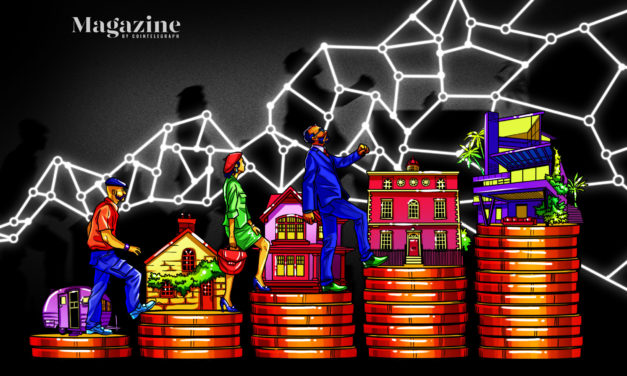
The explosive combination of blockchain and physical assets is making a real difference in how young people can access traditionally illiquid, expensive and slow-moving physical assets such as property. Formerly a once or twice in a lifetime purchase for most people, this lucrative investment opportunity is now being democratized so everyone can share in the wealth.This is important because many Millennials and members of Gen Z are effectively locked out of the property marketplace. According to The Intelligence Lab’s October 2021 report, global house prices are rising at the fastest rate since the first quarter of 2005. The pandemic fiscal stimulus-induced housing boom continues with prices rising by 9.2% on average across 55 countries and territories in 2020 to 2021 fiscal year.Harry Horsfall, almost young enough to be a member of Gen Z and founder of Zebu Digital, is no stranger to crypto. In 2103, he bought his first Bitcoin and has not looked back since. His team has grown to 70 young crypto fans globally and he runs digital marketing programs for Web3 projects. However, he says that it’s only via crypto that he has any shot of ever buying an apartment.“With current UK prices comparative to salary and mortgage multipliers there is no way I could afford a down payment on an apartment and save for a deposit while living in London, let alone get a big enough mortgage for my own place,” says Horsfal.“However, with an ability to use staking and yield farming through crypto, I am hopeful I can look at purchasing something modest — hopefully in Lisbon.”But, banking on getting rich enough via crypto to buy a place is not going to be achievable for an entire generation. However, blockchain is also providing innovative new solutions for the majority by disrupting the property market through tokenization. Instead of saving up an enormous deposit to get a crippling mortgage, you can now buy a fraction of a property at a time via tokens and build up your stake slowly while benefiting from rising house prices.Can tokens help you get on the property ladder?Building wealth, brick by brickCointelegraph caught up with Kevin Murcko, CEO of CoinMetro, who has been working in the space for a number of years. He launched tokenized property investments pre-COVID and has seen an initially incredulous community begin to gain both an understanding and appetite for digital assets.“Tokenization is just what Gen Z was waiting for — even if they didn’t know it. Currently, access to traditional property investment requires a high wealth threshold, much higher than for previous generations,” he says.“With tokenization,people can now buy a fraction of a penthouse in Manhattan valued at say $30 million and still earn the same percentage return on their much smaller investment. And, when I say smaller it is technically and financially feasible to offer entry level units around the $500 mark.”He adds: “Crypto is about access.”While it’s possible to offer such services without blockchain — Australia’s BrickX is a good example — tokens can make the process easier, more manageable and transparent.Holding the token without using the property, as you might with a traditional timeshare option, means there are no tax implications until the time of the sale.But, taking the leap into new and relatively untested property tokenization is a big call, and even crypto fans are wary.Ashton Barger, Gen Z and head organizer of the U.K. conference DeFi Live, has been into crypto since 2017. He’s not sure he even wants to buy a house just yet due to the expense and while he’s interested in the concept of tokenization, he thinks it’s a bit early.“Regarding the concept of tokenization, I haven’t invested in any of it,” he says. “It’s just not a space I’m as comfortable with investing in yet and I’m just not sure where to start. I will likely find a way to get involved once I have the resources and means to do so.”This is the sort of house the vast majority of Gen Y investors can’t afford.Developing marketOn the other side of the equation, tokenization offers developers a path to raising funds, especially for sub-$50 million developments.“Those developments are not attractive to traditional finance brokers, they don’t make enough money in commissions and it’s ironically harder to raise money for more modest projects. So, not only investors like this approach but so do developers, especially new entrants to the market without a proven track record,” Murcko explains.“You no longer need to find one investor that passionately believes in a project and is willing to hand over $50 million, you can find thousands of investors willing to pledge lesser amounts.”Distribution costs are normally very high in TradFi, but if the funds are raised on specialized platforms then the costs are considerably lowered, the processes are streamlined and much of the cumbersome paperwork is ditched.As an added benefit, Murcko reckons that the rise of tokenization will also force TradFi to become more agile.A step toward an entire propertyMurcko also reckons that the mortgage marketplace will also evolve in this direction, providing access to loans for those currently denied them by big banks.Can crypto get you closer to your property dreams?“So, soon, you have a crowdfunded mortgage platform directly competing with the monopoly banks. A candidate might not reach the ‘bar’ set under traditional finance criteria, but retail funders have different criteria and can be swayed by emotion and other factors. And, that is not a bad thing — helping a single mom raise a mortgage to buy a house otherwise outside her scope will probably result in the most conscientious of re-payers.”“It’s the same with entrepreneurs looking to raise capital. TradFi might reject them out of hand without a proven track record, but a crowd might look at the passion and vision of the entrepreneur and decide to invest,” he says.One such entrepreneur to combine his knowledge of property and blockchain is U.K. Bricktrade founder and CEO Gus Kang. Kang has more than 20 years of experience in high-end property in both London and Hong Kong. He established a company called Waterfronts, based in the Docklands in London to manage property from there all the way down to Chelsea, which also has an office in Hong Kong.He was struck by the possibility of using blockchain to streamline property purchasing bottlenecks.“Even buying a single property is a laborious process and can take up to six months. These delays seemed so last century and reinventing property investment became my passion.”Kang is in the process of launching what he calls the U.K.’s first construction financial platform accepting both fiat and crypto where the minimum investment is only $500 and the actual transaction can be done in a minute. It basically uses blockchain coordination as a way of crowdfunding a development, then a one-stop shop to sell the apartments in the development and rent them out.“We have put a lot of security into all levels of this process to assure investors that the risks are minimized at all times. We are a very experienced team and have been working on this since 2018. 80% of the platform is now built and we are just waiting to complete the remaining 20% under the advice and guidance of the FCA and U.K. regulations,” says Kang.Token of tokensLearning from other blockchain platforms, BrickTrade will have its own token which will allow token holders to get early access to offers.“This will be important, as from our research, we see these deals get funded up to a tune of a million pounds in minutes. There is an appetite in the marketplace for secure asset-backed investments.”Kang intends to involve the community in all aspects of the deal. In addition to accessing all the formational data, there are plans to have live camera feeds on each building site with regular webinars and updates from the developers.“The token holders can ask questions directly from the developer team.”Once the project is funded, they switch from fundraising to sales — again in fractional amounts and also giving the BrickTrade community first dibs.“So, the developer comes to us to get funding in phase one but in phase two we’re now helping him sell the units while reducing costs of funds and cost of sales on both sides. The fractional owners can then decide if they want to sell the units once complete or if they wish to rent them.”This is phase three which amalgamates all of Kang’s property — this time in property management.Buying a property is a big life decision, but there are now some innovative alternatives.“We can find the tenant, get all the certificates required and make sure the legal paperwork is in place along with insurance. We do this anyway for our other properties,” he says.“In fact, the beauty of this system is that a property could live in the ecosystem forever — a property that we helped build and maintain. It is, by now, a known quantity.”Using blockchain, smart contracts and tokens have been the key to the streamlining of the process. In addition, having a fully closed proven development system from funding to selling will enable BrickTrade to get bigger discounts from developers.“If we had tried this ten or even five years it would not have been possible. But, now the timing is perfect with the demand in the market for asset backed investments.”Other markets up and runningThe proptech market is finally here can be witnessed by other projects around the globe. One such project, launched and live, is AqarChain based in the UAE. Created in 2018 to develop real-world use cases in emerging tech, AgarChain digitizes real estate on its own platform and claims to be the world’s first decentralized real estate market.On its hybrid tokenization platform, real estate assets are first turned into an NFT holding the title deed in the metadata and then the NFT is fractionalized. Property ownership is authenticated through the NFT.Agarchain CEO Waqas Nakhwa says the beta platform launched in January and the NFT Assets marketplace is due to come this month followed by the Metaverse land.“Aqarchain in Q1 will also be exploring listing properties on its tokenization platform outside of UAE. A full-scale Aqarchain platform is expected to be available in Q3 of 2022. The full-scale platform will have the Metaverse and P2E land exploration game as its extended features,” he says.Ownership of the NFT tokens will also confer governance voting rights, prorated returns on the property and any capital appreciation or depreciation of the value of each property. In addition, the owners of the project predict an active secondary market.In addition, Propy, an NFT focused real-estate company, is applying innovative blockchain technology to real-world assets. By working with new protocols for real estate transactions they are providing an extra layer of trust and removing stress for home buyers. As part of their expansion, they have announced the first U.S. real estate NFT with an auction of a Florida-based home later this week. After a successful sale, the property becomes a DeFi asset that can be borrowed against.DIY property tokenizationAt the other end of the scale from the grand plans hatched in the skyscrapers of Dubai, there are more DIY efforts using tokens to represent property.Aaron Cohen, 23 has been involved in the crypto market since 2016 and is a founder of @PhysicallyBacked. He had previously purchased a land plot about an hour out of New York and he decided to fractionalize the entire plot into multiple one-square-foot assets.“I am not hiding anything — this is utterly transparent — but I really wanted to add real value to NFTs,” he says.At the time of the interview in late January, Cohen had just listed four NFTs, each representing a one square foot plot for $200 and within an hour and two of them had sold. In fact, the bright purchaser of one of them had it directly relisted on OpenSea at a new price of 1 ETH.Physically backed tokens for sale.“Good luck to them,” says Cohen. “Ownership of each NFT allows the holder ownership in the land now and also rights in the future in case of development. But, today, it‘s sentimental NFT ownership. After all, who wouldn’t want to own a plot of land just outside New York?”Current plans for how to develop the concept in the future include planting trees and creating a carbon sinkhole. Cohen points to the scarcity of his NFTs as they are directly linked to actual land and not a digital space.Still, it’s a nice thought that you can get on the property ladder in New York for just $200 even if it’s only big enough for a bug hotel.Disclaimer: Cointelegraph Magazine does not endorse property tokenization services or recommend investing in property via new platforms. It’s super interesting of course, but new and fast-evolving investment tech is high risk.

Čítaj viac

Astrology charts beat technical analysis: Maren Altman is a star

Are future prices written in the stars? Meet Maren Altman, presciently named for cryptocurrency, who combines astrology and day trading crypto into a winning blend.In 1973, Princeton University professor Burton Malkiel published his book A Random Walk Down Wall Street, in which he famously states that a “blindfolded monkey throwing darts at a newspaper’s financial pages could select a portfolio that would do just as well as one carefully selected by experts.”Fast forward to 2013, and Rob Arnott, CEO of Research Affiliates, conducted research mimicking monkeys using AI and actually discovered the monkeys had done a much better job than both the experts and the stock market. Closer examination proved the success was a result of the random selection of companies by the “monkey approach,” optimizing their success. However, it is a sobering thought that not only machines but possibly primates can outperform humans in stock picking.It’s a small step, perhaps, to look at the potential of astrology to determine the future price of Bitcoin. Unlike a  stock, whose performance is dictated by both the business performance of a company and the sector in which it operates, technical analysts’ predictions for Bitcoin price movements depend on reviewing charts and patterns — similar to that performed by astrologists.Maren Altman reads the charts and predicts the future of crypto.In the gutter, looking at the starsSo, how do you predict the price of Bitcoin with astrology? Enter Maren Altman, who calls herself “your personal poet to the stars, especially on TikTok,” and has made a name for herself over the last two years by using astrology to predict price — but not without attracting some controversy.“I was always the weird girl who asked people about their star signs. In college, I used to earn pocket money by doing people’s charts at parties. I have always been fascinated by astrology.”It was a natural fit for Altman to run Bitcoin through the charts, using the genesis block as the birth date — after all, anything with a birth date can be plugged into the astrology charts. Altman bought some Bitcoin back in 2017 but had largely forgotten about it until she became interested again in March 2020 when she was studying philosophy at NYU, along with the rest of the student population — nothing like a good pandemic and soaring price to grab interest.“I grew up with astrology where patterns and cycles are tracked. I was also familiar with financial astrology, so it just made sense to apply it to cryptocurrency,” says Altman.That’s a big callOne of her first notable calls was in January 2021, where she observed that the new moon in Capricorn, on Jan. 13, looked big for Bitcoin. She went on to predict a dip followed by a bull run. Her call was prescient, with Bitcoin continuing to double in price before April. To counter that, she predicted all-time highs in May, with largely unremarkable success, and Bitcoin floundering instead in its first notable dip of 2021.Becoming a day trader proved profitable for Altman, but it was not without its stresses.“It was not enough to call the price; I had to be able to execute,” she says. “And, some days, I made mistakes and lost money, but it was not the fault of the charts but my errors.”She sees astrology as a giant mirror where certain signifiers of planetary alignments represent themes such as world growth, or even world aggression or peace. By reading those patterns and overplaying them on what has already happened, she can trace future movements or, in the case of cryptocurrency, prices.Maren offers fans astrology and silliness.Altman acknowledges that it can be hard to read the charts — there is a system of patterns but also multiple cycles that can result in misreading. Having said that, she is still ahead of the game.“Either way, I am 100% transparent with my trades. I share everything,” she says.She began trading and posting on social media in earnest in the summer of 2020, and today, she has more than a million followers on TikTok and more than 2 million combined on all her socials.“It just blew up over the summer of 2020,” Altman explains.When asked why she gained such traction, Altman shrugs her shoulders.“I am a bit of a character. I’m young, I’m a woman and I wear mostly red. But, I am also serious, I don’t dumb myself down and I make my living though crypto. I guess it just blew up in a perfect storm of weirdness.”Did she predict Jan. 6, or did she just read the newspapers?It might also be down to her humor and calling both the Biden presidential win and the Jan. 6, 2021 uprising, although political majors might have achieved similar success through reading the papers.She also picked up a number of high-profile features in tier-one publications such as The Washington Post, Reuters and The New Yorker — not magazines that frequently publicize highly improbable predictions.Scrolling through her popular TikToks at one point when talking about flipping NFTs, she explains that she put a down payment on an apartment in Dubai by flipping one NFT. It’s pretty inspirational.Mostly, though, her income is through her trading, and she is reluctant to do much monetization of her socials.Maren, feeling a little bearish. Source: Twitter“I’ve been hesitant to partner with paid sponsors because everyone in crypto hates people that monetize their socials. It’s just not done,” she explains.She has written several articles for crypto traders and for market analyst Mati Greenspan on his Quantum Economics platform, but she is not directly employed by him.In other interviews, she points to her Astrology Academy, where she offers astrology training to paying clients. There are about 150 paying clients. She says that she has 1,000 people in her membership community paying between $7 and $50 a month for her teachings.Charting a course through the stormAt this point, I ask if she has had much pushback. Yes, she has, to the point of having to flee the country because of death threats.“New York was no longer safe for me, and so I went to friends in Dubai,” she says.Altman is back in New York when we speak, but she references the trolling campaign spearheaded by a 2021 article in Rolling Stone where she was called a white supremacist, a racist, homophobic and transphobic, among other things. Worryingly, given her following, it accused her of plagiarism.Altman was criticized by Rolling Stone.There is a lot to unpack in the series of tweets and articles written around this time. BIPOC astrologers in the same field, such as AstroDim, said that Altman had, at first, dissed their commentary that President Biden would die in office but then reposted similar predictions later on.In other social media flareups, Altman, a vegan, has used inflammatory images and texts in support of her dietary choices. Again, it has caused some backlash.the more importance you have to say, the more others will misrepresent you & take you out of context.the key is to remember that what you have to say is more important than shutting up.— MAREN (@marenaltman) January 7, 2022The BIPOC astrologers in the same article also maintained that there is a general bias against BIPOC people across social media platforms, targeting TikTok in particular.The biggest complaint made against Altman by the BIPOC astrologers in that 2021 Rolling Stone article is that when Altman talks about the same topics as they do, she gets more views. That might say more about America than astrology.Altman apologized in a number of videos about her comments and videos on gender fluidity, trans people and animal/meat eaters before going offline during the Mercury retrograde when she went to Dubai.According to Altman, she was not trolled by crypto heads but rather “spiritual crazies” who invented a lot of their claims.She certainly does attract a lot of attention — good and bad — and there is even a Twitter account presenting an archive of her more standout tweets where she claims, among other things, that artificial insemination for dairy cows is a form of sexual assault.Promoting disordered eating as well as an ongoing moral superiority complex pic.twitter.com/BImU7tO5Lf— maren altman tweets (@marenaltmantwe1) February 9, 2021Altman says she went to the police when the threats escalated and now has security.A thread: #astrotwitter 2 nights ago I was shocked to see Maren Altman tweet she has a legal team handling the recent incident involing her and the rest of the astro community, it wasn’t a good look…— Jalin (@C_Jalin) February 12, 2021What we know for certain if you believe in the charts, however, is that she is assured of more success in her future.“Not famous, as that is a very loaded word, but I always knew I would be successful. Funnily enough, my own astrology charts are entirely focused on finance, and it never made sense to me until now.”“In time, I’ll move away from day trading and into angel investing, but I need to build my capital first.”

Čítaj viac

Despite the bad rap, NFTs can be a force for good

Crypto is like a double-edged sword, one good piece of news is followed by ten bad reactions. It’s like being the parent of the hyperactive kid in the kindergarten — he breaks other kids’ toys, bounces off the walls like a demon and the other parents hate him, but you know he’s a sweet, thoughtful and kind soul who will one day find the cure for cancer.And as you stand surveying the debris of his day in kindergarten with the other parents giving you the evil eye and the Montessori teacher sadly shaking her head, you cannot wait for that day to come soon enough.So, in crypto, one step forward is the introduction of nonfungible tokens, or NFTs. Finally, something that everyone — including your non-tech or finance friends — can get their teeth into and understand.I listened to a radio program yesterday where during the weekly film roundup a reviewer spoke about Quentin Tarantino producing NFTs of unused pages of his Pulp Fiction script. Sure, he is being sued by Miramax, but the reviewer positively salivated over the term NFT.“I’m not tech or finance,” she said. ‘But I like talking about NFTs and Tarantino.”So NFTs are mainstream. Noobs still get hung up on the Beeple sale ($69 million at Christie’s in March) much in the same way the OGs regard the eye-watering 2017 Tezos ICO that raised $232 million or BlockOne’s epic twelve-month raise of $4 billion the following year. These are the milestones when the money gets silly and crypto gets onto the mainstream news feeds.But, the backlash has already begun. The amount of energy “wasted” in generating NFTs is a very serious issue currently doing the rounds. If using energy to produce cryptocurrency is seen as wasteful, then expending large amounts of energy to create NFTs of low-resolution cartoon JPGs sounds positively frivolous. A sort of let them eat cake moment in crypto history.This is why it is good to seek out educators who can balance the rhetoric, to counter the inbuilt prejudice or sheer misinformation bandied about like gospel.Once you weigh up the evidence, NFTs can be seen as a force for good.The Plane truthGary Nuttall, an emerging technology consultant with Distyltics, and a recent finalist in the prestigious U.K. CryptoAM Education Awards, is in demand to explain all things crypto. When I spoke with him, he had just hopped off a webinar with bankers. He wears a shirt (to impress the bankers) and a hoodie (to prove his tech credentials), but finds himself answering the same questions again and again.“The Silk Road and money laundering in crypto is still a top question,” he says, as he visibly sighs. “And I point out to them that the most money laundering is executed in the U.S. dollar. We have a way to go.”Nuttall begins by addressing layer-one blockchains and the energy charges.“Talking about layer-one blockchains being energy expensive to mint NFTs misses the point entirely. For example, on the Bitcoin blockchain, a block is produced every ten minutes, while on Ethereum it’s more like every 15 seconds – these blocks are going to be produced regardless of whether or not there are NFTs onboard.”Nuttall compares it to a plane going from London to New York. “The plane is going anyway, where or not every seat is filled.”So what is the carbon footprint of NFTs?The Cambridge Bitcoin Electricity Consumption Index (CBEI), housed in the Judge Business School at the University of Cambridge, UK, has been tracking Bitcoin since 2019. In its most recent findings published in May 2021, the CBEI reported that Bitcoin mining currently consumes 133,68 terawatt hours a year of electricity – consistently rising year each year from when this research began.Similar studies into the carbon footprint of Ethereum produce similar results. Digiconomist estimates a single Ethereum transaction’s carbon footprint at 33.4kg CO2 and each time an NFT is minted or sold, that’s another transaction. These estimates point to a single NFT transaction is likely to have a carbon footprint more than 14 times that of mailing an art print.Both Bitcoin and Etheruem use proof-of-work (PoW) mining, which is associated with significant carbon output. In the Ethereum ecosystem, this is being addressed by layer-two solutions such a Polygon and the forthcoming move to proof-of-stake (PoS) with Eth2, but for now, the NFT marketplaces are still plagued by high gas fees.In May, The Financial Times called Bitcoin a “dirty currency.”“The Bitcoin ecosystem itself accounts for the same amount of energy consumed by the Netherlands,” says Nuttall. “Which is a lot until you consider that it’s only half the energy consumed by TVs left on standby overnight in the U.S. Perspective.”Nuttall has a more unique perspective when it comes to explaining the link between cryptocurrency and energy.“I see it as an alternative way of storing energy consumption. Consider an electricity company operating a hydroelectric dam. When they empty the water, they produce electricity which they sell back to themselves off peak at a low rate to refill the dam but sell onto the grid at a premium rate.“I see the production of cryptocurrency as an alternative means of storing value — it’s just that instead of it being water, it’s in a cryptocurrency.”Nutall also uses the invention of the motor vehicle as a parallel to blockchains.“Early cars were energy inefficient — it takes time to improve and, too, with proof-of-work — that is terribly inefficient. But innovations are coming, proof-of-stake is much more computationally efficient and low on energy consumption. Innovation is key here and it is coming.”Nutall has big dreams for NFTs helping that innovation and reduce energy costs. As he points out, distributed ledger projects are all about traceability, provenance and transparency – but it’s terribly manual, as everything has to be written to the blockchain.“Whereas NFTs are a programmable layer on top of blockchains. They come with a built-in digital representation of ownership, bragging rights if you will, but we can also program in things like fees for the originator.“It’s going to totally disrupt industries where there are licensing rights such as music or gaming. Right now, we are at NFT 1.0 but we are rapidly moving to 2.0 or even 3.0 where NFTs may be more active, used as locks or access points to underlying assets. We are just at the tip of the iceberg right now.”But even at this early stage, with most NFTs stored on Proof of Work chains, there are already plenty of projects out there looking to tap into this new technology to deliver benefits for humanity.Bricx Martillo Dumas’s winning entry.Climate changeDigitalArt4Climate was launched by the United Nations as part of the Year of Creative Economy for Sustainable Development. DigitalArt4Climate is a multistakeholder partnership initiative that turns art into digital assets (NFTs) and is supported by UN-Habitat, and IAAI-Clocha with technology partner Unique.Network from the PolkaDot ecosystem.In this project, young people, climate challenges and technology were all brought together to raise awareness of the issues. Storing NFTs on a carbon-neutral network called Unique Network was also a key aspect of the project.In its FAQ, DigitalArt4Climate says it sees “the potential of the technology to not only disrupt existing inefficient supply chains, but also the ability to transform how disparate communities communicate and trust each other through permissionless distributed ledger technology. ”A related exhibition “Humanity challenged by Climate Change” was exhibited in Glasgow at COP26, with digital artist, Bricx Martillo Dumas from the Philippines winning the art competition. Dumas said, “This competition may come to an end, but our fight for climate justice is far from over.”Religious artifactsReligious artifacts from the ancient Portugal’s Santa Casa da Misericórdia de Lisboa (SCML) museum were dropped on the Artentik marketplace on Dec. 1, based on Polygon. These NFTs are based on ancient religious paintings and relics from saints. The proceeds will be used to support Portugal’s largest charitable organization, the SCML, as it bridges the gap between the very ancient and the most modern.This project claims to be the first religious NFT collection.SCML is the keeper of the Museum and Church of São Roque in Lisbon and houses one of the most important religious collections in Catholic Europe.“In Lisbon, SCML enjoys a warm relationship with residents and visitors to the museum and church and we see a way of extending that relationship globally and to new generations through NFTs,” says Edmundo Martinho, President of SCML.Is this the ideal Christmas present for faithful moms and dads?Pope Paul III receives St Francis Xavier in a painting from the SCML collection.Music and tree plantingYoshidrops was founded by EOS legend Michael Blu, or MBlu, as he is better known. MBlu was previously a precious metal broker before he discovered cryptocurrencies and is particularly bullish on EOS. He made serious money trading cryptocurrencies but also turned his passion into philanthropy. He and his wife adopted a child from Haiti and, from seeing the devastation of the country, began fundraising to build schools through his Uplift Nation (which subsequently morphed into UpliftArt) platform.First #nft music video on #blockchain??? imagine the possibilities… Great article @kansai_krypto ?❤️? $wax @WAX_io @pinknetworkx @bytemaster7 @block_one_ @WilliamEQuigley $eos #EOSIO https://t.co/Aj4l0ipfKN— mBlu (@mBluCrypto) August 2, 2020He was an early convert to NFTs and created what he says is the world’s first full length NFT music video of his band called My Bitcoin Bull V. Subsequently, he launched YoshiDrops with a musical collaborator, Yoshi, which pairs musicians and artists together in drops which are bundled in a monthly subscription model. He is supporting new and established artists on this platform which has a built-in philanthropic aspect again.Yoshidrops dropped one million Yoshi NFT coins for free to random Wax wallet holders, and MBlu tells Cointelegraph that they have already raised $60,000 on the secondary marketplace.“100% of that income is going to CarbonFund.org, to offset blockchain-generated carbon. It’s taken a while, but we are building a community and getting there.”[embedded content]NGOs and NFTsThe AIBC conference was held again on the island of Malta in November and during that popular event a new ethical funding platform, Orica, was launched. Branded as a platform for digital creatives and social impact projects, its mission is to accelerate wealth equality through digital assets.The launch project was for an NGO to help build a school in Uganda using NFTs and, in this case, “Blockchain Island” dollars from Malta were funding education for Ssese Island children in Lake Victoria.Bbanga Project NGO collaborated on an NFT to help build a school on the island of Bugala.The NGO Bbanga Project collaborated with digital artist Mellowmann to release a collection of Uganda-inspired NFTs. These were “approved” by the Ssese Islands school children before being auctioned this week by Orica. Proceeds of the sales will be used to finish building a school for the children on their remote island of Bugala.“The Ssese archipelago has eighty-four islands, but only fourteen have access to a school. We’d already built the main school hall on Bugala but then our funding dried up,” explains Bbanga Project founder Sani Hayatbakhsh.Blockchain operations lead Danial Zey said two days after the launch that “It looks like we will be able to reach the goal we set for the NGO we are working with. I think it is also thanks to amazing publications such as Cointelegraph that helped us share the news about the school in Uganda.”Gaming and NFTsStephen Cutter is the founder and CEO of Wuji Games which launched Earth Defender at COP26. His passion for saving the Earth has led him over the past ten years to create a project which now combines blockchain, NFTs, Natural Capital Accounting Principles, the Metaverse and tree planting.There are also elements of staking, ReFi, rewards, Easter Eggs and links with GiveNation and links with tree planting organizations Tree Sisters and the Eden Project.“Ten years ago, I started watching nature documentaries with my children and I was hooked. Since then, I have dedicated myself to working with the earth. I believe that if you take care of your home, it will take care of us.”Cutter uses the NFTs to provide a real-life twin tree to plant with his sustainable tree planting partners.At Wujigames you can play games, plant trees and earn NFTs.The project also aims to help protect wildlife through combining filmmakers, digital artists and technology.Cryptograph launched five official NFTs recently week from renowned filmmaker Kristian Schmidt and Pixar artist Andy Harkness. “Into The Wild,” features five unique animal representations — Cheetah Reflection, Annabelle and Lion, Miyavi & Eagle, Whale Shark Depth and Joiride. The proceeds and that of the secondary market will benefit WildAid — an organization on a mission to protect wildlife from illegal trade and other imminent threats.In a neat tie-in with real-world rewards, with the purchase of each Cryptograph, the token holder gains access to an exclusive photoshoot with Kristian, as well as a 30-minute photograph masterclass.Miyavi And Eagle by Kristian Schmidt and Andy Harkness.Serial blockchain and charity entrepreneur Duncan Murray has recently launched Aniseed, claiming to be the world’s first charity NFT marketplace where a percentage of every NFT sold goes directly to charitable projects.Currently, the charities associated with the platform are concentrated on the environment or emergency efforts. If the NGO or charity does not have its own artist, then Murray favors finding geo-local artists through a site such as Anytask.com which is run by Electroneum and pays its sellers in ETN.“Right now, the NFTs tend to be simple JPGs or 3D images but in phase two we intend linking the NFT to an actual map — if planting trees — or to allow the owner to plant their tree virtually in a Metaverse.”Aniseed is a carbon-negative platform with more than 200 metric tons of carbon offsets to its name. There are also plans to release a token, code-named Acre, which will be backed by a real-world acre of rainforest through one of the partners, Rainforest Trust.Finally, here at Cointelegraph, we take our commitment to climate change and “NFTs for Good” very seriously. Editor in Chief Kristina Lucrezia Cornèr, who is based in Italy, attended COP 26 and spoke about the real impact that the crypto community could have on environmental initiatives.“Decentralization is an alternative to “campanilism,” or as it’s known in English, parochialism. This is a local small mindset versus a global vision of a decentralized world,” she said.

Čítaj viac

Získaj BONUS 8 € v Bitcoinoch

nakup bitcoin z karty

Registrácia Binance

Burza Binance

Aktuálne kurzy