
Autor Cointelegraph By Jesse Coghlan

Bipartisan bill to give CFTC authority over exchanges and stablecoins

A bipartisan group of lawmakers in D.C. introduced an updated bill on April 28 to regulate cryptocurrency developers, dealers, exchanges, and stablecoin providers, bringing them under the regulatory control of the United States Commodity Futures Trading Commission (CFTC).The Digital Commodity Exchange Act of 2022 (DCEA) was re-introduced to Congress by Republican Representatives Glenn Thompson and Tom Emmer with support from Democrat co-sponsors Darren Soto and Ro Khanna.The updated version includes a section covering stablecoin providers, who can register as a “fixed-value digital commodity operator.” These operators would be obligated to share how the stablecoin operates, retaining records for the regulator along with providing information on the assets backing the “fixed-value digital commodity” and how they’re secured.As per the last bill, the DCEA would authorize the CFTC to register and regulate cryptocurrency exchanges that offer spot trading of crypto commodities — those that allow traders to buy cryptocurrencies at the current price.The DCEA would not affect the Securities and Exchange Commission’s (SEC) regulatory power over digital asset securities offerings, but instead classify cryptocurrencies that are not securities as digital commodities to be brought under regulation by the CFTC.Crypto exchanges would also be subject to the same rules as other commodity providers for listing new cryptocurrencies on their platforms. Exchanges must demonstrate the crypto is “not readily susceptible to manipulation” through analyzing its mechanics such as its “purpose, functionality, governance structure, distribution, and participation.”Developers of cryptocurrencies could also voluntarily register with the CFTC and make disclosures required for public trading and listing on an exchange. A summary of the act says registration would ensure accuracy of records and public information about the crypto is standardized and could help facilitate public exchange listings.Related: Self-regulatory organizations growing alongside new US crypto regulationRegulatory uncertainty has afflicted cryptocurrency businesses operating in the U.S.,and in a release the co-sponsors of the bill said it would help with easing the prevailing uncertainty of the current rules, with Soto saying:”Regulatory clarity is critical for digital commodity markets to promote innovation and consumer protection. Innovators are spending up to fifty percent of start-up costs on legal fees because of the current regulatory ambiguity between what is a security and what is a commodity.”Industry advocacy body the Crypto Council for Innovation called the bill “a step forward” as it creates a “new atmosphere of opportunity without stifling innovation” adding:“This is one of a few bills introduced that the industry should watch closely.”In February, CFTC chair Rostin Behnam told lawmakers during a Senate hearing on digital assets that the Commission had a lack of authority to enforce the crypto space due to differing regulations.Behnam called the crypto space “in essence…an unregulated market” and said more regulatory authority for the CFTC “will only allow us to see what’s going on underneath the hood.”The bill will need to move forward to a hearing by the Agriculture Committee, if passed by the House, it will be then taken up by the Senate Agriculture Committee for discussion.

Čítaj viac

New York Mayor urges state to abandon ‘stifling' BitLicense scheme

New York City Mayor Eric Adams has hit out at his states’ BitLicensing regime, claiming that it stifles innovation and economic growth.In a closing keynote interview at the Crypto and Digital Assets Summit in London on April 27, Adams suggested his state legislature counterparts in Albany “listen to those who are in the industry” adding: “It’s about thinking not only outside the box, but on this one, we may have to destroy the box.”Adams is a crypto advocate who ran for mayor planning to turn New York City into the “center of the cryptocurrency industry” and took his first three paychecks in Bitcoin (BTC). In the interview he said cryptocurrencies and blockchain technology are the “next chapters in the future” and the opportunity shouldn’t be squandered.“New York State is the only state to require a license for crypto companies. That’s a high barrier, and it just makes us less competitive. We have to continue to be competitive.”Since 2015, any “virtual currency business” wishing to offer services within New York requires a BitLicense to do so. According to the states’ Department of Financial Services (DFS) the license ensures that its residents have a “well-regulated way to access the virtual currency marketplace” and that the state remains at the “center of technological innovation and forward-looking regulation”.Many crypto firms moved from New York when the license was introduced and recent calls to remove regulatory barriers and ease restrictions often focus on the license, which costs $5,000 in application fees along with unclear capital requirements set by the DFS.Related: What can Eric Adams do? The limits of turning New York City into a crypto hubIn the state capital, lawmakers take an altogether stricter regulatory approach to the cryptocurrency industry than Adams would. On Tuesday the New York State Assembly passed a bill to the Senate which would place a two-year ban all on all new proof-of-work (PoW) cryptocurrency mining facilities using carbon energy. On April 9 Governor Kathy Hochul signed into law a requirement that BitLicensed firms must pay assessment fees to cover the cost of regulatory operating expenses incurred by the DFS, placing possibly tens of thousands of dollars a year extra in fees on firms.“It is imperative that we work with the state lawmakers and regulators,” Adams said “I’m really happy to see Governor Hochul is leaning into this industry as we examine what are the bureaucratic issues that we need to look at.”

Čítaj viac

New York State Assembly passes ban on new BTC mines that don't use green power

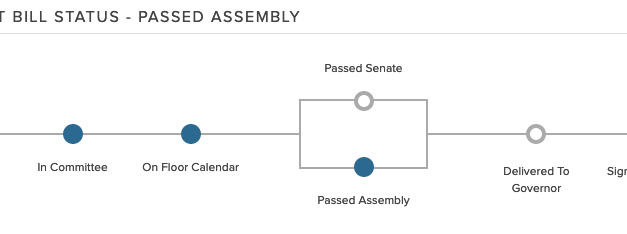
The New York State Assembly passed a bill late on Tuesday April 26 that would place a two-year ban on all new proof-of-work (PoW) cryptocurrency mining facilities in the state that use a carbon based fuel to power their operations.The bill sponsored by Anna Kelles would not only impose a two-year hold on approval of any new Bitcoin mines, the proposed moratorium would also prevent the renewal of permits issued to existing PoW cryptocurrency miners using carbon sourced energy if they seek to increase the amount of electricity consumed.Thrilled that my bill with Senate champion @kevinparkernyc A7389C/S6486D just passed in the Assembly as part of the #EarthDay Package! Thank you to all of cosponsors and advocates who helped get this bill to the floor for a vote! pic.twitter.com/NhVnMo3FJE— Anna Kelles (@annakelles) April 27, 2022The bill gathered the support it needed to pass, with 95 in favor, 52 against and will now be carried by Senator Kevin Parker for a vote in the Senate. If successful it will then be delivered to Governor Kathy Hochul who can veto the bill or sign it into law.Current status of Bill A7389C as of April 27. Source.The Department of Environmental Conservation (DEC) would be tasked by the bill with preparing a “generic environmental impact statement” to number, locate and asses the energy consumption and greenhouse gas emissions of PoW miners and their impact on the public health.Related: US lawmakers sound alarm to EPA over environment concerns of crypto miningCryptocurrency industry advocacy group the Blockchain Association had previously called on “pro-tech, pro-innovation, pro-crypto” residents of New York to mount an opposition to the bill, which they claim resulted in thousands of messages to legislators.The association said that around three hours of debate took place over the bill, demonstrating what they believe is a “greater opposition to the mining ban than proponents believed.” In a tweet today the team said it will direct its energy to the New York Senate to defeat what it calls the “anti-technology bill”.Proposed bans on proof-of-work cryptocurrencies on environmental grounds are becoming more common. A similar proposal called the Markets in Crypto Assets (MiCA) bill was narrowly defeated in the European Parliament in late March, with legislators there even considering a ban on Bitcoin trading to enforce the proposed ban on mining.

Čítaj viac

Failure to launch: Australia’s first 3 crypto ETFs all miss launch day

The launch of Australia’s first three Bitcoin (BTC) and Ethereum (ETH) exchange-traded funds (ETF) scheduled for today, has been delayed as a result of further “checks” needing to be completed.The exchange listing the Bitcoin Spot ETF from Cosmos Asset Management, Cboe Australia, released a statement late Tuesday stating that “standard checks prior to the commencement of trading are still being completed” and a “further update will be provided in the coming days.”Cboe issued the same notice regarding two spot ETFs issued by 21Shares also scheduled for launch today, a Bitcoin ETF and an Ethereum ETF.It’s unclear why the products are delayed with the Australian Financial Review reporting that a “service provider downstream” — an entity such as a prime broker or major institution with the power to delay listings until it’s ready to support the trade of the products — could be to blame for the hold up.The underlying asset for the Cosmos ETF is a direct investment into the Canadian Purpose Bitcoin ETF, North America’s first Bitcoin exchange-traded fund. The funds issued by 21Shares are backed by Bitcoin and Ethereum reserves held in cold storage by Coinbase.Toby Chapple, Head of Trading at Australian wealth management firm Zerocap, told Cointelegraph the delay was “not a big deal.” Referring to the Cosmos Bitcoin ETF he added:“You would think an ETF which invests in another ETF would be easier to handle, but the broker will just be ensuring they have all their ducks lined up before they go live.”Cici Lu, Managing Partner at crypto asset investment and wealth management firm Apollo Capital also said that it seemed like just a small bump in a long road for the funds:“While this isn’t an ideal start for the ETF’s, it will be looked at as only a minor speed bump in an otherwise successful result for the crypto asset industry in Australia.”He added: “The traditional finance sector is trying to get its head around how to adapt their businesses to a new asset class, it is a journey both crypto and TradFi are on together. ”Cointelegraph contacted Cboe Australia, Cosmos and 21Shares for more information regarding the delays but did not immediately hear back.Cosmos Asset Management’s “Cosmos Purpose Bitcoin Access ETF” received approval from the Australian Securities Exchange (ASX) on April 19 to begin trading following a seven-day notice period and was expected to attract around $1 billion after its launch.The two ETFs issued by 21Shares received approval around the same time, aligning all three funds with the same launch date.Related: Australian prudential regulator releases roadmap for cryptocurrency policy21Shares isn’t a stranger to hold ups with its crypto ETF products Earlier in April the United Stated Securities and Exchange Commission (SEC) rejected its Bitcoin ETF which was to list on the US Cboe BZX Exchange saying the exchange didn’t meet requirements for listing a financial product.

Čítaj viac

Floki Inu resumes controversial ad blitz in London

Dogecoin rival Floki Inu has begun what it calls an “aggressive” marketing campaign in London, plastering advertisements around the city’s train stations and on its famous red buses.Floki Inu announced the new campaign in an April 23 blog noting that “the people’s cryptocurrency” will start advertising on the side of 100 buses and on 203 posters in the city’s underground train stations starting from Monday April 25.#FLOKI’s new and aggressive London campaign will start tomorrow Monday, April 25.$FLOKI to be featured on:- 100 buses across the streets of London.- 203 strategic placements across London Underground.These ads will be seen tens of millions of times!Get ready for impact! pic.twitter.com/hBanvs8eu2— FLOKI (@RealFlokiInu) April 24, 2022The new campaign for the memecoin comes after a similar marketing blitz late in 2021 which caused a stir with London assembly member Sian Berry, who sought to ban all cryptocurrency advertisements on the city’s rail and bus networks.Floki Inu’s last campaign featured signs which read “Missed Doge? Get Floki.” In November, Berry posted a tweet likening cryptocurrencies to gambling, adding that public services should not advertise “risky” schemes.Like gambling ads, which we have finally got the Mayor to remove, there is no way our public services should be used to advertise these unregulated, risky schemes to Londoners. I asked for a ban in July and I am still pushing.https://t.co/i7EBxfbGrV— Sian Berry (@sianberry) November 14, 2021

The campaign received so much negative attention that the UK’s Advertising and Standards Authority (ASA) intervened, banning the ad in a ruling on March 2 as it “exploited consumers’ fears of missing out, trivialized investment in cryptocurrency and took advantage of consumers’ inexperience.”Related: UK politicians say cryptocurrency is ‘not an investment’However, Sabre, the pseudonymous moniker for Floki Inu’s Director of Marketing emphasized in the announcement that the team has no intentions of standing down despite the regulatory push back:“In a sense this second London campaign is an even bigger win for Floki and the crypto industry as a whole than the first, as our team has fought for the right to advertise our groundbreaking project to the public.””Some wanted us banned here entirely, and the anti-crypto agenda continues to come thick and fast through smear campaigns and misinformation. The Floki Team will always stand our ground no matter what,” they added.  Earlier this year in January, the ASA continued with a raft of bans on crypto firms advertising in the UK. The regulator halted two advertisements from Crypto.com which promoted the ease of purchasing Bitcoin and earning yield rewards as they did not state the risk of the investment.In mid-December 2021, six crypto firms were hit with ad bans by the ASA for “taking advantage of consumers’ inexperience” and also failing to demonstrate the risk of crypto investing.

Čítaj viac

Získaj BONUS 8 € v Bitcoinoch

nakup bitcoin z karty

Registrácia Binance

Burza Binance

Aktuálne kurzy