Autor Cointelegraph By Jesse Coghlan

Twitch co-founder raises $24M for Web3 gaming firm Metatheory

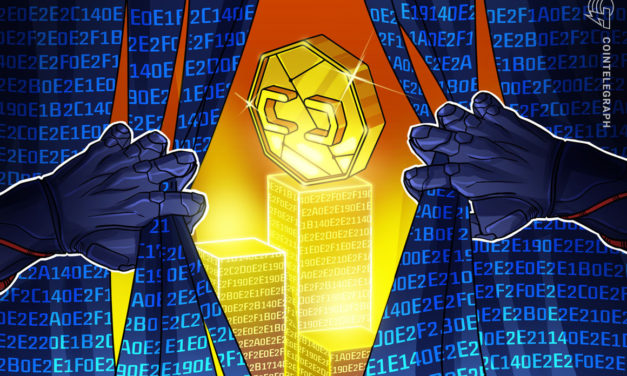
Web3 gaming and entertainment company Metatheory founded by Twitch co-founder Kevin Lin has raised $24 million in a Series A funding round on Monday.The round was led by crypto capital venture firm Andreessen Horowitz (a16z), with participation from Pantera Capital, the venture arm of the FTX cryptocurrency exchange, FTX Ventures, and other venture firms, according to the announcement.Metatheory was launched in November 2021 around one year after Lin left Twitch, where he wrote in a Medium article at the time that he was creating the gaming company and also a blockchain game called DuskBreakers. Lin was quoted in this week’s announcement as saying:“Building immersive digital experiences has always been a passion of mine, and after stepping away from Twitch to explore what’s next in the industry, I truly believe blockchain will open the door to even more possibilities and have a major impact in the gaming, storytelling and community building space.”ICYMI: Today we’re excited to announce a $24M Series A Round in Metatheory, our parent company. A big TY to: @a16z@PanteraCapital@FTX_OfficialBreyer Capital @jimihendrixlive@MeritCircle_IO@Globalcoinrsrch@Sfermion_@daedalus_angels@dragonfly_cap@rechargecapital— DuskBreakers (@DuskBreakers) May 16, 2022DuskBreakers was released in December 2021 with the art designed by the former lead illustrator at Twitch. The Ethereum-based game implemented a “play-to-mint” model for its first 10,000 nonfungible tokens (NFTs). Those looking to grab an NFT have to play an arcade-type game to validate their entry onto a whitelist.The DuskBreakers team plans to release comics and animations to continue its storyline, andditional NFTs and content are in the works at Metatheory with a play-to-earn game set for launch in the fourth quarter of 2022.Related: How blockchain games create entire economies on top of their gameplay: ReportLin is not the only Twitch co-founder with an interest in gaming NFTs. In December 2021 Justin Kan, another co-founder of Twitch, launched the Fractal NFT marketplace which focuses on blockchain gaming tokens saying that “NFTs are the future of gaming.”Blockchain gaming is gaining interest from titans of the traditional gaming industry. Most recently, Square Enix revealed in its earnings report that it will expand NFTs into more of its games in 2022.Microsoft’s CEO said the development of metaverse platforms was a key reason for the $69 billion acquisition of gaming giant Activision Blizzard and Sega is looking to integrate cloud technology NFTs as part of its new Super Game project, which connects its different games to each other.

Čítaj viac

Stablecoin supplies and cash reserves in question amid crypto exodus

Cryptocurrency investors and traders have cashed out $7.7 billion from the stablecoin Tether (USDT) resulting in its market capitalization falling by 7.8% over the past seven days to $76 billion.The amount withdrawn from the top stablecoin is nearly double the $4.1 billion it held in cash reserves at the end of 2021 according to Tether’s latest reserves report from December 2021.To maintain Tether’s peg with the US dollar the company behind the token backs USDT with assets such as cash, bonds, and Treasury bills, the purpose being that each token is backed by at least $1 worth of assets.According to the latest reserves report, the company had a total assets amount of at least $78.6 billion, around $4 billion or 5% of which was cash.However, the firm seems to be able to maintain its cash reserves despite the “bank run” scenario caused by the collapse of the algorithmic stablecoin TerraUSD (UST) which had investors fleeing not only stablecoins but the entire crypto market for fear of collapse.A separate transparency report updated daily shows that 6.36% of Tether’s assets are currently held in cash which would amount to roughly $4.8 billion if Tether’s reserves closely match the USDT market cap. On May 12, market panic caused USDT/USD to trade under $0.99 on major exchanges, causing Tether to issue a statement at the time stating that it will honor all redemptions to $1.https://twitter.com/Tether_to/status/152472463333705728The same day, Tether’s Chief Technology Officer Paolo Ardoino said in a Twitter spaces chat that the majority of the company’s reserves are in U.S. Treasuries and that over the last six months it has reduced its exposure to commercial paper.Related: Untethered: Here’s everything you need to know about TerraUSD, Tether, and other stablecoinsTether has received scrutiny for its secrecy regarding the assets in its reserve and only published its first reserve breakdown in May 2021. The published reports are still vague as to the exact assets the company invests in.​​This obscurity coupled with the recent short-lived de-pegging had some investors rushing to swap their Tether for another popular US dollar stablecoin, USD Coin (USDC) on the notion that USDC was audited and already fully backed by cash and U.S. Treasuries.A blog post on May 13 by Circle’s Chief Financial Officer Jeremy Fox-Geen made in response to the stablecoin fallout reaffirmed that USD Coin was fully backed by cash and U.S. Treasuries for the 50.6 billion USDC in circulation.Data from CoinGecko further shows investors finding a safe harbor in USDC, a 6.3% leap in the USDC market cap took place between May 3 and May 17 representing $3.1 billion of inflows over that time.

Čítaj viac

Goldman Sachs and Barclays invest in UK crypto trading platform Elwood

Banking giants Goldman Sachs and Britain’s Barclays have joined a $70 million Series A funding round for the institutional crypto trading platform Elwood Technologies, founded by billionaire British hedge fund manager Alan Howard.Joining the round was crypto-friendly German bank Commerzbank, crypto investment manager Galaxy Digital, and Dawn Capital as reported by the Financial Times on May 15. The fundraising round valued the company at around $500 million according to the report.Despite the recent fall in crypto markets, Elwood said it’s betting that traditional financial institutions such as hedge funds and banks will still be interested in investing in cryptocurrencies. Elwood’s funding round was already agreed to and in motion before the latest drop in prices which has seen roughly 15% wiped off the total crypto market cap since May 9 according to CoinMarketCap.Elwood Technologies CEO James Stickland said the fundraising was “another validation of the longevity of crypto” brushing off the falling prices from the last few weeks:“We’re getting investment from financial institutions that aren’t expecting to get massive returns in 15 minutes. They’re investing in the infrastructure, I think it’s a reassurance message.”Elwood Technologies provides a crypto portfolio management system with crypto market information and trading infrastructure for institutional investors that features an interface that connects to crypto exchanges, liquidity providers, and custodians.Commenting on the deal Goldman Sachs’ global head of digital assets Mathew McDermott said the investment showed the firm has “continued commitment” to cryptocurrencies, adding:“As institutional demand for cryptocurrency rises, we have been actively broadening our market presence and capabilities to cater for client demand.” The funding from Goldman Sachs marks the bank’s further expansion into crypto assets. The investment bank was the first to offer a loan backed by Bitcoin (BTC) to crypto exchange Coinbase in early May. It has long seen an interest in the space, even referring to digital assets and the Metaverse as “megatrends” in March. Related: Decentralized and centralized finance need to collaborateAnother case of the Wall Street giant cozying to crypto firms saw a meeting between Goldman CEO David Solomon and FTX boss Sam Bankman-Fried which included an offer from Solomon to help FTX with future funding rounds and regulatory compliance.As for Elwood Technologies, it will remain majority-owned by Alan Howard who was the main investor before the Series A round. Howard co-founded the hedge fund Brevan Howard which launched its crypto investment division “BH Digital” in September 2021.

Čítaj viac

SEC's Hester Peirce says new stablecoin regs need to allow room for failure

Commissioner Hester Peirce — also known as the Securities and Exchange Commission’s (SECs) “crypto mom” — has backed a regulatory framework for stablecoins that allows “room for there to be failure.”Speaking at an online panel on May 12 hosted by financial think-tank the Official Monetary and Financial Institutions Forum (OMFIF) Peirce, who has long been an advocate for crypto, was asked to shed light on the actions being taken by U.S. regulatory bodies in regard to cryptocurrency.“One place we might see some movement is around stablecoins,” Peirce answered, “that’s an area that has gotten a lot of attention this week.”“It’s been one area within crypto that’s really had quite a moment and there’s a lot of stablecoin use and therefore people are thinking down the road, if this gets even bigger do we want to have some kind of regulatory framework?”Peirce said she’s urged the SEC to use its regulatory powers to provide exemptions to particular technologies which she says would allow for important experimentation.“We need to allow room for there to be failure because that obviously is part of trying new things and our framework really does allow for that kind of trial and error. I hope that we will use it for that purpose.”The depegging of the algorithmic USD stablecoin TerraUSD (UST) early this week was mentioned by officials in the U.S. Capital with United States Secretary of the Treasury Janet Yellen saying at a Senate hearing on May 10 that a “consistent federal framework” on stablecoins needs to be developed in light of the situation.Two days later on Thursday May 12 Yellen said that stablecoins de-pegging from the US dollar were not a threat to the country’s financial stability as they’re not yet at a scale where a price drop would present a risk. Currently the market capitalization of the top five USD stablecoins is over $154 billion, or around 11% of the $1.36 trillion total cryptocurrency market cap according to figures from CoinGecko.Related: Chairs from the SEC and CFTC talk crypto regulation at ISDA meetingSpeaking further on the regulatory environment for stablecoins Peirce said that it’s important for regulators to remember that the term covers a variety of assets:“You might say ‘stablecoin’ and one stablecoin might look nothing like another stablecoin. I think it’s very important to approach all the conversations in crypto with an understanding that there’s a lot of variation which makes it difficult to craft a regulatory framework.”She added that the regulations “try to cover what exists today” but also “what is going to exist tomorrow… and that’s not easy to do.”

Čítaj viac

How to protect yourself from the recent spate of 'crypto muggings'

There has been a spate of “crypto muggings” in London recently, with thieves threatening crypto holders with violence unless they transfer over their digital currencies held in mobile phone wallets or on crypto exchanges.As detailed by The Guardian UK, crime reports from the City of London police detail how thousands of dollars worth of crypto has been stolen by thugs in person. One victim said their phone had been pick-pocketed while out drinking and they later realized over $12,000 worth of Ethereum (ETH) had been siphoned from their Crypto.com account. The victims believes the thieves witnessed them type in their account pin.Another victim was approached by a group offering to sell him cocaine and after moving to another location to buy the drugs, the person was held against a wall whilst the gang accessed his phone and crypto account using facial verification, transferring over $7,000 worth of Ripple (XRP) to their own wallets.This is an increasingly common variation on what is termed a “$5 wrench attack”.As blockchain transactions are irreversible and most methods of cryptocurrency storage place responsibility for security of the assets with the individual who owns them, Cointelegraph spoke with blockchain security firm BlockSec who shared the following tips on how to protect crypto from a mugging:“Do not deposit a large amount of crypto in a wallet or exchange app. Only leave a small portion in there. You can have a multi-sig wallet and with a policy saying only two signers can move the money in the wallet. By doing so, only a small amount of crypto will be lost during the mugging.”BlockSec also suggested a way to trick thieves if a crypto user is mugged, saying some smart phones can have different logins which can hide certain applications such as Huawei’s “PrivateSpace” feature:“The apps in the ‘PrivateSpace’ are different from the main ones actually used. So if the users are mugged they can enter into the ‘PrivateSpace’ showing that they don’t have any crypto apps installed on their phone, or vice versa, can hide crypto apps in this space.”Samsung phones have a similar feature called a “secure folder” which can be used to hide all your crypto applications behind a PIN or password and the folder itself can also be hidden from the home screen.On Apple iPhones apps can be moved to one page on the home screen and hidden all at once, and there are further options such as removing an individual app from showing on the home screen only to be accessed via search.Cointelegraph also spoke with a pseudonymous Twitter user and independent security researcher known as “CIA Officer” popular for creating and sharing guides and tips on how crypto users can harden security of their assets.You’ve been asking me for a long time and finally I decided to write an ultimative thread on an advanced (and authorial, please note) cryptocurrency storage technology Read carefully, there will be only Spy-level trips — CIA Officer (@officer_cia) April 25, 2022CIA Officer shared an article they wrote in April featuring 13 tips on the principles of storing cryptocurrencies, saying:“I wrote the article because my sense of justice just pushes me forward because maybe the biggest threat to crypto is crypto scams as people just get disappointed and leave forever.”In the article, CIA Officer gives a reminder that mobile wallets like MetaMask are only interfaces and recommends storing all crypto on a cold wallet such as Ledger or Trezor as opposed to keeping it on an exchange or in a mobile wallet.Related: Warning: Smartphone text prediction guesses crypto hodler’s seed phraseA physical storage device will keep all crypto offline and assets can only be moved if someone has access to the wallet along with knowing the PIN and in some cases a password. One can even be created using an old smartphone rather than using a dedicated device.The crypto stored on the cold wallet can be further security hardened and CIA Officer echoes the advice from BlockSec to set up a multi-signature wallet th uses two or even three separate devices to approve a transaction.CIA Officer also shared their rules for crypto OpSec, which is shorthand for “operational security” a process of risk management with the goal of preventing leaks of sensitive information.“You should build your own stone wall of OpSec, so you’ll know perfectly what to do if something happens.”In light of the muggings, such OpSec measures include keeping any crypto investments a total secret. Potential thieves in public settings could overhear a discussion or even witness a person’s crypto holdings, as in the above case where the victim was pickpocketed.“Being suspicious is always a good thing,” CIA Officer writes, “you may try to be hacked through acquaintances, either those pretending to be acquaintances or acquaintances themselves.”

Čítaj viac

Získaj BONUS 8 € v Bitcoinoch

nakup bitcoin z karty

Registrácia Binance

Burza Binance

Aktuálne kurzy