Autor Cointelegraph By Jesse Coghlan

BTC Markets becomes first Australian crypto firm to get a financial services license

Australian-based cryptocurrency exchange BTC Markets has become the first crypto company in the country to gain a financial services license.The license was issued by the country’s financial regulator, the Australian Securities and Investments Commission (ASIC), to BTC Markets’ sister company BTCM Payments. We have an exciting announcement to make: BTC Markets is the first Australian crypto exchange to successfully go through the full AFSL application process via our sister company, BTCM Payments!✅AFSL attained✅ISO Certified✅SOC 2 on the way!#crypto #bitcoin #finance— BTC Markets (@BTCMarkets) June 21, 2022An Australian Financial Services (AFS) license allows the holder to give advice, deal in, and create a market for a financial product. It also permits the provision of custodial or depository services, amongst other perks.While crypto and digital asset companies don’t require an AFS to provide services due to the lack of regulation in the country, BTC Markets says the move allows it to more closely bridge the gap between traditional finance and crypto while offering new products to its customers.It marks the end of an almost two-year wait for the firm for the AFS license, which was registered in August 2020.BTC Markets has certification from the International Organization for Standardization (ISO) for information security management and is certified by the country’s crypto industry body, Blockchain Australia.BTC Markets CEO Catherine Bowler said the license would prepare her exchange business for what she believes is impending regulation and complements its progress in obtaining a System and Organization Controls (SOC) 2 certification.Related: Binance Australia CEO: Regulations will establish higher standards in cryptoBTC Markets has established itself as a key player in the Australian crypto industry with $US4.7 million in daily volume, according to CoinGecko.  In February, the exchange signed a deal with the stock market trading platform SelfWealth to offer SelfWealth users access to trade Bitcoin (BTC), Ethereum (ETH), Ripple (XRP), Chainlink (LINK), and Uniswap (UNI) from June 30.Other exchanges have followed suit. Earlier this month, Australian crypto exchange Swyftx completed a $1.5 billion merger deal with online stock market investing platform Superhero.

Čítaj viac
New video revives debate over Bored Ape Yacht Club's alleged 'racist' imagery

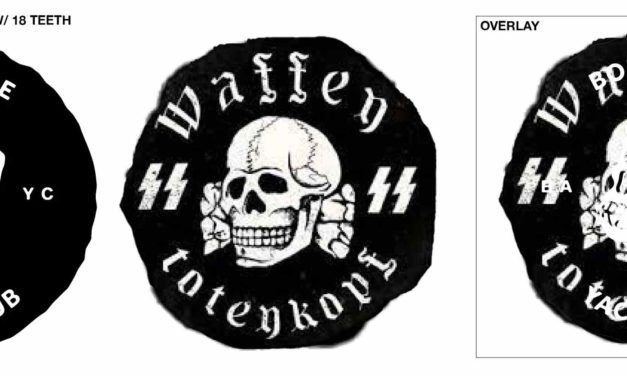
A video released by investigative YouTuber Philip Rusnack, known as ‘Philion,’ has revived the debate over whether Yuga Labs’ flagship Bored Ape Yacht Club (BAYC) non-fungible token (NFT) collection employs racist imagery and white supremacist esotericism.In the hour-long video released June 20 on YouTube, Rusnack laid out his case, claiming that BAYC is “one massive alt-right inside joke” using language, symbols, and memes from the anonymous image board website 4chan.He alleged the NFT images featured racist caricatures of Black and Asian peoples and drew comparisons between the symbology and language used by Yuga Labs and the BAYC with that used by the Nazis.For instance, an example widely used by supporters of the claims draws a comparison between the BAYC logo and the Nazi Totenkopf symbol used by the SS Panzer Division in World War II.BAYC logo (left) alongside the Totenkopf (middle) symbol with an overlay (right) to present the similarities. Source: gordongoner.comAt the end of the video, Rusnack makes a call to action, asking his viewers to pressure BAYC NFT owners to “burn” their token in a process where the NFT is sent to an unusable and unrecoverable wallet address.“I want every celebrity actor, athlete, and influencer to burn their f*cking ape. I want to make such a f*cking shit storm that everyone from Steph Curry to Post Malone to Jimmy Fallon is forced to act.”The claims of racist symbology within the collection have been a hot topic on social media this year but hit the spotlight when artist Ryder Ripps published a compilation of what he claims is evidence of Nazi imagery and antisemitism in early 2022.Ripps bought the domain gordongoner.com, the same pseudonymous moniker adopted by Yuga Labs co-founder Wylie Aronow to host a website that details numerous examples of the esoteric symbolism. The video details information acquired by Rusnack and the research conducted by Ripps.Rusnack says in the video there is a “point at which these similarities are no longer coincidences,” adding:“If I bring up one instance that highlights deliberate Nazi, fascist, or alt-right messaging, you may think to yourself, ‘I see it, but that’s a reach.’ So I ask you: What is your number? At what point do all of these examples become crystal clear in front of your eyes?”Without directly citing the controversy, Yuga Labs responded to some of the claims, tweeting in January that apes were used as many in crypto refer to themselves as such. Likely regarding the crypto-slang term “ape in,” used to denote when someone invests heavily into cryptocurrencies or projects with little prior research.A little a bit about us to start off the new year and what’s coming. 1. What’s the inspiration behind the name Yuga Labs? We’re nerds, and Yuga is the name of a villain in Zelda whose ability is that he can turn himself and others into 2D art. Made sense for an NFT company.— Yuga Labs (@yugalabs) January 3, 2022Addressing the BAYC logo, Yuga Labs said the purpose was to make the “club” look “ramshackle and divey” and on why they chose a skull:“We went with an ape skull to help convey just how bored these apes are – they’re ‘bored to death.’”A senior research fellow at the Anti-Defamation League’s (ADL) Center on Extremism, Mark Pitcavage, often cited as an extremism expert, said in a February interview with Input he saw no correlation between the logo and the Totenkopf and was quoted saying:“The Nazi Totenkopf is one very specific graphic design of a skull and crossbones, and the monkey skull resembles it in no way except insofar as all skulls resemble each other to a certain degree.”Pitcavage did agree, however, that traits and attributes of some NFTs were problematic such as the “hip hop” trait with a gold chain and the “sushi chef headband” being stereotypes of Black culture and a Japanese person, respectively.Related: Binance embarrassed after unveiling swastika-like emoji on Hitler’s birthdayOverall though, Pitcavage and another ADL researcher Carla Hill said the research complied by Ripps doesn’t point to a specific group of extremists.Ripps has faced allegations that his complied research is a publicity tactic to sell his own BAYC derivative NFT collection called “RR/BAYC,” featuring over 6,000 NFTs based on the original collection.Ripps says the collection is a satire and protest aimed to educate those about the BAYC’s alleged extremist ties. However, these allegations don’t present a counter-argument to the claims presented by Ripps in his research.Cointelegraph contacted Rusnack, Ripps, and Yuga Labs for comment but did not hear back before publication.[embedded content]

Čítaj viac

Nifty News: Christie’s NFT expert to lead CryptoPunks, fake heiress launches NFT collection

Noah Davis, the non-fungible token (NFT) specialist at auction house Christie’s, has said he’s leaving the position in July to take up a post as brand lead for the CryptoPunks NFT collection with Yuga Labs.Announcing the move on June 19 in a Twitter thread, Davis looked to quash any anxieties holders had regarding the future of one of the oldest NFT projects, saying he “will not f*ck with the punks.”What does that mean? It means no Punks on lunchboxes or cringe TV shows/shitty movies. It means no arbitrary rushed utility or thoughtless airdrops. It means if you love your Punk(s) because they are what they are (just Punks) then you and I see eye to eye…— Noah (@NonFungibleNoah) June 19, 2022He invited CryptoPunk owners to schedule a talk with him about the project’s future at the NFT NYC event and said the new position wouldn’t take away from his own NFT project.Davis is responsible for the record-breaking auction of Beeple’s “Everydays: The First 5000 Days” NFT, which sold for over $69 million in March 2021.Yuga Labs acquired the intellectual property of the CryptoPunks collection from Larva Labs in March, saying it would turn over full commercial rights to the owners, a promise yet to be realized.But, Yuga Labs co-founder Wylie Aronow aka “Gargamel” addressed the holdup in a series of tweets on June 19, writing it was “too significant to rush” and that new terms “will be rolling out in the next couple of weeks.”With the announcement of Davis’ move and the new terms set to take effect soon, some are alleging insiders had prior knowledge of the information citing the surging sales volume of the collection.Ok so no one’s going to address the obvious insider trading that happened in the last 48 hours?Chart: @punk9059 https://t.co/56s56D5Nw1 pic.twitter.com/beNkWbAc2Y— Chainleft (@ChainLeftist) June 19, 2022

According to OpenSea, 39 sales of the CryptoPunks collection have taken place since the announcement, with 101 sales in total on June 19, up from the only 19 sold the day prior, on June 18.Convicted scammer “reinvents” herself with NFTsConvicted con-artist and fraudster Anna Sorokin, who from 2013 to 2017 pretended to be the wealthy German heiress “Anna Delvey” to defraud acquaintances and business of over $275,000, has started an NFT collection.Titled “Reinventing Anna,” the collection features 2,000 NFTs for 0.1 Ethereum (ETH) each, or about $110. It is marketed as a way for “fans to interact with Anna” and access private “ask-me-anything’s” with Sorokin.Related: NFT trading volume surges amid market and floor price crashThe collection will feature 20 “gold edition cards,” which grant owners the possibility of a one-on-one phone call or in-person visit with the so-called “renowned socialite.”The collection’s name is a play on the “Inventing Anna” Netflix drama miniseries released earlier this year, the subject of which is inspired by Sorokin’s story.“I see this first drop as an opportunity to directly connect with my audience and take charge of the narrative that’s been largely outside of my control,” Sorokin wrote in an Instagram post regarding the collection.It’s unknown how NFT holders will be able to visit her in person, however. Since March 2021, Sorokin has been held by United States Immigration and Customs Enforcement for overstaying her visa and faces deportation to Germany.Duppies followers targeted in phishing scamDuppies, an upcoming Solana NFT project from the same team as the popular “DeGods” collection, had its Twitter account hacked on June 18, with attackers tweeting a link to a “stealth mint” of the NFTs.The link was a phishing website, and users who connected their wallets and attempted to mint had their wallets drained of all funds. One Twitter user wrote they lost 650 Solana (SOL) worth around $18,850 from the attack.In Twitter Spaces after the attack, the creator of the upcoming collection known as “Frank” joined security auditor “Code Monkey” to explain how the attack happened.The auditor said the attacker likely accessed the Duppies Twitter account in a targeted SIM swap attack.The attack works by scammers contacting the phone provider of the mobile number holder and trick the carrier into swapping the mobile number to a SIM card in their control. From there, the attacker can bypass any two-factor authentication on the account and gain access.More Nifty News:Watchmaker TAG Heuer has released a watch that can pair with a smartphone to show NFTs on the watch face and also connect to the blockchain to verify the NFT is owned by the wearer.Despite warnings from the nation’s authorities, the number of NFT and digital collectible platforms in China has seen a five times increase since February 2022, going from just over 100 to over 500, according to local state-owned media.

Čítaj viac

President of Panama shoots down crypto bill citing FATF guidelines

Panama’s President Laurentino Cortizo has partially vetoed Bill No. 697 dubbed the “crypto bill” saying it requires more work to better fit Panama’s financial regulations.President Cortizo previously warned in May he wouldn’t sign the bill unless it included additional Anti-Money Laundering rules after Panama’s National Assembly passed the crypto bill in late April 2022.Local media outlet La Prenda obtained a copy of the 32-page veto, reporting the President wrote it’s “imperative” the cryptocurrency laws conform to new regulations recommended by the Financial Action Task Force (FATF) outlining “fiscal transparency and prevention of money laundering”.President Cortizo has previously described the legislation as an “innovative law”, and indicated approval of certain aspects of the bill, but has said possible illicit uses of cryptocurrencies needed addressing.Congressman Gabriel Silva who helped introduce the bill in September 2021 tweeted on June 16 that (according to a translation) the veto was “a lost opportunity to generate jobs, attract investment and incorporate technology and innovation in the public sector.” El Presidente acaba de vetar parcialmente el proyecto de Ley de CryptoUna oportunidad perdida para generar empleos, atrae inversión e incorporar tecnología e innovación en el sector públicoEl país merece más oportunidades y también inclusión financiera (1/2)— Gabriel Silva (@gabrielsilva8_7) June 16, 2022“The country deserves more opportunities and financial inclusion,” Silva added, saying Congress will study the veto to make corrections which will then be passed through to debates.Related: Top 30 Panama Bank is ‘Bitcoin friendly,’ welcomes crypto servicesIf the bill is eventually signed it will make Panama the second Central American country to regulate the spending of cryptocurrencies. The nearby country of El Salvador was famously the first country to make Bitcoin (BTC) a legal tender.Unlike El Salvador however, Panama’s bill covers other cryptocurrencies besides Bitcoin and wouldn’t require local businesses to accept digital assets.According to the bill Panamanians “may freely agree on the use of crypto assets, including without limitation Bitcoin and Ethereum (ETH)” as an alternative payment for “any civil or commercial operation”.The bill would also cover the issuance of digital value and regulate the tokenization of such things as precious metals. A digitization of identity using blockchain or distributed ledger technology would also be researched by the government’s innovation authority.

Čítaj viac

Inverse Finance exploited again for $1.2M in flashloan oracle attack

Just two months after losing $15.6 million in a price oracle manipulation exploit, Inverse Finance has again been hit with a flashloan exploit that saw the attackers make off with $1.26 million in Tether (USDT) and Wrapped Bitcoin (WBTC).Inverse Finance is an Ethereum based decentralized finance (DeFi) protocol and a flashloan is a type of crypto loan that is usually borrowed and returned within a single transaction. Oracles report outside pricing information.The latest exploit worked by using a flashloan to manipulate the price oracle for a liquidity provider (LP) token used by the protocol’s money market application. This allowed the attacker to borrow a larger amount of the protocol’s stablecoin DOLA than the amount of collateral they posted, letting them pocket the difference.The attack comes just over two months after a similar April 2 exploit which saw attackers artificially manipulate collateralized token prices through a price oracle to drain funds using the inflated prices.In response to the attack, Inverse Finance temporarily paused borrowing and removed its DOLA stablecoin from the money market while it investigated the incident, saying no user funds were at risk.Inverse has temporarily paused borrows following an incident this morning where DOLA was removed from our money market, Frontier. We are investigating the incident however no user funds were taken or were at risk. We are investigating and will provide more details soon.— Inverse+ (@InverseFinance) June 16, 2022It later confirmed that only the attacker’s deposited collateral was affected in the incident and only incurred a debt to itself due to the stolen DOLA. It encouraged the attacker to return the funds in return for a “generous bounty”.Related: Attackers loot $5M from Osmosis in LP exploit, $2M returned soon afterIn total, the attacker’s gained 99,976 USDT and 53.2 WBTC from the attack, swapping them to ETH before sending it all through the cryptocurrency mixer Tornado Cash, attempting to obfuscate the ill-gotten gains.The previous attack in April saw attackers make off with $15.6 million in ETH, WBTC, YFI and DOLA.DeFi marketplace Deus Finance suffered from a similar exploit in March, with attackers manipulating a price pairing within an oracle leading to a gain of 200,000 Dai (DAI) and 1101.8 ETH worth over $3 million at the time.Beanstalk Farms, a credit based stablecoin protocol lost all $182 million worth of collateral in a flash loan attack caused by two malicious governance proposals which in the end drained all funds from the protocol. How the latest attack went downBlockchain security firm BlockSec analyzed that the attacker borrowed 27,000 WBTC in a flashloan swapping a small amount to the LP token used to post collateral in Inverse Finance so users can borrow crypto assets.The remaining WBTC was swapped to USDT, causing the price of the attacker’s collateralized LP token to rise significantly in the eyes of the price oracle. With the value of these LP tokens now worth far more due to the price rise, the attacker borrowed a larger amount than usual of the DOLA stablecoin.The value of the DOLA was worth much more than the deposited collateral, so the attacker swapped the DOLA to USDT, and the earlier WBTC to USDT swap was reversed to repay the original flashloan.

Čítaj viac

Získaj BONUS 8 € v Bitcoinoch

nakup bitcoin z karty

Registrácia Binance

Burza Binance

Aktuálne kurzy