Autor Cointelegraph By Jesse Coghlan

ASIC's Longo pledges action against certain ‘high-risk’ crypto products

Australia’s financial services and markets regulator has issued another glaring warning towards issuers of crypto-based financial products, particularly those inappropriately marketing high-risk products.Joe Longo, chair of the Australian Securities and Investment Commission (ASIC) in an opening speech at the ASIC annual forum on Nov. 3 local time said it will use current laws to police “risky and complex products” to protect consumers.He added, “crypto and the crypto ecosystem continue to pose challenges and opportunities for regulators and policymakers alike” saying the risks with crypto investing are “often opaque” with the assets being “highly volatile, inherently risky, and complex.”While his warning encompassed non-crypto-focused firms too, Longo took particular aim at issuers of crypto-based financial products, putting them on notice if their offering doesn’t pass ASICs muster:“Too often, issuers are seeking to market high-risk and niche investment products, including in some cases crypto-based products, to a very wide range of consumers. We’re seeing issuers promoting high-risk products as appropriate investments that will make up a significant portion of an individual consumer’s investment portfolio. This will not be tolerated and action will be taken,” he warned.Longo said ASIC is continuing to use rules enacted in Oct. 2021 for financial products to have stricter target market determinations (TMDs) and disclosures of significant dealings outside of those TMDs to police “risky, volatile, and complex products.”ASIC recently used these powers on Oct. 17, halting three cryptocurrency-related funds set to be offered to retail investors, due to non-compliant TMDs saying to Cointelegraph that they were “too broad […] given the volatility and speculative nature of crypto markets.”Longo took a seemingly softer approach towards blockchain and asset tokenization technology, noting it as having the potential to “provide new solutions to longstanding problems” and “revolutionize the way we do commerce.”He noted the regulators’ work supporting the pilot of a local Central Bank Digital Currency (CBDC) saying ASIC is monitoring developments of the pilot and how it will respond and adapt, adding:“While encouraging digital innovation, ASIC will act to disrupt and deter conduct that harms people. Harmful conduct that falls within our jurisdiction, including unlicensed conduct and misleading promotion of crypto-asset financial products, is within our sights.”Related: Saying ‘not financial advice’ won’t keep you out of jail: Crypto lawyersAt a panel on cryptocurrency later in the day, Longo said crypto “the capacity for consumer and investor harm is really, really significant” when trading digital assets and reiterated the difference between crypto and blockchain technology:“My central message for consumers is that this is a risky, speculative, and poorly understood activity, which has to be distinguished from the innovation of the underlying technology.”Longo said that crypto brings together “key issues that ASIC is interested in: technology, innovation, and new challenges for regulation.”He spoke on the three “cornerstones” of ASICs crypto regulation strategy which are supporting the development of a regulatory framework and greater legal clarity for crypto and gathering information from international peers to inform the government on an effective legal framework along with continuing to disrupt and deter scams involving crypto.

Čítaj viac
Come one, come all! Meta to bring NFT minting and trading to Instagram

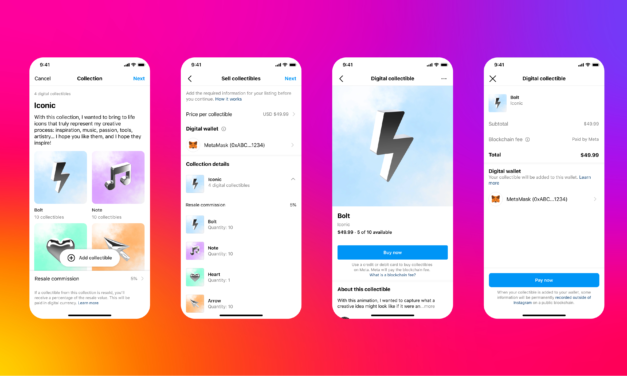
Social media platform Instagram is set to introduce a number of nonfungible token (NFT)-related tools that will allow creators to mint, show and sel NFTs.Instagram parent company Meta said on Nov. 2 during its Creator Week 2022 event that the platform would allow its creators to make “digital collectibles” and sell them “both on and off Instagram.”Meta says creators will have an “end-to-end toolkit” from creating, showing, then selling NFTs within the platform and has chosen the Polygon (MATIC) blockchain as an initial partner for this functionality.Concept images of Meta’s NFT interface for Instagram. Image: MetaIt says a “small group” of United States-based creators will be eligible to test the new features and expansion to other countries will follow, but provided no information on when this would take place.In addition to its current lineup of supported blockchains that include Ethereum (ETH), Flow (FLOW), and Polygon Meta also revealed its support for the Solana (SOL) blockchain and its popular Phantom wallet.Support for video NFTs will also be added and metadata such as names and descriptions for select NFT collections will be pulled from NFT marketplace OpenSea.Meta’s head of commerce and financial technology, Stephane Kasriel, said Meta won’t charge fees to create or sell NFTs until 2024, and blockchain gas fees for buyers will be covered by Meta “at launch” but didn’t clarify how long the launch timeline would be.Kasriel said NFT transactions would still be subject to “app store fees,” referring to Apple’s 30% commission on NFT sales that has drawn heavy criticism for being more expensive than the average 2.5% commission enforced by NFT marketplaces such as OpenSea.Related: Facebook is on a quest to destroy the Metaverse and Web3With this, buyers seemingly won’t be able to purchase Instagram NFTs using crypto through the Instagram app as both Apple and Google only support in-app purchases using fiat currencies and both forbid buttons, external links, or other actions that give users a way to circumvent their commissions.Meta has not released how much of a commission it plans to take from NFT sales nor what its creator royalties system will look like, it’s unknown if it will follow the recent pushes from NFT marketplaces to move to opt-in royalty models.Cointelegraph contacted Meta for clarification on its commission and royalties structure but did not immediately receive a response.

Čítaj viac

Nifty News: GameStop NFT market goes live, Hong Kong’s NFT concept and more

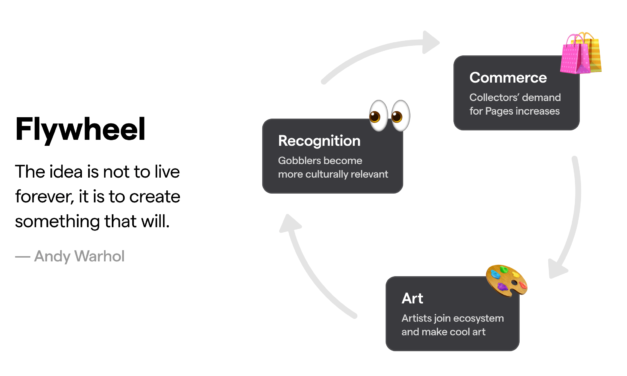
The nonfungible token (NFT) marketplace for American video game retailer GameStop has officially gone live on Ethereum (ETH) layer 2 blockchain ImmutableX, all part of the latest Web3 push from the gaming retailer. The pair first partnered in February to build the marketplace offering a $100 million grant for NFT content creators and tech developers before a public beta of the NFT marketplace debuted in July.With the Oct. 31 announcement of the full launch, GameStop’s market will allow for popular Web3 games on ImmutableX such as the role-playing game Illuvium and Gods Unchained to be accessed by users.Gamestop has worked to launch a series of Web3-powered products over the past year with a beta self-custody crypto wallet released in May that integrates with its NFT marketplace. In March the retailer also launched its first beta NFT marketplace on Loopring, an Ethereum-based layer-2 protocol. Most recently in September, GameStop announced a partnership with FTX US aimed at bringing more customers to crypto and working together on e-commerce and online marketing initiatives. Hong Kong’s proof of concept NFTsThe Hong Kong government on Oct. 31 released a policy statement that set out its stance on virtual assets and detailed its related pilot projects, one of which involved NFTs.Its NFT-based project is a proof of concept to promote the usage of NFTs with the government Financial Services and the Treasury Bureau (FSTB) and foreign investment department InvestHK issuing NFTs at their flagship Hong Kong Fintech Week event.The NFT serves as proof of attendance for the conference-goers with the statement saying it’s a “digital badge and memento using blockchain technology in celebration of their participation”.The NFT can also be used to create an Augmented Reality (AR) avatar “to experience the Metaverse” while at the event and holders will receive a discount on tickets for the event in 2023.Although it’s not mentioned what blockchain the NFTs are minted on they can be stored in a crypto wallet, or for those who are without a wallet, can be stored as what the statement calls an “NFT-to-be” with a user storing it on an email address until they create a digital wallet.Hong Kong Fintech Week kicked off on Oct. 31 and sees speakers from a range of Web3 firms including Yat Siu, co-founder of Animoca Brands, Sam Bankman-Fried, co-founder of FTX, and Sebastien Borget, co-founder of The Sandbox metaverse and others.Art Gobblers makes over $20M hours after launchNFT project “Art Gobblers” created by Justin Roiland, the co-creator of the popular animated show Rick and Morty, has seen nearly $20.5 million in ETH volumes just seven hours after launch.The project is a collaboration between Roiland and venture capital firm Paradigm, and describes itself as an “experimental decentralized art factory.” According to Blur data, the project is seeing strong launch success with 12,906 ETH in volume at the time of writing. According to a Paradigm overview, the Art Gobblers ecosystem is intended to work by financially incentivizing artists and collectors in a feedback loop for both to contribute to the project, either with better art, or more money.A diagram explaining the intention of the Art Gobblers ecosystem. Image: ParadigmArtists create a drawing using the websites tool which can then be turned into an NFT provided they have enough native tokens called GOO, these NFTs can then be “eaten” by an Art Gobbler which will store the artwork in its “belly gallery” with the NFT artwork associated to that Gobbler on-chain.The project also enacts other deflationary measures such as restricting the amount of NFTs that can be minted and mechanisms that automatically adjust prices in coordination with an issuance schedule.The initial mint saw 2,000 “Gobblers” minted with the community expected to spend GOO tokens to mint a further 8,000 over the next 10 years.Cardano NFTs hit third place for trading volumeCardano (ADA) NFTs surged in trading volume over the past month placing the blockchain in third place according to an Oct. 27 report by analytics platform DappRadar.The report said in the last 30 days Cardano’s NFT volume reached $191 million bringing it to the third-largest NFT protocol behind Ethereum and Solana (SOL).Related: An introduction to decentralized NFT catalogsThe blockchain’s popular NFT marketplace JPG Store saw a 40% increase in trading volume in the last 30 days also which reached a value of $11.2 million.DappRadar attributes the surge to the blockchain’s Vasil hard fork upgrade that went live on Sep. 22 which brought with it increased efficiency for its smart contracts allowing decentralized applications to deploy and run at lower costs.More Nifty News:American National Basketball League (NBA) athlete Steph Curry filed a trademark application for a so-called “Curryverse” that could see the basketball champion granted exclusive rights for, among other things, “metaversal appearances.”A Japanese city has adopted a metaverse-based school to try to get students to attend classes with students able to explore a virtual campus and classrooms, although the students must gain permission from their real school principals before attending.

Čítaj viac

Coinbase seeks to join Ripple’s legal fight against the SEC

United States-based crypto exchange Coinbase has become the latest organization to stand behind Ripple Labs n its legal battle against the Securities and Exchange Commission (SEC), which could wrap up as soon as the first half of 2023.Paul Grewal, Coinbase’s chief legal officer in a series of tweets on Oct. 31 said the exchange had asked the presiding judge for permission to file an amicus brief, saying the case was a “textbook” definition of “just how critical fair notice is.”Earlier today, @coinbase asked Judge Torres for permission to file an amicus brief in the SEC case over XRP. Our point in pretty simple: this is a textbook case of just how critical fair notice is any reasonable notice of due process under law. 1/3 pic.twitter.com/qhSSGrNgJK— paulgrewal.eth (@iampaulgrewal) October 31, 2022An amicus brief, known as a “friend of the court,” is a legal document containing advice or information relating to a court case from an organization or individual that is not directly involved in the case.Grewal added that a fundamental protection under the U.S. Constitution is that authorities can’t “condemn conduct as a violation of law without providing fair notice that the conduct is illegal.”“By suing sellers of XRP tokens after making public statements signaling that those transactions were lawful, the SEC has lost sight of this bedrock principle,” he added.If approved, Coinbase will join the ranks of the non-profit organization Investor Choice Advocates Network and crypto mobile app SpendTheBits which were granted permission to file amicus briefs in October.Related: ‘Well worth the fight’ — Ripple counsel confirms Hinman docs are in their handsThe filing also comes on the same day cryptocurrency lawyer John Deaton filed a motion seeking permission to submit an amicus brief on behalf of the XRP “decentralized community.”It also follows days after crypto advocacy group the Blockchain Association also announced its support for Ripple on Oct. 28 by announcing it had filed its ow amicus brief, noting that SEC chairman Gary Gensler’s views on securities laws could have “devastating effects” on the space.Ripple Labs has been caught up in a nearly two-year-long legal saga with the SEC that regards the sale of its Ripple (XRP) tokens as unregistered securities sales.Ripple CEO Brad Garlinghouse on an Oct. 11 panel at DC Fintech Week said he thinks the case could be wrapped up by the half of 2023 but admitted it would be hard to predict an exact end date.

Čítaj viac

9 years after the first Bitcoin ATM, there are now 38,804 globally

On Oct. 29, 2013, a coffee shop in downtown Vancouver, Canada opened what is understood to be the world’s first publicly available Bitcoin (BTC) automatic teller machine (ATM) operated by Robocoin. The crypto ATM saw 348 transactions and $100,000 transacted in its first week of operation.As of Oct. 30, 2022 — nine years and one day on — Robocoin has ceased operations and the first crypto ATM has likely been removed or replaced, but crypto ATMs have continued to increase in number with 38,804 cryptocurrency ATMs in existence today, according to Coin ATM Radar.The global hub for crypto ATMs has since moved however, with the United States now housing nearly 88% of the world’s supply of crypto ATMs and taking credit for 90% of all newly installed ATMs over the past few months. In October alone, 129 of the world’s newly installed ATMs were located in the United States out of a total of 205. Canada, home to the first crypto ATM, has only seen that number creep to 566 after nine years, though it’s still placing in second at 6.6% of the total, as per Coin ATM Radar data.Meanwhile, Spain became the third-largest crypto ATM hub on Oct. 22 with its 0.6% share across 215 ATMs.A July report from Research and Markets estimates the crypto ATM space is now valued at $46.4 million, which will grow more than 10 times to  $472 million by 2027, driven by remittances and increased crypto ATM installations.However, like many crypto-related products, crypto ATM installations have been challenged this year as a result of the crypto bear market. Crypto ATM installations slowed between January and May before a slight recovery between June and August, but September saw net crypto ATMs drop globally for the first time ever after 459 machines were removed from the global network.Related: How Bitcoin ATMs in Greece fare during a record-breaking tourist seasonBitcoin is still the most popular cryptocurrency transacted across crypto-enabled ATMs with nearly 100% supporting BTC transactions per Coin ATM Radar. However, other cryptos also appear to be supported across the network.Litecoin (LTC) is popular with almost 81% of ATMs supporting the crypto, and Ether (ETH) closely follows at almost 74%, Dogecoin (DOGE) sits in fourth place with just under 40% supporting the so-called memecoin.In early October U.S. authorities warned crypto ATMs were emerging as a popular method for scammers to receive value and defraud victims most often in “pig butchering” scams where the attacker poses as a potential romantic partner, gaining trust and asking the victim to send them money, or in some cases, cryptocurrency.

Čítaj viac

Získaj BONUS 8 € v Bitcoinoch

nakup bitcoin z karty

Registrácia Binance

Burza Binance

Aktuálne kurzy