

Autor Cointelegraph By Jesse Coghlan

US sentences ‘laptop farmers’ who assisted North Korean IT workers

US prosecutors said they have secured eight sentences in the last five months against people acting as US-based proxies for North Korea-based IT workers, shedding new light on how they have been able to infiltrate US companies. Two men have been sentenced this month alone. The Justice Department said Wednesday that separate courts sentenced Nashville resident Matthew Issac Knoot and New York resident Erick Ntekereze Prince for helping North Koreans work remotely for US companies.The US perpetrators, known as “laptop farmers,” acted as recipients for laptops that US companies would send to new employees. They installed remote desktop software on the devices, allowing North Korean IT workers to use them remotely while appearing to work from the US.North Korea’s remote worker scheme generates revenue for the government and has targeted technical roles at crypto companies to gain access to internal systems, company assets and security infrastructure. Such access can help workers understand company infrastructure and identify systems that could later be exploited.Source: FBI Cyber DivisionProsecutors said Knoot, who was sentenced on May 1, and Prince, sentenced on Wednesday, each received 18 months in prison. Prince was ordered to forfeit $89,000, the amount the North Korean workers paid him for the scheme, while Knoot was ordered to pay $15,100 in restitution to the companies and to forfeit an additional $15,100, the amount he earned from the scheme.Together, the Justice Department said the pair generated $1.2 million in revenue for North Korea, and the scheme affected nearly 70 US companies.Related: North Korea tied to heists worth $578M in April after Kelp DAO exploitLast month, New Jersey residents Kejia Wang and Zhenxing Wang were given nine years in prison and seven years, eight months in prison, respectively, for hosting laptop farms for North Korea.Prosecutors in that case said the scheme lasted multiple years, used the stolen identities of 80 people in the US and made over $5 million for the North Korean government.According to a report by CrowdStrike in August, the number of companies that hired North Korean workers over the previous 12 months jumped 220%, with workers infiltrating more than 320 companies over that period.The report noted that North Korean workers were heavily using artificial intelligence to automate and optimize the process of applying for and working in remote jobs.The US charged four North Koreans in June last year, accusing them of stealing more than $900,000 in crypto after using fake identities to gain remote employment at an Atlanta-based blockchain research and development company and a Serbian crypto company.Magazine: Guide to the top and emerging global crypto hubs — Mid-2026Cointelegraph is committed to independent, transparent journalism. This news article is produced in accordance with Cointelegraph’s Editorial Policy and aims to provide accurate and timely information. Readers are encouraged to verify information independently.

Čítaj viac
Coinbase shares slide on $400M Q1 loss, revenue miss

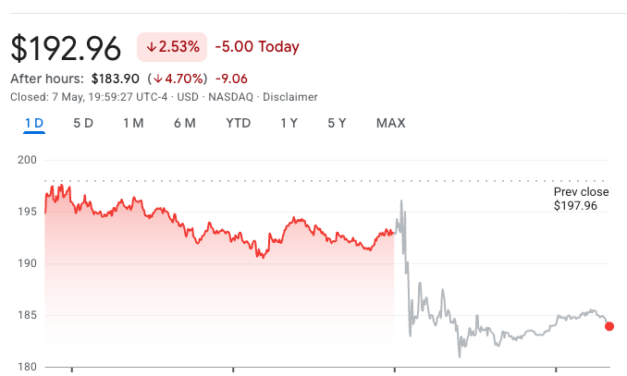
Coinbase shares slid Thursday after the US crypto exchange reported a steep first-quarter loss while revenue missed Wall Street expectations.Coinbase reported a net loss of $394.1 million in Q1, its second consecutive quarterly loss after reporting a $667 million loss in Q4 2025. It swung from a $65.6 million profit a year earlier. “Macro conditions were genuinely tough,” Coinbase chief financial officer Alesia Haas told investors on an earnings call. “Total crypto market cap and total crypto trading volume were both down more than 20% quarter-over-quarter.”Coinbase’s earnings come as other crypto companies have also struggled to turn a profit in the first months of 2026 as a crypto market slump pushed some traders to other investments.Meanwhile, Coinbase’s Q1 revenue was $1.41 billion, missing analyst estimates of $1.5 billion. Transaction revenue slumped 40%, while subscription and services revenue — representing its business outside trading — fell 13.5% from a year earlier. Its earnings per share were a $1.49 loss, compared to analysts’ expectations of 36 cents per share, which saw Coinbase dropping by 4.7% after hours on Thursday to under $184.Coinbase shares fell in regular and after-hours trading on Thursday amid the company’s first-quarter earnings. Source: Google FinanceCoinbase’s stock has fallen more than 14.5% this year, prompting the exchange to pursue new business lines such as prediction markets and cost-cutting measures, including laying off 14% of its workforce, or about 700 employees, on Monday.Despite the company’s earnings, CEO Brian Armstrong struck an optimistic tone on the earnings call, telling investors that “the world economy is moving on-chain, and Coinbase was built to capitalize on this transition.”He added that over the past year, Coinbase has aimed to transition from “a primarily spot-focused crypto platform into a place where you can now trade any asset class.”“We’re in kind of this interim period where spot crypto assets were down a bit, other asset classes were up. As we diversify, these things will get balanced out, where we’ll just be in a more upward channel over time,” Armstrong added.Related: Block Inc rises 8% as Q1 gives ‘earnings surprise’ despite Bitcoin dipCoinbase rival Robinhood Markets also missed estimates for the first quarter last month as its crypto revenue and trading volumes nearly halved from a year earlier.Bernstein said in March that the decline in crypto stocks presented a more attractive entry point for investors seeking exposure to the current hot theme of tokenization and maintained a bullish rating on Coinbase and Robinhood.It argued that the companies offered investors exposure to a broader shift toward tokenized finance, including stablecoins and prediction markets, which it expected to gain traction in the coming years.Magazine: Guide to the top and emerging global crypto hubs — Mid-2026Cointelegraph is committed to independent, transparent journalism. This news article is produced in accordance with Cointelegraph’s Editorial Policy and aims to provide accurate and timely information. Readers are encouraged to verify information independently.

Čítaj viac

Trump-linked American Bitcoin reports $82M Q1 loss, revenue miss

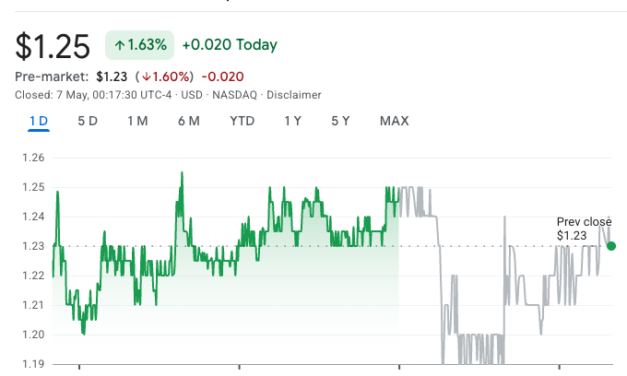
American Bitcoin, the crypto mining company co-founded by US President Donald Trump’s son Eric Trump, reported an $81.7 million first-quarter loss as its revenue missed analyst estimates.American Bitcoin on Wednesday reported revenue of $62.1 million for the quarter ended March 31, a 400% increase from $12.3 million in the prior-year period but down from $78.3 million in the fourth quarter of 2025.The revenue figures fell short of analyst estimates by 17%, while the firm, which also counts Donald Trump Jr. as a shareholder, reported a quarterly loss of 8 cents per share, compared with Wall Street estimates of 1 cent per share.American Bitcoin is one of the newest crypto mining companies in the industry, which started trading on the Nasdaq in September after merging with Gryphon Digital Mining. It is one part of the Trump family’s sprawling interests in crypto businesses, which also includes the trading platform World Liberty Financial and its stablecoin, USD1.Shares of American Bitcoin (ABTC) ended after-hours trading down 1.6% on Wednesday at $1.23, erasing the 1.6% gain they made during the regular session.American Bitcoin’s share price was choppy on Wednesday following the company’s first-quarter results. Source: Google FinanceThe company’s stock has fallen nearly 26.5% so far this year amid a challenging environment for Bitcoin miners, as the cryptocurrency fell from a 2026 high of $97,000 in January, which it has struggled to regain. Bitcoin was recently trading at $81,000, according to CoinGecko.American Bitcoin’s first-quarter loss narrowed from its $100.6 million loss a year ago. It reported that it mined a record 817 Bitcoin in the first quarter, compared to 783 Bitcoin in the fourth quarter of 2025.Related: Trump-linked American Bitcoin energizes 11,298 new ASICsThe company said in a statement that its cost of mining was $36,200 per Bitcoin in the first quarter, a 23% improvement from $46,900 per Bitcoin in the fourth quarter of 2025, due to “higher production volume spread across a stable fixed-cost base and continued energy pricing discipline.”American Bitcoin said in March that it added 11,298 mining machines to its fleet, bringing about 3.05 exahashes per second (EH/s) to its operations. The first of the machines was energized on March 31.“We continue to prioritize fleet efficiency, cost discipline, and capital allocation accretive to Bitcoin per share,” American Bitcoin CEO Mike Ho said. “Looking ahead, we will keep deploying incremental capacity when expected returns justify it and focus on compounding our Bitcoin reserve while preserving balance sheet flexibility.”The results came on the same day that Hut 8 reported the first quarter 2026 net loss of more than $253 million, due mainly to a reduction in the market value of its Bitcoin holdings.Revenue for the quarter totaled more than $71 million, down by about 22% from the previous period’s $88.4 million, up from analyst forecasts. Magazine: Trump’s crypto ventures raise conflict of interest, insider trading questionsCointelegraph is committed to independent, transparent journalism. This news article is produced in accordance with Cointelegraph’s Editorial Policy and aims to provide accurate and timely information. Readers are encouraged to verify information independently.

Čítaj viac
Stablecoin adoption to scale on back of ‘very large’ tech firms: Bitwise

Stablecoins are more likely to go mainstream if adopted by major technology companies, a shift Bitwise says could help push the market closer to a projected $4 trillion by the end of the decade.Bitwise chief investment officer Matt Hougan said on Tuesday that DoorDash and Meta’s recent use of stablecoins for payments in limited projects is likely “the real killer app of stablecoins.” “On a relative basis, these are not a big deal. Both are pilot projects and the dollar amounts are small,” Hougan wrote. “But they’ve answered a question I’ve had about stablecoins for a long time. They’ve also increased my confidence that stablecoins will scale to trillions in assets and hundreds of millions of users.”Multiple large non-crypto institutions have been testing stablecoin technology. Meta on Thursday launched stablecoin payouts for creators in the Philippines and Colombia, while the food delivery app DoorDash said on April 21 it would offer stablecoin payments to its users, workers and merchants.The market value of all stablecoins is currently just under $318 billion, but Hougan said projections, such as one from Citigroup in September, say the market could grow to $4 trillion by 2030 in a best-case scenario.Matt Hougan, pictured at Bitcoin 2026. Source: YouTube“To get there, stablecoins will have to expand beyond their current primary use case of crypto trading and be embraced for everyday activity, like payments,” Hougan said. “To really scale to hundreds of millions of users, stablecoins are going to need the support of very large players.”He said that the current pitch to businesses about stablecoins is that they are cheaper and faster, but another main reason multinational companies would adopt the technology is to simplify their global payments infrastructure.Related: Stablecoin firms have a $112B additional opportunity in LATAM remittance“Stablecoins make global payments simple,” he argued. “One wallet address, no banking infrastructure, no currency conversions. For a global business managing millions of micropayments, that type of simplicity is worth a lot.”Companies in the US have been more confident in testing stablecoins after Congress passed the GENIUS Act last year, a bill regulating stablecoin issuers and forming a framework for how the tokens should be backed.Visa is among the companies that have adopted stablecoins, and the payments giant expanded its pilot of the tokens on Thursday to include five more blockchains as the volume of settlements on its stablecoin settlement network has grown.US banks have meanwhile grown wary of stablecoins and have lobbied to restrict them, arguing they compete with and threaten bank deposits, which could harm the banking system.The Senate is shaping legislation outlining how crypto will be regulated, which currently includes a clause banning platforms such as crypto exchanges from paying rewards on idle stablecoin holdings, but allowing other forms of rewards.However, banking groups on Tuesday argued the clause that lawmakers pitched as a compromise between crypto and banking lobbyists’ interests, did not go far enough.Magazine: GENIUS Act reopens the door for a Meta stablecoin, but will it work?Cointelegraph is committed to independent, transparent journalism. This news article is produced in accordance with Cointelegraph’s Editorial Policy and aims to provide accurate and timely information. Readers are encouraged to verify information independently.

Čítaj viac

a16z raises $2.2B for new fund backing stablecoins, prediction markets

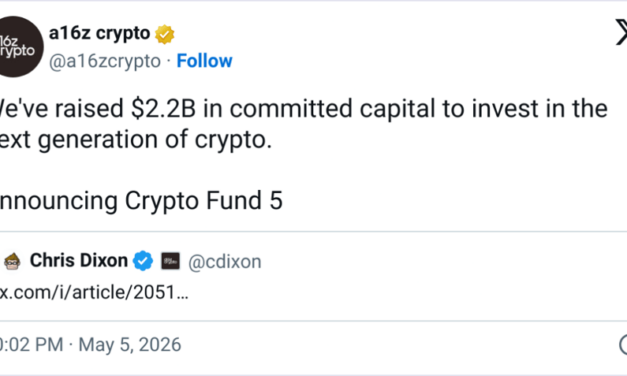
The crypto-focused arm of venture capital firm Andreessen Horowitz has raised $2.2 billion for its fifth fund dedicated to backing crypto projects.In a blog post on Tuesday, a16z Crypto said its latest fund, Crypto Fund 5, would back founders “turning new infrastructure into products people use every day,” including stablecoins, perpetual futures, prediction markets and tokenized assets.“Software is getting more complex and harder to trust,” a16z Crypto general partners Eddy Lazzarin, Guy Wuollet, Ali Yahya and founder and managing partner Chris Dixon wrote in the blog post.“The infrastructure the internet runs on is more consolidated than ever. In that environment, the properties that crypto networks were designed to provide become more valuable, not less,” they added.A16z’s latest fund comes a day after rival venture firm Haun Ventures said it raised a $1 billion fund for crypto and artificial intelligence, suggesting venture capital appetite for crypto remains strong even as the bulk of funding has focused on AI.Source: a16z CryptoAI firms received a record $242 billion in venture funding in the first quarter of 2026, according to a Crunchbase report released in April, with the technology capturing 80% of the record $300 billion in global venture funding during the quarter.Crypto Fund 5 is smaller than its predecessor, a record $4.5 billion crypto-focused fund that a16z Crypto launched four years ago in May 2022, just as the Terra blockchain imploded, causing a chain reaction of crypto company collapses and a regulatory crackdown.A16z said that crypto is in “one of those quieter moments” of the cycle, and it is seeking out “what people keep using when the hype fades.”It added that stablecoin use “has kept climbing even through downturns,” and it has also seen “meaningful growth” in crypto perpetual futures and prediction markets.Related: Crypto VC funding plunges to $659M in April, hits near two-year low“Traditional assets are starting to move onchain, and onchain finance is being used for assets beyond network tokens,” a16z added. “A new financial system is taking shape that runs continuously, settles nearly instantly, costs almost nothing, and is open to anyone with internet access.”It added that crypto has been buoyed by a US regulatory landscape that is “moving in the right direction,” with an array of supportive lawmakers and White House officials helping advance the stablecoin-regulating GENIUS Act, which a16z said was “a good example of what thoughtful policy can look like.” “We expect more regulatory progress for the rest of the crypto market through legislation and rulemaking,” it added.Magazine: Adam Back says current demand is ‘almost’ enough to send Bitcoin to $1MCointelegraph is committed to independent, transparent journalism. This news article is produced in accordance with Cointelegraph’s Editorial Policy and aims to provide accurate and timely information. Readers are encouraged to verify information independently.

Čítaj viac

Získaj BONUS 8 € v Bitcoinoch

nakup bitcoin z karty

Registrácia Binance

Burza Binance

Aktuálne kurzy