Autor Cointelegraph By Greg Oakford

NFT art pioneer wants to upload her brain so she can live forever: Josie Bellini, NFT Creator

Who is Josie Bellini? 

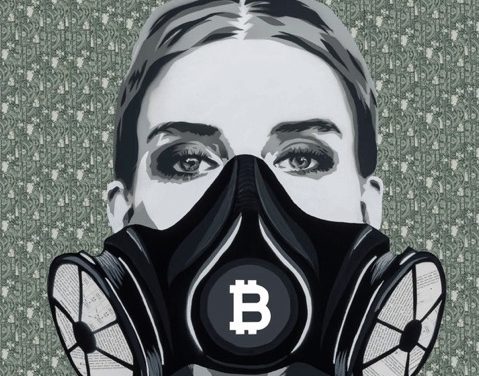
Crypto artist Josie Bellini is most famously identified by her iconic Bitcoin gas mask from Filter. She has become one of the most prominent NFT artists, being featured at Christie’s and on just about every NFT marketplace platform available, including SuperRare, ASync Art and Nifty Gateway. 

Born and raised in Chicago, Bellini always had a passion for art. But growing up in poverty, she wanted to live a life of plenty, leading her to major in finance at college and take a job at a TradFi company. 

Weirdly enough, her desire to learn more about finance led her to crypto… which led back to art… which led to making money.

Still image of “Filter” GIF by Josie Bellini. (OpenSea)

“Growing up in poverty, you don’t hear about stocks and investing,” she says. “I was thinking, ‘I have all these clients that were investing, and they were making money, while they were asleep.’ I kept thinking, ‘How can I do this?’”

She didn’t have enough money to invest in half the things she recommended for clients, as she wasn’t an accredited investor. A spark reignited about a paper she’d written in college about Bitcoin, and she fell down the rabbit hole of Ethereum in 2017. 

“I started to think deeper about crypto and how this could potentially be my breakthrough. I got obsessed,” she says. “I’d ask myself questions of why Bitcoin was invented, why Ethereum came along, and what the differences between the two were.” 

Bellini would attend Bitcoin meetups in her hometown, and before long, she quit her job to work in crypto, aiming to become a full stack developer by attending a coding bootcamp, “but I absolutely hated it, I don’t remember any of it. What I did love was the design side of it.” 

“I started making websites, logos and materials for blockchain conferences around the world and also crypto companies. That was my foot in the door to getting work in the industry.” 

“By the end of 2017 is when I made my first personal crypto artwork; that piece was called “Genesis,” and it blew up on Reddit. At the time, the term ‘crypto art’ wasn’t really a thing, and I wasn’t using it then myself. What I was doing was creating themed art to spread awareness of cryptocurrencies.” 

Čítaj viac
From SNL and The Tonight Show to Sotheby’s:  NFT Creator Bryan Brinkman

From working on Saturday Night Live and The Tonight Show as an animator to now having more than 1,000 collectors of his NFTs, Bryan Brinkman is an example of how a digital artist can thrive in ways never before possible. 

Best described as a digital pop artist with an emphasis on animation, Brinkman’s fans include high-profile NFT collectors such as Pranksy, J1mmy.eth and WhaleShark. He has also been featured at Christie’s and had fractionalized art of his put up for auction at Sotheby’s.

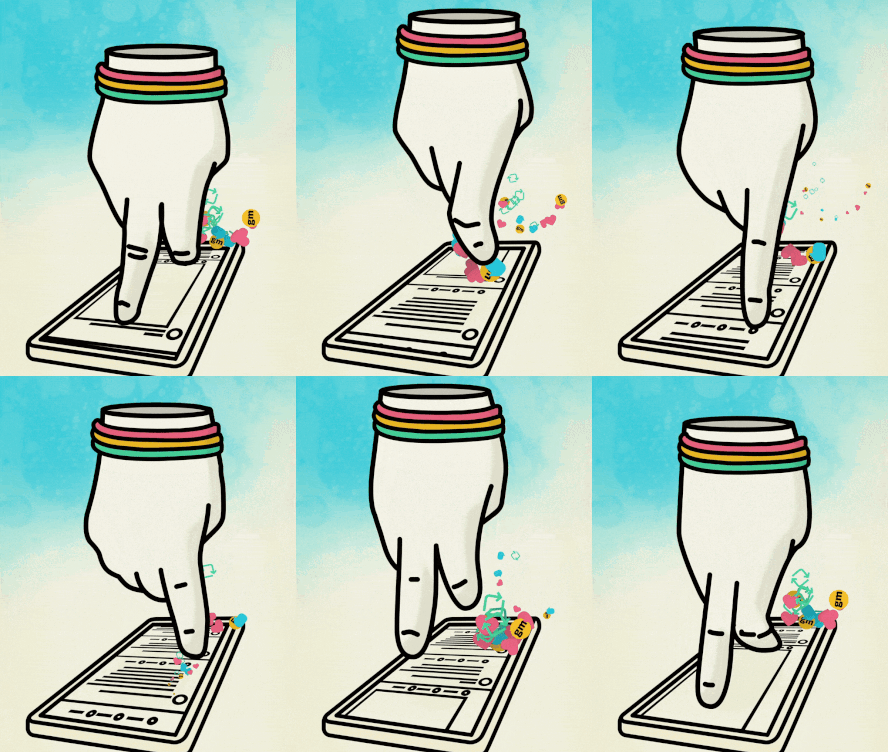
“Scroll’ by Bryan Brinkman. (SuperRare)

“Prior to NFTs, I spent 15 years working in various industries such as fashion, MTV shows and animated television series. I’ve also worked a large chunk of my career on late-night TV shows like Saturday Night Live and The Tonight Show, which revolve a lot around humor,” Brinkman says. 

“When NFTs came along, animation finally became a medium that could be quantified and collected. It immediately clicked with me. There are lots of branches you can do as an animator, but this is the only one that allows you to truly be independent and in control.”

“In its simplest form, I describe myself as a digital pop artist, but I also think mixed media is a term I use as well. I like to mix 2D and 3D as well as play around with different mechanics and forms.”

Brinkman also understands how to market his work and build community — essential ingredients for an NFT artist today.  

“I think about dividing your time into thirds. Spend one-third of it making art, and spend another third working on marketing your art, whether that be making cool teasers or videos talking about your art, or maybe writing Twitter threads about how you made it. That stuff is very important. Then the final third is spending time in the community, learning from other artists, talking to other artists, just connecting in general,” Brinkman states.

“I learned from many of the artists who came before me, whether it was Sarah Zucker, Coldie, Josie Bellini, Alotta Money, Hackatao, Matt Kane and a host of other OGs out there.” 

Read also: The Sarah Show: Analog childhood meets dizzying digital future

Influences:

Brinkman draws inspiration from many styles and artists, but animation is at his core, and he studied it in college.

“Don Hertzfeldt [American animator, writer and independent filmmaker, best known for animated films World of Tomorrow and It’s Such a Beautiful Day] is a big one. He influenced me with a lot of his short films that are simply brilliant. Bill Plympton [American animator and cartoonist best known for his 1987 Academy Awards-nominated animated short Your Face] influenced me with his work ethic and how he was able to maintain an independent animation artist lifestyle for all these years. I think he’s nearly 80 years old now,” Brinkman states.

Brinkman also cites pop artist Keith Haring, an American graffiti-inspired pop artist, and NFT artist Killer Acid. 

“I think Keith was able to ride the line between pop art and commercial art in a way that still kept his integrity. I also have to shout out Killer Acid, who inspired me to join the NFT space. He was a very early SuperRare artist.”

“Peace Sign Dude” by Killer Acid, animated by Patrick Passaro. (SuperRare)

In fact, “Peace Sign Dude” by Killer Acid is still his favorite NFT in his collection.

“J1mmy.eth actually owned it, and he offered to give it to me as a gift, which was incredible. It’s now my never-sell grail gift. Pretty cool story because it’s the artist I discovered NFTs via and it’s my collector who first supported my career, so it’s my most special NFT.” 

Read also: Become a hot new NFT artist via the ‘soft shill taco method’ — Terrell Jones 

Notable sales to date:

“Betty’s Notebook,” a collaboration with Async Music. This world’s first programmable music NFT made $375,000 in sales. (Async Music)

“Flywheel,” an edition of 15, from the “CTRL” collection. CTRL was released on Nifty Gateway Curated on Sept. 16, 2022 and sold out, grossing over $100,000. (Nifty Gateway)

“Explode.” Sold at Sotheby’s off-chain for $75,600 on Oct. 26, 2021 to Pranksy. (SuperRare)

“Yearn.” Secondary market sale for 18 ETH ($58,400 equivalent on the date of sale) on Aug. 23, 2021. (SuperRare)

Hot new NFT artists to watch 

Brinkman is a prolific NFT collector himself, with a reputation for spotlighting and elevating other artists: 

Alimo (@alimofun): Best known for curvy post-pop imagery, highly saturated colors, vibrant hand-drawn letters and worlds inhabited by figures arranged on flat tonal surfaces. 

“I think Alimo does really beautiful landscapes that are very simplified and kind of pop art. The colors he uses are very soothing. I’m a big fan of the stories he tells with surfing and snowboarding.”

Ykha Amelz (@ykhaamelz): Indonesian artist who specializes in 2D. She combines her inner-child nostalgia and chaotic mind into a vibrant universe populated by a family of cartoon characters.  

“With Ykha, I think the world she’s building is extremely fun. It’s sort of like a mixture of skater artwork, but then she has all these characters that go from scene to scene and tell a story. Visually, it’s eye candy.” 

Jisu (@JisuArtist) — Korean-American illustrator based in Los Angeles. 

“With Jisu, her work has these harsh angles on faces, but there are lots of colors and almost like a glitchiness to it. I’m a big fan. I think they’re really cool. All three of them are crushing it. I imagine they’re all going to be big names eventually.” 

Read also: Breakdancing medic’s NFT auctioned at Sotheby’s — Grant Yun, NFT creator

Process: 

“Breezy” by Bryan Brinkman. (Nifty Gateway)

Brinkman takes the process of making art on the blockchain seriously, as there’s a record of the work forever, he points out.

“It usually starts with sketches. Sometimes this is done in physical form on a sketchbook, or sometimes it’s Procreate on an iPad, but it unusually starts with thumbnails — which goes back to my background in animation, where you start with storyboards,” says Brinkman. 

“I usually think small initially and then decide if it is an idea or an opinion and how I convey that visually. Not everything has the same deeper meaning, but usually, there’s that thought process I go through, and then I refine it. From there, the process of building kicks in, and I’ll use some animation software as I start building the pieces and it starts to evolve into its own thing. There’s a lot of layers of refinement and tweaking required as well as getting the timing and motion to feel right.” 

“Once it becomes an animation, I then need to decide, is this going to be a video with audio or an animated GIF? Should it be tall, or wide, or square?”

“Finally, I’ll give consideration to how I think it’s going to be displayed, because everything’s on the blockchain forever. I think about building things for TV screens because that’s going to be how people look at this stuff in the future. It’s a lot of different steps along the way, but each of those steps can have a totally different detour that turns the work into something totally different.” 

Read also

Features
Crypto Pepes: What does the frog meme?

Features
Bitcoin: A Peer To Peer Online Poker Payment System by Satoshi Nakamoto

The NFT space is missing?

For Brinkman, discoverability is the missing piece of the puzzle.

“It’s really hard to find artists. We need sites that allow you to see artists and new artists. We need to create algorithms that show you other artists that are in the style you might be searching for,” he says.“Currently, it’s all word of mouth and based on influencers on Twitter, which is fine, but it’s still a very curated way of doing it,” says Brinkman. 

“I think, for better or worse, artists need liquidity on their secondary markets. To that degree, maybe some sort of universal artist bid mechanism where I will buy any piece by this artist for X amount of money. That way, there’s always a low level of liquidity like you’d see in places like Blur.” 

“Some artists might say that’s a terrible thing. I don’t know. But there is that problem right now. When you buy art, it’s hard to get out of it if you need to in a pinch. I think if there is that, that will attract more people that might see it as more of a liquid asset than a long-term investment.” 

“Bull Run” by Bryan Brinkman. (Nifty Gateway)

Royalties debate

Since the explosion of Blur over the last four to five months, the royalty debate has been a hot topic. Incentives to use Blur to receive future airdrops have been a significant driver in OpenSea’s market-share hit.

Blur does not recognize royalties, which was part of the value proposition for NFT artists in the early days when the narrative was that creator royalties would be paid in perpetuity via a smart contract. However, royalties are actually captured at the marketplace level, and many artists have been understandably outspoken about missing out.

“I realized very early on that creator royalties were a social contract, not a smart contract,” Brinkman says.

Read also: 4 out of 10 NFT sales are fake: Learn to spot the signs of wash trading

“People would trade my SuperRare one-of-ones and not pay royalties. So early on, I knew not everybody was going to pay royalties. So, how do we look at this situation? I think some of it is an incentive question.

Brinkman says that if there are secondary hubs where everything is listed, there is discoverability and royalties are paid, then “that’s going to be the place where you go to buy art, and that’s where artists send people. I believe 70% of people will just go there and buy it.”

“You pay a premium because they have everything in one place.”

“Then there are going to be these people that are going to go off and try to find the best deal. Maybe my 70/30 prediction is off, but I think there’s always going to be the dynamic of ease of accessibility versus avoiding royalties.”

Links: 

Linktree: linktr.ee/bryanbrinkman

Twitter: twitter.com/bryanbrinkman 

Website: bryanbrinkman.com 

Subscribe
The most engaging reads in blockchain. Delivered once a
week.

Greg Oakford
Greg Oakford is the co-founder of NFT Fest Australia. A former marketing and communications specialist in the sports world, Greg now focuses his time on running events, creating content and consulting in web3. He is an avid NFT collector and hosts a weekly podcast covering all things NFTs.

Follow the author @GregOakford

Čítaj viac

The Sarah Show’s analog childhood meets dizzying digital future: NFT Creator, Sarah Zucker

As a Millennial who remembers the world before digital devices and the internet were everywhere, Sarah Zucker — aka The Sarah Show — is fascinated by the accelerated transition society at large is going through.

“I feel as a Millennial that I’m part of this generational cohort that’s in this very unusual experience of having had an analog childhood and now living a digital future,” says Zucker. 

“I’m specifically using tools of the recent past like analog TVs to take people out of our present moment and create this different experience of time and sense. I would say my work really is about time more than anything.” 

The Los Angeles artist is considered an OG of the NFT art scene, having started way back in 2019 (her first mint was on April 4 that year) compared to most artists who arrived on the scene in the last 12–24 months.

Dream Loaf from Grails Season 1 by Sarah Zucker. (PROOF)

Her art seems to resemble something you’ve seen before, all while feeling like something completely new, telling stories with a dose of humor while tapping into cutting-edge and obsolete technologies. 

Having been featured at Sotheby’s and more recently at the Los Angeles County Museum of Art (LACMA), Zucker’s love for art started with film photography.

“I’ve always expressed myself visually. As a teenager, I got very into photography and specifically working with film photography. We’re talking about the early 2000s when everything was going digital,” she says.

“Vintage technology has always been of interest to me. It’s not necessarily about nostalgia, it’s more that I find the physicality of vintage technology really interesting.”

She was an early convert to uploading pics on Tumblr and Instagram and spent about a decade pursuing photography before her master’s in screenwriting saw her embrace narrative filmmaking on video.

Influences:

The Sarah Show takes inspiration from German expressionist art, which emerged in a similarly tumultuous period to today around the end of the First World War. 

“There had just been this World War that made everyone feel like the world was suddenly getting a little more global than felt comfortable. There was a pandemic. There were all these things in society, and yet the artists of that time were so expansive, emotive and free,” she says. 

“They were breaking forms and creating things in a way that said, ‘We don’t care how we’re supposed to do this; we’re going to do this the way that this expression needs to come out of us’. I can’t get enough,” says Zucker. 

Read also

Features
Monero-Mining Death Metal Band from 2077 Warns Humans on Lizard People Extinction Scheme

Features
Insiders’ guide to real-life crypto OGs: Part 1

Personal style: 

“I’ve always been something of an outlier in my artwork. I would say it’s not easily defined. You could call it glitch art, you could call it video art, you could call it GIF art, or, more recently, NFT art as it gets called now. I don’t think those terms are incorrect, but they miss the big picture.” 

“I describe it more like a multiverse that I’m channeling through. I’m channeling through myself and through these vintage broadcast devices into a body of work that gets referred to as The Sarah Show.”

“Cassandra’s Vision” from “The Cassandra Complex” collection by Sarah Zucker. (OpenSea)

With technological advancements like AI happening at a breakneck pace, Zucker says she’s trying to address the “big universal existential questions” about the fact we’re on the “brink of a completely new way of living as human beings.”“I view my work as a way of depicting what it’s like to be this sort of silly, scared, happy, manic, dreadful little creature strapped to this rocket ship going into the future and trying to make sense of what this life has been and what it’s going to continue to be.”

Notable sales to date:

[embedded content]

“Space Loaf” sold for $44,062 at Bonhams, June 21–30, 2021

Self Transcending – sold for $22,680 at Sotheby’s on 11 June, 2021. (Sotheby’s) 

Everything’s Different Now – sold for 15 ETH ($22,600 equivalent on date of sale) on 28 October, 2022. (SuperRare)

Rhapsody in Hugh – sold for 14 ETH ($17,300 equivalent on date of sale) on 27 June, 2022. (SuperRare)

Up-and-coming NFT artists to watch

Zucker is a big fan of performance art and has two specific artists to put on your radar. 

Edgar Fabian Frias — 2022 MFA Art Practice at UC Berkeley. 

“Edgar works regularly in the contemporary art world and is a bit of a shapeshifter, bringing such a unique perspective from their background. There’s a high weirdness approach to art-making that I certainly connect with. Admittedly, I turned them on to NFTs in mid-2020.” 

David Henry Nobody Jnr — New York performance artist, reality hacker, NFT artist. 

“David is someone who I’ve followed for years and years. I’ve always found his work to be just irresistible. He has a huge following on Instagram; he has a lot of visibility there.” 

Read also

Features
Banking The Unbanked? How I Taught A Total Stranger In Kenya About Bitcoin

Features
Ethereum is eating the world — ‘You only need one internet’

Process: 

Zucker creates her distinctive style using a mix of old analog devices and new digital tools, such as Adobe After Effects. 

“I start with sketching or writing things out, essentially conceptualizing things. From there, I generally begin in some sort of digital way, either animating in After Effects or Photoshop. I often shoot live video in my studio.”

“I also have this analog video rig I’ve built out in my studio that’s made of vintage broadcast devices. I have custom glitch hardware, with different devices and capabilities that allow me to apply all sorts of different analog effects. In addition, I have a number of different TVs and cameras for creating feedback loops for creating texture.”

“With some of my work, you’re often seeing screens within screens because that experience of the screen is a big part of what I’m aiming to convey through my work.”

Making work in an analog system can often mean making multiple versions because there is no easy way to save the work. 

“There’s no saving in the analog system. It all has to be done with immediacy. An example would be laying it all down on VHS tape, and then I bring it back out to digital and have basically two ways to convert it to the digital realm.” 

“One is to film it in 4K, essentially like filming it in high definition digital video off of the vintage screen because often that’s the look I want, the screen within the image itself. The other option is to use a transfer system that basically digitizes the analog signal. It brings it back into digital signal where I can record it digitally,” says Zucker. 

NFT Creator Sarah Zucker

Artnome’s influence as a collector: 

Zucker has been collected by a lot of people over her four years in NFT land but singles out Jason Bailey — aka Artnome — as someone that’s played a pivotal part in her journey. 

“I have a great relationship with a lot of my collectors. I think collectors and artists do this great dance of symbiosis,” she says.

“I think Artnome had been checking out my work and recognized that I had a number of pieces just sitting there on the market, and he swept them all. More importantly, it’s not just that he bought my work — it’s that he wrote a very thoughtful thread on Twitter about my work.”

“In the thread, he drew attention to my work and video art in general. He really did this service to me by contextualizing my work for people. Plus, Jason is an arts writer; he’s very knowledgeable and told everyone about what my work was.” 

“This was January, in 2020, when he showed my work off, and from that day on, it has snowballed into an increasing amount of visibility and appreciation. I can always point to that one moment of that one person bringing a little bit of spotlight to me and it has continued to echo out through my life over the past three years,” says Zucker.

Links: 

Lynkfire: linktr.ee/thesarahshow 

Twitter: twitter.com/thesarahshow 

Instagram: instagram.com/thesarahshow/ 

Subscribe
The most engaging reads in blockchain. Delivered once a
week.

Greg Oakford
Greg Oakford is the co-founder of NFT Fest Australia. A former marketing and communications specialist in the sports world, Greg now focuses his time on running events, creating content and consulting in web3. He is an avid NFT collector and hosts a weekly podcast covering all things NFTs.

Follow the author @GregOakford

Čítaj viac

Creating ‘organic’ generative art from robotic algorithms: Emily Xie, NFT Creator

New York’s Emily Xie is exploring the new frontier of digital art by combining her skills and passion for computer science and generative art. 

In a little under two years, since she minted her first NFT in March 2021, she has caught the attention of prolific collectors, such as Punk6529, DC Investor and Bob Loukas, and recently left her software engineering job to pursue life as a full-time artist. 

“I studied art history, took studio art courses, but also studied computational science and engineering. I made all sorts of art growing up, but it was more in a traditional media way. As a software engineer, I was always hoping to combine my love for programming as well as my love for art and creativity,” says Xie. 

“Generative Patchwork and Bullseye” by Emily Xie. (Hypemoon)

Discovering generative art

“I found that desire in generative art in around 2015–2016. It made a lot of sense making art with code. You don’t get any more of a direct and elegant combination than that of those two fields.”

“It’s so full of exploration. You’re engaging with technology in a way that’s creative because it exercises both sides of the brain, and that’s a rare thing to encounter.” 

Xie attributes her love for making generative art to the freedom it gives her to let her creativity loose, and she gets lost in the process. 

“Assemblage #6” on Tezos Blockchain by Emily Xie. (Objkt)

“Generative art is meditative for me. Whenever I made it, I got really sucked into it. The world around me would just disappear, and I would spend hours just programming and seeing what the algorithm might do.”

“Prior to NFTs, there was not very much opportunity to actually make a living out of it. When NFTs did come along, it was the first time where I actually saw a pathway for myself to be making a living as an artist.” 

Inspired by East Asian art, Xie’s collection “Memories of Qilin” was launched via Art Blocks a year ago and has now seen over 4,400 ETH ($7.4 million at the current ETH price) in secondary sales.

In July 2022, Xie teamed up with Bright Moments for her 100-piece collection “Off Script,” which is an algorithmic representation of a 20th-century modern art collage. 

Just recently, the New York resident engaged in a collaboration with the Los Angeles County Museum of Art, and she also has worked with SuperRare and Objkt (Tezos). 

Influences

Xie takes influence from many artists and styles but specifically singles out Japanese ukiyo-e artist Hokusai, best known for the famous big wave woodblock print, and Spanish painter Picasso who revolutionized abstract art with cubism. 

“For me, I love abstract expressionists and early modern collage artists, but a few names that come to mind are Hokusai and Picasso,” she says, also referencing the “Fidenza” NFT artist Tyler Hobbs.

Read more: Tyler Hobbs wrote software that generates art worth millions

“There’s a lot of generative artists that have inspired me over the years. Tyler Hobbs is one of those. I’d also say Zach Lieberman has been a huge inspiration,” says Xie. 

“In general, the genre influences for me are collage and textiles. I draw a lot of real-world inspiration from them.” 

“The Great Wave off Kanagawa” by Hokusai, 1831. (Metropolitan Museum of Art)

Personal style of generative art

Xie’s aesthetically pleasing style takes inspiration from traditional East Asian art, and she has a knack for creating pieces that can be studied with the naked eye at length. 

“I would say that my personal style is very influenced by textiles, patterns, collage and wallpaper. This idea of bringing together a lot of different patterns and putting them into one piece and seeing how that can create something so cohesive — that’s really interesting to me,” Xie states.

Her work brings human warmth to what could be a sterile nature of computer-generated art. 

“I would say that, a lot of times, my artwork tends to have a very organic feel. It explores this tension between what is handmade and appears very human versus what is computational and somewhat cold and robotic.”

“It’s very fascinating to me to bring in a sense of organic and human into a medium that’s inherently digital with the code I use.” 

Notable generative art sales to date

“Memories of Qilin #191” sold for 55.55 ETH on Nov. 4, 2022 ($91,380 equivalent on the date of sale). This sale went from Bob Loukas to the Punk6529 Museum. (OpenSea)

“Flowers and Bloom” sold for 30 ETH on Nov. 19, 2022 ($36,495 equivalent on the date of sale). This sale was via Unit London. (Unit London)

“Memories of Qilin #442” sold for 40 ETH on Nov. 4, 2022 ($65,800 equivalent on the date of sale). (OpenSea)

NFT artists to watch

Xie points out a number of up-and-coming NFT artists she’s excited about. 

William Mapan — An artist who works with code and has been featured on Art Blocks, Bright Moments and at Sotheby’s. 

“William is an incredible artist. He has all these beautiful, hand-drawn-looking works. His series ‘Anticyclone’ is just stunning, and I’ve collected one. I think he really loves drawing inspiration from traditional media as well.” 

Iskra Velitchkova — A computational generative artist who’s also been featured at Sotheby’s. 

“Her work has a very digital quality to it. Whilst digital, it’s also deeply atmospheric. Her style is so consistent. If you see an Iskra Velitchkova piece, you know it’s hers.” 

Sasha Stiles — A metapoet and AI researcher.

“Sasha is doing some amazing work around artificial intelligence and poetry. It’s very cutting edge in my opinion.” 

Read also

Features
Unforgettable: How Blockchain Will Fundamentally Change the Human Experience

Features
Porn Payments Were Supposed to be Crypto’s Killer App: Why Have They Flopped?

Generative art process 

Using a combination of traditional sketching, photoshop and writing algorithms, Xie’s process can be quite time-consuming and detailed. 

“Programming is a pretty intensive process, so you want to visualize what you’re trying to program as concretely as possible before doing it. I typically do that in Photoshop and sketch out what happens if I add a line to a given element. I’ll look to see if that makes sense. If it looks good, I will then program it out and see where that takes me,” says Xie. 

“Often, it starts with a pretty extensive mood boarding process where I’ll go and collect a bunch of images that I love that I’m inspired by. That gives me an idea of what I’m interested in at that moment. Sometimes, I can’t articulate or vocalize that myself; it’s a very subconscious thing.” 

“Off Script #62” by Emily Xie. (OpenSea)

Once Xie has an idea of what she wants to make, she starts to code to create the output. 

“When I’ve got my inspiration, I then start tinkering around with algorithms. Sometimes, that means revisiting an algorithm that I’ve already written or learned about, for example, flow field. From there, it’s a matter of trying to draw inspiration from other elements and attempting to recreate them using code.”

“Typically, what that means is you’ll lay down some lines of code and then you’ll see what it produces, and it’ll render on your screen. From there, it becomes an iterative process of playing with parameters. For example, if you constrained one parameter, you might get wavy lines instead of something else. You’re constantly going back to your code, editing it and rendering it, and then repeating that process over and over again until you get something you like.” 

“Throughout my programming process, I actually try to prototype rapidly as much as possible because you can also run into the problem where you have an idea and spend all day programming it out, but it looks bad, and you’ve wasted all that time.”

Physical-to-digital art paradigm shift

Xie says that tokenized digital art is turning the traditional relationship between original and reproduction on its head. 

“It’s interesting because, in the past, the “Mona Lisa” physical object is the true piece. Then every other picture of it you find floating around on the internet is just a manifestation of it. In this paradigm, it’s the complete opposite, which is really funny. I think it’s really important because, for the longest time, the traditional model left digital artists without a real way to assign originality and collectibility to the artwork,” Xie says. 

“In the past, there wasn’t an easy way for my generative art to be collected. How do you collect something that sits on your computer but could be transferred to any computer all around the world with a click of a button? It required a way to assign rarity to a JPEG. NFTs are it. If people really think about it, it makes so much sense, and it opens up digital art to be finally appreciated and collected.” 

Favorite NFT you own

“I would have to say ‘Anticyclone’ by William Mapan and ‘Folio #22’ by Matt DesLauriers. I love both of those pieces that I’ve collected.” 

Links: 

Lynkfire: linktr.ee/emilyxxie 

Twitter: twitter.com/emilyxxie 

Memories of Qilin website: memoriesofqilin.com/ 

Subscribe
The most engaging reads in blockchain. Delivered once a
week.

Greg Oakford
Greg Oakford is the co-founder of NFT Fest Australia. A former marketing and communications specialist in the sports world, Greg now focuses his time on running events, creating content and consulting in web3. He is an avid NFT collector and hosts a weekly podcast covering all things NFTs.

Follow the author @GregOakford

Čítaj viac

Získaj BONUS 8 € v Bitcoinoch

nakup bitcoin z karty

Registrácia Binance

Burza Binance

Aktuálne kurzy