Autor Cointelegraph By Gareth Jenkinson

Deutsche Bank analysts see Bitcoin recovering to $28K by December

Analysts from Deutsche Bank forecast Bitcoin (BTC) rebounding to $28,000 by December 2022 as the cryptocurrency market continues to grapple with gloomy times.Bitcoin and the wider cryptocurrency markets have endured a tough six months, with the value of BTC, in particular, enduring its worst quarter in 10 years. Macroeconomic conditions around the world have played a role, with stagnating markets and fears of inflation driving conventional stock markets and their crypto-counterparts down to painful lows.A report from Deutsche Bank analysts Marion Laboure and Galina Pozdnyakova provides an interesting perspective on the medium-term outlook for BTC. Their insights suggest that cryptocurrency markets have mirrored movements of the Nasdaq 100 and S&P 500 since late 2021.The pair believe that the S&P will rebound to its January levels and that Bitcoin’s correlation to the index could result in a 30% increase in value from current levels midway through 2022. This would see BTC back up to the $28,000 mark.Related: Better days ahead with crypto deleveraging coming to an end — JPMorganThe prediction may quell some of the fear and uncertainty swirling in the space, but the recovery of cryptocurrency markets is not so clear cut. Laboure and Pozdnyakova highlighted the recent collapse of the Terra ecosystem and the Celsius debacle and their influence on markets as exacerbating factors:“Stabilizing token prices is hard because there are no common valuation models like those within the public equity system. In addition, the crypto market is highly fragmented. The crypto freefall could continue because of the system’s complexity.”A separate investor note from JPMorgan suggests that the crypto ecosystem may already be in recovery. While firms like hedge fund Three Arrows Capital became insolvent after failing to meet margin calls from investors amid the crypto market crash, other industry players have propped up the ecosystem:“The current deleveraging cycle may not be very protracted given the fact that crypto entities with the stronger balance sheets are currently stepping in to help contain contagion and that venture-capital funding, an important source of capital for the crypto ecosystem, continued at a healthy pace in May and June.”The note also highlighted the relatively healthy amount of venture capital investment into cryptocurrency firms over the past two months — to the tune of $5 billion. This represents a $3.4 billion increase from the same period in 2021.

Čítaj viac
Investors' perception of crypto is changing for the better: Economist survey

A report published by the Economist paints a bright future for cryptocurrency adoption, with survey respondents anticipating growing demand in the near future.Economist Impact published findings of its ‘Digimentality Report’, delving into consumer trust in digital payments and the stumbling blocks that have hampered the digitization of basic monetary functions. The data obtained provide food for thought and perspective, as it compares trends from previous surveys on the subject carried out in 2020 and 2021.Information was gleaned from a consumer survey completed by 3,000 consumers in early 2022, with half of the respondents living in developed economies including the United States, United Kingdom, France, South Korea, Australia and Singapore. The other half were respondents hailing from developing countries including Brazil, Turkey, Vietnam, South Africa and the Philippines.Around 75 percent of the participants had tertiary education or higher and had used a variety of digital payments methods to pay for goods or services. The latter part of the survey involved 150 institutional investors and corporate treasury management respondents – giving insight into the attitude of the wider conventional financial system on the subject.A key takeaway was the prevailing sentiment from investors who agreed on open-source cryptocurrencies like Bitcoin (BTC) or Ether (ETH) are useful as a diversifier in a portfolio or treasury account. 85 percent of respondents held this view, while nine in ten institutional investors and Corporate treasury survey takers indicated that demand for all cryptocurrencies, including CBDCs and enterprise blockchains, has increased over the past three years.Related: Nations to adopt Bitcoin, crypto users to reach 1B by 2023: ReportThe report indicated that the rise of Web3 and different Metaverse projects may increase this demand. 74 percent of respondents also agreed that Nonfungible tokens (NFT) are an emerging asset class that organizations plan to acquire and trade.Central bank digital currencies (CBDCs) were another notable focal point, with an increasing number of consumers expecting their respective governments or central banks to launch a working CDBC system by 2025. 65 percent of executives that took part in the survey believe that CBDCs are likely to replace physical fiat currencies in their countries of operation.The regulation was identified as the primary obstacle stopping institutional investors or corporate treasuries from using cryptocurrencies. 35 percent of respondents cited market trust or understanding of the space as an obstacle — a marked decline in perception from the 47 percent from the 2021 study.This echoed the sentiments of U.S. Treasury secretary Janet Yellen, who unpacked her remarks on digital assets policy and regulation in May 2022. She noted barriers limiting access to cryptocurrencies which included financial education and technological resources.

Čítaj viac

KuCoin plugs into Web3 with new decentralized wallet

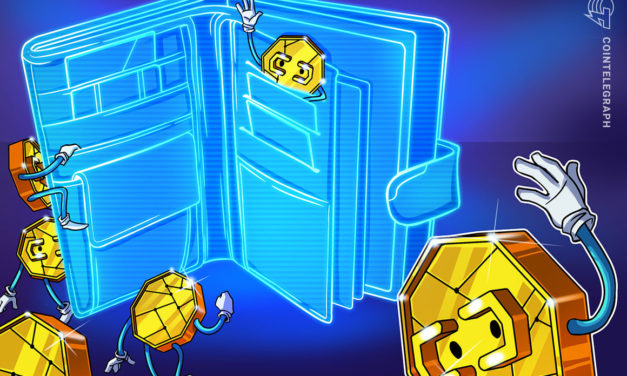
Cryptocurrency trading platform KuCoin has launched a new decentralized wallet platform as interest in Web3 continues to gather steam. KuCoin Wallet is now live for users, with the browser-based platform paving the way for a mobile application which is still in development. The platform plugs into the KuCoin ecosystem and features cross-blockchain integration. Users will be able to buy, sell, trade and send a variety of cryptocurrencies including Bitcoin (BTC), Ether (ETH) and Tether (USDT) in addition to other tokens. The wallet is self-custodial, giving users full control and responsibility over their private keys. As the cryptocurrency ecosystem continues to adopt and support decentralized finance (DeFi) and nonfungible token (NFT) functionality, KuCoin Wallet’s roadmap will include the addition of DeFi, NFT and GameFi services. KuCoin’s proprietary NFT marketplace Windvane powers this functionality at launch, allowing users to trade and view NFTs in the KuCoin Wallet. Windvane unveiled a $100 million “Creators Fund” in April 2022 to help support and encourage early-stage NFT projects to build on the platform.KuCoin netted $150 million of investment in a pre-series B round in 2022 – with the firm valued at $10 billion. The firm intends to use the proceeds of the latest fundraising round to continue developing Web3, DeFi and NFT services and offerings within its ecosystem. KuCoin Labs and KuCoin Ventures will spearhead these efforts – which have already come to fruition with the launch of KuCoin Wallet.Related: GameStop unveils beta cryptocurrency wallet and upcoming NFT platformA number of prominent cryptocurrency exchanges and service providers have recently launched non-custodial, multi-blockchain wallets in recent months to keep pace with interest in Web3functionality.Leading United States-based cryptocurrency exchange Coinbase integrated Web3 functionality with a wallet and browser for a select group of its mobile app clients in May 2022. Trading on NFT marketplaces was a big focus, while token swaps and other DeFi services were made available through exchanges like Uniswap and Opensea.Robinhood promoted an upcoming non-custodial cryptocurrency wallet in May 2022 with cross-blockchain accessibility which will also feature NFT storage and access to marketplaces. American brick-and-mortar gaming retailer GameStop followed suit with the launch of its own blockchain wallet that will also feature NFT functionality.

Čítaj viac

Two key takeaways from Nansen’s UST stablecoin depeg report

As the dust settles on the cataclysmic collapse of the Terra ecosystem, an on-chain deep-dive carried out by blockchain analytics firm Nansen highlights two major takeaways.The cryptocurrency ecosystem was awash with varying speculatory theories around the cause of Terra’s algorithmic stablecoin UST’s decoupling from its $1 peg. The who and why seemed a mystery but the outcome was catastrophic, with UST dropping well below $1 while the value of Terra’s stablecoin token plummeting in value as a result.Nansen undertook an investigation leveraging on-chain data from the Terra ecosystem to the Ethereum blockchain in an effort to chart the chain of events that led to the UST depeg. [embedded content]It is worth noting that the report does not include potential off-chain events that could have exacerbated the situation, impact on investors, breakdown of net losses between wallets, and what happened to Bitcoin (BTC) reserves backing UST.Attackers preyed on shallow Curve liquidity to exploit arbitrage opportunitiesThe first and biggest takeaway was Nansen’s identification of a small set of addresses or players that identified vulnerabilities in the Terra ecosystem. These actors preyed on the relatively shallow liquidity of Curve pools backing the TerraUSD (UST) peg to other stablecoin and moved to capitalize on arbitrage opportunities.The report outlines how these actors withdrew UST funds from the Anchor protocol on Terra. These funds were then bridged from Terra to Ethereum making use of the Wormhole infrastructure.Massive amounts of UST were then swapped with various stablecoins in Curve’s liquidity pools. Nansen then speculated that during the depegging process, some of the identified wallets exploited discrepancies between pricing sources on Curve as well as decentralized and centralized exchanges by taking buying and selling positions across exchanges.Nansen’s report refuted a speculative narrative that a single attacker or hacker worked to destabilize UST. Seven wallets central to UST’s depegNansen blockchain analysis adopted a grounded theory approach that identified relevant transaction volume data between May 7 and 11 – the timeframe in which UST lost its $1 peg. The firm reviewed social media and forum threads to narrow down that particular time frame, highlighting prominent transaction flow on Curve liquidity pools – which led to its three-phase analytical approach.Phase one involved analysis of transactions in and out of the Curve lending protocol, which allowed Nansen to compile a list of wallets whose activities suggest a significant impact on the UST depegging.Phase two was slightly more complicated, as Nansen observed transactions across the Wormhole bridge that may have influenced the depeg event. The firm reviewed outflows of UST from the Anchor protocol involving a narrowed-down list of wallets. This was followed by investigating the sale of UST and USDC on centralized exchanges. Related: Exchanges back ‘Terra 2.0 revival plan’ via airdrops, listing, buyback and burningThe final phase involved triangulating on-chain evidence to form a narrative of the events around the UST depeg. A list of seven wallets was then highlighted that are believed to have been central in the Terra ecosystem collapse.The Nansen report provides some interesting insights driven by blockchain analytics. The core ‘why’ remains a mystery though – with the firm opting not to speculate on the potential objectives or motivations behind the seven main addresses that played a major role in triggering the depeg of the UST algorithmic stablecoin.

Čítaj viac

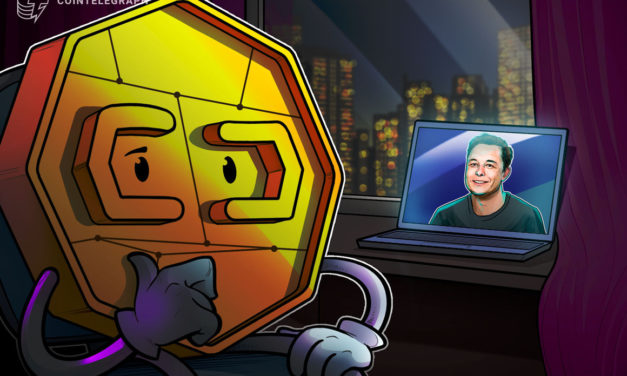
‘Yikes!’ Elon Musk warns users against latest deepfake crypto scam

Tesla CEO Elon Musk distanced himself from yet another fabricated video promoting a cryptocurrency scam.Originally shared on Twitter, the video in question was a deepfake of Musk purportedly promoting a cryptocurrency platform boasting 30% returns on crypto deposits. Scammers made use of original footage from a TED Talk featuring Musk and curator Chris Anderson at a TED conference in Vancouver in April this year.The tweet and video caught the attention of Musk himself, who’s been increasingly active since his move to acquire the social media platform for an estimated $44 billion. The Tesla CEO and SpaceEx founder replied to the video in his signature comical style:Yikes. Def not me.— Elon Musk (@elonmusk) May 25, 2022Musk’s global renown as a technology pioneer has made him a choice target for scammers looking to take advantage of unwitting social media users and investors. The not-so-tech-savvy users are at risk of being duped by scams promoting unrealistic returns on investment.Cryptocurrency scams of this nature were rife in 2020 and 2021, with the United States Federal Trade Commission (FTC) releasing a report that estimated that over $80 million worth of cryptocurrency was stolen from unsuspecting victims over a six month period.Given Musk’s affinity for the cryptocurrency space and his pro-Dogecoin slant, fraudulent YouTube live streams became a weapon of choice. Musk’s now-famous appearance on the American television show Saturday Night Live proved to be a cash cow for scammers, with the FTC zooming in on scam addresses that had received about 9.7 million Dogecoin worth $5 million in May last year.Related: Elon Musk buys Twitter for $44B — crypto industry reactsMusk’s move to buy Twitter has come with promises to promote free speech on the platform, while the Tesla CEO also vowed to cull an alarming number of spam and scam bots that have fleeced users of millions in recent years in his Ted talk appearance earlier this year:“A top priority I would have is eliminating the spam and scam bots and the bot armies that are on Twitter. They make the product much worse. If I had a Dogecoin for every crypto scam I saw, we’d have 100 billion Dogecoin.”As Cointelegraph previously explored, deepfake videos have been prevalent since the term was coined in 2017. Making use of artificial intelligence and computer-generated images, video and audio, creators look to manipulate, deceive or scam viewers with media that is often so realistic it’s hard to discern truth from fiction.Blockchain technology has been touted as a potential tool to combat deepfake and fake news. But the reality is that social media platforms are still awash with fraudulent media.

Čítaj viac

Získaj BONUS 8 € v Bitcoinoch

nakup bitcoin z karty

Registrácia Binance

Burza Binance

Aktuálne kurzy