
Autor Cointelegraph By Gareth Jenkinson

South African exchanges welcome the new 'crypto is financial asset' ruling

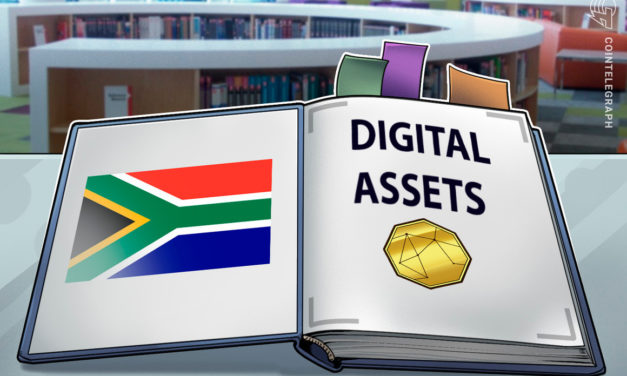
South Africa’s Reserve Bank is set to begin regulating cryptocurrencies as financial assets in the next 18 months, with exchanges expecting the move to drive adoption in the country.The move to classify cryptocurrencies as financial assets and not currency, has been talked about for some time by the South African Reserve Bank (SARB). Deputy governor Kuben Chetty confirmed that the new regulations would take effect over the next year, speaking in an online dialogue on July 11.The cryptocurrency space has been left to develop organically in South Africa, with no clear-cut regulations issued by the SARB until recently. The country has become a leader in cryptocurrency adoption, with more than 6 million South Africans estimated to own some cryptocurrency.Now that the SARB has finally taken a stance toward the ecosystem, exchanges, traders, and investors can begin to take stock of the ramifications. Cointelegraph reached out to prominent exchanges operating in the country to gauge the perception of the SARB’s regulatory attitude.Related: Africa’s top golfers to shoot for Bitcoin prize on Sunshine TourMarius Reitz, general manager for Africa at global cryptocurrency exchange Luno, has been a proponent of clear regulatory parameters for the cryptocurrency industry. In correspondence with Cointelegraph, Reitz welcomed the regulatory move and believes it will create a safer environment for users in the country:“It will require crypto asset service providers (CASPs) to obtain FSP licenses and will be easier for the public to identify a trusted and licensed platform. It will create a barrier to entry for those platforms with no regard for the security of customer funds and customer information.”Reitz said that Luno was in a fortunate position to preempt regulatory changes in South Africa, given that the company operates in a variety of markets globally that already have strict regulatory guidelines like Malaysia and Singapore.The Luno GM for Africa said complying with new regulatory parameters would not require a step-change in its processes aside from country-specific nuances. Luno already carries out KYC checks, sanctions screenings as well as anti-money laundering (AML) and counter-terrorism financing (CTF) measures. Reitz also suggested that more exchanges could make use of proof of reserves verification. Although not required as a law, Luno undertook an audit of its crypto holdings to confirm custody of customers’ assets to provide an added level of trust to customers.It’s also business as usual for VALR, another South African cryptocurrency exchange which has quickly grown into a trusted platform for local crypto traders and users. CEO Farzam Ehsani told Cointelegraph that the company is already conducting itself as a regulated entity, adopting KYC checks and a risk management and compliance program. VALR also has AML and CTF policies in place and has worked with authorities to combat the illicit movement of funds. Ehsani was confident that developing regulations for the space would not lead to stifling controls, with the industry set to fall under the purview of the Financial Intelligence Centre:“VALR is already registered with the Financial Intelligence Centre and we have been working with the FIC for many years so any official regulatory framework in this regard will just formalize what VALR already has in place.” The SARB continues to explore the possible use of a central bank digital currency (CBDC) through its Project Khokha initiative. A number of prominent players from the traditional banking sector in South Africa have been actively involved in testing a proof-of-concept for the proposed CBDC settlement system.

Čítaj viac

Bitcoin not a currency? South Africa to regulate crypto as financial asset

The South African Reserve Bank is set to introduce regulations next year that will see cryptocurrencies classed and treated as financial assets to balance investor protection and innovation.Cryptocurrency use in South Africa is in a healthy space, with around 13% of the population estimated to own some form of cryptocurrency according to research from global exchange Luno. With more than 6 million people in the country having cryptocurrency exposure – regulation of the space has long been a talking point.Companies or individuals looking to provide advice or intermediary services involving cryptocurrencies are currently required to be recognized as financial services providers. This involves meeting a number of checkboxes to comply with global guidelines set out by the Financial Action Task Force. South Africa’s National Treasury budget review published in February 2022 formally introduced the move to declare cryptocurrencies as financial products. The state also plans to enhance the monitoring and reporting of cryptocurrency transactions to comply with exchange regulations in the country.South African Reserve Bank deputy governor Kuben Chetty has now confirmed that new legislation will be introduced in the next 12 months, speaking in an online series hosted by local investment firm PSG on July 12. This will see cryptocurrencies fall under the scope of the Financial Intelligence Centre Act (FICA).This is significant, as it will allow the sector to be monitored for money laundering, tax evasion, and terrorism financing which has been a heavily debated byproduct of the decentralized nature of cryptocurrencies and blockchains.Related: South Africa finishes technical PoC for wholesale CBDC settlement systemChetty highlighted the road that the SARB will take over the next 12 months to introduce this new regulatory environment. Firstly, it will declare cryptocurrencies as a financial product which allows their listing as a schedule under the Financial Intelligence Centre act.Following that, a regulatory framework will be developed for exchanges which will include certain KYC requirements as well as the need to meet tax and exchange control laws. Exchanges will also be expected to issue a ‘health warning’ to highlight the risk of losing money.Chetty noted that the SARB’s attitude towards the sector has changed significantly over the past decade. Some five years ago the institution thought there was no need for any regulatory oversight, but a gradual shift in perception to define cryptocurrencies as financial assets has changed that stance.“By all definitions, it’s [cryptocurrencies] not a currency, it’s an asset. It’s something that is tradable, it’s something that is created. Some have backing, others do not. Some may have a genuine underpinning, real economic activity.”The deputy governor insisted that the SARB did not regard cryptocurrencies as a form of currency given the perceived inability for everyday retail use and the associated volatility. Chetty agreed that continued interest in the space creates a need to regulate the sector and facilitate its merge with mainstream finance “in a way that balances the excitement and hype with the investor protection required”.The SARB also continues to explore the possible introduction of a central bank digital currency (CBDC), having recently completed a technical proof-of-concept in April 2022. The second stage of Project Khokha involved using a blockchain-based system for clearing, trading and settlement with a handful of banks that form part of the Intergovernmental Fintech Working Group (IFWG).

Čítaj viac

Swiss Post's banking arm developing in-house crypto custody platform

Switzerland’s Post Office is set to onboard cryptocurrency trading through its banking arm PostFinance as user appetite for custody grows in the country.Some 2.6 million users that currently bank with PostFinance, the fifth largest bank in the country, are expected to be able to buy and sell Bitcoin and other cryptocurrencies through an inhouse trading and custody service in the next two years.As reported by local media outlet Swissinfo, the executive board of the Post Office’s banking arm intends to provide direct access to cryptocurrency markets through a proprietary service operated by PostFinance by 2024 at the latest.It’s the latest step by the institution to afford its clients the ability to gain access to cryptocurrencies. In 2021, PostFinance partnered with online trading platform Swissquote to develop the Yuh mobile application, which gives users access to traditional shares and stock markets as well as over 25 cryptocurrencies.Related: Swiss asset manager Julius Baer eyes crypto and DeFi potential While more tech-savvy users are content with a third-party service provider like Yuh as their gateway to cryptocurrency markets in the country, PostFinance is looking to give customers direct access to these markets.Cointelegraph has reached out to PostFinance to confirm the move and the reasoning behind it as Switzerland continues to be a center for cryptocurrency and blockchain adoption. The Italian-speaking Swiss town of Lugano is the most recent region to announce the acceptance of Bitcoin, Tether (USDT) and LVGA tokens as a recognized means of payment for taxes, public services and tuition fees for students in a partnership with Tether.Meanwhile, the Swiss Central Bank has had a mixed attitude toward the development of a central bank digital currency (CBDC). Project Helvetia was launched to pilot the use of a CBDC with commercial banking partners in the country while its governing board was still considering potential risks.

Čítaj viac

U.S. trademark and copyright offices to study IP impact of NFTs

As nonfungible tokens (NFTs) continue to garner interest, the United States Patent and Trademark Office and U.S. Copyright Office are set to launch a study into their impact on intellectual property rights.The examination of NFTs comes after a request from senators Patrick Leahy and Thom Tillis in June for a deep dive into the potential ramifications the burgeoning asset class could have in regard to intellectual property rights.The two departments have agreed to conduct the study in correspondence with Leahy and Tillis, conducting preliminary discussions to plot a plan of action which will include consultations with various stakeholders well-versed in the NFT landscape.A broad range of topics will be considered that was initially raised by the Vermont and North Carolina senators. This includes potential intellectual property challenges with future applications of NFTs, the rights associated with transferring ownership of an NFT, licensing rights and infringements and the potential IP rights given to NFT creators.Cointelegraph has reached out to both departments to ascertain how long the study will take to be completed, the scope of its coverage and which industry stakeholders will be consulted. They did not immediately respond.Related: ‘Wave of litigation’ to hit NFT space as copyright issues aboundThe NFT space has already caused plenty of strife for companies that have seen their products or intellectual property infringed upon in recent months. A number of high-profile brands have sought legal recourse against NFT marketplaces and platforms that may have infringed on associated IP rights.Global sportswear brand Nike made headlines in February as it instituted court proceedings against online reseller StockX for infringing on its trademark through the sale of unlicensed sneaker NFTs. The company had sold Nike NFT sneakers which were set to include redeemable, real-world versions of the shoes.American rapper Lil Yachty is fighting his own legal battle in California, after filing a trademark infringement lawsuit against two music companies. The 24-year-old claimed the firms used his likeness and name to raise more than $6.5 million in venture capital to bankroll the launch of a collection of NFTs.Production company Miramax also went the legal route in November 2021 after critically-acclaimed film director Quentin Tarantino looked to launch NFTs derived from his blockbuster 1994 film Pulp Fiction. The studio claimed Tarantino infringed on copyrights as he set out to launch an NFT collection featuring seven uncut screenplay scenes, exclusive commentary and original handwritten scripts.

Čítaj viac

REPORT: Binance allegedly continued to serve Iranian customers, despite ban and sanctions

Global cryptocurrency exchange Binance is under the spotlight as a report claims it continued serving Iranian clients despite a company ban and economic sanctions against the country.According to an investigative report from Reuters, individuals inside the country continued to trade on Binance after the company itself had shifted Iran onto a blacklist of jurisdictions in which it would not operate.The use of the exchange by Iranians also brings into question capital controls instituted against the country after U.S. economic sanctions were ramped-up in 2018. Binance, itself, operates out of the Cayman Islands and is not subject to sanctions banning U.S. entities from doing business in Iran.However, Binance’s U.S. based business Binance.US does throw a spanner in the works, possibly facing secondary sanctions for doing business in a sanctioned state and by providing a means for Iranians to bypass trade embargoes.Related: Binance blocks crypto accounts of relatives tied to the Russian government Anecdotes from Binance users in the country claim that lax registration requirements made it easy to set up an account and start trading, with only an email needed to register. Other former traders continued to use Binance in the country through the use of virtual private networks (VPNs) and IP address blockers.The exchange tightened its Anti-Money Laundering (AML) and Know Your ustomer (KYC) requirements in Iran late last year. Cointelegraph has reached out to Binance for comment on the veracity of the claims from users in Iran.Binance recently moved to act in accordance with European Union sanctions against Russia amid its ongoing invasion of Ukraine. This entailed restrictions against Russian citizens holding more than 10,000 euros ($10,800) from trading on Binance’s spot, futures and custody wallets, as well as staked and earned deposits.

Čítaj viac

Získaj BONUS 8 € v Bitcoinoch

nakup bitcoin z karty

Registrácia Binance

Burza Binance

Aktuálne kurzy