Autor Cointelegraph By Gareth Jenkinson

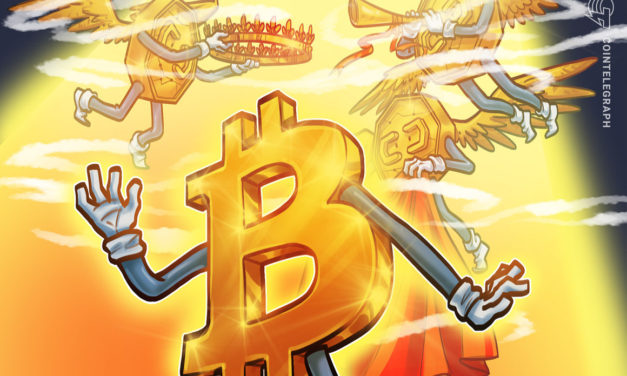
Bitcoin tackles unique challenges in emerging markets

The adoption of Bitcoin (BTC) in emerging markets was a focal point on the first day of the Blockchain Economy Istanbul event, with calls for a focus on case-by-case use of Bitcoin to maximize its reach.The two-day summit sees prominent speakers from the cryptocurrency ecosystem converge with the likes of MicroStrategy’s Bitcoin proponent Michael Saylor on the panel list at this year’s event.Cointelegraph caught up with Ben Caselin, VP of global market and communications at cryptocurrency exchange AAX, to explore some of the concepts after his keynote address on the Satoshi Standard and emerging markets.Caselin believes a logic-based focus on emerging markets is crucial, considering it is made up of some six billion people accounting for 85% of the global population. He also questioned the notion of mass adoption, primarily because different countries face drastically different realities:“The people in Nigeria are dealing with a very complicated banking system that doesn’t actually help them. The government may have rolled out a CBDC project but it’s not interesting. People care about Bitcoin, people care about non-government money.”Caselin also highlighted another anecdotal example from Afghanistan, where Roya Mahboob made headlines by paying her Afghan Citadel Software Company employees in Bitcoin as a solution to the difficulty for women to access bank accounts in the country.Emerging markets also offer a unique challenge as cryptocurrency firms and service providers grapple with onboarding people that are unfamiliar with Bitcoin, stablecoins or decentralized finance (DeFi) protocols. A focus on challenges unique to a country or group of people is often the main driver of adoption:“You are afraid of your government? Okay, maybe Bitcoin is good for you. If your challenge is that your local currency is bad because it is low quality, maybe there’s a different conversation about Bitcoin that we can have.”Caselin believes the cryptocurrency space has moved out of the decade-long emergent stage of its life cycle from 2009 and 2019. He drew parallels to the early days of the internet, where Jeff Bezos was initially mocked for his online-book store which became today’s ubiquitous Amazon.Caselin believes that a move into an adoption phase calls for the cryptocurrency industry to shape up. Recent market turmoil, exacerbated by the collapse of the Luna ecosystem and the failure of a handful of cryptocurrency lenders and hedge funds, detracts from the greater importance and utility of the space:“If Bitcoin is not helping women in Afghanistan, or the people in Cuba, or the bankless communities in Nigeria, then Bitcoin is not that interesting.”Data from Chainalysis backs up Caselin’’s assertion that emerging markets are more focused on “legacy” cryptocurrencies like Bitcoin, while institutional investors from major economies have driven recent investment in more complex assets and products powered by DeFi.

Čítaj viac

Crypto ATM market value to hit $472 million by 2027 per new data

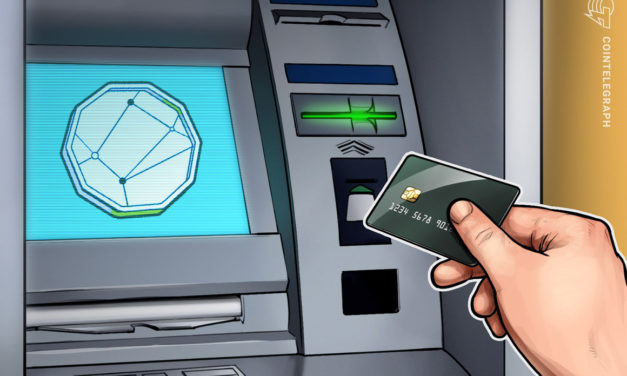
The global cryptocurrency ATM market is projected to grow at a rapid rate over the next five years as market research predicts the space to be worth half a billion dollars by 2027.Research and Markets published a new report, which estimates a compound annual growth rate of 59% for the industry from 2022 to 2027. It currently values the crypto ATM market at $46.4 million and expects this value to increase to $472 million over a five-year time period.The main drivers of the projected growth include growing remittances and fund transfers in developing countries, fluctuating monetary regulations and an increase in crypto ATM installations around the world.The insights are driven by in-depth qualitative analysis and verifiable data to create projections about the addressable market. Primary research included interviews, surveys and observations involving market participants.Related: A dozen Bitcoin ATMs installed at the largest EU electronics retailerThe report also delves into restraints on growth which includes uncertain regulatory environments in different countries, lack of education and technical understanding of cryptocurrencies. Security and privacy concerns and technical challenges around the scalability of installations are identified as barriers to growth.Crypto ATM service providers could also benefit from significant growth opportunities in developing markets and the growing acceptance of cryptocurrencies across different industries.America remains a significant market for cryptocurrency ATMs, accounting for 88% of crypto ATM installations around the world. The country saw some 641 crypto ATMs commissioned for use in the first 10 days of July 2022. Canada has the second-largest amount of crypto ATMs, making North America the most prolific adopter of the service.The overall downturn across cryptocurrency markets have had an effect on the roll-out of new crypto ATMs, with the rate of new installations showing a steady decline throughout 2022.

Čítaj viac

TikTok data policy debacle: Is user’s crypto at risk?

TikTok continues to gather a head of steam, with the popular social media application surpassing one billion users in 2022. While daily users blissfully swipe through the latest videos from their favorite content creators, data security concerns continue to ask questions of the Chinese social media behemoth.The company has faced criticism over the past couple years relating to security concerns over data collection policies despite the popularity and prolific onboarding of users around the world. Cryptocurrency users have also questioned whether critical data like private keys to wallets could be scraped by the alleged data practices of TikTok.United States Federal Communications Commissioner Brendan Carr called for Apple and Google to remove TikTok from their app stores in June 2022, claiming the app “harvests swaths of sensitive data that new reports show are being accessed in Beijing.”TikTok is not just another video app.That’s the sheep’s clothing.It harvests swaths of sensitive data that new reports show are being accessed in Beijing.I’ve called on @Apple & @Google to remove TikTok from their app stores for its pattern of surreptitious data practices. pic.twitter.com/Le01fBpNjn— Brendan Carr (@BrendanCarrFCC) June 28, 2022Two years prior to this, cyber intelligence firm Check Point Research released a report highlighting vulnerabilities within the TikTok application. This included the ability to take control of TikTok accounts and manipulate their content, delete and upload unauthorized videos, make private “hidden” videos public as well as gaining access to private email addresses and mobile numbers.The firm shared these discovered exploits with TikTok in late2019 and the company deployed solutions to the vulnerabilities. Check Point Research told Cointelegraph that it has not conducted further research into TikTok’s code since its original examination.TikTok uses HackerOne to reward code sleuths through its bug bounty program. The initiative rewards the discovery of security vulnerabilities, with different reward bands for the severity of the bug discovered. Since the current bounty table was instituted in October 2021, TikTok has paid out $539,000 in bug bounties. Related: Former head of TikTok gaming leaves Web2 to build core Web3 protocolCointelegraph reached out to TikTok for comment on concerns expressed about its data security and collection practices. A company spokesperson shared a broad range of published resources addressing the subject of its data collection practices and claims against it. TikTok stores user data in Singapore and the U.S and employs access controls including encryption and security monitoring from its American-based security team. Access to this data is behind a number of control mechanisms and the company maintains that user data is not accessible in China, as has been claimed by individuals like the FCC’s Carr in America.The spokesperson also noted that the application’s clipboard access is controlled by the user, in lieu of a report from the Financial Review in July 2022 that claimed this function was automatically enabled by TikTok. The fear  potentially risking any confidential messages or passwords copied onto a user’s clipboard.Coins not at risk but phishing is a realityCryptocurrency users can breathe a sigh of relief, as security experts agree that using or having TikTok on a mobile device does not directly place cryptocurrency wallets and exchange apps at risk of being compromised.Bree Fowler has been following TikTok data concerns as a senior cybersecurity and privacy writer for CNET over the past couple of years. The journalist believes TikTok users should not be concerned about using other apps alongside TikTok, telling Cointelegrap:“State sponsored hackers aren’t going to go after regular people this way. I’d be more worried about shady crypto apps and exchanges. It’s much easier to just send phishing emails.”Fowler warned users to deny TikTok from tracking activity across a device as an added precaution, change the app’s privacy permissions and store cryptocurrency in offline (cold) wallets.Cointelegraph also reached out to cybersecurity firm Kaspersk’s security expert Anna Larkina, who believes there is merit in the questions being asked of TikTok’s data collection policies:“The amount and type of data that TikTok collects about its users imposes a corresponding degree of responsibility for their safety. There does appear to be a need for maximum transparency in where exactly this data goes, especially if we are talking about third parties, which is extremely difficult to track.”Larkina noted that the sum of all this data holds a substantial amount of information about an individual user, with the potential cost of a data leak not to be taken lightly. The biggest threat highlighted by both experts is the potential for user data to be compromised and then used in coordinated phishing attacks. With the amount of information stored by TikTok, including what applications are installed on your device, attackers could potentially plan targeted attacks on individual users.Larkina also warned users not to copy and paste login and password details on devices that have TikTok installed and to limit the app’s ability to collect data.Politically charged situationPolitics have been intrinsically tied into the situation around TikTok and its popularity and use across the world. Former U.S. President Donald Trump’s administration moved to ban TikTok and WeChat from operating in America, which thrust the issue to the fore.Fowler believes it’s unclear whether concerns raised over the past two years are warranted and that political motivations are at play as well. While most associate TikTok with harmless videos that have captivated young audiences, Fowler remained skeptical of the situation:“On the surface, that doesn’t seem super personal or that it would be of any use to the Chinese government. But the more information any group or person has about you, the more they can use it to their advantage, whether it be for data mining, cybercrime, or more nefarious purposes.” Given TikTok’s massive reach, the platform has also become a prime advertising avenue for the cryptocurrency space. Binance made headlines in June 2022 as they struck an ambassador deal with TikTok’s most followed influencer Khaby Lame to create Web3-focused educational content. The platform also plugged into the nonfungible token (NFT) universe with its own collection of NFTs from a handful of its most prominent content creators, celebrities and influencers in September 2021.

Čítaj viac

74% of public agencies feel under-equipped for crypto investigations: Report

A public agency survey conducted by blockchain analytics firm Chainalysis highlights the need for better tools, training and support for cryptocurrency-related investigations. The blockchain data platform delved into the topic in its 2022 State of Cryptocurrency Investigations Survey, with 74% of respondents indicating their agencies were under-equipped to investigate cryptocurrency-related crime.Chainalysis polled some 300 respondents across 183 public sector agencies in the United States and Canada to unpack the challenges and successes working in the sector. An overwhelming number of respondents indicated that cryptocurrencies were relevant to their investigations and that their respective agencies would do well to invest more resources. Despite cryptocurrency being central in some investigations, most respondents agreed that the space could positively advance the financial system and disagreed with the suggestion that cryptocurrencies were used primarily by criminals. Chainalysis noted the growth of legitimate cryptocurrency usage far outweighs the growth of criminal usage. Still, the percentage of illicit usage is significant enough in U.S. dollar terms that the public sector must be prepared to investigate.Respondents also suggested their agencies have investigators or analysts specializing in cryptocurrency-related investigations. The survey also indicated that many agencies do not use specialized blockchain analytical tools, and 74% of respondents believe their agency isn’t well-equipped to investigate cryptocurrency-related crime. Related: DeFi-ing exploits: New Chainalysis tool tracks stolen crypto across multiple chainsChainalysis highlighted this as a major problem given the constantly changing industry, citing the recent shift from centralized services to decentralized finance (DeFi) protocols, which are more complex and difficult to investigate:“If agencies aren’t becoming proficient in cryptocurrency investigations now, their knowledge gaps could compound, causing them to fall further behind the criminals exploiting cryptocurrency regularly.”The survey revealed that over half of the 300 respondents see more than ten cryptocurrency-related cases in a year, while nearly 40% encountered more than 20 incidents. Scams, fraud, drugs, cybercrime and ransomware were the most commonly investigated crypto-related crimes.Chainalysis highlighted the need for trustworthy data powered by robust blockchain analysis tools that allow for simple and valuable data visualizations. Training in cryptocurrency and blockchain analysis was another point raised by respondents, while partnerships with the private sector could deliver these tools and resources.

Čítaj viac

NFT utility to remedy ticketing dilemmas? Experts weigh-in

The 2022 Champions League final will have a checkered position in the competition’s history book. Real Madrid emerged victorious over Liverpool inside the Stade de France, but the pandemonium outside the stadium before kick-off highlights the need for innovative solutions to events ticketing.Counterfeit tickets played a massive role in the chaotic scenes that played out in the French capital in June 2022, as fans broke into the stadium precinct while authorities rebuffed many. French authorities estimated that 35,000 people had arrived at France’s national stadium with fake tickets or none at all, in addition to the 75,000 fans that had legitimate tickets for the grand final.Black market ticket sales and touting have been part and parcel of the sporting and events world for decades, but the advent of blockchain-powered ticketing looks to be a promising solution. Nonfungible tokens (NFTs) are multi-faceted in that they ensure the credibility of tickets and enable Internet-of-Things (IoT) functionality while also serving as a unique digital collectible to commemorate an event. The NFL has already tested the waters with NFT ticketing, having distributed around 250,000 NFT tickets after launch in November 2021. Fans that attended the NFL’s Super Bowl LVI were also eligible for commemorative NFT tickets — all at no cost. How that NFT ticket looks and what it incorporates are up to the creators. The NFL’s NFT tickets are minted on the Polygon blockchain and feature different animated visual elements.The French envoy for the 2024 Paris Olympics has also suggested the use of NFT ticketing solutions to manage attendance for the events, as well as a trial run at the 2024 Rugby World Cup, which will also be hosted in the country.NFTs are multi-faceted in that they ensure the credibility of tickets and enable IoT functionality while also serving as a unique digital collectible to commemorate an event. How that NFT ticket looks and what it incorporates are up to the creators. The NFL’s NFT tickets are minted on the Polygon blockchain and feature different animated visual elements.Cointelegraph reached out to a handful of industry participants that already make use of blockchain-based NFT ticketing to gauge the impact of the technology.Amsterdam-based event technology firm GET Protocol issues tickets that are minted as NFTs on the Polygon blockchain when a user buys a ticket in their mobile app. Tickets are tied to mobile numbers, which is a key part of eliminating ticket touting.Related: There’s more to NFTs than just PFPs — 5 ways nonfungible tokens will transform societyUsers can claim the actual NFT when they scan the ticket QR code at the given event, which links to their GET Protocol wallet. This is where digital collectibles and other exclusive benefits can be extended to users.Colby Mort, who heads up NFT strategy at the company, told Cointelegraph that NFT tickets help add transparency to what is traditionally a “blackbox” industry. All tickets are transparently viewable in real time, which helps prove ticket authenticity, given the immutability of the underlying systemThe secondary sale market is also formalized. Tickets can only be resold within the system, giving organizers control of tickets, revenue, data and direct contact with holders. Tickets are also given extended life cycles, both pre- and post-events, with GET Protocol exploring decentralized event financing for an upcoming Lewis Capaldi art show in Iceland. This explores fundraising initiatives with technology that could benefit smaller artists and creatives.Digital collectibility is a major feature of post-event NFT utility but Mort also pointed to its potential as a community-building tool for artists and event hosts. “NFT Ticketing for a lot of mainstream audiences is the ‘light bulb moment’ of understanding the underlying utility of an NFT combined with the familiarity of the collectible side of NFTs as all NFT Tickets can include a digital collectible.”Josh Katz, CEO of NFT marketplace YellowHeart, told Cointelegraph the ticket industry is plagued by issues around authenticity and scalping which are mainly driven by the ease of forging or replicating paper tickets with modern hardware.The finite element and exclusivity of tickets also results in mass reselling at inflated prices. Katz noted that the online ticketing market is expected to be valued at $68 billion by 2025, while secondary sales could generate $15 billion in sales of which organizers and artists forgo their rightful share:“NFTs, on the other hand, can help solve most — if not all — of these issues. For one, the open and transparent nature of blockchains makes it extremely easy to verify the provenance and authenticity of NFT tickets, so it’s substantially harder for scammers to fool people.”Kats also highlighted the freely programmable nature of the smart contracts powering NFTs, bringing dynamic benefits to holders and issuers. This also addresses secondary market sales, where NFTs can be programmed to deliver a percentage of sales to the artist or event organizer.Mort insists that a focus on form and function has been important for their ticketing solution’s success to date. Ticket buyers use fiat currency to purchase tickets linked to bank accounts or cards and access and interact with their NFTs through an app. “Since our inception in 2016, we’ve prioritised abstracting away the complexity of blockchain and NFT technology, but over the last year we’ve seen a huge demand from ticketing companies and event organisers to explore the Web3 side of their ticketing with post-event NFT claiming.”GET Protocol was built to be blockchain agnostic, given that customers and clients will use the event and ticketing marketplace without having to understand the underlying technology. Striking a balance that ensures ease of access for new users while harnessing the programmability, utility and immutability of blockchain technology is a key theme highlighted by both Mort and Katz in the adoption of NFT ticketing. 

Čítaj viac

Získaj BONUS 8 € v Bitcoinoch

nakup bitcoin z karty

Registrácia Binance

Burza Binance

Aktuálne kurzy