Autor Cointelegraph By Gareth Jenkinson

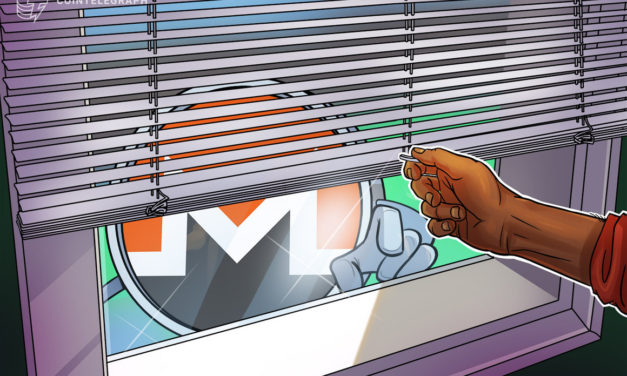
Huobi to delist Monero and other privacy coins, citing regulatory pressures

Cryptocurrency exchange Huobi will delist seven different privacy coins from its platform as regulatory pressure mounts on anonymity-enhanced currencies (AECs).The exchange announced that it had terminated the trading service of a number of privacy tokens including Dash (DSH), Decred (DCR), Firo (FIRO), Monero (XMR), Verge (XVG), Zcash (ZEC) and Horizen (ZEN). These tokens will begin to be delisted on Sep. 19, while deposit services were ceased on Sep. 12 in correspondence with the announcement. Users were urged to cancel open orders for the privacy coins, while the exchange will cancel any existing orders at the delisting time and credit users spot accounts.Related: US expansion for Huobi a step closer after it secures a FinCEN licenseHuobi noted that it made efforts to meet compliance policies of more than 100 countries in which its services are available. The announcement cited efforts to comply with the latest financial regulations, as well as the company’s Token Management Rules.Article 17(16) of its rules list addresses ‘trading concealment or suspension’, which gives Huobi Global the right to conceal or suspend token trading in the following circumstances. Clause 16 is directed at privacy coins in particular:“The token is a privacy token, does not support offline signatures, or its node source codes are not open-sourced.”The exchange also confirmed that it had ended trading services on its futures, margin, ETP, OTC and trading bot services. Cointelegraph has reached out to Huobi Global to ascertain the driving force behind the move and whether regulators in specific countries have necessitated the delisting of the respective privacy coins.As Cointelegraph previously reported, privacy tokens have come under intense scrutiny in different jurisdictions around the world, with the likes of Japanese, South Korean and Australian regulators outlawing their use in recent years. Huobi is eyeing a move into the United States market after acquiring a Money Services Business (MSB) license from the US Financial Crimes Enforcement Network (FinCEN) in July 2022. 

Čítaj viac


From the valley to oasis: Swiss and Dubai crypto associations team up

Switzerland-based Crypto Valley Association will partner with Dubai’s Crypto Oasis to collaborate in the ongoing development of the blockchain industry in both countries.The Crypto Valley Association (CVA), based in the Swiss Canton of Zug’s self-proclaimed ‘crypto valley,’ will spearhead the partnership with its counterpart in Dubai to connect a growing group of blockchain communities in Switzerland and the Middle East.Both associations were founded by Ralf Glabischnig, who played a major role in Zug’s establishment as a center for blockchain and cryptocurrency organizations. The likes of the Ethereum Foundation were born in the area, as Cointelegraph Magazine previously explored.  The new partnership between the Swiss and UAE-based associations is set to establish connections and information sharing between businesses in both countries.Crypto Oasis’ co-founder Faisal Zaidi will spearhead the CVA-led initiative in Dubai, which already has more than 1,100 UAE-based organizations involved in its growing ecosystem. Zaidi highlighted Dubai’s efforts to emulate Zug’s adoption and promotion of blockchain-based businesses, products and services in a statement from the announcement:“This alliance will connect a fragmented blockchain world by connecting Switzerland, which is at the forefront of disruptive technology, with the Middle East, which is all set to become the new hub for crypto and blockchain.”CVA has already carried out a similar initiative, setting up a Latin American chapter in July 2022, which taps into the burgeoning cryptocurrency and blockchain sector in South America.According to the announcement, CVA has extended an invitation to the Dubai International Financial Centre to visit Zug to identify blockchain organizations that could potentially migrate to the United Arab Emirates to bolster its growing ecosystem.The Dubai Crypto Oasis is looking to increase the number of blockchain and cryptocurrency companies within its ecosystem to 1,500 by the end of 2022. In contrast, CVA’s ecosystem took nearly six years to surpass the 1,000 mark.From a regulatory standpoint, Dubai introduced new laws in March 2022 to enhance investor protection and create governance standards for cryptocurrency-related businesses to operate in its jurisdiction.Around the same time, major cryptocurrency exchange operators Binance and FTX were granted licenses to operate and establish headquarters in Dubai.

Čítaj viac

The Sandbox's Instagram account compromised, hackers try to rent BAYC NFTs

Metaverse platform The Sandbox saw its Instagram profile hacked and used to try and rent out Bored Ape Yacht Club nonfungible tokens (NFTs) from a number of users on the social media platform.The voxel-powered NFT platform’s profile was compromised by hackers on Thursday, promoting a fabricated raffle ticket event that touted a season 4 LAND giveaway to unsuspecting users.The firm indicated that its two-factor authentication and other security measures had been bypassed to promote the fake giveaway. The profile’s website URL was changed, with one user claiming to have lost NFTs after clicking the fake link.Cointelegraph managed to follow the link to the fake website — which prompts users to connect web-based wallets for a chance to win the fraudulent raffle.In a bizarre twist, Sandbox co-founder and chief operating officer Sebastien Borget revealed that the hackers then reached out to a number of users on Instagram with Bored Ape Yacht Club profile pictures in an attempt to “rent” out the NFTs — offering 40 Ether (ETH) to use the BAYC NFTs for 24 hours. Instagram account recovered. The hacker tried to rent Bored Apes Yacht Club NFTs – using our account. We would NEVER ask via DM and have contacted all users to notify them. https://t.co/1DRFR3JlIq pic.twitter.com/CKQWfVBTNF— Sebastien (@borgetsebastien) September 8, 2022According to Borget, The Sandbox managed to recover control of its Instagram account a few hours later, while stories promoting the fake giveaway were still live on the account at the time of publishing (:00 pm EST).The NFT-powered Metaverse platform has collaborated with major brands and celebrities since its Alpha launch in November 2021. The likes of Paris Hilton and Snoop Dogg have partnered with the platform, while notable clothing retailers like Adidas launched NFTs wearables that are compatible with The Sandbox and other Metaverse platforms.Cointelegraph has reached out to The Sandbox to confirm details of the incident and will update this article accordingly.

Čítaj viac

Algorand upgrade boosts speed, adds trustless cross-chain communication

Pure proof-of-stake (PPoS) blockchain Algorand has introduced cross-chain communication and transaction speed improvements with the latest upgrade to its protocol.The layer-1 blockchain network announced the implementation of State Proofs to its mainnet, which introduces trustless communication between different blockchain protocols. The upgrade also increased Algorand’s processing speed from 1,200 to 6,000 transactions per second.The upgrade also includes the provision of new tools for developers as well as on-chain randomness capabilities for decentralized applications (DApps) running on Algorand. On-chain randomness is a key feature of Algorand’s PPoS consensus, in which network validators are chosen at random despite the respective amount of staked Algorand (ALGO) tokens.As Algorand unpacked in a recent Medium post, State Proofs are cryptographic proofs of Algorand’s state that allows DApps on other blockchains to trustlessly verify Algorand transactions. The upgrade also increased the block size to 5 MB and a “sub-4-second block latency and finality.”The introduction of State Proofs allows Algorand to securely connect to different blockchain networks without using an intermediary. Cross-chain interoperability and connectivity have mainly been powered by cross-chain bridges and validator networks, which have been subject to high-level exploits in recent times.3/ Today’s upgrade also features an increase in performance from 1,200 to 6,000 TPS and new best-in-class developer tools, allowing organizations building on #Algorand to continue to scale to meet growing demand for #Web3 applications pic.twitter.com/1CJyL0587L— Algorand (@Algorand) September 7, 2022Algorand touts its quantum-secure, trustless State Proofs as a solution to the centralized nature of storage points in existing cross-chain service providers and platforms. Exploits of cross-chain bridges have resulted in the loss of more than $2 billion in 2022 alone.Paul Riegle, chief product officer at Algorand, highlighted the upgrade as a significant step in facilitating the growth of Web3 platforms running on its network:“From State Proofs, which are a game-changing blockchain interoperability security feature, to increased TPS, we are unlocking the tools required for Web3 applications to fulfill their vast potential.”Algorand’s upgrade is timely considering that Ethereum is on the cusp of its transition from proof-of-work to proof-of-stake (PoS) consensus, with the Merge set to take place in the next couple of weeks. Ethereum’s move to PoS is set to drastically improve the scalability and efficiency of the network while reducing its carbon footprint.Algorand is the brainchild of MIT professor Silvio Micali, who founded the PPoS blockchain to address what is known as the “blockchain trilemma.” The trilemma suggests that no blockchain can be simultaneously decentralized, scalable and secure.

Čítaj viac

Hut 8 surpasses 8,000 BTC mark as it continues to HODL

Canadian mining firm Hut 8 saw its Bitcoin holdings surpass the 8,000 Bitcoin (BTC) mark as it continues to accumulate self-mined holdings through depressed cryptocurrency market conditions.Hut 8 released its latest mining report for August 2022, which showed that it had increased its Bitcoin holdings by 375 BTC for the month to take its total reserves to 8,111 BTC. The mining firm a reported that it had mined 12.1 BTC per day at a rate of 125.8 BTC per exahash for the month.While other mining operators have been forced to sell portions of their BTC holdings amid the ongoing cryptocurrency bear market, Hut 8 has managed to continue its self-described “long-standing HODL strategy” and still holds all of its mined BTC.Hut 8 also announced that it had installed 180 Nvidia GPUs at its main data center in Kelowna, Canada. The center currently mines Ether (ETH) but with the Merge set to take place in September 2022, its GPU mining equipment will be used to provide artificial intelligence, machine learning or VFX rendering services.Related: Repurposing Bitcoin mining heat can solve global energy crisis: ArcaneHut 8 has also continued increasing its mining capacity with the acquisition of Chinese ASIC MicroBT miners. The firm paid $58.7 million for 12,000 new MicroBT M30S, M30S+ and M30S++ miners in October 2021 and has received orders of 1000 machines monthly through 2022.Industry experts have warned of the potential implications of Ethereum’s Merge on other cryptocurrencies that run on proof-of-work (PoW) consensus algorithms. Once Ethereum transitions to the proof-of-stake operated Beacon Chain, many miners that secured the Ethereum blockchain will be looking to other PoW chains to continue mining. Ethereum Classic (ETC) saw its token value increase by more than 10% in early September as blockchain explorer and mining pool operator BTC.com launched an ETC pool featuring zero-fee mining over a three-month period.

Čítaj viac

Získaj BONUS 8 € v Bitcoinoch

nakup bitcoin z karty

Registrácia Binance

Burza Binance

Aktuálne kurzy