Autor Cointelegraph By Gareth Jenkinson

Only 10 hours to the Ethereum Merge: Here's what you need to know

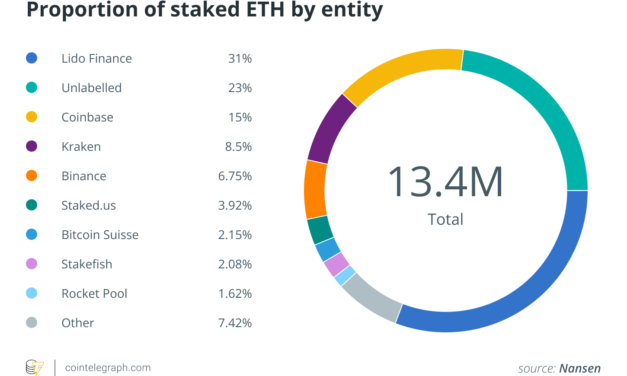
Ethereum’s long-awaited transition from proof-of-work (PoW) to proof-of-stake (PoS) is upon us as the Merge looms in less than 10 hours. There’s plenty to consider for the wider cryptocurrency space — and here’s what you need to know.What is the Merge?The Ethereum blockchain will transition away from its energy-intensive consensus mechanism PoW as its execution layer merges with the new PoS consensus layer known as the Beacon Chain.The Beacon Chain went live in December 2020, allowing ecosystem participants to deposit or ‘stake’ ETH to become the new validators of the network, in doing so replacing PoW miners that had previously put in the work to process transactions, produce blocks and secure the network.In its simplest form, the Merge will make the Ethereum network use 99% less energy and provide greater scalability, security and sustainability.Ethereum’s mainnet (PoW) and the Beacon Chain (PoS) have been running concurrently and will finally merge, hence the name, ushering in a new era for the smart contract blockchain network. The entire transaction history of Ethereum will be carried across as the new consensus mechanism takes control of the network.Who maintains the network after the Merge?As explained, users that are able to stake a total of 32 ETH are eligible to become individual validators of the Ethereum Beacon Chain. Validators are assigned to produce blocks at random and validate transactions and blocks created by other validators in the network.Users can also take part in pooled or centralized staking pools by staking smaller amounts of ETH, which promises a share of rewards for validating and maintaining the network. There are multiple staking options to consider for those interested in playing a part in the network’s new consensus mechanism.A recent report from blockchain analytics platform Nansen shows that just over 11% of the total circulating ETH is staked, with 65% liquid and 35% illiquid. There are a total of 426,000 validators and some 80,000 depositors, while a small group of entities commands a significant portion of staked ETH.Three major cryptocurrency exchanges account for nearly 30% of staked ETH, namely Coinbase, Kraken and Binance. Lido DAO, the biggest Merge staking provider, accounts for the largest amount of staked ETH with a 31% share, while a fifth unlabelled group of validators holds 23% of staked ETH.Could there be forks of the Ethereum blockchain?As Cointelegraph previously reported the Merge will see ETH, the native currency of the Ethereum ecosystem, remain once the Mainnet joins the Beacon Chain. It is worth noting that some PoW miners that previously mined blocks and maintained the execution layer have indicated that they will continue to do so.The PoS-powered Ethereum blockchain will continue to use ETH after the Merge, while another hypothetical PoW Ethereum network, dubbed ETHPOW, could fork away with the creation of an ETHW token. This is something that is being considered by financial service providers that offer exchange-traded products (ETPs) that are tied to the underlying asset of any given blockchain. If there is demand from investors for exposure to a forked PoW chain, then some firms may consider doing that.Any existing ETPs or funds that have exposure to ETH need not do anything, as ETH will continue to exist as the Beacon Chain implements PoS consensus.Do I need to do anything?The average Ethereum user and ETH holder need not worry about losing their funds or making any changes to preferred wallets before the Merge. As the entire history of the Ethereum blockchain is carried across in the transition – all funds in wallets are still accessible and safe.Most importantly – be wary of scams. Cointelegraph has compiled a list of the three most prominent ways malicious actors are trying to prey on the Merge event. Fraudulent staking pools, upgrade scams, and fake airdrops are being touted. You do not need to upgrade your wallet or send your ETH to receive new tokens.

Čítaj viac


BNB Chain to collab with Google Cloud to bolster Web3, blockchain startups

Binance’s smart contract blockchain platform BNB Chain has partnered with Google Cloud to bolster Web3 and blockchain startups.Startups that are currently building products and services on the BNB Chain blockchain will also be able to build on Google Cloud’s scalable, secure and open source infrastructure.This will see over 1,300 active, BNB Chain-based decentralized applications (DApps) from the world of decentralized finance (DeFi), metaverse, blockchain games and nonfungible tokens given access to the tools and infrastructure provided by both platforms.These projects will also be able to make use of Google Cloud for data encryption and on-demand analysis of on-chain data in real time. A key takeaway is providing the platform for developers and projects access to carbon-neutral cloud infrastructure to scale offerings. The partnership will also facilitate access to the Google for Startups Cloud Program to specific Web3 builders from the BNB Chain ecosystem. This includes projects that have been identified for the BNB Chain’s Most Valuable Builder (MVB) accelerator initiative. The Google for Startups Cloud program awards Google Cloud credits annually for up to two years to help early-stage businesses establish and grow their projects. Related: BNB Chain aims to raise 30K new Web3 developers across Latin America in 2022Web3 builders will also be able to connect with Google Cloud Startup Success team members and the firm’s technical subject matter experts across data management, data analytics, artificial intelligence, machine learning and zero trust security. Web3 developer workshops will also be available to participants, as well as Google Cloud training and certifications. The BNB Chain was created in February 2022 through the amalgamation of the BNB Beacon Chain and BNB Smart Chain. The blockchain network is Ethereum Virtual Machine compatible, allowing for multi-chain ecosystem development. 

Čítaj viac

Busan signs MoU with Huobi, gets more help for local crypto exchange

South Korea’s ‘blockchain’ city of Busan continues to establish agreements with cryptocurrency industry heavyweights as Huobi Global enters the development ecosystem.Huobi Global and its Korean branch became the latest exchange to sign a memorandum of understanding with the Busan Metropolitan City government to participate in the growth of its blockchain industry.According to an official announcement from Huobi, the partnership will see the company provide research and development, technology and financial support for the Busan Digital Currency Exchange. Huobi is also set to assist in identifying and hiring blockchain talent for Busan’s local exchange.Huobi has been operating a local office since 2019 and received a mandatory regulatory license from the South Korean Financial Services Commission in 2021. The company cites its operational experience within the country as an important factor in assisting Busan’s goal of becoming a global cryptocurrency and blockchain hub.Related: South Korea ramps up crypto investigations and regulationsA statement from Huobi Korea CEO Junyong Choi highlighted the company’s existing business ties with Korean blockchain ecosystem participants and the expertise of the Huobi Research Institute and Huobi Academy as key drivers of the partnership:”We believe that Busan has strong attributes for fostering innovation and growth, and share their belief that blockchain technologies can transform and benefit traditional industries.”Huobi has also committed to sponsoring the Busan Blockchain Week at the end of October 2022 as part of the agreement.Busan also signed an agreement with Sam Bankman-Fried’s cryptocurrency trading platform FTX in August 2022 to assist in the development of Busan’s local exchange. Binance also penned a similar deal with the city in the same month, with CEO Changpeng ‘CZ’ Zhao in attendance during the announcement.Both FTX and Binance are set to establish a local presence in the city as part of the deal, while Huobi Korea’s local office already has a foothold in Busan.

Čítaj viac

Sci-Fi NFT comic book project lays the foundation for CCG development

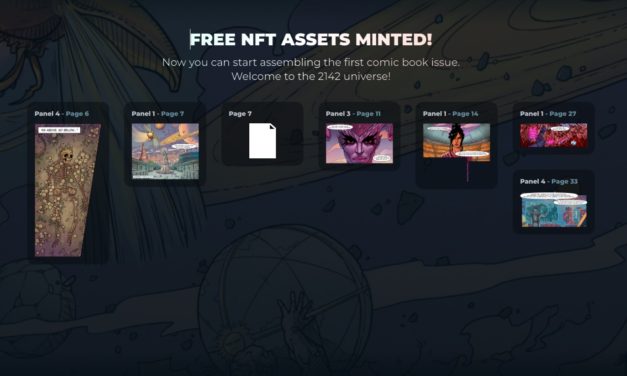
The year is 2142 AD. A dystopian future controlled by corporations is rocked as the last Bitcoin (BTC) is mined, and Satoshi Nakamoto’s long-dormant wallet is awakened and used to dismantle their control. The physical, virtual and astral realms are all disrupted as entheogen spirits, angels and demons battle it out while artificial intelligence (AI) fights AI to liberate conscious entities in the Metaverse.That is the scene-setter for a nonfungible token-powered (NFT) comic book project spearheaded by an ambitious team of former game developers from Serbia. The Web3 platform marries the ever-popular collectibility of comic books with the world of NFTs to establish the lore of a virtual tabletop RPG board game that is in pre-production.Dušan Žica, CEO and COO of 2142, jumps straight into the project’s premise in an exclusive interview with Cointelegraph. Having worked as a copywriter and advertising director for 11 years, Žica switched to the world of video game development the past seven years before the idea for 2142 was born in late 2021.Frustrated by the swathe of copycat collections in the NFT space, his team envisaged a GameFi comic book in which users mint, collect and compile panels and pages of the 2142 AD comic book series, starting with its first volume, before participating in a decentralized autonomous organization (DAO) to guide the course of the story’s progress and ending.Cointelegraph explored the Web3 website to begin the process of minting and compiling the first edition of the 2142 comic book. Paying gas fees gives users a small bundle of free, randomized NFTs, providing the first pieces of the comic book puzzle. As Žica explains, users would need to purchase a total of 15 to 20 bundles to complete the first 34-page comic issue. These bundles might give a user two of the same panels or pages, but the ERC-20 NFTs can be bought and sold on 2142’s proprietary NFT marketplace as well as platforms like OpenSea, enabling collectors to complete comics.The first issue of 2142 AD will also feature randomized cover pages, adding to the unique collectibility of the comic books, which is minted into a complete, single NFT on completion:“We’ve got different covers, which are based on random models, different characters and combinations. When you burn the whole collection of panels, you get one NFT issue. The issue should have inherent value because of that rarity.”Seasoned comic collectors are accustomed to paying anything from tens to hundreds of dollars for the latest copy or rare issue of their favourite comics. One bundle of 21 NFTs will cost around $30 and users will need to acquire at least 15 bundles to receive an airdrop of a character, location and item from the 2142 universe that can then be used to craft new, five-page spin-off webcomics based on the user’s choices. “In this way, we are actually decentralizing and randomizing world-building, it’s a new concept, and we’re not aware of anyone doing that,” Žica said. These characters, locations and items essentially form part of the pre-production of the team’s long-term goal of creating a collectible card video game and tabletop RPG in the mold of Cyberpunk 2020, Kult and The World of Darkness. Žica said that the real value of the NFT intellectual property will be realized and executed in a video game.“We’re in the process of pre-production of a CCG video game, as we all come from video game production backgrounds. It’s going to be a huge part of the pre-production, it can help us grow our community and enhance our world-building.”The 2142 team also wanted to avoid attracting NFT ‘flippers’ that have become part and parcel of the space, snapping up new digital collectibles in the hopes of major profits. Žica conceded that their Ethereum-based NFTs would be available on platforms like OpenSea – in a similar way in which Reddit’s collectible NFT avatars were listed and sold for a premium on the popular marketplace. According to the project overview, members of the 2142 DAO will be entitled to a revenue share in the developing tabletop RPG, CCG video game and animated series.

Čítaj viac

64% of staked ETH controlled by five entities — Nansen

A report from blockchain analytics platform Nansen highlights five entities that hold 64% of staked Ether (ETH) ahead of Ethereum’s highly anticipated Merge with the Beacon chain.Ethereum’s shift from proof-of-work to proof-of-stake is set to take place in the coming days after final updates and shadow forks were completed in early September. The key component of The Merge sees miners no longer used as validators, replaced by stakers that commit ETH to maintain the network.Nansen’s report highlights that just over 11% of the total circulating ETH is staked, with 65% liquid and 35% illiquid. There are a total of 426,000 validators and some 80,000 depositors, while the report also highlights a small group of entities that command a significant portion of staked ETH.Three major cryptocurrency exchanges account for nearly 30% of staked ETH, namely Coinbase, Kraken and Binance. Lido DAO, the biggest Merge staking provider, accounts for the largest amount of staked ETH with a 31% share, while a fifth unlabelled group of validators holds 23% of staked ETH.Lido and other decentralized on-chain liquid staking protocols were initially set up as a counter-risk to centralized exchanges accumulating the majority of staked ETH, given that these firms are required to comply with jurisdictional regulations. Related: Experts weigh in on the Ethereum vulnerabilities after Merge: Finance RedefinedNansen’s report stresses the need for Lido to be sufficiently decentralized in order to remain censorship resistant. Onchain data shows that ownership of Lido’s governance token (LDO) is concentrated, with groups of large token holders potentially carrying censorship risk. “For example, the top 9 addresses (excl. treasury) hold ~46% of governance power, and a small number of addresses typically dominate proposals. The stakes for proper decentralization are very high for an entity with a potential majority share of staked ETH.”Nansen also concedes that the LIDO community is actively seeking solutions to the potential risk of over-centralization, with initiatives including dual governance as well as a legally and physically distributed validator set proposed.Given the ongoing slump in cryptocurrency markets, the majority of staked ETH is currently out of profit – down by ~71%. Meanwhile 18% of all staked ETH is held by illiquid stakers that are in-profit. Nansen suggests that this category of stakers is the most likely to sell their ETH once withdrawals are enabled at the Shanghai upgrade. Fears of a major sell-off at The Merge are unwarranted, though, as ETH withdrawals will only be possible six to 12 months after The Merge.“Even then, not everyone can withdraw their stake at once as there is an exit queue in place for validators similar to the activation queue of around six validators (usually 32 ETH each) per epoch (~6.4 min).”Nansen notes that if all validators withdrew their staked ETH and stopped being validators, this would take around 300 days with over 13 million ETH staked.

Čítaj viac

Získaj BONUS 8 € v Bitcoinoch

nakup bitcoin z karty

Registrácia Binance

Burza Binance

Aktuálne kurzy