Autor Cointelegraph By Gareth Jenkinson

UK Law Commission expects 'substantial impact' from digital asset law review

The Law Commission of England and Wales hopes to establish the United Kingdom as a leading jurisdiction for grappling with legal disputes involving emerging technologies like cryptocurrencies, digital assets and electronic documentation.The project, dubbed “Digital Assets: Which Law, Which Court?” was announced on Oct. 18 with the aim of reviewing international legal challenges involving cryptocurrencies and providing recommendations for legal reform in the United Kingdom.Cointelegraph reached out to Professor Sarah Green, Law Commissioner for Commercial and Common Law, to unpack the driving force behind the authority’s latest law reform project. The U.K.’s legal review body has previously conducted projects aimed at smart contracts, digital assets and decentralized autonomous organizations.According to Green, the previous law reform projects identified several issues in determining which laws apply to international tech-related disputes and which courts should reside over them.Related: UK gov’t introduces bill aimed at empowering authorities’ to ‘seize, freeze and recover’ cryptoAs Green explained, existing rules of private international laws applicable to property disputes are based on the property in question having clear, definitive locations. This gives a clear connection to a particular legal jurisdiction.Given that digital assets and emerging technologies do not typically fit this “traditional mold,” existing  laws for disputes involving digital assets and the courts that should hear them are not necessarily fit for purpose:“This has resulted in an element of uncertainty regarding how a court may apply the existing rules. Indeed, English courts have already had to grapple with the difficult question of where certain digital assets are located for the purposes of establishing jurisdiction in relation to international defendants.”Green then gave a couple of examples of legal disputes in 2020 and 2021. These cases were hamstrung by the difficulty of determining the jurisdiction of the digital assets involved. The process is crucial in deciding if a claimant can serve proceedings in a given court or country. As Green highlighted, the cases in question provided real-world instances that call for legal clarity:“The issues are not abstract or hypothetical, but real and tangible.” The Law Commission will aim to produce a report setting out recommendations for reform in the context of private international law and digital assets. This will then be put out for public consultation with draft recommendations for law reforms in the second half of 2023.Green highlighted her belief that the project would have a substantial impact on the status of English law as a preferred choice of law and jurisdiction to adjudicate disputes:“It is all very well proposing reforms to English domestic law, but to extract the full benefit of those reforms, they should ideally be accompanied by reforms to the rules that determine whether English law applies and whether English courts can hear the dispute in the first place.” The U.K. Law Commission proposed a number of law reforms aimed at providing wider recognition and legal protections for cryptocurrency and digital asset users in July 2022. The move was driven by rapid growth in ownership and trading of nonfungible tokens (NFTs) and cryptocurrencies in the country.

Čítaj viac

‘The social benefits are huge’ — Web3 gaming to shift digital ownership

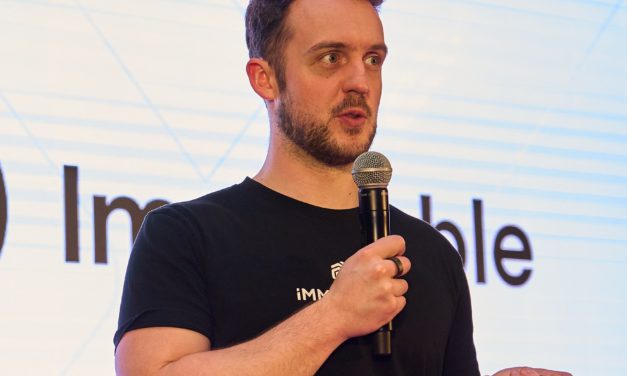
There is no substitute for experience. Even when an experience can feel regrettable, like getting your brother’s Runescape account banned.Robbie Ferguson grew up as an avid gamer, accumulating thousands of hours playing his favorite games. One fateful day, he logged into Runescape and set in motion a series of events that would forever change his view on digital ownership and the world of Web3 gaming:“I logged into my brother’s Runescape account which we shared and went into the wilderness and lost all his Red Dragon Armor. The next day, I felt so bad, I went and bought gold from a gold farm to replace it. The following day, the account was banned.”The incident left a mark on Ferguson, a software developer who became involved in the blockchain space through his introduction to Bitcoin in 2014. His interest was super-charged in 2015 with the advent of Ethereum and the potential of the ecosystem.Ferguson’s Runescape banning incident provided the impetus for his move into blockchain gaming development, having been left frustrated by what he described as the “arbitrary impunity” in which gaming economies and assets were governed by mainstream companies.Speaking to Cointelegraph during the Token2049 conference in Singapore in September 2022, Ferguson unpacked how he, his brother James and Alex Connolly went on to co-found blockchain technology firm Immutable in 2018 after their first attempts to build a decentralized game.Robbie Ferguson presenting at the Asia Blockchain Gaming Alliance summit during Token2049 week in Singapore.Ether Bots, their first attempt at an Ethereum-powered game, taught the trio what should go on-chain versus off-chain and laid the foundation for what would become an infrastructure platform for building Web3-based games and nonfungible token (NFT) functionality. Furthermore, Ferguson was intent on disrupting the status quo of digital ownership of in-game assets:“The reason we started with games is because they’re by far the most exciting use case for NFTs. There’s $110 billion spent every year on digital property that people have zero rights to and it’s a complete scam.”With lessons learned from their first foray, the successful launch of blockchain-powered play-to-earn tactical card game Gods Unchained played an integral role in establishing Immutable, a platform for blockchain development firms to build Web3 games with NFT integration. Understanding the solutionImmutable consists of two separate but intrinsically linked segments. ImmutableX is the company’s Ethereum layer-2 NFT scaling platform, while Immutable Studios is the gaming development arm of the firm. Ferguson maintains that ImmutableX, the Ethereum-based layer-2 solution NFT platform, took invaluable lessons from the development of Gods Unchained, which shaped the functionality of the infrastructure upon which other blockchain games are now being built:“There’s been a lot of gaming platforms built out there that don’t actually understand the needs of games, from a tech perspective, from a services perspective and from a user experience perspective.”The launch of Gods Unchained saw 50 million NFTs minted in its first week, which then led to a price surge due to high gas fees in the Ethereum ecosystem. This highlighted a major need to scale and reduce minting costs in order to make a Web3 NFT-packed game viable for any company, as Ferguson explained:“If this is gonna go at scale we need to make this stuff zero cost to create. If you take a single medium-sized game with 100 million players, if every one of them is trading just once or twice per day, you have a cost basis of tens of millions of dollars per week to that company.”ImmutableX is focused on making everyday in-game items tradable in low-cost bands. Ferguson used Gods Unchained as an example again, with trading cards only down around 10% from market highs because “people trade cards to use in the game, not because the price of Ethereum is $1,200 or $4,000.”While high-value NFTs will always form part of an in-game marketplace, usability should drive in-game economies, according to Ferguson. This then leads to the question of profitability and how Immutable is able to offer free minting of NFTs, which is touted on its website.Immutable facilitates this by paying for all the costs of NFT minting using zero-knowledge (ZK) rolls ups, providing economies of scale that allow billions of transactions to be bundled for a “reasonable cost.” That is still an eight-figure dollar sum for Immutable, but Ferguson highlighted the caveat:“We get to make it so anyone can create these assets for free via incredibly valuable economies and instead be monetized by taking small clips on every trade, which means we have the exact same incentive as games and users do, which is to maximize volume.”Giving back to the Ethereum networkImmutable’s efforts to solve the scalability of NFT minting to power blockchain-based games owe its thanks to Starkware, the Ethereum layer-2 platform that pioneered zk-STARK proof technology.The technology also allows Immutable to lay claim to being carbon neutral, with Ferguson touting the ability to mint 600,000 NFTs in a single proof that only takes up a fraction of a block in the Ethereum network.Nevertheless, zk-Rollups and Ethereum’s Merge have laid an important platform in allowing infrastructure providers like Immutable to build for an increasing number of Web3-based games in the future:“We’re barely at a fraction of a percent of the scale of transactions per second that NFTs will eventually take. If we’re looking at transforming gaming, with billions of gamers worldwide, even then trading a few assets every day is going to radically increase the demand for the stack.”According to Ferguson, Immutable also played a role in developing batched minting and deferred minting, two common NFT scaling paradigms used today by the likes of NFT marketplaces like OpenSea to Nifty Gateway.Why blockchain?Blockchain purists have often questioned whether some industries need to use the technology to improve existing systems. Ferguson considered this question carefully, highlighting his belief that digital users deserve to have rights to the items and assets they acquire in any digital environment:“The mission should be to create a better game, which under the hood uses Web3, so that people have a better experience and have digital property rights. It’s this lie that has been sold to consumers for the past three decades that just because something is intangible, you should have zero rights to it.”Ferguson believes that the success of the sector is already playing out, highlighting more than $9 billion worth of investments into Web3 gaming over the past 18 months. This, in turn, is set to create a shift in equity sharing:“The social benefits are huge. We’re democratizing access to economies with people building assets in-game and the ability for anyone to create content for games, Web3 can now empower those people to monetize much better.”While Web3 may put ownership in the hands of users, that does not mean that mainstream AAA companies are not keeping tabs on the burgeoning sector. As Ferguson explained, these firms will look to position themselves ahead of the disruptive technology if Web3 games become a new standard that is in demand.Immutable, meanwhile, continues to grow. The Australian-based blockchain technology company employs over 300 people and has raised over $300 million from investors including Coinbase, Tencent, Galaxy Digital and Animoca Brands.

Čítaj viac

IRS introduces broader ‘Digital Assets’ category ahead of 2022 tax year

American taxpayers will find a broader, more defined category encompassing cryptocurrencies and nonfungible tokens (NFTs) in their 2022 IRS tax forms. The draft bill released by the Internal Revenue Service features a well-defined Digital Assets section that outlines if and how taxpayers will account for the use of cryptocurrencies, stablecoins and NFTs.Page 16 of the draft defines Digital Assets as any digital representations of the value recorded on a ‘cryptographically secured distributed ledger or any similar technology.’ 2021’s tax form required taxpayers to indicate whether they had received, sold or exchanged in ‘virtual currency’ – with this term changing in the yet-to-issued 1040 tax form for 2022.Taxpayers are required to answer the Digital Assets section of their income tax return whether or not they have engaged in digital asset transactions during the tax year.A number of situations will require American taxpayers to indicate yes to the question on Digital Assets of Form 1040 or 1040-SR. This includes receiving as a reward, award or payment for property or services or sold, exchanged, gifted or ‘disposed of a digital asset in 2022.Related: IRS to summon users who don’t report and pay tax on crypto transactionsThis would include instances where an individual received digital assets as payment for property or services provided or as a result of a reward or award. Receiving new digital assets through mining or staking also falls under this category, as does transacting digital assets in exchange for goods or services as well as exchanging or trading digital assets. Holding cryptocurrencies, stablecoins or NFTs or staking tokens is also clearly addressed in the draft tax form:“You have a financial interest in a digital asset if you are the owner of record of a digital asset, or have an ownership stake in an account that holds one or more digital assets, including the rights and obligations to acquire a financial interest, or you own a wallet that holds digital assets.”The Digital Assets explainer also outlined conditions that do not require taxpayers to check Yes on their tax forms. If an individual holds a digital asset in a wallet or account, transfers digital assets from a wallet or account to another wallet or account owned by themselves or acquires digital assets using U.S. dollars or other fiat currencies through electronic platforms like PayPal.Digital asset transactions can be clearly classed in either capital gains or income sections of the 2022 tax return.If an individual disposed of any digital asset during the year which was held as a capital asset, they are expected to calculate their capital gain or loss and report on Schedule D of the tax return.If individuals received digital assets as payment for services or sold digital assets to customers in a trade or business, this would need to be reported as income in its specific category.

Čítaj viac

UK Law Commission to review international laws on crypto to consider legal reforms

The Law Commission of England and Wales will set about reviewing private international legal challenges involving cryptocurrencies through a government-commissioned project.The review, launched on Oct. 18, will provide clarity on how international law approaches emerging technologies like cryptocurrencies, digital assets and electronic documentation. The law reform project, dubbed “Digital Assets: Which Law, Which Court?” will outline current international legal rules and their application to digital contexts with the purview of making recommendations for legal reforms to keep United Kingdom laws relevant.The project is sponsored by the Ministry of Justice and intends to develop reform proposals to be published for public consultation by the second half of 2023.The announcement highlighted that the proliferation of blockchain technology has generated a number of conflict of law issues, which, in turn, has created legal uncertainty for users, organizations and governments. Related: 8 things to remember as the U.K. considers new crypto property lawsA major hurdle is considering which courts have the power or jurisdiction to hear disputes and which laws should be applied. This is also due to the digital nature of cryptocurrencies and digital assets like nonfungible tokens (NFTs), which are intangible in nature, distributed and geographically difficult to define, which further exacerbates legal considerations.Professor Sarah Green, Law Commissioner for Commercial and Common Law, highlighted the difficulty in dealing with legal disputes involving the burgeoning space in a statement shared with Cointelegraph:“With digital assets and other emerging technologies developing rapidly in recent years, the laws that support and govern them have struggled to keep pace. This has led to inconsistencies across jurisdictions, with uncertainty over which laws should be applied and which courts should rule on them.”The announcement also stressed its aim of supporting innovative digital technologies like cryptocurrencies in the U.K. as the country looks to establish itself as a hub for cryptocurrency adoption. The Law Commission has been involved in a number of law reform projects involving smart contracts, digital assets  decentralized autonomous organization (DAO) electronic trade documents. Cointelegraph has reached out to the Law Commission to ascertain further details of the project

Čítaj viac

Bitcoin Amsterdam 2022: Optimistic outlook for BTC amid shaky economic times

It may not have been Tulip season in the Netherlands, but there was a palpable buzz at the picturesque Westerpark, which played host to the Bitcoin Amsterdam 2022 conference.Prominent speakers from all corners of the Bitcoin (BTC) ecosystem drew in a healthy number of attendees across the two days of the program, exploring wide-ranging topics, challenges and successes as the space nears its 14th year of existence.With global economic woes continuing across conventional markets and global monetary inflation concerns mounting, Bitcoin’s role as a potential hedge was a major topic of discussion, kicking things off inside the Westerunie dome on day one at the conference.Bitcoin as an inflation hedgeFormer hedge fund manager Greg Foss and Prince Philip of Serbia Gave provided some interesting food for thought, highlighting the potential for Bitcoin as a safe haven asset given its engineered scarcity when compared to a debt-driven economic system that has been fighting to combat inflation.The Netherlands hosts one of the main crypto events in Europe these days! If you are around #BitcoinAmsterdam say hi to Cointelegraph reporters @gazza_jenks and @JoeNakamoto! pic.twitter.com/GZ7piDhrXj— Cointelegraph (@Cointelegraph) October 12, 2022Cointelegraph spoke to Foss in Amsterdam, who highlighted his view that Bitcoin will play a major role in tackling monetary inflation. Having cut his teeth working for the Royal Bank of Canada and spending nearly 30 years trading credit, Foss’s introduction to Bitcoin fundamentally changed his outlook on the current economic challenges facing the world:“I found Bitcoin in 2016. I’ve been researching it ever since, and in my opinion, it is the most important technological and financial solution to our looming debt crisis that we’re seeing coming true in real-time right now. What’s happening in the U.K. is extraordinary stuff. I haven’t been this nervous about the financial system since 2009.”Prince Philip used an anecdotal example of soaring inflation in Serbia both in the past and in 2022 as cause for concern for locals despite government assurances that inflation numbers would return to single digits in 2023:“This is how Bitcoin is really going to help people in Serbia and around the world. It’s key that we educate people to understand the scarcity of Bitcoin and how it’s going to solve the inflation issue we’re all experiencing right now.”Former European Parliament member Nigel Farage also weighed in on the issue from a British context in a conversation with Cointelegraph. While admitting he’d first heard of the concept of Bitcoin back in 2012, Farage only recently pondered its importance when he began to question the nature of fiat currencies in modern times.Farage highlighted a break away from the gold standard in various countries many decades ago as a primary cause of inflationary environments which often take years to remedy. Bitcoin, in his view, could become a more attractive means of transacting and combatting inflation in Europe in the near term future:“There’s gonna be a very, very big change here over the next two or three years, and it will become a trusted means of exchange. And if I look now doing banking transactions, they’re inefficient, they’re costly, and often quite slow. So [Bitcoin] becomes more and more attractive.”While there was plenty of optimism for Bitcoin being a hedge in an individual’s investment portfolio by a number of speakers, Foss highlighted the importance of having a clear strategy in place in terms of a percentage allocation to BTC in a portfolio.Energy issues in EuropeEnergy issues were another hot topic of debate, given that Europe is experiencing an energy crisis of sorts which has been exacerbated by Russia’s invasion of Ukraine. Andy Long, CEO of mining firm White Rock Management, summed up the status of affairs on the continent.“Really, the only affordable resources for energy for mining in Europe are in locations where the energy is stranded. When you transport energy, you have losses in the grid, but you also need enough capacity in the distribution network.”Long also noted that gas pipelines being restricted and nuclear power plants being powered down were adding further restraints, while renewable generation was not keeping pace. This means that mining operators are having difficulty finding locations with low-cost, stable power.Jelmer ten Wold, CEO of Greentech Technologies AG, highlighted the fact that the European Union is investing €300 billion in renewable energy production in the coming years while plans for consumption are lacking somewhat.“It will result in a lot more need and demand for stable load and load-balancing applications. The moment that the heat-user vertically integrates with a mining farm, producing heat and BTC at the same time, there is no way that an electronic boiler will ever be cheaper.” Long also recounted how his firm’s energy infrastructure investments in Sweden had led to a cascading effect of infrastructure development and further investment into mining ventures by other companies. This provides an example of how Bitcoin mining can be an incentivizing force for further electricity utility development.Considering sidechainsPaul Sztorc, independent Bitcoiner and inventor of BIP 300 and renowned cryptographer, Hashcash inventor and Blockstream CEO Adam Back pondered over the future use of sidechains to improve the Bitcoin network in the future.It’s a packed house early on day one of #BitcoinAmsterdam inside the Westerunie dome in Westerpark. pic.twitter.com/KSFvGok5HL— Cointelegraph (@Cointelegraph) October 12, 2022

OpCodes, Simplicity and zero-knowledge SNARKS were put forward by both speakers during their panel on the subject. Back suggested that opcodes, which push data or perform functions within a pubkey script or signature script, could be the easiest to implement in the near term future:“I think that the opcodes are probably the fastest path. I think there is new energy in Bitcoin layer twos with Fedimint and Statechains, there are multiple companies working on those things. They’re also interested in novel new opcodes so it’s a good time to have that conversation.”Sztorc, who created BIP 300 which proposes compressing three to six months of transaction data into a fixed 32-bytes, also agreed that sidechains could help scale Bitcoin’s network through the implementation of his BIP and other sidechain proposals:“The idea that I have for BIP 300 and just the sidechain idea more generally could have enormous impact. Not only does it do extensibility but it can be used to achieve a huge scale very quickly.”Upgrades or improvements to Bitcoin’s protocol have always been a contentious issue, but the two highly respected cryptographers certainly provided measured takes on how the protocol can continue to evolve in a multi-cryptocurrency and blockchain ecosystem.Julian Assange’s Bitcoin storyRenowned activist and Wikileaks founder Julian Assange, who is currently incarcerated at Belmarsh prison in London, was represented by his wife Stella, who gave a rousing address in Amsterdam which unpacked Bitcoin’s role in fighting censorship around the world:“Bitcoin and its technology are trying to fight censorship in a similar way to how Wikileaks has fought censorship using cryptography. Julian started Wikileaks with incredible innovation, he is a pioneer who has changed the way journalism is done.”Assange’s work using cryptography was primarily focused on helping journalists and newsrooms relook at how they protect their sources and information in the internet age. Once Wikileaks began publishing information, the media company saw itself shut off from major payment networks.“That led to Wikileaks becoming an early adopter of Bitcoin. It’s important to understand the attacks on Wikileaks and the different attacks. The extra-territorial banking blockades, the political and legal attacks.”General conversations with speakers and attendees painted a picture of optimism about Bitcoin’s ongoing role during increasingly uncertain times around the world. As the Covid-19 pandemic begins to fade away, inflationary concerns and the ever-present threat of an escalating situation in Ukraine have also seen energy costs soar in Europe.Despite a bleak outlook, Bitcoin continues to attract long-time users and prospective new entrants to explore the many avenues of the preeminent cryptocurrency. As one anonymous long-term Bitcoin holder told Cointelegraph, “I flew here from America because I like to keep tabs on what is going on in space.”The attendee was one of many who had traveled from various parts of the world to find out how the Bitcoin ecosystem continues to evolve in the ever-growing cryptocurrency ecosystem.

Čítaj viac

Získaj BONUS 8 € v Bitcoinoch

nakup bitcoin z karty

Registrácia Binance

Burza Binance

Aktuálne kurzy