Autor Cointelegraph By Gareth Jenkinson

ConsenSys commits $2.4M annually to launch MetaMask Grants DAO

Blockchain technology firm ConsenSys will spend $2.4 million annually to fund its newly launched MetaMask Grants DAO aimed at driving further development of the Web3 ecosystem.The fund will be led by MetaMask employees who will manage the decentralized autonomous organization (DAO). The DAO will be responsible for issuing grants to developers working outside of ConsenSys that are building products and services within MetaMask’s ecosystem and the wider Web3 space.The project will initially run for 12 months to assess its viability and success, with the DAO processing votes and proposals publicly through SnapShot on the Codefi Activate platform. ConsenSys is committing $600,000 per quarter in an effort to drive decentralization and adoption of Web3 mechanisms and business models.MetaMask’s global product lead Taylor Monahan highlighted the focus on decentralized development as a catalyst for further growth in a statement shared with Cointelegraph:“Not only will this accelerate growth for crypto-comfortable users, but this will also boost adoption for crypto-curious individuals with more paths to participate in.”The DAO itself is made up of three components. The first is the employee-led DAO which consists of more than 900 full-time ConsenSys employees. These employees will be able to opt-in to be Grants DAO members, all of whom have equal voting rights.Related: The blue fox: DeFi’s rise and the birth of Metamask InstitutionalThe second part is a leadership committee, or mini-DAO, made up of seven individuals. This committee will be responsible for identifying high-potential projects, creating governance proposals and updating external content. They will also gather feedback and drive improvements to the DAO.The final part is a secure multisignature wallet overseen by ConsenSys that will manage the token contract and treasury. It will also sign transactions for fund disbursement as well as mint and burn tokens as employees join or leave the company.The leadership committee of MetaMask Grants DAO includes the co-founders of MetaMask, its global product lead, Snaps Studios lead, senior DAO strategist, as well as ConsenSys’ director of strategic initiatives and product management director.The funding of the DAO will feature two types of grants. The Leadership Committee Grant will be voted on solely by its seven members, while DAO Grants will be allocated for the entire DAO to vote on.

Čítaj viac

Google feels the bear market as crypto ad revenues slip since July

The latest earnings call from Google’s parent company, Alphabet, highlighted decreased search advertising spending from financial services and cryptocurrency subcategories.Alphabet released its earnings report for Q3 on Oct. 25, outlining a 6% increase in revenue totaling $69.1 billion in comparison to Q3 last year. Revenues were down slightly from Q2 2022, dropping from $69.7 billion.However, the breakdown of revenues from Google Services, which includes its advertising earnings, showed that this segment increased from $58.8 billion to $61.3 billion over the past year. Philipp Schindler, chief business officer of Google, noted particular strife in the financial and the cryptocurrency sectors, in particular, with notable drops in advertising spending quarter-on-quarter during Alphabet’s earnings call on Oct. 25:“We did see a pullback in spending by some advertisers in certain areas in search ads. For example, in financial services, we saw a pullback in insurance, loan, mortgage and crypto subcategories.”Google updated its financial products and services policy in July 2022 to clarify the scope and requirement for adverts relating to cryptocurrency businesses, services and products. This set out rules for advertisers of exchanges and wallet services targeting countries, including France, Germany, South Korea, the Philippines, the United Arab Emirates, Hong Kong and Thailand.Related: Google gets in on Ethereum Merge excitement with nifty easter eggGiven that they met certain regulatory requirements within these jurisdictions, advertisers could continue to promote their crypto-related products and services through Google’s advertising platform. The change came several months after Google gave crypto-related advertising the green light in August 2021. The multinational tech giant had previously banned crypto- and initial coin offering-related advertisements back in June 2018. Global markets and cryptocurrency markets continue to weather difficult times, with the latter enduring what analytics firms like Glassnode have dubbed as the worst bear market on record.Nevertheless, the decreased advertising spending from the cryptocurrency sector does not reflect Google’s attitude toward the space. Google announced a partnership with American cryptocurrency exchange Coinbase in October to allow payments for cloud services with Bitcoin (BTC) and Ether (ETH) in 2023.

Čítaj viac

South African crypto landscape primed for TradFi growth after FSCA ruling

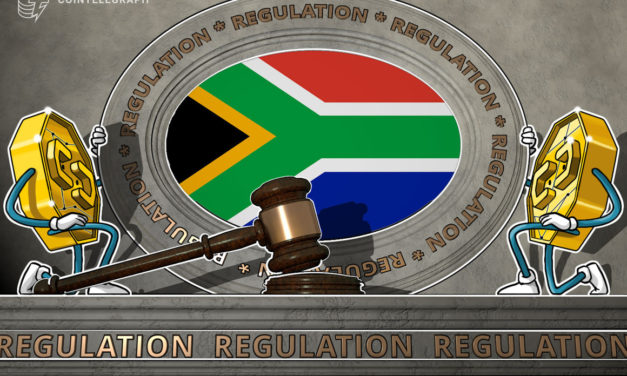
South African financial service providers have been primed to offer cryptocurrency products and services to customers after regulatory amendments in the country.This comes after South Africa’s Financial Sector Conduct Authority amended its financial advisory act from 2002 on Oct. 19, defining crypto assets in the country as financial products. Most importantly, the definition means that cryptocurrencies can now be offered by financial service providers, both domestic or international, given that they are licensed in South Africa.South Africa already commands a growing number of retail cryptocurrency users estimated to include as many as six million individuals. The country’s Reserve Bank has also taken a measured approach in its regulatory stance of the sector in an effort to ensure investor protection without hampering innovation.Cointelegraph touched base with two prominent cryptocurrency exchanges in the country, with both Luno and VALR serving significant user bases in South Africa. The companies are well placed to offer insights into the latest regulatory move, given that they cater to both retail and institutional clients in the country.VALR CEO Farzam Ehsani labeled the FSCA’s move as ‘good news for South Africa setting a path towards regulating crypto asset service providers in the country’ while ensuring ‘they are serving the public with integrity.’ Marius Reitz, Luno general manager for Africa, echoed these sentiments by highlighting the importance of regulatory clarity not only for investors but for financial service providers in the country:“The licensing requirements that will flow from this classification will drive high standards in the industry, particularly in relation to consumer protection, with potential investors easily able to identify those providers that satisfy regulatory requirements.”Reitz also flagged the key benefit, which now allows financial advisors to formally advise clients on cryptocurrency investments. Before the FSCA amended the definition of crypto assets, financial advisors were not permitted to give advice on unregulated investment opportunities. “The regulatory framework paves the way for wider institutional adoption. How this plays out will depend on the ability of more traditional finance companies and even banks to be able to fully support this newly classified financial product.”Chris Becker, cyber banking managing executive at Tyme Bank, also provided insights to Cointelegraph. The South African digital bank welcomed the move to regulate cryptocurrencies within existing frameworks as it looks to drive digital money services and payments.Becker believes the move could bring some comfort to individuals that may have been cautious of interacting with crypto asset service providers due to concerns of a lack of regulation, having worked for private wealth manager Investec as its blockchain lead in his previous role.Becker also agreed that the regulatory move may support greater adoption in the long-term if financial service providers use the new product category to offer crypto asset products to their large customer bases.Nevertheless, regulatory uncertainty has not stopped corporates and institutions from gaining exposure to cryptocurrencies in South Africa. Both exchanges already work with a number of institutional clients.VALR serves more than 700 corporates and institutions, which includes a number of large traditional finance institutions in South Africa. Ehsani said the firm has been focused on building its infrastructure for the past five years to bridge traditional finance in the country to cryptocurrency markets. Luno also allows corporate customers to use its platform.Meanwhile Becker highlighted the reality that traditional financial service providers may not necessarily invest in cryptocurrencies as a result:“Other regulations such as the Pension Funds Act and the Foreign Exchange Control Act do not yet make provision for crypto assets yet.”VALR’s CEO also believes that the country could see cryptocurrency-related exchange-traded funds (ETFs) and similar financial products being developed and released in the next few months now that regulatory oversight is becoming clear:“I think we’ll start seeing many more financial products related to crypto in the near future. Many people have been working on this for some time and now with the Declaration, we should expect to see much of this work become visible to the public.”Reitz offered a more measured take on the subject, highlighting the FSCA announcement as a first step in creating a broad regulatory framework for crypto assets in South Africa. He believes more clarity is needed around the wider application of the regulation with regard to permitted cryptocurrency financial products, highlighting America’s standpoint as an example:”In the United States, Bitcoin ETFs can only hold BTC futures contracts or stocks of companies and other ETFs with exposure to cryptocurrencies as the SEC continues to evaluate the approval of ETFs that own BTC directly.”Meanwhile, the FSCA delivered a more sobering message in a press conference that accompanied the Oct. 19 announcement. As Reuters initially reported, FSCA Regulatory Frameworks Department head Eugene Du Toit made it clear that cryptocurrencies are not recognized as legal tender in South Africa. The regulator also stressed the importance of being able to grapple with scams and fraudulent activities in the space in an effort to protect local investors.

Čítaj viac

WhatsApp down again? Google Trends spike after the outage

Some two billion WhatsApp users were left without service on Oct. 25 as the biggest messaging application worldwide went offline. Meta, the owner of Facebook and WhatsApp, is yet to clarify what led to the outage.Users took to social media platforms like Twitter to share hilarious memes about the outage, with many flocking to alternative social media platforms to find out if they were alone in their lack of service. A similar situation took place in October 2021, with Facebook, Instagram and WhatsApp going down for more than 24 hours due to a “server configuration change.” WhatsApp is down. #Bitcoin never goes down.— Cointelegraph (@Cointelegraph) October 25, 2022This time around, the outage was fairly short-lived, with WhatsApp restoring messaging services within a few hours of the initial outage. Nevertheless, questions about alternative messaging applications came to the fore once again.When you come to @Twitter and realise that, yes, WhatsApp is down… pic.twitter.com/xBpLAxw3Uf— Real Madrid C.F. (@realmadriden) October 25, 2022

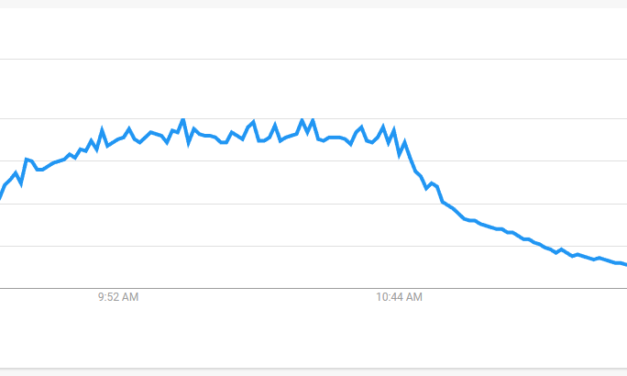
Google Trends data highlights the surge in searches relating to WhatsApp around the globe on Oct. 25 as users tried to find out what had happened to the world’s most popular messaging app. Singapore, United Arab Emirates, Italy, Netherlands, Pakistan and South Africa were among the countries with the highest number of WhatsApp-related queries following the blackout.The cryptocurrency community has long held privacy and encryption in high regard, and as such, a number of WhatsApp competitors have been endorsed as growing alternatives. Telegram has grown its user base steadily over the past few years, with founder and CEO Pavel Durov pinning the platform’s user base at 700 million users in October 2022. Telegram allows users to send end-to-end encrypted messages, photos and videos, share files, and create large groups or channels of up to 200,000 people for broadcasting purposes. Related: This is what your email could look like in Web3Signal commands a user base of some 40 million people around the world, and its privacy features are touted as industry-leading. Its open-source, end-to-end encryption means that Signal and third parties cannot read or listen to a user’s messages or conversations.Discord is a growing player in the instant messaging app space, already popular among gamers as a major voice-over-IP service. The platform is touted to serve over 140 million users that make use of its voice and video calls, text messaging, media and file sharing capabilities and server hosting.Line is another alternative messaging service used by some 178 million users across the East Asia region. It integrates text messaging, voice and video calls with a bouquet of services, including a wallet app, gaming and music streaming services.WhatsApp is down globally.https://t.co/uaVXfClZVr doesn’t have servers. All connections happen directly between peer devices. Full privacy.In fact the biggest lie is that people need cloud/centralized infrastructure to talk to friends and family.Be a https://t.co/4Wexvzjy95— Paolo Ardoino (@paoloardoino) October 25, 2022

A decentralized alternative that bypasses the need for central servers or services is also an option. Keet, developed by Bitfinex and Tether-backed development firm Holepunch, offers a desktop-based peer-to-peer messaging application for text and video calling. 

Čítaj viac

Low hash price, soaring energy costs spell tough Q3 for Bitcoin miners

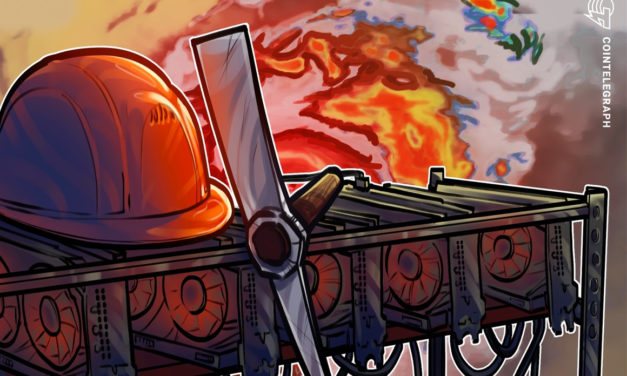
Energy problems in North America and Europe and prevailing market conditions have spelled another bleak quarter for Bitcoin (BTC) mining operators on both continents.The latest Q3 mining report from Hashrate Index has highlighted several factors that have led to a significantly lower hash price and higher cost to produce 1 BTC.Hash price is the measurement used by the industry to determine the market value per unit of hashing power. This is measured by dividing the dollar per terahash per second per day and is influenced by changes in mining difficulty and the price of BTC. As Hashrate Index reports, Bitcoin’s hash price was afforded some reprieve in the middle of Q3 as heat waves during the American summer led to a drop in hashrate, which corresponded with a slight BTC price recovery. However the price of Bitcoin dropped below $20,000 once again and hashrates climbed to new all time highs in September, leading to the hash price slipping closer to all-time lows.Miner profit margins were further threatened by rising energy costs in North America and Europe. The latter has been particularly hard hit by a ‘combination of mis-managed renewable energy policies, under investment in oil and gas, nuclear plant decomissionings, and Russia’s war with Ukraine’ which have sent energy prices sky-high.Related: Top 3 reasons why Bitcoin hash rate continues to attain new all-time highsAmerican miners have had to contend with the average cost of industrial electricity increasing 25% from $75.20 a megawatt hour to $94.30 per megawatt hour from July 2021 to July 2022. This has also had an effect on hosting service providers that are increasing their power prices in hosting contracts.As hash price has dropped, some mining operators with mid-range equipment are facing down reaching breakeven costs margins. In the past, retail miners have either abandoned or sold rigs that are no longer profitable to mine. Liquidating these assets is also becoming more difficult as Bitcoin mining values have been in decline throughout 2022. Rig prices dropped significantly in May and June but ‘flattened’ in August and September according to the report, while the picture is still bleak:“Old-gen machines like the S9 experienced a precipitous drawdown at the end of June amid Bitcoin’s freefall to $17.5k. With mining economics in the dumpster, the S9 and similar rigs have become unviable except in the cheapest energy markets.”Publicly-traded mining firms have also faced increasing pressure with increasing interest rates and greater difficulty acquiring lines of credit. This has led to some firms turning to equity fundraising, which has the downside of diluting shareholders at lower stock prices. However these at-the-market offerings allow for quick capital raises which can help fund continued expansion and operating costs through the ongoing bear market. Miners have also had to sell BTC holdings in order to keep production going in 2022. However this rate has ‘slowed progressively’ through the third quarter and public miners have sold fewer BTC than their monthly production in August and September for the first time since May.Hashrate Index also cautioned that Q3 could be a precursor for more tough times for the mining industry with the potential for further distressed asset sales, bankruptcies and miner capitulation as the year comes to a close.

Čítaj viac

Získaj BONUS 8 € v Bitcoinoch

nakup bitcoin z karty

Registrácia Binance

Burza Binance

Aktuálne kurzy