Autor Cointelegraph By Gareth Jenkinson

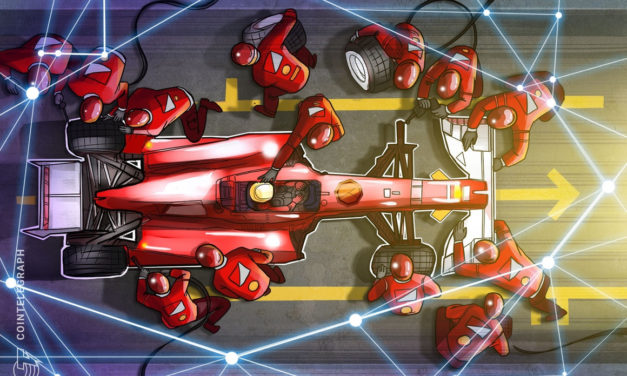
NFT rides shotgun as Red Bull Racing closes out F1 season

Cryptocurrency and blockchain technology firms continue to feature in the world of Formula 1, with a nonfungible token (NFT) making its mark on Red Bull Racing’s vehicles to close out the 2022 calendar.Red Bull Racing dominated the F1 season, topping the constructors’ standings, while Max Verstappen closed out the drivers’ standings for a second consecutive season. With the curtain closing on 2022’s race schedule in Abu Dhabi on Nov. 20, the team’s cars will feature an NFT on their livery in what is being called a first in F1.Red Bull Racing struck a deal with cryptocurrency exchange ByBit as a Principal Team Partner in February 2022, one of a handful of cryptocurrency firms sponsoring teams in Formula 1. The exchange’s logo will feature alongside Lei the Lightning Azuki, an NFT artwork and character from the anime-inspired Azuki collection.The original Lei Azuki NFT is one of 10,000 NFTs from the collection. The #8494 is currently listed on OpenSea and is valued at around 9 Wrapped Ether (wETH), or $11,100 at the time of writing. Related: Merch and perfume: Formula One trademark filing paves the way for F1 NFTsRed Bull Racing’s Lei the Lightning Azuki will be a limited edition version of #8494 and is set to be minted on the Tezos blockchain and available through ByBit’s NFT marketplace.A statement from Red Bulls Racing’s team principal, Christian Horner, highlighted the ongoing exploration of Web3 use cases through the partnership in the sporting world“In many ways, it’s been an eye opener for us to the vast opportunities Web3 has to offer. This unique project is the perfect combination of creativity, innovation, and passion which matches our ethos on the track.”The sport of Formula 1 has been a big proponent of the cryptocurrency space. Crypto.com signed a major sponsorship deal in June 2021 as its official cryptocurrency and NFT partner. Fan token blockchain platform Chiliz has also partnered with a handful of F1 teams over the past two years.McLaren became the first team to carry out a ‘livery takeover’ with their main sponsor OKX in 2022. Cointelegraph had an exclusive interview with Australian driver Daniel Ricciardo about the partnership at Token2049 in Singapore in October 2022. Formula 1 also filed a number of trademark applications in October 2022 that suggest that the organization is looking to take full control of the intellectual property in the wider cryptocurrency space.

Čítaj viac
27,000 requests last year: Collaboration key for Binance’s Investigations team

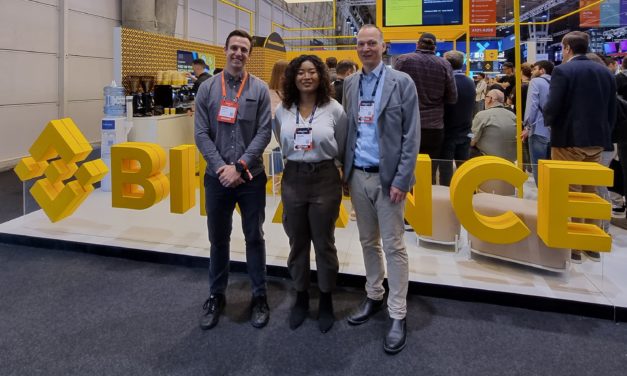
Historical crime has left a proverbial black mark on the cryptocurrency ecosystem with multi-million dollar hacks, scams and fraud cases grabbing headlines around the world.Various research reports have highlighted the use of cryptocurrencies for illicit means, with varying degrees of severity since Bitcoin’s inception in 2009. This has ebbed and flowed but crypto is still perceived by some as a means to launder money, finance terrorism and facilitate other serious crimes.The prevalence of cryptocurrency-related crime inevitably led to the development of better tools and services to track and trace funds on different blockchains and cryptocurrency exchanges. Firms like CipherTrace, Chainalysis and Elliptic offer surveillance and analysis tools to businesses, while some of the biggest players have gone as far as establishing their own investigation and surveillance departments to identify illicit transfers on their platforms.Binance is among them, with its exchange operating in several jurisdictions across the world. Its global footprint has demanded greater oversight of its operations which is carried out by Binance’s Investigations and Intelligence department.Cointelegraph sat down for an interview with department head Nils Andersen-Röed and senior manager Jennifer Hicks during Web Summit in Lisbon to unpack the role their team plays within the organization and the greater cryptocurrency and crime enforcement space.Industry expertsBoth individuals have a wealth of experience in the sector. Andersen-Röed rose through the ranks of the Netherlands Politie and led its Dark Web Unit from 2016 to 2018. He then worked for Europol’s Specialist Dark Web Team for three years before joining Binance.Hicks’ military background saw her serve as a cryptologic linguist for the United States Navy from 2010 to 2016. She later moved into specialized investigative work as a senior cybercrime investigator for Chainalysis from 2020 to 2021 as a precursor to her current role at Binance.Cointelegraph’s Gareth Jenkinson alongside Binance’s Investigations and Intelligence senior manager Jennifer Hicks and department head Nils Andersen-Röed at Web Summit in Lisbon in November 2022.Andersen-Röed oversees the European, Middle East and Africa region, with a mandate to handle a broad scope incorporating compliance processes. This includes transaction monitoring and storyboarding, as well as escalations on more serious issues:“In my team, I’ve got former law enforcement agents, so we all used to work on crime cases ranging from ransomware to traditional cases with cryptocurrency elements in there.”Hicks has a more specific directive across the global team, heading up the special investigations unit. Her team focuses on multinational and extremist-related crimes, tapping into her terrorist financing expertise:“We’ll get requests from all over the world. It could be Europe, United States, anything that has extreme events that could be crypto related and not just Islamic terrorism.”Hicks’ department has also addressed cases related to child abuse materials, violent crimes and incidents involving sanctions. Busy workloadBinance, like many other exchanges, has a dedicated team that deals with general oversight requests and private information inquiries. More complex or urgent queries are allocated to specific departments. The exchange’s global reach means that Andersen-Röed’s department is busy, usually processing requests in a few hours to three working days on average. It’s no mean feat, given the sheer amount of requests handled in 2021:“The generic caseload is quite big. I think for the case team, for example, last year had like 27,000 requests which were handled in a very short time.”This does not include what he describes as “proactive work.” This could include an instance of a hack, for example, where the team looks for exposure to Binance and investigates and takes action at an exchange level:“If we see or if we notice certain law enforcement agencies in certain countries are interested in it, then we also reach out to them to see if we can work with them.”Collaborative effortsBinance’s Investigations team has also been involved in larger projects relating to fraud cases, terrorism financing and ransomware attacks, which Andersen-Röed described as top priorities for law enforcement agencies.The transparent nature of blockchain networks also means that there is no shortage of work for Binance’s investigative team. This calls for a predefined scope in order to manage workloads and investigative efforts, given that some illicit movement of funds could eventually end up on Binance’s platform:“If you see a hack, even if it doesn’t go to our platform, we can still trace it through blockchain. So, we quite often have to define up to what point we will investigate. It could be that a hack at some point will reach our platform or users will try to launder money, and then we can quickly take action.”Binance’s Investigations team also has outside agencies approaching it for assistance. Hicks joked that the department receives requests “hourly” but the reality is that their expertise is sought after and influential.Working through hundreds of law enforcement requests is a sizable task, but Hicks highlighted her team’s efforts to help guide and support investigations that might be outside of the exchange’s sphere of influence. This includes offering more than just information that has been requested, by collaborating on thought processes and analytical approaches:“If we think that there’s a better avenue for them to get the answers that they need in their investigation, we’ll walk them through that. It’s really like a holistic process. It’s not really just standard field tracing and all that.”Investigations are a two-way street as well. Binance relies on commercial tools and threat intelligence platforms to keep an eye out for crypto-related crimes and illicit movement of funds, as Hicks explained:“The threat intelligence industry is chock full of great counterterrorism analysts that I used to work with in the past. So there is a network there that we rely on in order to gain a complete picture of whatever that investigation may be.”A guiding handWhile the top global law enforcement agencies are well-versed in tackling cryptocurrency-related crime, Binance’s Investigations team also supports those that are still learning to deal with these types of crimes.Andersen-Röed admitted that some countries and agencies are great at what they do, while others are still learning about the sector and lack the tools and expertise to tackle more complex tracing and crypto-related incidents:“We also try to we do a lot of active outreach for law enforcement to basically explain what we’re doing but also how they can investigate. And it helps us because the quality of professional will improve.”The pair’s Investigations team forms an important but smaller part of Binance’s compliance and security infrastructure. Some 500 people make up the department of the exchange that ensures its stability and security.Nevertheless, the impact of the Investigations team can end up helping secure the wider cryptocurrency ecosystem by going one step further than just identifying and deactivating Binance accounts being used to move illicit funds.Andersen-Röed stressed the importance of the reactive and proactive work in tracing cryptocurrency and flagging potential criminal elements:“We try to take action against the accounts and reach out to law enforcement so they can investigate and hopefully arrest criminals. We try to keep our platform safe, but we also try to keep the industry safe.”The cat-and-mouse nature of these efforts will likely continue, but Andersen-Röed believes his team’s efforts to make the industry safer will prevail in the long run. Collaboration and outreach remain an integral part of the exchange’s efforts to weed out nefarious players.

Čítaj viac

Abu Dhabi grants Binance financial services permission, economist hits out

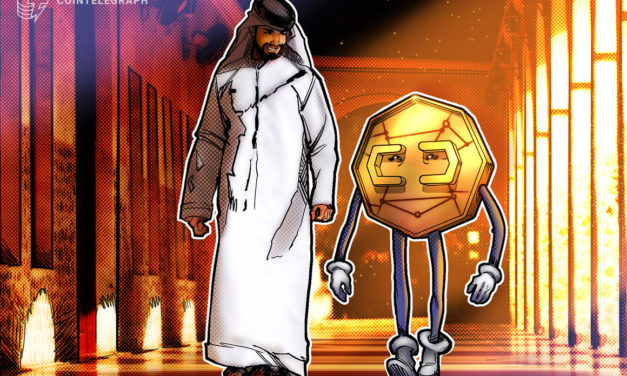
Abu Dhabi’s Global Market (ADGM) and Financial Services Regulatory Authority have granted cryptocurrency exchange Binance clearance to offer its services in the region.An official announcement from the United Arab Emirates capital’s financial center confirmed that Binance will be cleared to offer cryptocurrency custodial services to professional clients once it has met the requirements for its Financial Services Permission.The news came after Binance founder and CEO Changpeng Zhao attended the Abu Dhabi Finance Week. Zhao appeared onstage alongside Galaxy Digital CEO and investor Mike Novogratz at the event for a wide-ranging conversation that touched on the aftermath of the ongoing FTX bankruptcy.Binance had already gained a foothold in Abu Dhabi after being granted in-principle approval from ADGM in April 2022. This gave the exchange the go-ahead to operate as a broker-dealer for cryptocurrencies and digital assets. Related: FTX debacle sees Nansen take stock of major exchange on-chain holdingsWhile Binance looks set to begin offering its exchange services to customers in Abu Dhabi, the announcement had its detractors. Chief among those was economist and cryptocurrency critic Nouriel Roubini, who made disparaging remarks about the regulatory clearance afforded to Binance during a separate panel at the Abu Dhabi Finance Week.”This is an ecosystem that is totally corrupt… I can’t believe @cz_binance has a license to operate in the UAE,” @Nouriel tells CNBC’s @dan_murphy on stage at Abu Dhabi Finance Week. pic.twitter.com/3BGEMfx7zc— CNBC Middle East (@CNBCMiddleEast) November 16, 2022Roubini argued that Binance being banned in the United Kingdom and ongoing investigations by the United States Department of Justice suggests the exchange is a “walking timebomb”:“Unfortunately, this is an ecosystem that is totally corrupt. I think this is a lesson from the last few weeks, and I think these people should be out of here. I can’t believe [Zhao] and Binance has a license to operate in the UAE.”Binance has had an intriguing role to play amid the implosion of Sam Bankman-Fried’s FTX empire. Zhao held initial talks with his competitor to bail out FTX, but closer scrutiny of the company’s financials saw the deal fall through before FTX filed for bankruptcy.Binance then led a movement followed by a number of prominent exchanges to provide proof-of-reserves of cryptocurrency asset holdings. The exchange has also set up an industry recovery fund aimed at providing financial support to exchanges and projects facing liquidity issues.Binance has received a number of regulatory approvals in different countries in 2022, with Dubai giving the all-clear in September 2022. This followed the exchange receiving regulatory clearance to offer its services in Bahrain in March 2022.

Čítaj viac

FTX debacle sees Nansen take stock of major exchange onchain holdings

The collapse of cryptocurrency exchange FTX has put industry peers under the microscope with calls for transparent accounts of token holdings and assets under management.Major cryptocurrency exchanges like Binance, Huobi, OKX and Crypto.com have made efforts to share details of their assets and portfolios to assuage the wider space. This comes after investor confidence has been shaken, with users across the ecosystem moving Bitcoin (BTC) and other tokens off exchanges to avoid potential contagion from the FTX fallout. Blockchain analytics platform Nansen provides industry insights and is known for its wallet labeling features that track addresses across multiple blockchains. In a series of Tweets posted on Nov. 15, Nansen listed seven major exchanges, their relevant portfolios and explanatory statements of accounts.Related: Bitfinex CTO releases proof of reserves amid FTX bankruptcy fiascoThe assets and net worth of the exchanges is the sum of holdings in wallet addresses provided by the firms on blockchains that Nansen monitors. The analytics platform also notes that the figures are not an “exhaustive or complete statement of the actual assets/reserves held.”The exchanges accounted for include Binance, Crypto.com, OKX, KuCoin, Deribit, Bitfinex and Huobi.Binance, widely regarded as the largest global exchange by transaction volume, holds around $64.3 billion worth of assets across the Bitcoin, Ethereum, TRON and BNB blockchains. This eclipses the other exchanges by a substantial amount. 3/ @binance portfolio: https://t.co/mdsVyJNKYZCurrent holdings: $64.3B (removed Binance Bridge pegged tokens, only include their original assets)Chains:#Bitcoin#Ethereum#Tron#BNBChainBinance statement:https://t.co/BpTv4wpQwO pic.twitter.com/cgrP2MXh4s— Nansen (@nansen_ai) November 15, 2022Bitfinex has the second largest asset holdings in reserve of the seven exchanges according to data provided by the company. $8.23 billion of assets are held across the Bitcoin, Ethereum, Polygon, TRON, Solana, Acala, Avalanche, Cosmos, Fantom, Near, Terra and Terra Classic blockchains.9/ @HuobiGlobal portfolio: https://t.co/ck3ML981rzCurrent holdings: $3.31BChains:#Bitcoin#Ethereum#Polygon#TRON#Solana#Avalanche#CosmosHuobi’s statement: https://t.co/vBf7Y2V4Nc pic.twitter.com/vcM6xoaXfQ— Nansen (@nansen_ai) November 15, 2022

Huobi’s assets amount to a traced $3.3 billion across eight different chains. OKX reportedly holds $5.84 billion in cryptocurrency assets across the Bitcoin, Ethereum, Polygon, Arbitrum, TRON and Avalanche blockchains. 5/ @okx portfolio: https://t.co/fkfUzbAusTCurrent holdings: $5.84BChains:#Bitcoin#Ethereum#Polygon#Arbitrum#TRON#AvalancheOKX’s statement:https://t.co/jmEfmntgg3 pic.twitter.com/1TYCRfErrn— Nansen (@nansen_ai) November 15, 2022

Crypto.com holds an estimated $2.36 billion in assets across seven chains. KuCoin addresses account for $2.65 billion in assets on eight different blockchains and Deribit holds around $1.46 billion worth of assets on the Bitcoin, Ethereum and Solana blockchains.Nansen co-founder and CEO Alex Svanevik told Cointelegraph that the firm is planning to publish preliminary findings on the FTX situation this week. Nansen previously unpacked onchain findings after the cataclysmic collapse of the Terra ecosystem in May 2022.

Čítaj viac

L2 is crucial to Ethereum decentralization, censorship resistance, says researcher

Ethereum layer-2 scaling platform StarkWare has officially launched the StarkNet Foundation with the introduction of a diverse board that aims to safeguard Ethereum’s decentralization and censorship resistance.Seven individuals, including key members from the Ethereum ecosystem and wider cryptocurrency space, will head up the non-profit entity. An announcement shared with Cointelegraph outlined the role of the StarkNet Foundation in ensuring the maintenance and security of StarkNet’s network as well as its development and expansion.Cointelegraph reached out to Eric Wall to unpack his appointment to the Foundation’s board. Wall is a blockchain researcher and whistleblower who has exposed systemic flaws in high-profile cryptocurrency projects. Wall also acts as an advisor on cryptocurrency to the Human Rights Foundation.Wall highlighted systemic efforts to help Ethereum continue scaling through layer-2 innovations as key to the ongoing success of the smart contract blockchain network:“Since Ethereum is the most important DeFi chain we have, I care a lot about making sure that it sticks to the ethos of decentralization and censorship resistance. This battle is fought at the baselayer, but must also be fought at the layers above.”Wall told Cointelegraph that his motivation to join the Foundation was to ensure that ‘one of Ethereum’s most important second layers’ did not neglect the ethos of the underlying blockchain:“StarkWare is probably the most important player in the ecosystem in pioneering validity proof systems that many believe are absolutely central to Ethereum’s scalability endgame, and StarkNet is the general-purpose platform leveraging that technology”Wall highlighted the Foundation’s role in managing relationships with ecosystem partners and developers as well as allocating grants. This includes ensuring partnerships are in the best interest of StarkNet users and are aligned with ‘the fundamental ethos of neutral open-source engineering’.The Foundation will also focus on StarkNet technology education to help developers learn how to build Decentralized Applications (DApps) using StarkWare’s proprietary STARKs (Scalable, Transparent ARgument of Knowledge) proof system. Related: StarkWare nets $100M as investors bank on layer-2 successThe Foundation’s board also includes StarkWare CEO and co-founder Uri Kolodny and StarkWare’s president, co-founder and computer scientist Eli Ben-Sasson. Computer scientist and StarkNet advisor Shubhangi Saraf, blockchain developer and Nethermind founder Tomasz Stańczak, former United States deputy chief technology officer Andrew McLaughlin and award-winning lawyer Heather Meeker make up the rest of the leadership group.As previously reported, StarkNet is a decentralized layer-2 validity rollup that aims to scale the Ethereum network while maintaining its security and decentralization. It addresses what is known as the ‘blockchain trilemma’ coined by Ethereum co-founder Vitalik Buterin.The StarkNet Foundation will manage 50.1% of the ecosystem’s initial token supply to guide the network’s allocation of resources. The funds will be used to support StarkNet’s community of users, developers and researchers, which contribute to the ecosystem by creating infrastructure, tools and applications.

Čítaj viac

Získaj BONUS 8 € v Bitcoinoch

nakup bitcoin z karty

Registrácia Binance

Burza Binance

Aktuálne kurzy