Autor Cointelegraph By Ezra Reguerra

Vietnamese officials back new partnership to tokenize genomic profiles

Asia-based genomics firm Genetica and Web3 data management firm Oasis Labs have partnered to tokenize genomics profiles with the aim to enhance genomics-based precision medicine. In an announcement sent to Cointelegraph, the firms noted that Genetica will migrate 100,000 genomic data profiles to the Oasis Network. These profiles will allow the data owners to have full control and knowledge of how their genetic data is being used.The partnership is also backed by Vietnamese government officials who are very supportive of Web3 technologies and data rights. According to Nguyen Chi Dung, who is from the Ministry of Planning and Investment in Vietnam, their officials are firm supporters of Web3 and blockchain and believe that it brings true benefits to society. Chi Dung explained that: “The technology sector in Vietnam has been continuously growing and brings practical solutions to issues such as healthcare, education, finance, and others. […] By empowering data ownership and privacy sharing, it can help drive real benefits to healthcare and precision medicine.”Oasis Labs founder Dawn Song believes that data is “the new oil” and that it’s very important to develop technologies that are privacy-focused and allows the responsible use of data. He thinks that “once data can be viewed as property, it can propel the global economy.”Tuan Cao, the co-founder of Genetica, expressed his delight as the partnership allows them to realize one of their goals. “The partnership enables us to turn the idea of issuing GeneNFTs to our users a reality,” said Cao. Related: Crypto Stories: YouTuber CryptoWendyO shares how her healthcare skills helped with crypto tradingMeanwhile, the EU Blockchain Observatory recently published a report that highlights the applications of blockchain in the healthcare sector. According to the report, there are challenges that blockchain can fix on the way to what the report dubbed “Healthcare 4.0.”

Čítaj viac
US congress research agency weighs in on UST crash, notes gaps in regulation

The Congressional Research Service (CRS), a legislative agency that supports the United States Congress, has published a document that contains a rundown on algorithmic stablecoins and points out key factors to look at in the TerraUSD (UST) crash. In the report, the CRS described the UST crash as a “run-like” scenario and posited that there are policy issues connected to the risk of such events. According to the CRS, a “run” situation starts when holders are doubtful of the reserves that back the dollar peg of the asset. Following this, a significant number of investors withdraw investments at the same time, resulting in a negative domino effect that threatens the financial stability of the crypto ecosystem and the traditional finance system. The research agency further explained that run-like scenarios in traditional finance are guarded by regulation and other measures such as bank deposit insurance and liquidity facilities. These reduce the incentives of those who are considering pulling out their assets. On the other hand, the CRS notes that the stablecoin industry is not as “adequately regulated” and that there may be gaps in the regulatory frameworks of stablecoins, as the agency previously discussed in another report. Moreover, the CRS highlighted existing policy proposals that may restrict assets that could back stablecoins and establish reporting requirements. Related: Polygon and others extend helping hand to Terra blockchain projectsMeanwhile, United States Treasury Secretary Janet Yellen recently noted that the de-pegging of stablecoins like UST and Tether (USDT) is not a threat to the country’s financial stability. Despite this, Secretary Yellen also noted that the digital industry is “growing very rapidly” and present similar risks to banks. Following the Terra (LUNA) and UST crash, Terra co-founder Do Kwon announced that the Terraform Labs team will create a new proposal to fork the Terra Luna blockchain. The new blockchain will not be connected to UST, while the old Terra network will still coexist with UST and be renamed Terra Classic (LUNC).

Čítaj viac

Deus Finance’s dollar-pegged stablecoin DEI falls below 60 cents

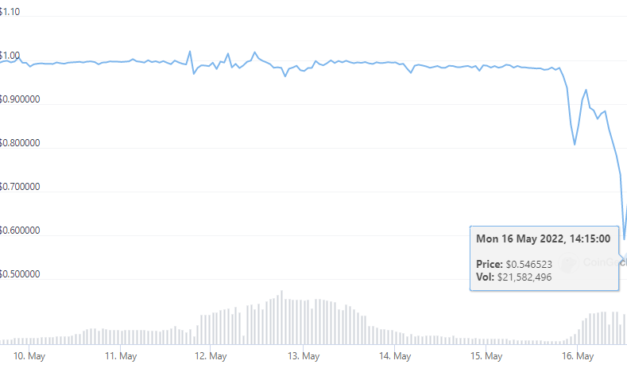
As the market continues to mourn over losses on the Terra UST and LUNA debacle, DEI, a stablecoin used as a collateral mechanism for third-party instruments built on the Fantom-based decentralized finance (DeFi) protocol DEUS Finance (DEUS), has failed to maintain its dollar peg, falling below 60 cents on Monday. As the price of DEI hit an all-time low of $0.52, its market capitalization also followed, dropping from almost $100 million to around $52 million. However, despite the depegging of its stablecoin, DEUS Finance’s governance token, DEUS went up from $163.40 to $327.28, before falling to $255.36. DEI price chart from CoinGeckoAt the time of writing, DEI’s price is $0.66 with a market capitalization of $59 million. This follows stablecoin fears brought about by the UST and LUNA debacle and a decision by Deus Finance developers to pause DEI redemptions. However, according to its official Telegram channel, the DEI peg will be restored in the next 24 hours. While DEI is also an algorithmic stablecoin like UST, the DEI stablecoin is collateralized, meaning that users are able to mint 1 DEI by depositing collateral worth 1 dollar. These can be assets like USD Coin (USDC), Fantom (FTM), DAI, WBTC or DEUS. Similar to UST, DEI’s peg is stabilized by a mechanism that involves the minting and burning of DEUS. When minting DEI, a DEUS collateral is burned unless other tokens are used as collateral. On the other hand, when redeeming DEI, DEUS is minted. Related: USDT-dollar peg wobbles as markets continue to struggle: Tether CTO weighs-inBack in March, the DeFi project became a victim of a hack that resulted in Dai (DAI) and Ether (ETH) losses worth $3 million. Because of this, the platform decided to close its DEI lending contract. A day after the Deus Finance exploit, DeFi protocols Agave and Hundred Finance also reported exploits that resulted in losses of various cryptos that were worth a total of $11 million.

Čítaj viac

Crypto Stories: YouTuber CryptoWendyO shares how her healthcare skills helped with crypto trading

CryptoWendyO heard about Bitcoin (BTC) on the radio and decided to take a risk. Little did she know, the risk she would take would change her life in ways she never thought possible. The influencer shared her Bitcoin journey in this episode of Crypto Stories.[embedded content]In her younger days, life wasn’t too kind to Wendy. According to the crypto influencer, she survived many challenges, including mental health issues, the death of her father when she was 11 years old, and growing up in poverty. For a long while, she thought that she would never be able to change her life. However, things changed when Wendy realized that the world around her didn’t care about her and the only way forward was to change her life herself. Then, she met Bitcoin. She explained that: “I kept hearing about Bitcoin on radio. So, I decided to go ahead and take a plunge and invest, be a little bit risky. And that was kind of a really cool thing to do because I never thought in a million years that I was smart enough to teach myself to do anything.”She also shared that her experience working in healthcare contributed to her success in crypto trading. According to Wendy, her healthcare job forced her to learn to calculate doses and communicate with many different people. She was able to apply these skills to crypto trading.Wendy believes that these experiences helped her become a “decent trader” and online content creator. With these, she was able to create a community of like-minded individuals who were interested in going through the same life-changing journey that she went through Related: Crypto Stories: Ethan Lou shares experience of crypto conference in North KoreaShe continued to encourage people to take more risks and believe in themselves. “One of the things that I realized is people who are wealthy, or people who are successful entrepreneurs, they take chances,” she said

Čítaj viac

Bitcoin to the sky: Emirates to accept BTC payments and launch NFT collectibles

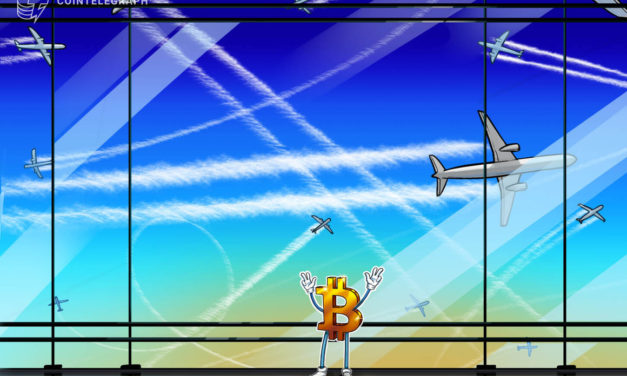
Emirates, the largest airline in the United Arab Emirates (UAE), announced that it has plans to implement Bitcoin (BTC) payments and launch nonfungible tokens (NFTs) to be traded through the company’s websites. In a media gathering held at the Arabian Travel Market, the chief operating officer of Emirates, Adel Ahmed Al-Redha reportedly stated that the Dubai-based airline will be onboarding new employees who will be focused on blockchain-related projects such as the crypto payments, blockchain tracking, metaverse and NFTs. According to Al-Redha, the airline is looking into using blockchain to keep aircraft records. Additionally, the airline executive also noted that it may use the metaverse to transform its processes such as operations, training, website sales, and other airline-related experiences into the digital world. The airline’s COO believes that this will make the processes “more interactive.” Apart from these, Al-Redha also mentioned that the airline industry is slowly making a comeback as there are more and more travelers coming in. To expand its reach, the firm is embracing new technologies such as a Bitcoin payment service and NFT collectibles to be traded. Related: Venezuelan international airport to accept Bitcoin payments: ReportAirports and airlines around the globe have been looking into ways to integrate blockchain-based technologies and crypto payments. In February 2021, Air France partnered with several organizations to create a blockchain-based system that verifies COVID-19 test results. In March 2021, the Latvian airline airBaltic has added Dogecoin (DOGE) and Ether (ETH) into its payment options. The airline has been accepting BTC since 2014 and allows the use of other currencies like USD Coin (USDC), Binance USD (BUSD) and Gemini Dollar (GUSD). Back in October 2021, Salvadoran President Nayib Bukele announced that the airline Volaris El Salvador will accept BTC payments. The announcement followed El Salvador’s push for BTC adoption when it declared BTC as legal tender.

Čítaj viac

Získaj BONUS 8 € v Bitcoinoch

nakup bitcoin z karty

Registrácia Binance

Burza Binance

Aktuálne kurzy