Autor Cointelegraph By Ezra Reguerra

Dubai regulation check: Which companies got approvals recently?

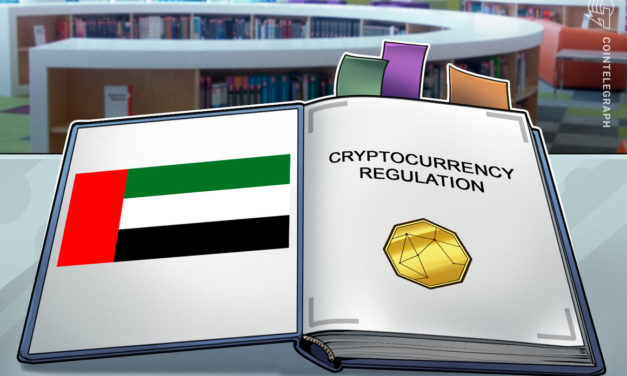
Dubai has positioned itself as one of the most crypto-friendly cities, having established a new regulator to cement the United Arab Emirates’ position in the crypto space. Following the move, crypto exchanges began to flock to the region, securing the newly formed regulator’s approval to operate within the region. In March, Dubai’s authorities announced a new law on crypto assets and established a new regulating body called the Dubai Virtual Asset Regulatory Authority (VARA). The regulator is tasked with organizing the issuance and trading of virtual assets and virtual tokens, authorizing virtual asset service providers, ensuring the protection of personal data, organizing the operations of virtual asset platforms and preventing price manipulation. VARA has regulatory authority within the Emirate’s special development and free zones. However, it does not have jurisdiction over the Dubai International Financial Centre (DIFC). In a previous interview with Cointelegraph, Kokila Alagh, the founder of a UAE-based law firm, explained that the DIFC is governed by its own independent regulator, the Dubai Financial Services Authority. Related: Dubai to ramp up metaverse efforts with 40,000 new jobsWith the region providing much regulatory clarity and an intention to become a key player in contributing to the future of crypto, exchanges took the opportunity to jump into the region, securing provisional approvals from VARA. In July alone, many exchanges secured approvals to expand their reach in the region. OKX extends offers after securing a provisional licenseOn July 14, the exchange OKX made a push into Dubai when it acquired a provisional license under VARA. According to the OKX team, the license allows the exchange to extend its services and products within the region. This means it can offer added services for specific investors and financial service providers in Dubai. Huobi secures MVP provisional licenseCrypto exchange Huobi Global jumped into the train as it secured a Minimal Viable Product (MVP) license under VARA. In an announcement sent to Cointelegraph on July 15, Huobi noted that Huobi Investment FZE, a UAE-based entity under Huobi, was authorized to offer its products and services under VARA’s specialized parameters. Following this, the exchange plans to set up a headquarters in the region. Komainu to provide crypto custody after securing VARA approvalKomainu, a firm working with institutions to gain crypto exposure, announced that it was granted approval to operate within the region on July 27. With the authorization to operate, the custodian can extend its custody services for blockchain-based digital assets to firms within the region. FTX subsidiary gets operating licenseFTX FZE, a subsidiary of crypto exchange FTX, secured an operating license from VARA on July 29. The firm secured the approval under the Minimal Viable Product (MVP) license, allowing the exchange to fully operate within the region and letting it provide regulated crypto derivatives and trading services to qualified institutions. Previously, FTX also secured the virtual asset exchange (VAX) license under VARA.

Čítaj viac


What happens when 21 million Bitcoin are fully mined? Expert answers

When the last Bitcoin (BTC) is finally mined, the livelihood of miners who rely on block rewards as a source of income will be affected. Despite this, the future of mining stays promising, according to an expert in the space. In a Cointelegraph interview, Mohamed El Masri, the founder of mining solutions provider PermianChain, talked about new players jumping into mining, the future of mining and what happens to mine profitability after the 21 millionth BTC is minted. El Masri highlighted that efficiency is a very important focus that new players in the space must take into consideration. Because mining profit depends on how efficient a mining operation is, the executive noted that efficiency brings the cost of energy down to a minimum. [embedded content]When asked about the future of the mining space, the executive shared that it’s not always about profit. El Masri said that the future of the mining sector relies on what he described as the “real Bitcoin miners” who value solving blocks more than how much BTC they can convert into fiat currency. The executive noted that these types of miners will be the leading operators in the space. He explained that: “The future of the Bitcoin mining sector depends on the continued commitment of industry players to support the infrastructure of this monetary and financial breakthrough, at any cost necessary.”The executive also shared his predictions on what the industry will look like once the last BTC is mined. According to El Masri, when the time comes, a BTC mining business can still be profitable because transaction fees will replace block rewards as a source of revenue for miners. By then, the mining executive predicted that BTC would be worth $430,500 each. Related: BTC mining costs reach 10-month lows as miners use more efficient rigsEl Masri explained that transaction fees will generate almost $3 billion in a year at this price point. He noted that there are also other growth drivers to consider, including layer2 improvements and energy efficiency enhancements.In a panel hosted by Cointelegraph Research, Bitcoin mining experts shared how they prepare for the next Bitcoin halving. According to the panel, several possible moves exist, including planning for survival during the bear market and capitalizing on the bull market.

Čítaj viac

Ethereum founder speaks against transferable governance, community responds

The governance discussion intensifies as decentralized autonomous organizations (DAOs) become more popular in the blockchain space. The dilemma between giving power to a specific few and the freedom to voluntarily delegate decision power was highlighted in a Twitter thread created by Ethereum founder Vitalik Buterin. In a tweet, Buterin brought up an old adage pointing out that power-hungry individuals are not suitable to lead. The Ethereum founder highlighted that the saying can be applied to DAOs and argued that transferable governance tokens in DAOs contradict the whole point of DAOs. Buterin noted that if governance can be transferred, it enables those who are after power. While the Ethereum founder presents a valid point, some reacted with contrasting opinions. In a reply, Twitter user Muki pointed out that it’s inevitable to delegate decision power. According to the community member, expecting everyone to participate is impossible, and a voluntary delegation of decision power is better than making uninformed decisions or not participating at all. Contributing to the discussion, Twitter user Willyogo wrote that holding transferable governance tokens does not equate to wanting to rule people. However, the community member also said that there’s definitely room for improvement for DAOs in terms of voting mechanics. Twitter user Vagobond also chimed in, saying that having fully recallable delegates is a way to move forward. In this idea, the delegates who were picked could instantly lose their authority the moment they stop representing those who delegated votes to them. While others focused on governance mechanics, some pointed to the use of blockchain-based technologies like picking important positions in a DAO using verifiable randomness. Another community member suggested randomly selecting token holders and rotating when the selected holder does not show on-chain activity. Related: Lido DAO: Ethereum’s biggest Merge staker soars 400% in July — but technicals flash warningIn the recent Ethereum Community Conference held in Paris, Web3 adviser Hilary Kivitz discussed DAOs and how they can fight off hostile takeovers. According to Kivitz, there are solutions such as adding poison pills into smart contracts to dilute the votes of exploiters. Meanwhile, in a recent interview with Cointelegraph, Alex Tapscott mentioned that DAO developments are something to look out for during the bear market. Tapscott highlighted that DAOs have the potential to replace traditional organizations in organizing resources.

Čítaj viac

Binance jumps into NFT ticketing after UEFA League fiasco

Following the chaos caused by counterfeit tickets in the UEFA Champions League 2022, crypto exchange Binance has launched the pilot of its nonfungible token (NFT) ticketing solution with football club Società Sportiva Lazio for the 2022 to 2023 season.In the announcement sent to Cointelegraph, Binance highlighted that NFT tickets will solve the issue of fake tickets and eliminate scalping, preventing disorder in sporting events. Apart from access to events, the NFT tickets will also serve other purposes such as store and match discounts, token giveaways and other experiences with S. S. Lazio. With the collaboration, NFT tickets will be available for all of S. S. Lazio’s home matches. Marco Canigiani, an executive at S. S. Lazio, said that current ticket holders will be able to claim their NFT tickets for free and use them to enter Stadio Olimpico and avail of the benefits that come with the digital tickets. Binance executive Zoe Wei said that the launch of NFT ticketing showcases a different way to use NFTs and highlights a significant use case for Web3 technology. Wei also said that blockchain-based tickets have the potential to eventually expand from sports to the broader entertainment industry. Related: NFT ticketing may catch on faster in France after UEFA championship debacleIn May, UEFA blamed thousands of fake tickets for the chaos that happened in the Champions League final in Paris. The event highlighted a problem with traditional ticketing systems, spurring comments from Web3 experts on how blockchain-based ticketing can provide a solution. In a recent interview with Cointelegraph, Josh Katz, the CEO of NFT marketplace YellowHeart, argued that ticketing is the most compelling use case for NFTs. The executive highlighted that, by having proof of authenticity for each ticket, event organizers will have a defense mechanism against counterfeit tickets.

Čítaj viac

Crypto mining still profitable in the long-term, expert says

From the great migration to the bear market, crypto miners went through many challenges throughout the year including a shift in profitability. However, according to Steve Bassi, an expert in Bitcoin (BTC) and Ether (ETH) mining, crypto mining may still be profitable if we look at its long-term prospects. As the costs of application-specific integrated circuit (ASIC) miners hover around $8,000 to $12,000 and electricity costs take up more than half of the projected income, the current estimated time frame when a miner could cover the cost of one device is five to six years. Commenting on the topic, Bassi said that while mining income certainly looks bleak in the short run, it will change as time goes by. He said:“In the long run, we’re expecting another BTC halving in 2024. So, a long-term holder could do well mining in the short term and perhaps selling when block reward goes down in 2024.”If prices don’t change in the coming years, things can go sour for miners as the devices are not designed to last that long. Bassi noted that mining hardware depreciates in three to five years, with some parts needing complete replacement. “Out to 60 months on these devices, operators have a good chance that they’re going to have to replace a power supply or fan in a significant portion of these devices,” said Bassi. Despite this, the mining expert praised the water cooling aspects of the newer Antminer devices. According to Bassi, if this standard stays, cooling will be more efficient and only miners who are already planning for liquid cooling will be competitive. Related: Bitcoin miners sell their hodlings, and ASIC prices keep dropping — What’s next for the industry? Earlier this month, JPMorgan strategists mentioned that the costs of producing BTC have dropped from $24,000 to $13,000 at the start of June. This number is the lowest since September of last year. While the lower production costs may ease selling pressure from miners, some still perceive it to have a negative effect on asset prices.

Čítaj viac

Získaj BONUS 8 € v Bitcoinoch

nakup bitcoin z karty

Registrácia Binance

Burza Binance

Aktuálne kurzy