Autor Cointelegraph By Ezra Reguerra

Bitcoin core contributor urges maximalists to take a different route

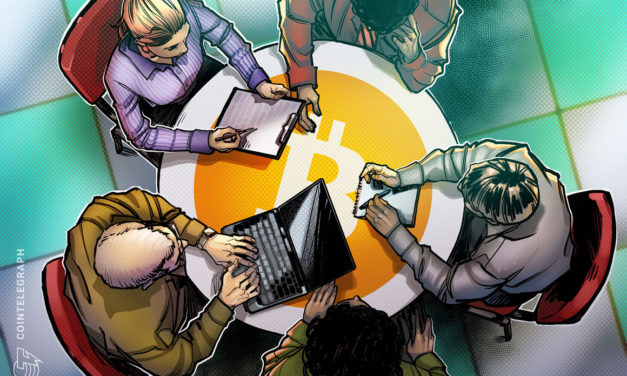
There was once a time when Bitcoin (BTC) was the only crypto project that was not a scam, and advocating for only BTC made perfect sense. However, according to a Bitcoin Core contributor, this has not been true for a while, as he urged the community to drop the us-versus-them culture. In a Twitter thread, Matt Corallo, who contributed to the Bitcoin Core, pointed out to the community that at the moment, instead of BTC proponents advocating why Bitcoin is unique and remarkable, they are spending time attacking other projects. According to Corallo, this situation is leading to what he described as a narrative war, where crypto projects bash each other. Corallo further explained that Bitcoiners coming after Ethereum (ETH) for the upcoming Merge, saying that proof-of-stake (PoS) will not work, will, in turn push ETH proponents to lobby with regulators against Bitcoin with the same environmental angle. Lastly, the developer urged Bitcoiners to focus on talking about Bitcoin and its positive aspects and drop the culture of attacking other projects that are not BTC. Despite the call for more respect and courtesy for other projects, some Bitcoiners still remain unfazed. In response to the thread, Twitter user BitcoinCEOh said that “anything other than Bitcoin is a scam.” They said that some projects look legit but are ultimately scams in the end. Related: Will Ethereum ever surpass Bitcoin? Crypto community answersIn July, Bitcoin proponent Michael Saylor said in an interview that all PoS networks are securities and are very risky. He argued that Ethereum is a security because of its inherent features such as being issued through an initial coin offering. He noted that it’s up to regulators to decide if these projects should continue or not. Meanwhile, Ethereum founder Vitalik Buterin has been actively defending Ethereum from critics. Buterin called out arguments against ETH voting and described one as an “unmitigated bare-faced lie,” saying that ETH doesn’t conduct voting on protocol parameters.

Čítaj viac

Nonfungible tokens don't live on the blockchain, experts say

As nonfungible tokens (NFTs) are advertised as blockchain-based technologies, there are misconceptions on how they are stored according to two experts. They argued that technically, these tokens do not exist in the blockchain but are actually stored elsewhere. In a Cointelegraph interview, Jonathan Victor, the Web3 storage lead at Protocol Labs and Alex Salnikov, the co-founder of Rarible, discussed decentralized storage, the future of the NFT space and investing in NFTs. According to Victor, main chains are very limited in size and storing data on the blockchain can be very expensive. Because of the large file sizes of assets, off-chain storage solutions are introduced. He said that NFT data can live anywhere from a hosted node or decentralized storage networks.Salnikov also weighed in on the topic, saying that since NFTs are a new concept, there can be a lot of misconceptions about how NFT storage works. He said that the transaction is confirmed by the blockchain, but the file is located somewhere else. He explained that: “It is important to understand that the NFT living in a user’s wallet only points to the file it represents – the actual file itself, also known as an NFT’s metadata, is typically stored elsewhere.”Despite this, the experts noted that storage for NFTs can still be considered decentralized. Victor explained that their project NFT.Storage does this by using decentralized storage networks like Filecoin (FIL) and the InterPlanetary File System (IPFS). With this, they are able to store NFTs as a public good, similar to the internet archive. He said that: “When we think about decentralization – I like to frame it in terms of whether there’s a single point of failure. Simply storing data off-chain doesn’t introduce centralization – so long as we’re doing it thoughtfully.”Salnikov also shared that in the NFT marketplace Rarible, they stored NFTs using IPFS. However, to further enhance data integrity, the Rarible co-founder said that they integrated with NFT.Storage, which implements both storages on Filecoin and IPFS. Related: Worthless JPEGs: Redditor turns NFT criticism into NFTsWhen asked about the future of the NFT space, the experts shared their predictions. Victor believes that there will be more digital goods represented by NFTs and more use cases will pop up. He also believes that the upcoming merge on Ethereum (ETH) may help boost NFT prices. On the other hand, Salnikov shared that their vision of the space is multi-chain and this is why they are trying to democratize the storage and access of NFTs. When asked if it’s a good idea to invest in NFTs now, the experts gave some of their advice. Victor cautioned investors not to put themselves in a situation where they would be forced sellers. He said that NFTs are often less liquid and advised investors to structure their portfolios in a way that they are not forced into a fire sale. Meanwhile, Salinkov shared things that he keeps in mind like taking a step back and looking at the bigger picture. He explained that there will always be price volatility in the market, but looking from a broader perspective, the NFT value remains on the rise.

Čítaj viac

Antminer S19 XP dropped in a bid to swing crypto miners back into profit

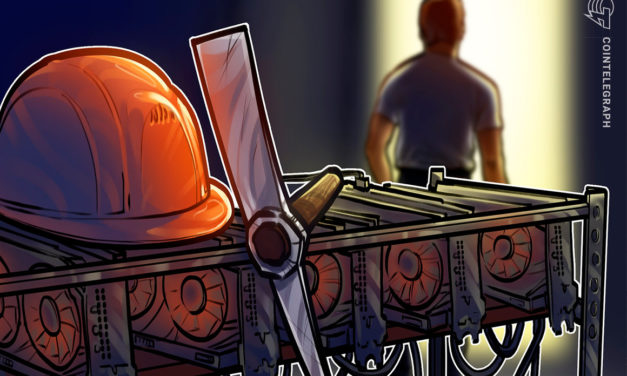
With the Bitcoin (BTC) price moving at a very steady pace during the crypto winter, the return on investment (ROI) on a new mining device seems like a shot in the dark. But a mining expert explained there may be hope for miners to make a comeback to profit. Phil Harvey, the CEO of crypto consultancy firm Sabre56, told Cointelegraph that there are factors to consider when checking the potential profit of mining devices. These are mining machine specifications, costs, real ROI and the economics of mining over time. Analyzing the recently released Antminer S19 XP by mining rig provider Bitmain, Harvey noted that specs-wise, it’s the most efficient miner at the moment. In terms of costs, the crypto mining expert pointed out that the current costs of mining machines are significantly lower than in the past few months, especially if purchased directly from the manufacturer, estimating that it can go roughly $5,600 per machine.In terms of what Harvey describes as the real ROI, the consultancy firm’s CEO explained that using their firm’s database that tracks miner revenue from when the first ASIC miner came out up to today, indicators show that large-scale miners can earn back their ROI in around 11 months. On the other hand, considering the electricity costs for retail miners, Harvey said that it could take 15 months for them to get their ROI. He also explained that: “These numbers do not account for possible leverage. In other words, miners who paid double must weather a payback period twice as long.”Commenting on the longevity of the new device, the CEO said that in a facility that they operate, this type of miner could last a minimum of 36 months. Related: What happens when 21 million Bitcoin are fully mined? Expert answersWhen asked if mining can be profitable in the long term, the expert also explained that mining revenue estimates don’t always play out the way it’s theorized. He noted that in 2013 and 2014 mining revenue estimates gained an average of $4,711.28. However, the real revenue turned out to be only $1,047.33. He explained that: “Basing the economics of mining on one single metric like dollars per terahash will not provide an accurate picture of the digital asset mining industry, investment opportunities, or the overall market.”Harvey emphasized that the data shows that revenue per terahash will decline, projecting a potential mining collapse. But the mining expert argued that this is tangential to revenue per mining machine which he argues to have shown stability over time.

Čítaj viac

Worthless JPEGs: Redditor turns NFT criticism into NFTs

A Redditor made it his mission to turn the tides on nonfungible token (NFT) critics by minting a collection using the top anti-NFT comments they found on the internet. In a Reddit post, user busterrulezzz introduced the NFT collection titled Worthless JPEGs! in an attempt to bring entertainment to crypto enthusiasts while critics of the space are rejoicing during the crypto winter. The Redditor collected quotes from Redditors and famous critics like Warren Buffet, Peter Schiff and Dan Olson and minted them as NFTs.One of the NFTs from the collection. Source: stratosnft.ioAdditionally, the Redditor said that this is a move that documents the sheer hatred that the blockchain space is getting and mock the non-believers. They wrote: “With this collection, my objective is to summarize what skeptics have to say about NFTs, capturing an era that I am sure will be studied for decades to come.”According to the Redditor, the quotes come with a signature that pays homage to what they describe as the trolling that is very common in our blockchain ecosystem. Apart from this, they noted that the nonfungible tokens (NFTs) also contain hidden easter eggs that point to the Ethereum blockchain.Lastly, the creator of the NFT collection also claimed that they are following experts’ advice to build during the bear market. “They say to build something during the bear market, so I did,” they wrote. Related: Ticketmaster scouts productization of enterprise NFTs beyond ticketingAs the bear market continues, unique NFT projects are popping up within the space. Earlier in August, Google’s artificial intelligence (AI) software was used to reimagine Bored Ape Yacht Club NFTs into machine-made abstract paintings. The project was called Artsy Monke, combining technology with art, according to its creators. In a recent interview with Cointelegraph, NFT expert Ahren Posthumus highlighted that it’s a good time to purchase NFTs while the prices are down. However, the expert urged investors to be vigilant in choosing which projects to invest in.

Čítaj viac

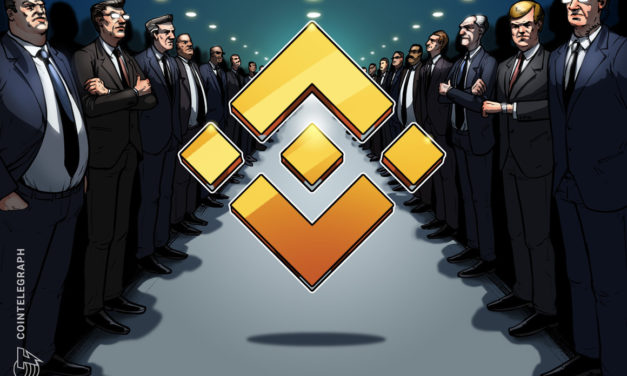
Philippine SEC cautions the public not to invest with Binance

The Philippine Securities and Exchanges Commission (SEC) cautioned the public not to invest in the crypto exchange Binance in their response to policy think tank Infrawatch PH’s attempts to woo the SEC to take action against the exchange. In a letter sent by SEC Director Oliver Leonardo, the public was advised to refrain from investing in the exchange. Additionally, the SEC noted that Binance is not a registered corporation based on the initial assessment. Leonardo wrote:“Binance does not possess the necessary authority and/or license to solicit investments as only registered corporations can apply for and be issued the necessary licenses to solicit investments.” The letter highlighted that Binance is violating laws like the Securities Regulation Code and the Revised Corporation Code enforced by the SEC. Because of this, the SEC also mentioned that if there are any victims, it encourages them to come forward and file their complaints against the exchange. Infrawatch PH Convenor Terry Ridon commented on the issue that this clarifies the government’s position on crypto platform operations. “This advisory provides immediate protection to Binance users who may have lost their money investing in an unlicensed platform,” he said.In a statement, Binance told Cointelegraph that they were aware of the letter sent by the SEC to Infrawatch PH and that they align with the SEC’s mission to protect users. According to a spokesperson from the exchange, they are open to dialogue with the SEC. They explained that Binance believes in developing regulatory frameworks that evolve with innovation. Binance said that: “We encourage the growth of positive innovations such as blockchain and look forward to having open dialogue with the SEC and any other industry participants that share our vision of financial inclusion and empowerment.”In June, Binance expressed its intention to get the virtual asset service provider (VASP) license and e-money issuer license in the Philippines. Binance CEO Changpeng Zhao expressed that the exchange is interested in expanding its operations within the country. Related: Binance gets VASP registration for its Spanish subsidiary from the Bank of SpainIn the same month, Infrawatch PH started its efforts against Binance by reaching out to the Philippine central bank. Additionally, the lobbying group also made efforts to ask the country’s Department of Trade and Industry (DTI) to ban Binance over alleged illegal promotions. However, the DTI responded that they are unable to enforce any ruling on the exchange.

Čítaj viac

Získaj BONUS 8 € v Bitcoinoch

nakup bitcoin z karty

Registrácia Binance

Burza Binance

Aktuálne kurzy