Autor Cointelegraph By Ezra Reguerra

Binance optimistic on Philippines entry despite SEC pushback

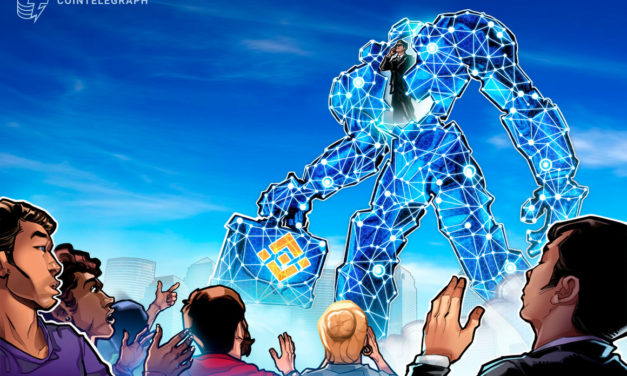
Despite the Philippine Securities and Exchanges Commission warning the public against investing with Binance, the crypto exchange stays positive and relentless in bringing its services to the Southeast Asian country. In an interview, Binance’s head of Asia-Pacific Leon Foong told Cointelegraph that they are very optimistic about being able to enter the Philippines. The executive highlighted that despite the efforts of a lobbying group to ban Binance, the firm will continue to be focused on trying to bring the benefits of crypto to the country. He explained that: “We tend not to really get distracted by what some of these other so-called lobbying bodies are doing. Rather, we want to focus on how we continue offering our users a better experience.”Foong believes that blockchain technology will be a key driver for financial inclusion and bring a huge opportunity to Filipinos. According to Foong, tech investments were once exclusive only to high-net-worth individuals. But with crypto and blockchain, the chance to invest in these projects is opened up to the masses across the globe. He said that: “If you look at how crypto and how digital assets have developed over the years, it has actually opened up investment opportunities in new technologies and in new projects.” Apart from these, the Binance executive also shared perspectives on how the country can increase its foreign direct investment volume. Foong said that this requires a regulatory framework that welcomes local and global players and rules that are pro-competition, pro-innovation and pro-user protection. Lastly, the executive said that the country must enable users to access global liquidity, with traders trading on the same order book. Related: Binance ban off the cards, says Philippine trade and industry departmentRegarding regulation, Foong commented that the Philippines is doing a great job creating its frameworks around the virtual asset service provider (VASP) and e-money issuer (EMI) licenses. When asked about the exchange’s progress in acquiring these critical licenses, the executive said they submitted the relevant paperwork. Still, they cannot comment any further as the details are confidential. He said that: “I think we are optimistic that we’ll be given a chance to really acquire a registered entity in the Philippines and be able to work closer with key local stakeholders to offer the people the digital assets and blockchain experience that they deserve.” According to Foong, compliance with regulation is a focus for the crypto exchange as it makes them accountable to their users. Additionally, having a direct relationship with regulators is very helpful in terms of clearing up misconceptions about the blockchain and crypto space.

Čítaj viac

Celsius community rally to perform another short squeeze attempt

The Celsius (CEL) community has rallied on Twitter once again to fight off short positions against their favored crypto token despite multiple challenges faced by the exchange, including bankruptcy and rumors of the company’s CEO fleeing from the United States.Thousands of tweets with the #CelShortSqueeze tag have been posted on the social media platform, advertising their long positions on CEL while encouraging others to do the same and post more content about the short squeeze. According to Twitter user Anakinsdad, the community is “at war with the shorts.” Another user posted:what #CelShortSqueeze teaches you is never to go against a community led movement. The probability of snowballing is huge if not almost certain.— Midas (@____Midas_____) August 9, 2022Short-selling is a strategy that lets investors earn from the decline of a token or a share. It involves borrowing shares and immediately selling to purchase at a lower price later. On the other hand, a short squeeze happens when opposing investors start to mass purchase a shorted asset, and instead of the prices falling, it pumps up, leading to losses for short sellers. This is not the first time that the Celsius community made an effort to perform a short squeeze on CEL. Back in June, community members who refer to themselves as “Celsians” brewed an unofficial recovery plan to force CEL short-sellers to take out their positions by driving the token’s price upwards.Related: Celsius vows to return from bankruptcy but expert fears repeat of Mt. GoxIn July, the Celsius company informed its users that they have filed petitions for Chapter 11 reorganization, which is also interpreted as a bankruptcy filing. This follows the firm’s infamous liquidity crisis, with users unable to withdraw their funds from the platform. Following the bankruptcy filing, the company’s lawyers have argued that its 1.7 million registered users gave up legal rights to their digital assets. Summing up Celsius’ claims, lawyer David Silver explained that for crypto deposited in Earn and Borrow accounts, users should stop thinking of the assets as their own.

Čítaj viac

Pinterest for Web3: Project launches curation ecosystem on Avalanche

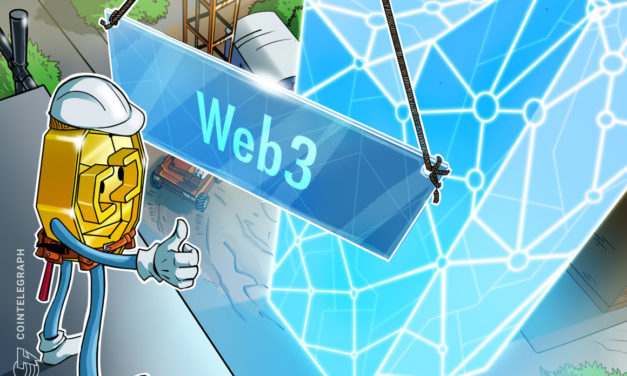
With play-to-earn (P2E) gaming rising in 2021 through Axie Infinity (AXS) and an offshoot called move-to-earn (M2E) gaining fame through STEPN (GMT), another variation of the “to-earn” model launches in an attempt to bring Web3 elements to existing Web2 frameworks. In an announcement, the CurateDAO team told Cointelegraph that they’ve launched a Pinterest-like database platform on the Avalanche (AVAX) blockchain. Similar to other “to-earn” models, users can be rewarded with crypto tokens for performing tasks. In this case, the task given to participants is contributing their curated lists to the project’s database. There are different roles within the project’s ecosystem. This includes curators, which will mint and set rules for a database, a scout who will find and contribute content that aligns with the database rules and viewers who participate by looking at the content. The curator can be an individual, a decentralized autonomous organization (DAO) or an artificial intelligence (AI) program like GPT-3. They will earn along with the scouts as content gets purchased by the viewers or accessed by watching advertisements. The team believes that incentivizing curation will lead to high-quality data being amassed. Michael Fischer, the Founder of CurateDAO, said that the project will be useful in acquiring user-generated content in a familiar Web2 application manner. Related: Ready Player One gave us the misconception that the Metaverse is VR — Everyrealm CEO, KBW 2022At the Korea Blockchain Week, Anthony Yoon, an executive at investment firm ROK Capital, told Cointelegraph that blockchain gaming is a good fit for the Korean gaming ecosystem. According to Yoon, some Web2 gaming companies are looking for ways to enter the blockchain with one approach being a develop first and launch a token later and the other prioritizing the token and then launching the token. In the same event, Axie Infinity executive Jeffrey Zirlin told Cointelegraph that their team is looking to increase their efforts in penetrating the gaming community in South Korea. Despite the ban on P2E games in the country, Zirlin noted that they are looking for ways to tailor the game to the region.

Čítaj viac

Bitcoin.com to introduce Bitcoiners to decentralized finance: KBW 2022

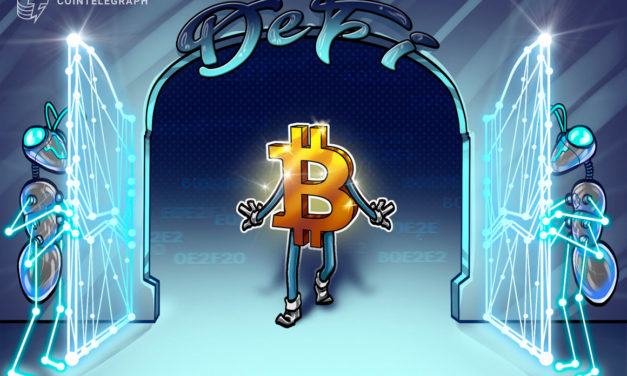
Crypto platform Bitcoin.com is looking to expand its ecosystem by introducing Bitcoin (BTC) holders to the world of decentralized finance (DeFi) and implementing new services such as a decentralized exchange (DEX) in its platform. Speaking with Cointelegraph’s Andrew Fenton at the Korea Blockchain Week (KBW) 2022, Bitcoin.com’s head of financial services Corbin Fraser said that the company is moving from only being associated with Bitcoin Cash (BCH) to becoming a DeFi platform that caters to crypto users across multiple chains. Fraser explained that: “We’ve got a lot of BTC users and a lot of these people want to do more with their crypto than just hold it. And they know there are opportunities in DeFi, but it’s a little bit complicated, a little bit scary.”Because of this, Fraser added that their team is focused on working to make the user experience easier and provide a more “friendly” crypto wallet. In addition to its DEX, the executive also highlighted their plans to release a prepaid debit card and run a token sale. With the debit card, the firm is planning to reward users who top up and for their usage. By seeing what people are spending their fiat money on, Fraser believes that they have the opportunity to create interesting reward campaigns. He explained that: “Let’s say gas is through the roof, we could potentially go after and say, okay, anytime you top up your fuel tank with some petrol, we can add an extra 2% kickback in our verse token.”Fraser said that this can be a way for their firm to help users through their day-to-day challenges. He said that it will be their way of saying, “sorry, inflation sucks so much, but there’s a little taste of crypto.”Related: KBW 2022: Digital property rights key to thriving Web3 economy — Animoca’s Yat SiuWhen asked about the demographics of Bitcoin.com’s community members, the executive mentioned that the majority of their users are BTC users who are looking for Bitcoin and its wallets. But with their company’s foray into DeFi, the firm can introduce those who found Bitcoin into different routes like stablecoins, Ethereum (ETH) and other opportunities within the ecosystem. At the same event, the CEO of Metaverse firm Everyrealm, Janine Yorio, told the KBW audience that while the Ready Player One film shows the Metaverse in virtual reality, most developments in the virtual world at the moment are being built for the desktop.

Čítaj viac

Ethereum Merge may lessen usage for other chains, says Nansen CEO: KBW 2022

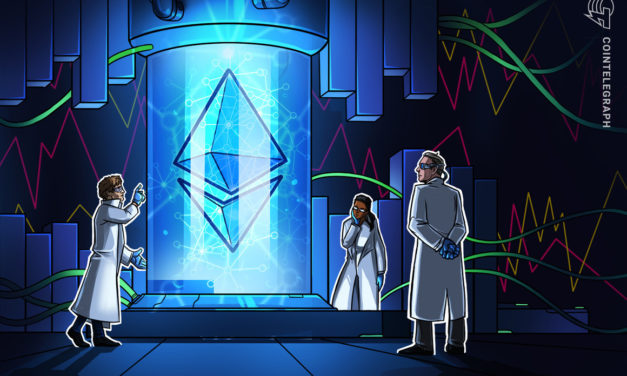
Cointelegraph’s Brian Newar spoke with Alex Svanevik, the CEO of blockchain data firm Nansen at the Korea Blockchain Week (KBW) 2022  held in Seoul and discussed topics like the upcoming Ethereum (ETH) Merge and how it will affect other blockchains. According to Svanevik, the industry witnessed a spillover effect in the last bull run. He said that in trading nonfungible tokens (NFTs), newcomers in the blockchain space didn’t want to pay hefty transaction fees of up to $100 to purchase NFTs in the Ethereum network. The Nansen CEO noted that this demand for NFTs spilled over to other blockchains where the fees to purchase NFTs weren’t as high as in Ethereum. He explained that: “It’ll be interesting to see to what extent these other ones can continue to have demand if a lot of it was driven by that spillover effect. You might have a lot less usage.”When asked what he thinks will happen to some other blockchains after the merge, the executive said that many may die off. “Many chains will probably become a ghost town or ghost chains. But I do think that some chains will find their own niches,” said Svanevik. Related: Web2 adoption key to Metaverse success, Klaytn Foundation — KBW 2022Despite this, Svanevik believes that there are some chains out there that have been able to bootstrap their own ecosystems. Citing examples, the Nansen CEO pointed to Solana (SOL), Polygon (MATIC) and Avalanche (AVAX). However, Svanevik noted that there are more chains out there that have the infrastructure that makes it easy for developers to come into their ecosystems. He said that: “I think some chains have managed to reach escape velocity where there’s enough infrastructure so that they can continue to grow more projects.”Svanevik also compared blockchains to cities. According to the executive, just as cities need hospitals, law firms and the media, blockchains need their decentralized exchanges (DEX), marketplaces, blockchain explorers and more. In the same event, 1inch co-founder Sergej Kunz told Cointelegraph that the decentralized finance (DeFi) market has a lot of room to grow in South Korea. Despite this, Kunz noted that there are challenges and barriers to entry, including the lack of knowledge in using crypto wallets and understanding of DeFi.

Čítaj viac

Získaj BONUS 8 € v Bitcoinoch

nakup bitcoin z karty

Registrácia Binance

Burza Binance

Aktuálne kurzy