Autor Cointelegraph By Ezra Reguerra

Aave community proposes to temporarily suspend ETH lending before the Merge

With the Ethereum Merge on the way, the risk research and analysis team Block Analitica proposed a temporary pause in Ether (ETH) borrowing to mitigate the risks which may lead to a decentralized finance (DeFi) implosion in the Aave lending protocol during the Merge. The team pointed out the potential issue of high ETH utilization which may result in liquidations being hard or impossible and annual percentage yields (APYs) reaching negative figures. Furthermore, the uncertainties surrounding the Merge and a potential Ethereum proof-of-work (PoW) fork may cause liquidity providers to start a bank run, pushing utilization to even higher levels. Block Analitica proposed several solutions, including a temporary halt for ETH lending on the Aave platform and increasing the variable borrow annual percentage rate (APR) at 100% utilization from 103% to 1,000%. In response to the proposal, the market risk assessment team Gauntlet network expressed support for the pausing of ETH borrowing. However, they suggested breaking up the proposal into two parts and conducting more analysis regarding the second solution presented by Block Analitica.In the end, community members initiated the vote to approve the pausing of ETH borrowing in the Aave platform. It will begin on Aug. 30, 2022, and end on Sept. 2, 2022. With this, community members can choose whether they agree to pause lending or not. Related: Bug bounty quadruples for Ethereum network — Up to $1M payouts ahead of MergeApart from DeFi platforms, centralized exchanges have also expressed concerns and put up countermeasures for the possible implications of the upcoming Ethereum merge. Crypto exchange Binance announced last week that they will pause ETH and ERC-20 token withdrawals to provide stability during the Merge. Meanwhile, digital asset platform Coinbase said that it will be reviewing any potential forks that may come out of the upcoming ETH Merge. According to the firm, the assets will be reviewed in a similar manner as any other asset that trades within its exchange.

Čítaj viac
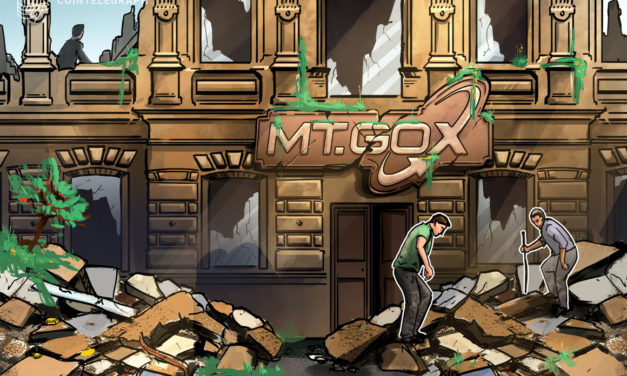

Mt. Gox creditors dismiss rumors of massive Bitcoin dump

As rumors about an upcoming Bitcoin (BTC) dump float on Twitter, Mt. Gox creditors took to Twitter to say that these are all false, with one highlighting that the defunct exchange’s repayment system is still not live yet. In a Twitter thread, Eric Wall introduced himself as a Mt. Gox creditor and confirmed that there would not be a 137,000 BTC dump, countering rumors floating around on social media. According to Wall, the exchange has not yet completed the infrastructure needed to commence the repayment.In addition, Wall also said that at the moment, people are still unable to register where to send the Bitcoin and Bitcoin Cash (BCH) payments. The creditor also believes that payments should occur in various installments, dismissing the fears that thousands of Bitcoin will be sold all at once, dumping the crypto’s price. Wall also noted that the crypto exchange has not yet provided a timeline on when it will proceed with its repayment process. Following this, the creditor also argued that even if the BTC were released, he would rather buy than sell because of the current market conditions.Eight Global CEO Michaël van de Poppe also highlighted that the distribution will be delayed. He tweeted:BREAKING:Mt. Gox will not be releasing the #Bitcoin, and will delay the distribution, once again. The entire crypto space was stressing out heavily on this, but unwarranted.— Michaël van de Poppe (@CryptoMichNL) August 28, 2022Marshall Hayner, another Mt. Gox creditor, also confirmed that they are not close to receiving their BTC. Hayner also assured the community that many people who will be getting their repayments from the exchange do not intend to sell their Bitcoin. Related: Bitcoin risks worst August since 2015 as hodlers brace for ‘Septembear’In July, Nobuaki Kobayashi, the appointed rehabilitation trustee in the Mt. Gox rehabilitation plan, confirmed that the exchange is preparing to pay back its creditors. In the official document released, the exchange noted that the account holders will have the option to receive payments in BTC or BCH. The rehabilitation plan was first approved in 2021. However, from the 850,000 BTC owed, the exchange only has 150,000 BTC to pay its creditors.

Čítaj viac

Pro-blockchain narratives hinder Bitcoin adoption, says StackinSat founder

Over a decade-long evolution later, for self-justified personal reasons, a handful of the crypto community members chose to believe in siding against Bitcoin (BTC), resulting in a narrative that preached “blockchain is great, Bitcoin is bad.”Josselin Tonnellier, the founder of Bitcoin exchange StackinSat and organizer of the Surfin’ Bitcoin 2022, believes that this particular notion is one of the main barriers to broader BTC adoption in France. In an exclusive interview with Cointelegraph reporter Joseph Hall, Tonnellier discussed several important topics, including the adoption of Bitcoin and crypto in France, the origins and goals of the Surfin’ Bitcoin conference, and overcoming challenges during the bear market. The executive explained that one of the most pressing concerns in France in terms of Bitcoin adoption is the pro-blockchain narrative that paints a negative picture of Bitcoin. He said that: “For many years it’s been blockchain is great. Bitcoin is bad. So, we try to produce content with prominent Bitcoiners and people want us to be able to explain what Bitcoin really is.”In terms of the connection between surfing and Bitcoin, the executive said that the goal of the event was to have a very chill place where the ecosystem could gather and make connections. Tonnellier explained: “We wanted to have a place to gather people in very nice settings at the end of August so people can enjoy the beach, feel like we are on holidays talking about Bitcoin, and we want to be very chill and relaxed, so you don’t see many suits and a bow tie.”The event organizer also highlighted that there had been plenty of Web3 and nonfungible token (NFT) events in the country and not much for Bitcoin. He added that this spurred their team to put the event together. Related: Cryptocurrencies copying Bitcoin not really making the cut, experts sayApart from these, Hall also asked Tonnellier about the difficulties that they are facing at the moment in organizing an event during the bear market. The event organizer explained that there are several ups and downs including setting the budget for the event. He said: “This limits the amount of sponsoring opportunities and especially in bear markets, it’s reduced even more and as you can imagine, the budget for marketing is shrinking considerably.”Despite the challenges that they had to face, Tonnellier expressed that they were able to gather people and proceed with the event. He expressed how rewarding it was for their team to see people from outside of France coming in to join the event.

Čítaj viac

Cryptocurrencies copying Bitcoin not really making the cut, experts say

Cointelegraph’s Joseph Hall interviewed Bitcoin (BTC) advocates Pierre Rochard and Morgen Rochard, the hosts of the Bitcoin for Advisors podcast at the Surfin’ Bitcoin 2022 event held in France. The group talked about how France can attract more miners, where Bitcoin comes in in terms of financial planning and the difference between Bitcoin and other cryptos. According to Pierre Rochard, who also works at the mining firm Riot Blockchain, there are two ways for France to attract large-scale Bitcoin miners. The first is to provide assurances in terms of policies on Bitcoin mining. In addition to this, the country should provide a power grid that is favorable for miners. He explained: “We’re seeing Japan is now opening up or changing policies on nuclear power, and I think that France should reinvest in its nuclear power and really they should be able to attract Bitcoin miners more easily.” Apart from mining, the group also talked about the topic of financial planning. Morgen Rochard, who is also a certified financial planner, discussed where Bitcoin comes in on financial planning. She shared that in many cases, the conversation in financial planning revolves around inflation and understanding money. She stated: “Most of my profession is about saying, hey, that cash you’ve got there, stop holding all that cash. We need to move it immediately into an investment because it’s, as Saylor called it, it’s a melting ice cube.”Morgen also said that some clients are quick to understand Bitcoin and are willing to put a portion of their portfolio into it. “The financial planning situation really overall kind of helps people to think about it,” she added.Related: Bitcoin advocate floats BTC as a solution to US student loan problemsWhen asked about other cryptocurrencies, the couple put on their Bitcoin maximalist hats and described how BTC is different from other coins like Dogecoin (DOGE) and Ether (ETH). Morgen said: “There’s something like Dogecoin […] but it’s basically it’s a copy of Bitcoin, but it’s still fiat, right? Because they’re constantly inflating it. And the same thing with Ethereum. They claim that there’d be a cap, but there’s really no cap because they don’t even know how much they have in supply.”Pierre also chimed in, explaining how the Bitcoin protocol is designed to minimize uncertainty. The mining executive highlighted that any change in Bitcoin’s parameters will affect this configuration. “Bitcoin is the best engineered digital monetary network and then everything else is worse,” he said. 

Čítaj viac

Waves-backed stablecoin USDN breaks peg again amid protocol upgrade

As the crypto community tries to navigate the bear market and recover from the onslaught brought about by stablecoin incidents like the Terra crash, another algorithmic stablecoin shows signs of struggle as it falls below its dollar peg. Algorithmic stablecoin Neutrino Dollar (USDN) has deviated from the dollar once again, marking the fourth time that USDN struggled to maintain its dollar peg this year. The Waves-backed stablecoin is trading at $0.90 at the time of writing. Correlation =/ Causation hereBut every time #USDN from #WAVES has depegged There has been a crash in bitcoin. Just an odd coincidence. Lets see how this plays out. pic.twitter.com/ruJ0cKfezu— BareNakedCrypto , I will not message you (@BearNakedCrypto) August 26, 2022In April, USDN crashed to $0.78 as price manipulation accusations began to float. The stablecoin recovered within a few days after its first crash. However, in the following months, the digital asset once again showed signs of weakness. In May, it fell to $0.82 and dropped once more in June as it traded at around $0.93 per token.To address the stability issues, the team behind the stablecoin initiated a vote to implement changes within the protocol’s parameters. After the vote, the team added new mechanics to improve the economics behind the protocol. This includes changes in the maximum swap amount, backing ratio protection mechanics and improving rewards distribution. Related: Stablecoin issuers hold more US debt than Berkshire Hathaway: ReportMeanwhile, a recent exploit in the Acala Network pushed the price of its stablecoin Acala USD (aUSD) downward by 99%. More than 1 billion aUSD were minted out of nowhere, leaving its holders wondering how the decentralized finance protocol would recover. At the time of writing, aUSD is still trading at $0.65 per token. Earlier this month, HUSD, a stablecoin backed by crypto exchange Huobi, also wobbled to $0.82 due to a liquidity problem. According to the exchange, the depeg was due to closing market maker accounts for regulatory compliance. This caused a short-term depeg that was fixed by the issuers promptly.

Čítaj viac

Získaj BONUS 8 € v Bitcoinoch

nakup bitcoin z karty

Registrácia Binance

Burza Binance

Aktuálne kurzy