Autor Cointelegraph By Ezra Reguerra

DeFi faces criticism for denying user access based on wallet content

While decentralized finance (DeFi) is expected to be an upgrade to traditional finance mechanisms, some believe that denying users access to decentralized exchanges based on their wallets is a backward move. In a tweet, entrepreneur Brad Mills criticized DeFi for denying users access to decentralized exchanges (DEXs) due to various factors such as location and wallet content. Because of this, Mills described the future of Web3 as a “surveillance panopticon” and said that it has rebuilt everything wrong with Wall Street but on a blockchain. Within the tweet, Mills also shared an image of a pop-up message from 1inch Network’s decentralized application (DApp) restricting access because of the wallet address used. In a statement, Sergey Maslennikov, the chief communications officer at 1inch, told Cointelegraph that restricting wallets is part of their efforts to provide a safe and compliant community environment. Maslennikov explained that: “Users’ wallets which are owned or associated with clearly illegal behavior like: sanctions, terrorism financing, hacked or stolen funds, human trafficking, and child sexual abuse material (CSAM) are prevented from interacting with the 1inch dApp.”According to Maslennikov, the DeFi aggregator complies with all applicable sanctions and embargo lists. Apart from this, the DEX also follows anti-money laundering (AML) and terrorist financing prevention regulations, as well as efforts by the global community. Related: Institutional crypto adoption requires robust analytics for money launderingMeanwhile, the Financial Action Task Force (FATF) recently noted that countries that are ignoring the rules for crypto AML may be placed on the watchdog’s grey list, which is a list subject to increased monitoring. At the moment, there are 23 countries on the list, including crypto hubs like the United Arab Emirates and the Philippines. In terms of terrorist financing, a United Nations (UN) official recently highlighted that terrorists still prefer to use cash over crypto. Svetlana Martynova, the Countering Financing of Terrorism Coordinator at the UN, said in a special meeting that while cash is still the predominant method for terrorist financing, terrorists are able to adapt to new technologies, and this includes crypto.

Čítaj viac


Gala token exploit 'not a white hat act': Huobi Global

Disclaimer: This article is updated with pNetwork’s official response to Huobi.Days after GameFi project Gala Games and decentralized finance (DeFi) protocol pNetwork assured its community that everything was fine, crypto exchange Huobi Global came out with its version of the story, accusing pNetwork of earning a $4.5 million profit from the recent pGALA crash. On Nov. 3, a suspected attacker minted $2 billion worth of Gala tokens (GALA) on the Binance Smart Chain and dumped a portion of the tokens on PancakeSwap, earning a total of 12,977 Binance Coin (BNB), which was worth around $4.5 million at the time. This drained a PancakeSwap pool and caused a drop in the token price. According to a crypto analytics account called Lookonchain, some traders took advantage of the situation, buying GALA from PancakeSwap and dumping the tokens on Huobi, causing a price crash from $0.04 to $0.0003 on the crypto exchange. With the community in fear of a potential multi-billion dollar hack, the Gala Games president for blockchain Jason Brink took to Twitter to explain that everything is fine and that the activity observed is part of pNetwork’s efforts to safeguard its liquidity pool from vulnerabilities. However, in a recent announcement by Huobi Global, the crypto exchange made allegations against pNetwork, claiming that the protocol’s recent behavior was not a white hat move. According to Huobi, the recent incident was a scheme for malicious profit. Additionally, the crypto exchange also alleged that calling the activity a white hat attack was only an excuse by the pNetwork team “to avoid legal consequences.”Related: Huobi Global reportedly plans relocation to the CaribbeanFurthermore, Huobi also made claims that the incident caused massive losses for its users. The exchange underscored that it is ready to represent the users who sustained damages from the incident and threatened to take legal action against pNetwork. However, if the alleged attackers are willing to return the proceeds from the attack, Huobi said that it will provide a $1 million bounty and will not pursue its legal responsibilities. In response to the allegations made by Huobi, pNetwork officially responded deeming Huobi’s allegations as untruthful. The DeFi protocol highlighted that they have definitive proof that pNetwork acted in good faith and all actions were in done in collaboration with Gala Games. The firm also explained that it will seek legal action against Huobi for its allegations.  

Čítaj viac

OpenSea revises NFT rarity ranking protocol after community feedback

While giving rarity ranks to nonfungible tokens (NFTs) on a marketplace may help collectors decide on whether to purchase NFTs or not, some argue that ranking NFTs may do more harm than good. In a tweet, an NFT investor pointed out several issues surrounding OpenRarity, the new rarity ranking protocol implemented by NFT marketplace OpenSea. According to the community member, putting “rank” in the NFT listing with no mention of “rarity” anywhere could be misleading. Taking the Moonbirds NFT collection as an example, the community member argued that since the collection enabled the OpenRarity ranking protocol, it destroyed its own market-driven rarity structure, making every single NFT a “floor Moonbird.” The NFT collector also called out Kevin Rose, the CEO of Proof, the creators of Moonbird, to turn off the OpenRarity ranking function for the collection. Days after the feedback, the NFT marketplace made some revisions to the ranking system. At the moment, NFT listings now show “rarity rank” instead of just the rank. In addition to this, the NFT marketplace has also added trait count within the ranking methodology and a way to sort items with unique attributes before applying any additional information that elevates its rank. After making the changes, OpenSea announced that it will be enabling the rarity ranking feature to eligible collections across all chains. The change will be implemented starting Oct. 25. According to the NFT marketplace, the most consistent feedback that they have received is from people asking how they could get access. To make this access possible to more collections, the marketplace will be implementing the feature to all their supported blockchains. Related: Prosecutors argue ‘insider trading’ claim in the OpenSea case is accurateThe NFT marketplace first launched the NFT ranking protocol on Sept. 21 in an attempt to provide a reliable rarity ranking for collectors. The protocol called OpenRarity is a collaboration between NFT entities and aims to standardize the rarity methodology across NFT platforms.

Čítaj viac

Anthony Hopkins sells out NFTs in minutes: Nifty Newsletter, Oct 12–18

In this week’s newsletter, read about how Animoca Brands co-founder Yat Siu believes that nonfungible token (NFT) games are only at the tip of the iceberg in terms of potential. Check out how an executive at Kraken highlighted that NFTs will be as disruptive as Bitcoin (BTC) and how a museum in Ukraine is preserving the country’s cultural heritage through NFTs. In other news, find out how an industry executive claimed that brands have a lot of responsibility in terms of protecting their NFT investors against fraud. Last but not least, British actor Anthony Hopkins sold out his NFT collection within minutes of its release. NFT games are ‘only scratching the surface’ of what’s possible — Animoca’s Yat SiuThe co-founder of Animoca Brands, Yat Siu, highlighted that NFT games are only at the surface of what is possible for the space. The executive believes that there are new forms of gaming that will be developed as a result of NFT’s inherent features like digital ownership. In an interview with Cointelegraph, the Animoca Brands co-founder highlighted the potential of NFTs to branch out into mobile phones. According to Siu, mobile phones and artificial intelligence can play a huge part in the development of NFT gaming. Continue reading…NFTs will be ‘as disruptive’ as Bitcoin was 10 years ago — Kraken execJonathon Miller, an executive at crypto exchange Kraken, likened NFTs to Bitcoin in terms of disruptiveness. According to Miller, the exchange is bullish when it comes to NFTs and believes in their innovative features. Speaking to Cointelegraph, Miller highlighted that despite the low NFT activity in recent months, there are positive signals at the institutional level. According to the executive, the NFT space has the potential to eventually stabilize and have gradual growth. Continue reading…Ukrainian art museum to preserve art and cultural heritage through NFT auctionKharkiv Art Museum has announced that it has released an NFT collection with the purpose of saving the cultural heritage of Ukraine. The collection, dubbed Art without Borders, is available at the Binance NFT Marketplace. Kharkiv, a city that has been affected by the country’s ongoing conflict with Russia, can preserve its culture by turning artworks from the museum into NFTs. At the moment, artworks by Albrecht Dürer, Georg Jacob Johann van Os, Ivan Aivazovsky, Simon de Vlieger and others are already converted into NFTs and are available in the collection. Continue reading…Industry exec explains why NFT fraud protection falls on brand and not marketplacesBrands that issue NFTs have more responsibility in terms of protecting consumers than NFT marketplaces, an industry executive argued. In a Cointelegraph interview, BrandShield CEO Yoav Keren said that brands that issue NFTs must be proactive in terms of protecting their investors from fraud. The executive claimed that brands must be the first to take action to protect their customers across all platforms. According to the CEO, brands must also keep the legal implications in mind when it comes to the misuse of their image. Continue reading…Academy Award winner Anthony Hopkins sells out NFT collection in minutesBritish actor Sir Anthony Hopkins has sold out his first NFT collection, dubbed The Eternal Collection, within 10 minutes. Orange Comet, the actor’s partner in creating the NFTs, claimed that the NFT drop is the fastest sell-out in the history of the NFT marketplace OpenSea. Celebrating the release of his NFT collection, Hopkins took to Twitter to thank his fans for their support. Inspired by the actor’s performances, the NFTs feature 1000 cinematic artworks. Apart from the art, the NFT images come with other benefits like receiving autographed books and engaging with the actor through a Zoom call. Continue reading…Thanks for reading this digest of the week’s most notable developments in the NFT space. Come again next Wednesday for more reports and insights into this actively evolving space.

Čítaj viac

Beers for Bitcoin: Here’s the story of Satoshi’s Place pub in the UK

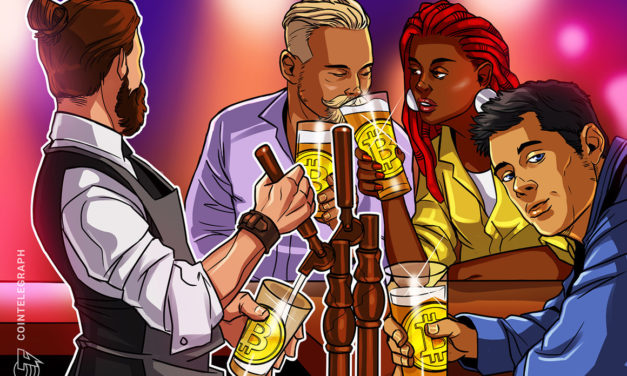
While opening a Bitcoin-themed bar sounds like a dream for many Bitcoiners, it also comes with its challenges, according to Adam (who did not share his last name), the founder of Satoshi’s Place. Cointelegraph reporter Joseph Hall visited a Bitcoin-themed pub called Satoshi’s Place and sat down with its founder. The duo talked about the place’s history, how it came to be and the difficulties of running a Bitcoin business in the United Kingdom. [embedded content]According to Adam, he first got into Bitcoin (BTC) in 2013. Five years later, he opened a coffee and breakfast shop that accepted Bitcoin payments with its own Bitcoin ATM. Back then, the founder highlighted that they did not have the Bitcoin Lightning Network and had to wait for a bit for payments to go through. He explained that: “That was literally layer one. It wasn’t lightning, it was slow. But I mean, it was only kind of small amounts anyway. So, we just let the user sit down and watch the transaction and stuff.”After a while, the cafe’s team did some testing over the years but had difficulties in terms of adoption and troubles with their bank. “I had a bank account here which got blocked for about a year just for taking Bitcoin payments,” he said. Adam highlighted that even though everything was documented properly and presented to the banks, their accounts were still blocked. Despite the issues faced, the founder said that they still carried on. From just being a coffee shop, the place started to offer pizzas in honor of the Bitcoin Pizza Day. Eventually, the place also offered workshops to those who wanted to learn about Bitcoin. “Everything from Lightning education, Bitcoin for kids, Bitcoin development, all different types. There are about 16 hosts that I’ve got up to now that want to do workshops,” Adam noted. Related: Grayscale Bitcoin Trust trades at a record 36.7% discount, but is it justified?After the growth of the workshops and the reception for Bitcoin in the area, the founder eventually turned the place into Satoshi’s Place, in celebration of Bitcoin’s pseudonymous creator. The place offers a Bitcoin-themed atmosphere with hand dryers emitting heat from a Bitcoin miner.

Čítaj viac

Získaj BONUS 8 € v Bitcoinoch

nakup bitcoin z karty

Registrácia Binance

Burza Binance

Aktuálne kurzy