Autor Cointelegraph By Ezra Reguerra

Interpol operation exposes $122M crypto wallet tied to romance scam laundering

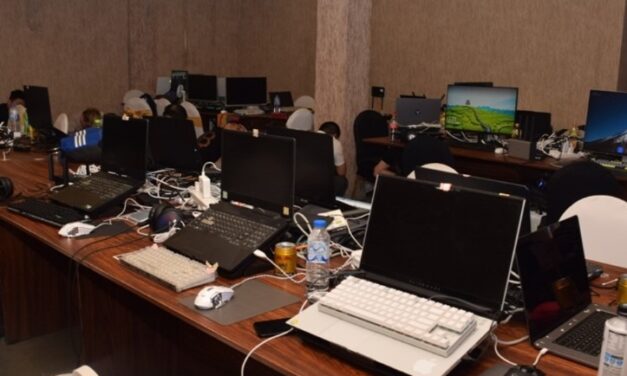
A crypto wallet linked to a suspected romance-scam money launderer processed more than $122.5 million in 10 months, according to Interpol, as authorities expanded a global crackdown on online fraud.Interpol said Thursday that Thai authorities arrested two suspects and uncovered a money-laundering network that funneled proceeds from romance scams into cryptocurrencies, using cross-chain token swaps to obscure the trail.The Thai investigation was part of Operation First Light 2026, an Interpol-coordinated campaign targeting social engineering scams and the financial infrastructure used to launder their proceeds.The operation involved authorities in 97 countries and territories, resulting in 5,811 arrests and the seizure of $293 million in illicit assets tied to fraud and money laundering.Tomonobu Kaya, director of Interpol’s Financial Crime and Anti-Corruption Centre, said social engineering scams “continue to pose a significant threat to our society,” adding that no country can tackle the problem alone.Authorities carried out raids on scam centers. Source: Interpol Crypto romance scams draw global enforcement scrutinyInterpol said participating authorities targeted bank accounts and crypto wallets used to move illicit funds. The operation analyzed 152,808 cases, blocked 31,014 bank accounts, solved 23,715 investigations and identified 15,606 suspects.Authorities also used Interpol’s payment-freezing system, known as the Global Rapid Intervention of Payments, to help block illicit transfers involving fiat and virtual assets.Authorities in Palau also deported 22 people allegedly involved in two hotel-based scam centers that used cryptocurrency and illegal gambling websites to target victims abroad.Related: US seizes $61M in USDT linked to ‘pig butchering’ crypto fraud schemeThe case follows growing concern over the use of crypto in romance and investment scams. In April, the US Federal Bureau of Investigation (FBI) reported that Americans filed 181,565 crypto-related scam complaints totalling over $11 billion in losses in 2025. Romance scams, also known as pig-butchering scams, often involve criminals building trust with victims through social media or online dating platforms before steering them toward fraudulent investment schemes.Magazine: The 5 types of real world assets being tokenized fastest onchain

Čítaj viac


Bank of Korea stands firm on bank-led stablecoin push as deposit token pilots advance

The Bank of Korea (BOK) has doubled down on its stance that won-denominated stablecoins should first be issued through bank-led consortiums.According to local reports from Digital Asset and EDaily, the central bank made the comments in materials submitted on Thursday to the National Assembly’s finance committee. Local outlets reported that the BOK called for safeguards, including priority issuance by bank-led consortiums and a statutory policy body involving relevant agencies.The latest comments reinforce the BOK’s months-long push to keep won stablecoin issuance under bank-led structures. The central bank’s stance has divided policymakers and industry groups and contributed to delays in South Korea’s digital asset bill.The BOK also said it plans to continue developing deposit-token use cases in the second half of the year, including support for government subsidy payments, vouchers, electric vehicle charging infrastructure and further real-world transactions for the general public. Deposit tokens are digital tokens that represent commercial bank deposits. In April, BOK Governor Hyun-Song Shin expressed support for deposit tokens and central bank digital currencies (CBDCs) in his first public address, while South Korea’s Ministry of Economy and Finance announced a pilot to use tokenized deposits for government operational spending. BOK’s stablecoin stance keeps bill debate alive The BOK’s latest comments add to a policy standoff that has slowed progress on South Korea’s Digital Asset Basic Act. The bill had repeatedly stalled over disagreements on who should be allowed to issue stablecoins, with the BOK pushing for banks to retain majority ownership of stablecoin issuers.Related: South Korea adds token securities to capital market overhaulThe debate has continued as lawmakers consider how stablecoins, tokenized real-world assets (RWAs) and other digital assets should fit into South Korea’s rulebooks. In April, the ruling Democratic Party proposed to put stablecoins and RWAs under existing financial laws. Despite this, key issues such as whether stablecoin issuers should be bank-led remained unresolved. The bill’s timeline, which the government told President Lee Jae-myung in January it aimed to meet by the first quarter of 2026, has since slipped amid the US-Israeli war with Iran that began in late February, local elections, and delays in reorganizing the Assembly’s committee structure.Magazine: The 5 types of real world assets being tokenized fastest onchainCointelegraph is committed to independent, transparent journalism. This news article is produced in accordance with Cointelegraph’s Editorial Policy and aims to provide accurate and timely information. Readers are encouraged to verify information independently.

Čítaj viac

India crypto tax filings lag trading activity: Report

India’s tax department reportedly found widespread gaps in crypto tax reporting, warning that offshore exchanges, private wallets and peer-to-peer (P2P) trades are making crypto activity harder to track. Reuters on Wednesday reported government documents showed that fewer than a quarter of 645,000 individuals who made crypto transactions in the year ending in March 2023 reported the trades on their tax returns. The department also reportedly estimated that India had about 39 million crypto traders holding over $2.1 billion in crypto at the end of May. The findings add a tax-enforcement factor to the country’s long-running digital asset policy debate, moving the issue beyond the central bank’s financial-stability concerns and into questions on offshore trading and recoverable tax revenue. India was ranked first in Chainalysis’ 2025 Global Crypto Adoption Index.The report comes days after the Reserve Bank of India (RBI) backed a containment strategy for crypto assets. On July 3, the central bank urged lawmakers to keep banks and financial institutions insulated from cryptocurrencies and privately issued stablecoins. The RBI reportedly said prohibition remained a recognized policy option and recommended preventing digital asset use in payments and settlements. Cointelegraph sought comment from India’s Central Board of Direct Taxes but had not received a response by publication.Crypto tax enforcement remains a global challengeIndia is not the only jurisdiction struggling to bring crypto activity into the tax net. In Israel, a voluntary disclosure program aimed at crypto profits fell short of expectations, according to a June 3 report by local business outlet Globes. The Israel Tax Authority (ITA) reportedly expected to collect 2 billion to 3 billion Israeli shekels (about $650 million to $986 million) from the process, which offered criminal immunity to taxpayers who would disclose previously hidden capital. Related: Petition to scrap South Korea’s crypto tax reaches 50K thresholdDespite this, only 289 disclosure requests had been submitted since the program was launched in August 2025, with reported capital totaling 676.5 million shekels and estimated tax due of 40.9 million shekels. The figure was a sharp miss compared with the expectations and with the estimated crypto tax gap. Globes cited tax experts who said the program’s lack of an anonymous disclosure track had weakened the incentive for crypto holders to come forward.Magazine: Has Bitcoin bottomed for this cycle? Analysts say ‘not yet’Cointelegraph is committed to independent, transparent journalism. This news article is produced in accordance with Cointelegraph’s Editorial Policy and aims to provide accurate and timely information. Readers are encouraged to verify information independently.

Čítaj viac

Kalshi files same-day appeal of NY court's rejection of bid to block state gambling law enforcement

Kalshi is appealing a New York federal judge’s rejection of its bid to block state gambling officials from enforcing local laws against the prediction market platform’s sports-related event contracts. In a notice filed on Tuesday in the US District Court for the Southern District of New York (SDNY), Kalshi said it would take the case to the US Court of Appeals for the Second Circuit. The appeal followed a same-day opinion and order denying the platform operator’s motion for a preliminary injunction against officials at the New York State Gaming Commission. The appeal escalates a growing legal fight over whether sports prediction markets are federally regulated derivatives or state-regulated gambling products. This question has already split courts across the United States.Judge Analisa Torres earlier Tuesday rejected that argument at the preliminary injunction stage, finding that New York gambling laws, as applied to Kalshi’s sports-event contracts, were not preempted by the US Commodity Exchange Act. The court said Kalshi had not made a “clear or substantial showing” that it was likely to succeed on the merits.The order also noted that other jurisdictions have had split opinions on similar requests from Kalshi. Some have granted injunctions against state enforcement, while others have denied the company’s motions.“Major loss for Kalshi in the nation’s financial capital, with likely knock-on effects in other cases (esp. Connecticut and other SDNY lawsuits),” wrote lawyer Daniel Wallach, whose Florida law firm is devoted principally to sports wagering and gaming law in the US. Kalshi’s US legal fight widensKalshi’s appeal comes as prediction market platforms face mounting pressure from state regulators over their sports event contracts. In May, the Commodity Futures Trading Commission (CFTC) backed Kalshi in an Ohio federal appeals court fight after the platform challenged efforts to restrict its prediction market offerings. The CFTC’s filing came after it had sued five states, including Wisconsin, New York, Arizona, Connecticut and Illinois, to assert jurisdiction over prediction markets.On June 25, Kalshi sued Illinois officials over a state law it said “expressly bans sports event contracts” unless prediction market platforms obtain local licenses. The platform argued that the law usurped the CFTC’s authority over federally regulated derivatives markets. Related: Kalshi June trading volume tops $9B as World Cup fuels prediction marketsState regulators have also cracked down on other platforms. In April, Wisconsin sued Robinhood, Coinbase, Polymarket, Crypto.com, as well as Kalshi, over sports event contracts. The state alleged that the platforms facilitated illegal sports betting. Nevada regulators have pursued similar actions against prediction market firms, including Kalshi, Coinbase and PolymarketMagazine: Has Bitcoin bottomed for this cycle? Analysts say ‘not yet’

Čítaj viac

Base to activate B20 standard for stablecoins, RWAs and other tokens

Coinbase-backed Ethereum layer-2 network Base is set to activate its B20 token standard on mainnet, introducing a native framework for stablecoins, tokenized real-world assets (RWAs) and other fungible tokens. According to Base documentation, B20 is scheduled to go live at 6 pm UTC on the mainnet, enabling developers to begin creating tokens under the new standard.The activation will enable developers to use Base’s native token standard to create stablecoins, RWAs, tokenized equities and other fungible tokens without requiring them to build and audit custom ERC-20 contracts.The standard supports two variants: asset and stablecoin. The asset variant has configurable decimals between six and 18, while the stablecoin variant has fixed six-decimal formatting and requires issuers to specify a fiat currency denomination, such as the US dollar or euro.B20 supports two variants. Source: BaseB20 was introduced as part of the network’s Beryl upgrade, which went live on June 26. The upgrade shortened withdrawal waiting periods from seven days to five days and added technical changes aimed at improving network performance. Base said B20 tokens are compatible with standard ERC-20 tokens but come with built-in issuer controls. Those features include supply limits, transfer rules, minting, burning, pausing and transaction notes.B20 activation follows Base outagesThe B20 activation follows back-to-back outages linked to its sequencer infrastructure. On June 25, Base encountered an outage caused by a consensus issue. At the time, the network said an invalid block had been sequenced, preventing new blocks from being created. Base resumed block production on the same day, after a nearly two-hour halt.Related: Coinbase restores trading after AWS outage disrupts marketsIn a post-mortem, Base said that a sequencer bug caused back-to-back outages on June 25 and June 26. The first incident lasted for about 116 minutes, while a second outage lasted about 20 minutes after a race condition prevented sequencers from catching up after a system reset. The initial outage occurred hours before the scheduled Beryl upgrade, which was delayed by one day due to a separate B20 activation registry timing issue.Magazine: Has Bitcoin bottomed for this cycle? Analysts say ‘not yet’

Čítaj viac

Získaj BONUS 8 € v Bitcoinoch

nakup bitcoin z karty

Registrácia Binance

Burza Binance

Aktuálne kurzy